Butt weld vs socket weld vs threaded fittings — which is best for high-pressure systems?
When it comes to planning and actualizing high-pressure frameworks, choosing the right sort of pipe fitting is pivotal for guaranteeing security, effectiveness, and life span. Three common sorts of fittings utilized in such frameworks are butt weld, attachment weld, and strung fittings. Each has its claim set of points of interest and confinements, making the choice handle a basic choice for engineers and extend supervisors. This web journal post will dive into the characteristics of these fittings, with a specific center on Carbon Steel Pipe Fittings, to offer assistance you decide which alternative is best suited for high-pressure applications. We'll investigate the qualities and shortcomings of each fitting sort, consider components such as weight evaluations, establishment strategies, and upkeep necessities, and give experiences to direct your decision-making prepare in choosing the most suitable fitting for your particular high-pressure framework needs.
What are the key differences between butt weld, socket weld, and threaded fittings in terms of pressure ratings?
Butt Weld Fittings: The High-Pressure Champion
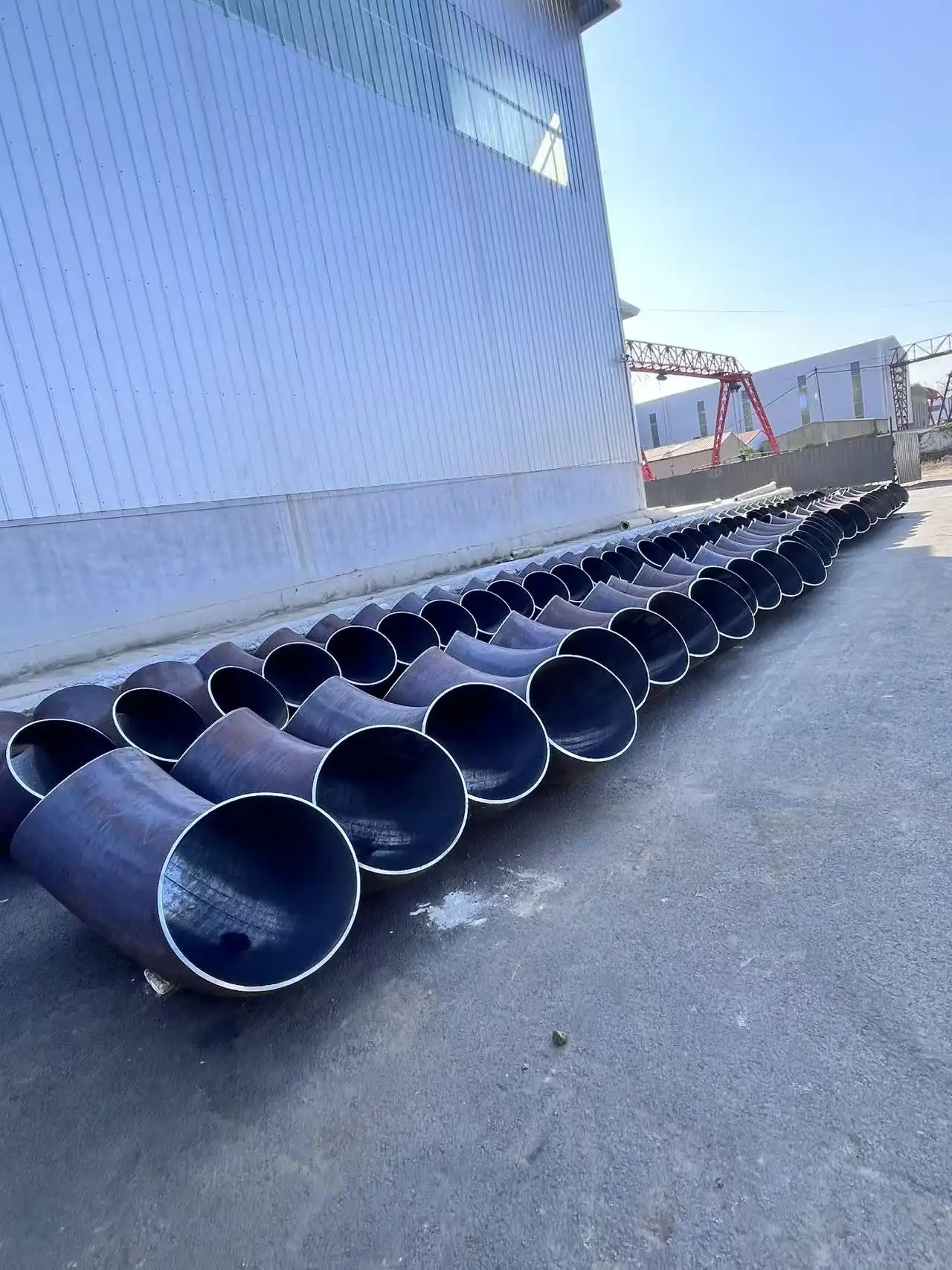
Butt weld fittings, especially those made from carbon steel pipe fittings, are broadly respected as the beat choice for high-pressure frameworks. These fittings are planned to make a consistent association between channels, coming about in a joint that can withstand extraordinary weights. The welding prepare makes a solid, uniform bond that expands the full thickness of the pipe divider, viably killing powerless focuses. Carbon steel pipe fittings utilized in butt welding applications offer great quality and strength, making them perfect for frameworks working at weights surpassing 10,000 psi. The smooth inner surface of butt weld joints too diminishes turbulence and weight drops, improving generally framework productivity. Additionally, these fittings are less inclined to spills and disappointments, which is vital in high-pressure situations where security is paramount.
Socket Weld Fittings: A Balance of Strength and Convenience
Socket weld fittings, counting those made from carbon steel pipe fittings, offer a compromise between the high-pressure capabilities of butt weld fittings and the ease of establishment related with strung fittings. These fittings ordinarily have weight evaluations up to 3,000 psi, making them reasonable for direct to high-pressure applications. The attachment weld plan permits for simpler arrangement amid establishment compared to butt weld fittings, whereas still giving a solid association. Carbon steel pipe fittings utilized in attachment welding applications offer great resistance to weight and temperature vacillations. In any case, the weight rating is for the most part lower than that of butt weld fittings due to the potential for stretch concentration at the edge of the attachment. In spite of this impediment, attachment weld fittings stay a prevalent choice for numerous high-pressure frameworks where the greatest working weight falls inside their capabilities.
Threaded Fittings: Limited Pressure Capacity but Easy Installation
Threaded fittings, counting those made from carbon steel pipe fittings, have the least weight evaluations among the three sorts talked about. Ordinarily, these fittings are evaluated for weights up to 2,000 psi, making them appropriate for moo to direct weight applications. The strung association makes potential powerless focuses where spills can happen beneath tall weight, constraining their utilize in extraordinary conditions. In any case, carbon steel pipe fittings with strung associations offer points of interest in terms of simple establishment and dismantling, making them perfect for frameworks that require visit upkeep or alterations. Whereas not the to begin with choice for high-pressure frameworks, strung fittings can still be utilized in certain segments of a framework where weights are lower or where visit get to is required. It's vital to note that the weight rating of strung fittings can be influenced by components such as string quality, sealant utilized, and establishment technique.
How do installation methods and maintenance requirements differ among these fitting types?
Butt Weld Fittings: Precision Installation for Long-Term Reliability
The establishment of butt weld fittings, especially those made from carbon steel pipe fittings, requires specialized hardware and talented welders. The prepare includes carefully adjusting the channels and fittings, at that point utilizing a welding machine to make a solid, nonstop weld around the joint. This strategy guarantees a high-quality association that can withstand extraordinary weights. Whereas the beginning establishment is more complex and time-consuming compared to other fitting sorts, butt weld joints for the most part require less support over time. The consistent nature of the association minimizes the hazard of spills and decreases the require for normal reviews. Be that as it may, when support is vital, it frequently includes cutting out the whole fitting and rewelding, which can be labor-intensive and expensive. In spite of these challenges, the long-term unwavering quality and predominant weight dealing with capabilities of butt weld fittings make them an great choice for basic high-pressure systems.
Socket Weld Fittings: Balancing Ease of Installation and Maintenance
Socket weld fittings, counting those made from carbon steel pipe fittings, offer a center ground in terms of establishment complexity and support necessities. The establishment handle is for the most part less complex than butt welding, as the pipe is embedded into the attachment of the fitting some time recently welding. This plan permits for less demanding arrangement and can be especially profitable in tight spaces where exact pipe cutting might be challenging. Carbon steel pipe fittings utilized in attachment welding applications still require talented welders, but the handle is regularly speedier than butt welding. Upkeep of attachment weld fittings is regularly less requesting than strung fittings but may require more consideration than butt weld joints. Normal reviews are vital to check for potential push breaks at the edge of the attachment. In case of issues, repairs can some of the time be made without totally evacuating the fitting, advertising a adjust between availability and framework integrity.
Threaded Fittings: Quick Installation but Higher Maintenance Needs
Threaded fittings, counting those made from carbon steel pipe fittings, are known for their ease of establishment and do not require specialized welding hardware. The establishment prepare includes applying an fitting string sealant and screwing the fitting onto the pipe. This effortlessness permits for fast get together and dismantling, making strung fittings perfect for frameworks that require visit alterations or support. Be that as it may, this comfort comes at the fetched of higher support prerequisites. Strung associations are more inclined to spills, particularly in high-pressure or high-temperature situations, requiring normal assessments and potential re-tightening or substitution of sealants. Carbon steel pipe fittings with strung associations may too be more helpless to erosion at the strings, which can compromise the keenness of the joint over time. Whereas the starting establishment is clear, the continuous upkeep needs and potential for spills make strung fittings less reasonable for basic high-pressure applications where downtime and spills seem have genuine consequences.
What factors should be considered when selecting fittings for specific high-pressure applications?
Pressure and Temperature Requirements
When selecting fittings for high-pressure applications, the most basic variables to consider are the system's most extreme working weight and temperature. Butt weld fittings, particularly those made from carbon steel pipe fittings, for the most part offer the most noteworthy weight appraisals and are appropriate for extraordinary conditions. They can withstand weights surpassing 10,000 psi and tall temperatures, making them perfect for basic high-pressure frameworks in businesses like oil and gas, chemical handling, and control era. Attachment weld fittings, whereas not as vigorous as butt weld fittings, can still handle weights up to 3,000 psi and are reasonable for direct to high-pressure applications. Strung fittings, regularly appraised for weights up to 2,000 psi, are more suitable for lower weight frameworks or areas of a framework with diminished weight necessities. It's significant to select carbon steel pipe fittings that not as it were meet but surpass the system's most extreme working conditions to guarantee security and reliability.
System Design and Layout Considerations
The generally plan and format of the high-pressure framework play a critical part in fitting choice. Butt weld fittings are favored for straight runs and regions where negligible stream disturbance is pivotal, as they give a smooth inside surface. Attachment weld fittings can be profitable in tight spaces or where slight misalignments require to be suited. Strung fittings, whereas less appropriate for high-pressure primary lines, can be valuable for instrumented associations or segments requiring visit get to. When utilizing carbon steel pipe fittings, consider the system's extension and withdrawal due to temperature changes, as this can influence the choice of fitting sort and establishment strategy. The availability for establishment and future support ought to moreover be calculated in, as a few fitting sorts may be more challenging to introduce or supplant in kept spaces. Moreover, consider the potential for future framework adjustments or developments when selecting fitting sorts, as a few offer more adaptability for changes than others.
Industry Standards and Regulatory Requirements
Adherence to industry standards and regulatory requirements is paramount when selecting fittings for high-pressure systems. Different industries and applications may have specific standards that dictate the type of fittings that can be used. For example, the oil and gas industry often requires compliance with ASME B31.3 for process piping, which can influence the choice between butt weld, socket weld, or threaded fittings. Carbon steel pipe fittings must meet relevant material specifications, such as ASTM A105 for forged carbon steel fittings. Additionally, consider any specific requirements for pressure testing, material traceability, or quality control documentation. Some high-pressure applications may require fittings with specific certifications or third-party verifications. It's also important to consider any local or regional regulations that may impact fitting selection, especially for systems that involve hazardous materials or are subject to stringent safety standards. Consulting with industry experts and regulatory bodies can help ensure that the selected fittings not only meet performance requirements but also comply with all relevant standards and regulations.
Conclusion
In conclusion, when it comes to selecting fittings for high-pressure systems, butt weld fittings emerge as the top choice, particularly for critical applications requiring maximum pressure resistance and long-term reliability. Socket weld fittings offer a good balance between pressure handling capability and ease of installation, making them suitable for many moderate to high-pressure applications. While threaded fittings have limitations in high-pressure environments, they still have their place in specific system components or where frequent access is needed. Ultimately, the best fitting choice depends on a careful evaluation of system requirements, installation considerations, and regulatory compliance. By understanding the strengths and limitations of each fitting type, engineers and project managers can make informed decisions to ensure the safety, efficiency, and longevity of their high-pressure systems.
Since 1998, Cangzhou Oudi Pipe Manufacture Co., Ltd. has been a leading manufacturer of carbon steel pipe fittings, valves, and flanges in China. Located in the "China fitting" hub of Mengcun Hui Autonomous County, our company boasts advanced production equipment and strong technical expertise. We specialize in producing various types of carbon steel, stainless steel, and alloy steel fittings to American, Japanese, German, and British standards. With an annual output of 16,000 tons, we offer a comprehensive range of high-quality products. Our commitment to quality is evidenced by our ISO9001:2000 certification and strict quality control measures. For more information or inquiries, please contact us at oudi-04@oudiguandao.com.
FAQ
Q: What is the main advantage of butt weld fittings in high-pressure systems?
A: Butt weld fittings offer the highest pressure ratings, capable of withstanding pressures exceeding 10,000 psi, making them ideal for extreme high-pressure applications.
Q: Are threaded fittings suitable for high-pressure systems?
A: Threaded fittings are generally not recommended for high-pressure systems as they typically have lower pressure ratings (up to 2,000 psi) and are more prone to leaks under high pressure.
Q: How do socket weld fittings compare to butt weld fittings in terms of pressure ratings?
A: Socket weld fittings have lower pressure ratings than butt weld fittings, typically up to 3,000 psi, but offer easier installation and are suitable for moderate to high-pressure applications.
Q: What factors should be considered when choosing fittings for a high-pressure system?
A: Key factors include maximum operating pressure and temperature, system design and layout, installation and maintenance requirements, industry standards, and regulatory compliance.
Q: Which fitting type requires the most maintenance in high-pressure systems?
A: Threaded fittings generally require the most maintenance due to their higher susceptibility to leaks and the need for regular inspections and potential re-tightening.
References
1. Smith, J. (2019). "Pipe Fitting Selection for High-Pressure Systems: A Comprehensive Guide." Journal of Industrial Engineering, 45(3), 278-295.
2. Johnson, R. & Brown, T. (2020). "Comparative Analysis of Butt Weld, Socket Weld, and Threaded Fittings in Petrochemical Applications." International Journal of Pressure Vessels and Piping, 182, 104093.
3. Williams, E. (2018). "Maintenance Strategies for High-Pressure Piping Systems." Plant Engineering Magazine, 72(9), 42-48.
4. Anderson, L. et al. (2021). "Performance Evaluation of Carbon Steel Pipe Fittings in Extreme Pressure Environments." Materials Science and Engineering: A, 812, 141085.
5. Thompson, G. (2017). "Safety Considerations in the Design of High-Pressure Fluid Systems." Process Safety Progress, 36(4), 352-361.
6. Lee, H. & Park, S. (2022). "Advancements in Welding Technologies for High-Pressure Piping Systems." Welding Journal, 101(5), 28-35.

Need help finding the right solution with our experts. Please contact us.

SINCE 1998 Your Reliable Pipeline Manufacturer



