Pipe Reducers in HVAC, Chemical, and Petrochemical Industries
Pipe reducers are widely used in HVAC, chemical processing, and petrochemical piping because they provide a controlled transition between pipes with different nominal sizes. While a reducer is a very basic fitting, the size, material, wall thickness, connection type, and orientation may all impact the performance of a plumbing system. A reducer that is good for a low-pressure HVAC water line may not be appropriate for a high-temperature process line transporting corrosive chemicals or hydrocarbons. For engineers and procurement teams, selecting the proper reducer is more than just matching one pipe diameter to another. Operating medium, temperature, pressure, installation location, appropriate pipe standard, welding requirements, and estimated service life need to be addressed in conjunction. An understanding of these parameters may assist in avoiding issues such as high pressure loss, poor drainage, localized corrosion, weld mismatch, and premature fitting failure.
How Pipe Reducers Support Different Piping Applications?
Connecting Different Pipe Sizes Without Compromising the System
The primary function of a reducer is to connect a bigger pipe to a smaller pipe or a smaller pipe to a larger pipe and yet maintain a continuous run of piping. If it is not appropriate with a transition fitting, altering pipe diameter would need a more complex fabrication arrangement, which might lead to more welds and make inspection or maintenance more difficult.
HVAC systems often use reducers when branches or equipment connections necessitate a change in pipe capacity. Chilled water, hot water, condenser water, and air handling systems may all have parts with differing flow needs. The reducer enables the pipe arrangement to move away from these parts while making the connection viable for installation.
Chemical and petrochemical plants are more concerned with the process conditions. The reducer is used to connect process pipes to pumps, heat exchangers, tanks, manifolds, or other equipment with differing connection diameters. In these applications the fitting has to be suitable with the size of the pipe as well as the process fluid and the pressure and temperature conditions of the line.
Understanding the Difference Between Concentric and Eccentric Designs
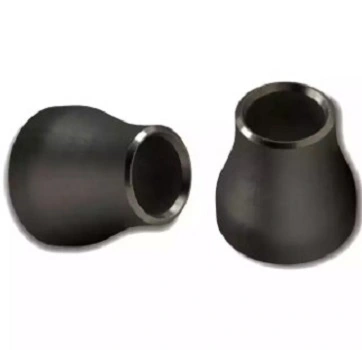
There are two fundamental types of reducers: eccentric and concentric. Concentric reducers have shared centerlines between the big end and the tiny end. Eccentric reducers have the two ends offset from each other. This may seem like a little difference, but it may make one design more suitable than another depending on where it is to be installed.
Concentric reducers are often the most practical choice when the pipe system is symmetrical and a common centerline is desired to be maintained. They are often utilized in vertical pipelines and applications where the shape of the transition does not provide an undesirable pocket for liquid or gas.
Eccentric reducers are especially beneficial in horizontal piping applications where it is vital to maintain level pipe elevation. The direction of an eccentric reducer may assist in preventing an undesirable low point where liquid might be collected in liquid services. In gas or vapor service the orientation may be set to avoid liquid collection anywhere else in the system. The proper orientation relies on the service, direction of flow, drainage needs, and the technical design of the line.
Therefore, the decision for concentric or eccentric construction should not be dependent on the availability of fittings alone. The reducer geometry must be studied along with the location of the pipe, the conveyed medium, and the needs of the linked equipment.
What Engineers Should Consider Before Selecting a Reducer?
Material Compatibility Comes Before Cost
Material selection is one of the most crucial options to make while describing a reduction. The fitting must be resistant to the working environment for the estimated service life, and the material must be suitable with the conveyed medium and the linked pipe.
Carbon steel may be satisfactory for several common industrial services and HVAC applications, with pipe reducers being suitable where corrosion conditions are controlled. Stainless steel may be desirable in applications where corrosion resistance, cleanliness, or compatibility with a specific process fluid is desired. More exotic metals may be required for pipelines subjected to harsh chemicals, high temperatures, or severe petrochemical service.
The material must be selected based on whether the reducer will be welded to the pipe or not. The pipe, reducer, and welding technique must be compatible to provide the requisite mechanical and service performance for the finished junction. The use of a material that seems good based just on its nominal strength might be problematic if its chemical composition, weldability, or corrosion resistance is not compatible with the rest of the system.
Engineers in the chemical and petrochemical fields may additionally have to consider corrosion allowance and the risk of localized corrosion. A fitting that works well under normal circumstances may have a greatly shortened service life if the real process involves impurities, moisture, chlorides, acids, or other hostile components.
Size, Wall Thickness, and Pressure Requirements Need to Match
Choosing a reducer is not about choosing the bigger and the lower nominal diameters. It is also vital to know the wall thickness of the fitting and how it relates to the pipe it is attached to. A reducer should be capable of being fitted into a plumbing system without generating an improper mismatch of thicknesses or connection sizes.
Check the pressure and the temperature at the same time. The maximum permitted pressure limits for a fitting under ambient circumstances may not equal the maximum allowable pressure limits for the same fitting at increased temperature. Thus, before issuing the final specification, the suitable piping code and fitting standard should be defined.
For industrial projects, the procurement team should additionally check the necessary end dimensions, material grade, wall thickness, manufacturing standard, and inspection requirements. This minimizes the chance of obtaining a fitting with the proper nominal diameter but does not satisfy the real dimensions or material requirements of the project.
Flow Conditions Influence Reducer Selection
The change in pipe diameter modifies the conditions of the flow in the system inherently. A reduction in flow area may cause an increase in velocity. The transition may create local pressure loss and turbulence. The real impact relies on the fluid characteristics, flow rate, reducer shape, and relation between both pipe diameters.
This is particularly important in HVAC systems where pumps and fans are chosen based on system resistance and desired flow. A superfluous transition adds unwanted resistance to the system, affecting energy consumption and equipment performance.
Consequences in chemical and petrochemical systems might be more serious. The fluid can be combustible, caustic, viscous, and/or sensitive to changes in pressure and velocity. Engineers should thus consider the reducer as part of the whole plumbing system, not as an isolated fitting.
Application Differences Across HVAC, Chemical, and Petrochemical Systems
HVAC Systems Focus on Flow Distribution and Installation Practicality
HVAC pipe often stresses the need for dependable flow distribution, acceptable pressure loss, corrosion resistance, and ease of installation. Where the pipe widths fluctuate with the desired flow rate, reducers may be used around pumps, branches, coils, heat exchangers, and equipment connections.
The physical layout of fittings is important as well since HVAC systems are typically located in tight mechanical areas. A nominal pipe size compatible reducer may not be acceptable if the geometry conflicts with surrounding equipment or causes an unwanted elevation shift.
Fitting installations might be affected by insulation and condensation control on chilled water systems. Instead of only choosing a fitting for its connection size, engineers and contractors should think about access for insulation, welding and supports, and future maintenance.
Chemical Processing Requires Greater Attention to Corrosion and Process Media
Chemical processing systems may expose reducers to fluids much more aggressive than those normally encountered in HVAC operations. The selection procedure must thus begin with the actual chemical composition and the operating circumstances of the process.
Temperature, concentration, pressure, moisture content, and impurities may affect material performance, including that of pipe reducers. Stainless steel could be good for one chemical use but not for another, and a specialized alloy may be required for a more demanding environment.
The interior geometry of the reducer may also be important in the presence of deposits, sediments, or viscous fluids. If the plumbing system lets debris gather in an undesired area, it might be more difficult to clean and maintain. A practical design addresses the typical operation as well as the situations that may arise during shutdown, cleaning, draining, or process adjustments.
Petrochemical Lines Demand Consistent Mechanical and Fabrication Quality
Petrochemical pipes often must handle difficult combinations of pressure, temperature, vibration, and process-fluid exposure. Reducers may be fitted to lines linked to pumps, separators, heat exchangers, storage systems, and process equipment; therefore, dimensional uniformity is vital during manufacture.
The reducer should be compatible with the pipe standard and the welding process utilized for the project. Incorrect dimensional control may cause alignment difficulties during the installation process, while incorrect material may cause long-term corrosion or mechanical problems.
Quality documentation in petrochemical procurement might sometimes be more crucial than in less demanding applications. Depending on the project, purchasers may demand material certifications, dimensional inspection records, chemical and mechanical test findings, weld-related documents, or other quality records. The correct paperwork should be established before manufacturing and not asked for after the fittings have been done.
Installation Practices That Help Protect Long-Term Performance
Correct Orientation and Alignment Matter During Fabrication
A properly selected reducer can still cause problems if it is installed incorrectly. Before welding or final assembly, the reducer should be checked for alignment with the connected pipe and for the correct orientation specified in the piping design.
Misalignment can introduce unnecessary stresses into the fitting and the surrounding pipe. It may also make equipment connections more difficult and create additional loads on nearby supports or nozzles. During fabrication, the reducer should therefore be positioned according to the approved piping drawings and installation requirements.
For eccentric reducers, orientation deserves particular attention because the offset can influence drainage, vapor movement, and the elevation of the connected pipe. The correct orientation should be determined from the service conditions rather than selected casually at the job site.
Welding and Joining Quality Should Not Be Overlooked
In many industrial systems, reducers are welded directly to the pipe. The welding process therefore becomes part of the fitting's overall performance. Proper preparation, alignment, welding procedure qualification, and inspection can help ensure that the completed joint performs as intended.
The exact welding requirements depend on the material, pipe specification, wall thickness, service conditions, and applicable code. Where the project requires inspection or non-destructive testing, the reducer joints should be included in the relevant inspection plan.
For threaded, socket-weld, or other connection arrangements, the same principle applies: the joining method must be appropriate for the pressure, temperature, medium, and service environment.
Supports and Thermal Movement Should Be Considered
Pipe reducers should not be expected to compensate for poor piping support. Industrial piping systems can experience vibration, thermal expansion, contraction, and equipment movement. If these loads are not managed by the overall piping design, excessive stress can be transferred to fittings and welded joints.
This is particularly relevant around pumps and other rotating equipment. A reducer installed close to a pump connection may experience additional mechanical loads if the piping is poorly aligned or inadequately supported. Proper support placement and flexibility analysis help reduce these risks.
Inspection, Maintenance, and Procurement Considerations
Inspect the Fitting as Part of the Complete Piping System
Inspection should not stop once a reducer passes a visual check. The fitting should be considered as part of the complete piping system, including the welds, adjacent pipe, supports, insulation, and connected equipment.
During routine maintenance, engineers may look for visible corrosion, deformation, leakage, coating damage, unusual vibration, or signs of mechanical stress. In critical process lines, additional inspection methods may be required according to the facility's inspection program and applicable standards.
Wall-thickness monitoring can also be useful where corrosion or erosion is a known concern. Tracking thickness over time gives maintenance teams a better basis for identifying deterioration before it develops into a more serious integrity problem.
A Reliable Supplier Should Support More Than Product Delivery
For B2B buyers, supplier capability is part of reducer selection. A manufacturer should be able to confirm the material grade, dimensions, applicable manufacturing standard, connection details, and inspection requirements before production begins.
Clear technical communication is especially important when the project involves non-standard dimensions, special materials, unusual wall thicknesses, or demanding service conditions. The supplier should understand the engineering requirements rather than treating every order as a simple size-matching exercise.
Buyers can also reduce procurement risk by confirming the required quality documents, testing requirements, marking, packaging, and delivery conditions at the quotation stage. This makes the purchasing process clearer and helps prevent costly specification changes after production has started.
Conclusion
Pipe reducers are basic components that guarantee the smooth and secure operation of frameworks in the HVAC, chemical, and petrochemical segments. Engineers can guarantee pipe reducers work well in each environment by meticulously evaluating texture choices, arrangement factors, and foundation methods. To keep these vital parts running for a longer period of time, planned evaluations and backups are essential. To keep up system judgment and working efficiency in ever-changing businesses, high-quality pipe reducers are significant.
However, selecting the right reducer requires more than matching a large pipe with a smaller one. The reducer configuration, material, wall thickness, pressure and temperature conditions, flow characteristics, installation orientation, and joining method all influence its suitability. HVAC systems may prioritize efficient flow distribution and practical installation, while chemical and petrochemical systems often require greater attention to corrosion resistance, process conditions, fabrication quality, and inspection.
For engineers and procurement teams, the most reliable approach is to define the complete service conditions before placing an order and then confirm that the selected reducer matches the piping specification. Working with a manufacturer that can provide consistent dimensions, appropriate materials, technical documentation, and inspection support can further reduce installation and operating risks. When the fitting is selected as part of the complete piping system rather than as an isolated component, it becomes much easier to achieve dependable performance over the intended service life.
For more information on our run of pipe reducers and other channeling components, it would be perfect if you contacted us at oudi-04@oudiguandao.com.
FAQ
1. What is the main purpose of a pipe reducer in industrial applications?
A pipe reducer connects pipes of different diameters, allowing for smooth transitions and efficient flow of fluids or gases in piping systems.
2. How do pipe reducers contribute to system safety in chemical and petrochemical industries?
Properly selected and installed pipe reducers help prevent leaks, ruptures, and other potential hazards, ensuring system integrity and regulatory compliance.
3. What materials are commonly used for pipe reducers in harsh industrial environments?
Materials such as high-grade stainless steel, alloy steels, and specialized plastics are often used for their corrosion resistance and durability.
4. What is the difference between concentric and eccentric pipe reducers?
Concentric reducers have a symmetrical profile and are often used in vertical installations, while eccentric reducers have an offset design preferred for horizontal installations.
References
1. Smith, J. (2019). "Pipe Reducer Design and Selection for Industrial Applications." Journal of Piping Engineering, 45(3), 178-195.
2. Johnson, A., & Brown, T. (2020). "Corrosion Prevention Strategies for Pipe Fittings in Chemical Processing." Chemical Engineering Quarterly, 62(2), 89-104.
3. Lee, S., et al. (2018). "Performance Analysis of Concentric and Eccentric Reducers in HVAC Systems." International Journal of HVAC&R Research, 24(4), 312-328.
4. Zhang, Y. (2021). "Material Selection Criteria for Pipe Reducers in Petrochemical Industries. " Materials Science and Engineering: A, 812, 141086.
5. Wilson, R., & Taylor, M. (2017). "Maintenance Practices for Critical Piping Components in Industrial Facilities." Plant Engineering and Maintenance, 39(1), 45-58.
6. Garcia, C. (2022). "Advancements in Pipe Reducer Technology for Improving Energy Efficiency in HVAC Systems." Energy and Buildings, 255, 111667.

Need help finding the right solution with our experts. Please contact us.

SINCE 1998 Your Reliable Pipeline Manufacturer



