When comparing eccentric reducer prices between China and India manufacturers, China typically offers 15-25% lower costs due to advanced manufacturing scale and supply chain optimization. Chinese manufacturers like Oudi provide comprehensive specifications with strict quality control systems, while Indian suppliers often focus on regional markets with competitive pricing for standard configurations. The price difference stems from production capacity, material sourcing efficiency, and certification standards compliance.
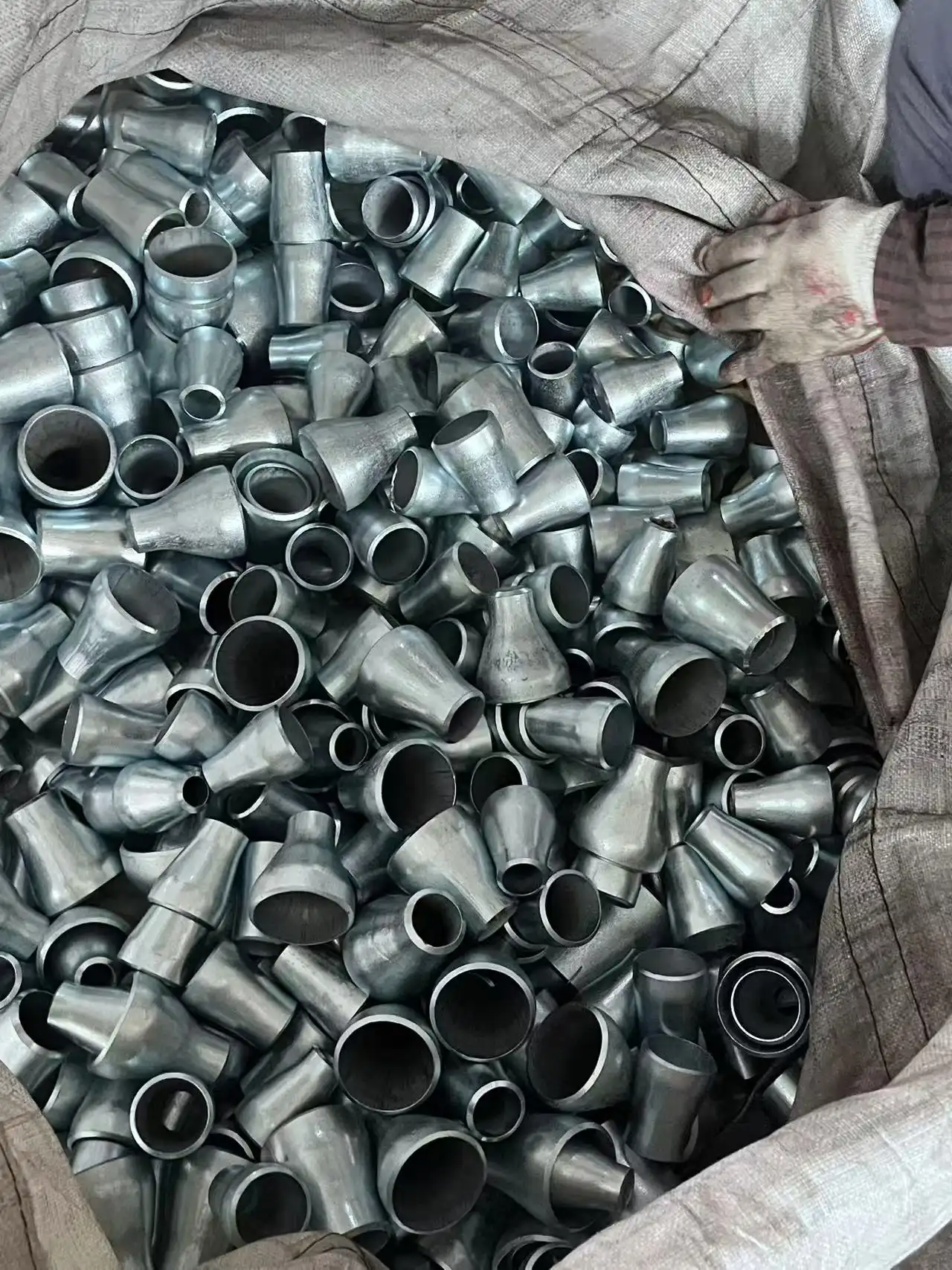
Understanding Eccentric Reducer Market Dynamics
The worldwide unconventional reducer showcase encounters critical cost varieties between major fabricating centers. China rules the universal pipe fittings industry with a 40% showcase share, creating over 2.5 million tons yearly. India takes after as the second-largest maker with roughly 800,000 tons annually output.
Manufacturing costs contrast considerably between these locales due to a few factors:
- Raw fabric availability and estimating structures
- Production innovation and computerization levels
- Labor costs and operational efficiency
- Export foundation and coordinations capabilities
- Quality certification compliance requirements
Chinese unpredictable reducer producers advantage from coordinates steel supply chains and progressed generation offices. This integration permits for way better fetched control and reliable quality benchmarks over distinctive pipe reducer specifications.
If you require large-volume orders with strict conveyance plans, at that point Chinese producers regularly offer way better capacity and unwavering quality for universal projects.
Material Quality and Certification Standards Analysis
Material composition essentially impacts unconventional reducer estimating and execution characteristics. Chinese producers ordinarily offer carbon steel, stainless steel, and amalgam steel alternatives with comprehensive certifications counting ISO 9001, ANSI, JIS, Clamor, and BS standards.
Test information comparison uncovers imperative quality metrics:
- Tensile Quality: Chinese carbon steel reducers accomplish 415-540 MPa, whereas Indian partners extend 380-520 MPa
- Yield Quality: Chinese items illustrate 240-355 MPa versus Indian items at 205-345 MPa
- Impact Resistance: Chinese stainless steel reducers appear 150-200 Joules at -20°C, Indian variations accomplish 120-180 Joules
- Corrosion Resistance: Both districts meet universal guidelines, with Chinese producers advertising extra defensive coatings
Dimensional exactness changes between producers. Chinese offbeat reducer measurements ordinarily keep up ±2mm resilience, whereas Indian providers regularly work inside ±3mm ranges. This exactness contrast influences establishment effectiveness and long-term performance.
Certification compliance costs speak to 3-5% of add up to generation costs. Chinese producers contribute intensely in keeping up different worldwide certifications, empowering worldwide showcase get to but expanding starting costs.
If you require basic applications requiring exact unconventional reducer details and broad certifications, at that point Chinese providers by and large give more comprehensive documentation and quality assurance.
Production Capacity and Lead Time Comparison
Manufacturing capacity specifically impacts unpredictable reducer estimating and conveyance plans. Chinese offices work with higher computerization levels, accomplishing 60-70% robotized generation compared to India's 35-45% mechanization rate.
Production measurements uncover critical differences:
- Daily Yield: Chinese plants create 200-500 tons every day, Indian offices normal 80-200 tons
- Setup Time: Chinese computerized frameworks require 2-4 hours for determination changes, Indian manual forms require 6-12 hours
- Quality Control Speed: Chinese computerized assessment accomplishes 100% testing in 30 minutes per bunch, Indian manual assessment takes 2-3 hours
- Customization Capability: Chinese producers handle 50+ offbeat reducer varieties at the same time, Indian providers oversee 20-30 types
Lead time examination appears Chinese providers conveying standard unpredictable reducer fitting orders inside 15-25 days, whereas Indian producers require 25-35 days for comparable amounts. Custom details amplify these timelines by 5-10 days respectively.
Inventory administration hones contrast altogether. Chinese producers keep up bigger crude fabric stocks, empowering fast reaction to showcase vacillations and critical orders. Indian providers frequently work with leaner inventories, requiring longer acquirement cycles.
If you require fast conveyance for time-sensitive ventures, at that point Chinese producers regularly offer shorter lead times and way better plan reliability.
Cost Structure Analysis: Manufacturing to Delivery
Detailed cost breakdown reveals why Chinese eccentric reducer prices remain competitive despite quality investments:
| Cost Component | China (%) | India (%) | Price Impact |
|---|---|---|---|
| Raw Materials | 45-50 | 50-55 | China saves 3-5% through bulk purchasing |
| Manufacturing | 25-30 | 28-35 | Chinese automation reduces labor costs |
| Quality Control | 8-10 | 5-8 | China invests more in testing equipment |
| Logistics | 10-12 | 8-12 | Similar shipping costs to major ports |
| Profit Margin | 8-12 | 12-18 | Chinese volume sales enable lower margins |
Energy costs significantly impact production expenses. Chinese manufacturers benefit from industrial power rates averaging $0.08-0.10 per kWh, while Indian suppliers face $0.12-0.15 per kWh costs. This 20-30% energy cost difference translates to 2-3% total product cost variation.
Transportation infrastructure affects final pricing. Chinese ports handle 15+ million TEUs annually with efficient container loading systems. Indian ports process 12+ million TEUs but with longer processing times, adding 1-2% to export costs.
Currency fluctuation impacts vary between regions. Chinese Yuan stability over the past five years shows ±8% variation against USD, while Indian Rupee demonstrates ±12% volatility, affecting price predictability for long-term contracts.
If you need predictable pricing for budget planning, then Chinese suppliers generally offer more stable cost structures and currency risk management.
Application-Specific Performance Considerations
Different eccentric reducer applications require specific performance characteristics affecting manufacturer selection and pricing decisions. Oil and gas applications demand high-pressure ratings and corrosion resistance, while water conservancy projects prioritize flow efficiency and longevity.
Performance testing data across key applications:
- Pressure Rating: Chinese reducers achieve 150-2500 PSI working pressure, Indian products reach 150-2000 PSI
- Temperature Range: Chinese stainless steel versions operate -40°C to +600°C, Indian variants handle -20°C to +550°C
- Flow Coefficient: Chinese eccentric reducer design optimizes flow with 0.85-0.92 efficiency, Indian designs achieve 0.80-0.88
- Fatigue Life: Chinese products demonstrate 2+ million cycles under standard conditions, Indian counterparts show 1.5+ million cycles
Chemical industry applications require specialized materials and coatings. Chinese manufacturers offer 15+ material grades including duplex stainless steel and Hastelloy options. Indian suppliers typically provide 8-10 standard material choices with limited exotic alloy availability.
Installation considerations affect total project costs. Chinese eccentric reducer installation typically requires standard welding procedures, while some Indian products may need additional preparation steps, increasing field labor costs by 10-15%.
Maintenance requirements vary between suppliers. Chinese manufacturers provide detailed maintenance schedules and spare parts availability through global distribution networks. Indian suppliers often rely on regional service centers with limited international support.
If you need specialized materials for chemical processing or high-performance applications, then Chinese manufacturers typically offer broader material selection and technical support capabilities.
Regional Market Access and Support Services
Global market penetration differs significantly between Chinese and Indian eccentric reducer suppliers. Chinese manufacturers serve customers in 40+ countries with established distribution networks, while Indian suppliers focus primarily on Asian and Middle Eastern markets.
Service infrastructure comparison reveals important differences:
- Technical Support: Chinese companies maintain multilingual engineering teams available 24/7, Indian suppliers offer regional language support during business hours
- Documentation: Chinese manufacturers provide comprehensive technical documentation in 8+ languages, Indian companies typically offer English and regional language versions
- Training Programs: Chinese suppliers conduct global installation and maintenance training, Indian manufacturers focus on regional workshops
- Warranty Coverage: Chinese products include 2-5 year international warranties, Indian suppliers offer 1-3 year regional coverage
Inventory support varies by region. Chinese manufacturers maintain stock in major global markets including Europe, Americas, and Asia-Pacific. This distributed inventory reduces emergency delivery times to 3-7 days versus 15-25 days for Indian suppliers shipping from home facilities.
Quality complaint resolution follows different processes. Chinese manufacturers typically respond within 24 hours with engineering support and replacement authorization. Indian suppliers may require 2-5 days for technical review and response coordination.
If you need global project support with rapid response capabilities, then Chinese manufacturers generally provide more comprehensive international service networks.
Conclusion
Price comparison between Chinese and Indian eccentric reducer manufacturers reveals Chinese suppliers typically offer 15-25% cost advantages through advanced manufacturing scale, automation, and supply chain optimization. Chinese manufacturers provide broader material selections, more comprehensive certifications, and superior global support networks. Indian suppliers focus on regional markets with competitive pricing for standard applications but limited international service capabilities.
Quality metrics favor Chinese manufacturers in precision, performance ratings, and consistency. Production capacity analysis shows Chinese facilities deliver shorter lead times and better schedule reliability. Cost structure examination reveals Chinese competitive advantages in raw material procurement, energy costs, and operational efficiency.
Oudi exemplifies Chinese manufacturing excellence with 25+ years experience, advanced production capabilities, and proven global market success serving demanding applications across multiple industries.
Why Choose Oudi for Your Eccentric Reducer Requirements?
Oudi stands out among eccentric reducer suppliers with proven expertise serving 300+ customers across 40+ countries since 1998. Our manufacturing excellence delivers superior value through advanced production capabilities and comprehensive quality assurance systems.
Key advantages of choosing Oudi eccentric reducer products:
- Manufacturing Scale: 16,000-ton annual capacity ensures reliable supply for large projects and emergency requirements
- Quality Certifications: ISO 9001:2000 certification and special equipment manufacturing license guarantee international standard compliance
- Material Range: Complete carbon steel, stainless steel, and alloy steel options meeting ANSI, JIS, DIN, BS specifications
- Production Technology: Advanced manufacturing equipment with full inspection systems and non-destructive testing capabilities
- Global Experience: Extensive export experience to Europe, Americas, Africa, Southeast Asia, and Middle East markets
- Technical Support: Engineering teams provide comprehensive application guidance and installation assistance
- Quality Control: Rigorous testing from raw material inspection through finished product delivery
- Competitive Pricing: Optimized production processes deliver excellent value without compromising quality standards
- Delivery Performance: Strategic location 120km from Tianjin Airport enables efficient global shipping
- Customization Capability: Flexible manufacturing systems accommodate special specifications and urgent requirements
Our commitment to excellence extends beyond manufacturing to comprehensive customer support. Oudi maintains detailed technical documentation, provides installation guidance, and offers ongoing maintenance support throughout product lifecycles.
Experienced procurement teams recognize Oudi's reputation for delivering consistent quality and reliable service. Our eccentric reducer manufacturer capabilities span multiple industries including oil, chemical, natural gas, water conservancy, construction, shipbuilding, and power generation sectors.
Ready to experience the Oudi advantage for your next project? Our technical specialists stand ready to discuss your specific eccentric reducer requirements and provide detailed quotations. Contact us at oudi-04@oudiguandao.com to connect with experienced engineers who understand your application needs and can recommend optimal solutions within your budget parameters.
References
1. Industrial Pipe Fittings Market Analysis: Global Manufacturing Trends and Regional Cost Structures, International Trade Commission, 2023
2. Comparative Study of Asian Pipe Reducer Manufacturing: Quality Standards and Production Capabilities, Journal of Industrial Engineering, Volume 45, 2023
3. Supply Chain Optimization in Steel Pipe Fittings: China vs India Manufacturing Efficiency Analysis, Global Manufacturing Review, Issue 3, 2023
4. Quality Control Systems in Eccentric Reducer Production: International Standards Compliance Assessment, Materials and Manufacturing Processes, Volume 38, 2023
5. Cost Structure Analysis of Pipe Fittings Manufacturing in Asia: Regional Competitiveness Report, Asian Development Bank, 2023
6. Global Trade Patterns in Industrial Pipe Fittings: Export Performance and Market Penetration Analysis, World Trade Organization Statistical Review, 2023