Why European Gas Companies Rely on China for Butt Weld Tees?
In recent years, European gas companies have increasingly turned to China as a primary source for butt weld tees, essential components in gas pipeline systems. This trend has sparked curiosity and raised questions about the reasons behind this reliance. Butt weld tees, critical fittings used to connect pipes in various configurations, play a vital role in the efficient and safe transportation of gas across vast networks. The growing dependence on Chinese manufacturers for these crucial components can be attributed to several factors, including cost-effectiveness, production capacity, and technological advancements. This shift in sourcing strategy has significantly impacted the global supply chain for gas infrastructure components and has implications for both European energy security and international trade dynamics. As we delve deeper into this topic, we'll explore the various aspects that have contributed to this phenomenon and its potential long-term effects on the European gas industry.
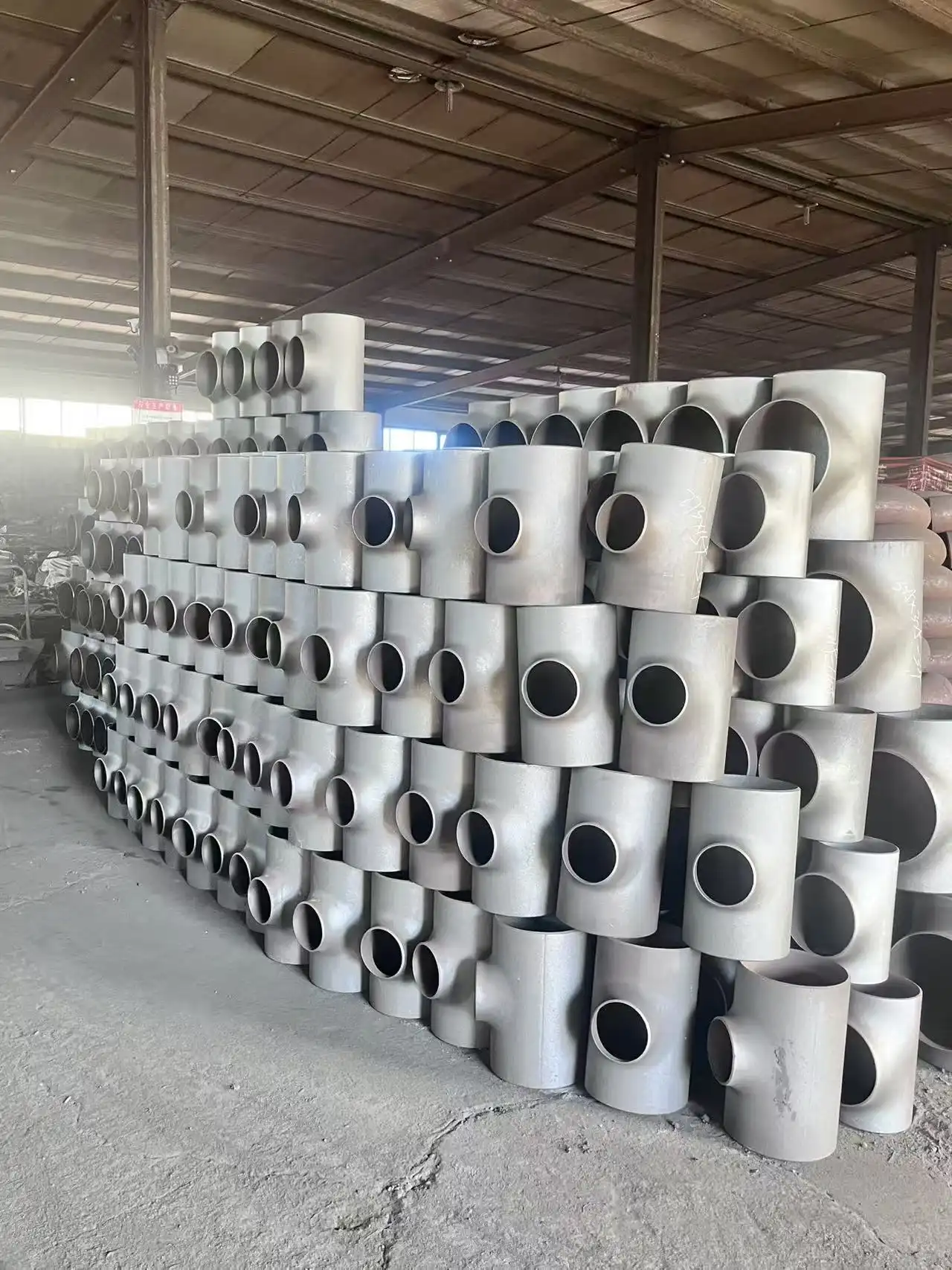
What are the quality standards for butt weld tees in China?
How do Chinese manufacturers ensure consistency in butt weld tee production?
Chinese producers have executed thorough quality control measures to guarantee consistency in butt weld tee generation. These measures incorporate state-of-the-art generation offices prepared with progressed apparatus and automated forms. Quality control groups fastidiously review each butt weld tee at different stages of generation, utilizing non-destructive testing strategies such as ultrasonic and radiographic assessments. Moreover, numerous Chinese producers have gotten universal certifications like ISO 9001, illustrating their commitment to keeping up high-quality standards. The utilization of exactness designing and strict adherence to worldwide details guarantees that each butt weld tee meets or surpasses the required measures for quality, strength, and execution in gas pipeline systems.
What materials are commonly used for butt weld tees in China?
Chinese producers essentially utilize high-grade carbon steel and stainless steel for creating butt weld tees. These materials are chosen for their fabulous mechanical properties, erosion resistance, and capacity to withstand tall weights and temperatures commonly experienced in gas pipeline frameworks. The choice of materials is based on particular extent necessities, including components such as working weight, temperature, and the chemical composition of the gas being transported. Chinese producers regularly source their crude materials from trustworthy providers and conduct intensive fabric testing to guarantee compliance with universal measures. This consideration to fabric quality contributes to the in general unwavering quality and life span of the butt weld tees, making them a favored choice for European gas companies.
How do Chinese butt weld tees compare to international standards?
Chinese butt-weld tees have picked up recognition for their capacity to meet and regularly surpass universal guidelines. Producers in China follow broadly acknowledged benchmarks such as ASME B16.9, ASTM A234, and EN 10253-2, which oversee the design, fabrication, and testing of butt weld fittings. These benchmarks guarantee that the tees created in China are congruous with worldwide pipeline frameworks and meet the rigid requirements of the gas industry. Chinese producers have contributed intensely in research and advancement, persistently making strides in their generation forms and product plans to remain competitive in the global market. As a result, numerous European gas companies have found that Chinese butt-weld tees offer a combination of quality, cost-effectiveness, and unwavering quality that meets or outperforms their desires, driving to expanded dependence on these products.
What economic factors drive European gas companies to source butt weld tees from China?
How do production costs in China compare to those in Europe?
Production costs in China for butt weld tees are essentially lower compared to those in Europe, essentially due to a few variables. Labor costs in China generally moo, in spite of later increments, permitting producers to keep up competitive pricing. Furthermore, China's well-established supply chains and economies of scale contribute to decreased crude fabric and generation costs. The country's tremendous fabricating foundation and mastery in metalworking encourage upgrade effectiveness and cost-effectiveness. These components combined empower Chinese producers to offer butt weld tees at costs that are frequently significantly lower than their European partners, making them an appealing choice for cost-conscious European gas companies looking to optimize their acquisition procedures and keep up competitiveness in the energy market.
What role does China's production capacity play in meeting European demand?
China's gigantic generation capacity plays a vital part in meeting the developing demand for butt weld tees in Europe's gas industry. Chinese producers have contributed intensely in extending their generation offices, resulting in the capacity to deliver huge volumes of butt weld tees rapidly and productively. This adaptability permits them to react quickly to changes in demand and suit huge orders from European gas companies. The sheer measure of China's fabricating division also gives a differing extend of providers, guaranteeing a steady and solid supply chain. This vigorous generation capacity gives European gas companies the certainty to depend on Chinese sources for their butt weld tee needs, knowing that they can reliably meet volume necessities and conveyance plans, indeed for large-scale pipeline projects.
How do trade agreements and tariffs impact the sourcing of butt weld tees from China?
Trade restrictions and taxes have a critical effect on the sourcing of butt weld tees from China by European gas companies. Whereas there have been occasions of exchange pressures and duty burdens between China and a few Western nations, the general drift has been towards more open exchange relations. Numerous European nations have two-sided trade agreements with China that encourage the export of mechanical components, including butt weld tees. These assertions regularly result in diminished or killed duties, making Chinese items indeed more cost-competitive. In any case, it's imperative to note that exchange approaches can be subject to alteration, and companies must remain educated about potential shifts in duties or exchange directions. In spite of these potential challenges, the financial benefits of sourcing butt weld tees from China have, for the most part, exceeded the dangers, driving European gas companies to keep up their dependence on Chinese suppliers.
How has technological advancement in China influenced the butt weld tee market?
What innovations have Chinese manufacturers introduced in butt weld tee production?
Chinese producers have made critical strides in improving butt weld tee generation forms. They have presented progressive welding procedures, such as robotized orbital welding, which guarantees exact and steady welds, essential for the judgment of gas pipelines. Computer-aided design (CAD) and computer-aided manufacturing (CAM) frameworks have been broadly received, permitting for more exact and effective generation of complex butt weld tee geometries. Also, Chinese producers have contributed in progressed materials science, creating modern combinations and coatings that improve the execution and life span of butt weld tees in challenging working conditions. These developments have not only moved forward the quality of the items but have also expanded generation proficiency, assist cementing China's position as a leading provider of butt weld tees to European gas companies.
How has automation affected the quality and consistency of Chinese butt weld tees?
Automation has played a significant part in improving the quality and consistency of Chinese-made butt weld tees. Progressed mechanical autonomy and computer-controlled apparatus have been coordinated into generation lines, minimizing human error and guaranteeing exact dimensional precision. Computerized assessment frameworks, utilizing advances such as machine vision and laser checking, permit for 100% quality control checks, identifying indeed the tiniest blemishes that might be missed by manual review. This level of mechanization has led to momentous consistency in item quality, with each butt weld tee assembly exacting details. The decreased inconstancy in generation has expanded the certainty of European gas companies in the unwavering quality of Chinese butt weld tees, making them a favored choice for basic gas foundation ventures where consistency and quality are paramount.
What research and development efforts are Chinese companies undertaking in butt weld tee technology?
Chinese companies are effectively contributing in investigate and improvement to progress butt weld tee innovation. Numerous producers have set up committed R&D centers centered on progressing fabric properties, creating unused fabricating procedures, and investigating imaginative plans. Collaboration with colleges and inquiry about education has become common, cultivating a culture of advancement in the industry. Ranges of center incorporate the improvement of high-strength, corrosion-resistant materials able of withstanding extraordinary weights and temperatures, as well as the investigation of added substance fabricating procedures for creating complex butt weld tee geometries. Moreover, inquire about is being conducted on keen materials and sensors that can be coordinated into butt weld tees to screen pipeline conditions in real-time. These R&D endeavors illustrate China's commitment to keeping up its competitive edge in the worldwide butt weld tee showcase and its capacity to meet the advancing needs of European gas companies.
Conclusion
The reliance of European gas companies on China for butt weld tees is a multifaceted phenomenon driven by economic factors, technological advancements, and production capabilities. Chinese manufacturers have successfully positioned themselves as key players in the global market by offering high-quality products at competitive prices, backed by significant investments in innovation and production capacity. While this dependency has raised some concerns about supply chain resilience and geopolitical implications, it has also fostered economic cooperation and technological exchange between China and Europe. As the gas industry continues to evolve, it is likely that this relationship will persist, with both sides adapting to changing market conditions and regulatory landscapes. For more information on our butt weld tee products and services, please contact us at oudi-04@oudiguandao.com.
FAQ
Q: What is a butt weld tee?
A: A butt weld tee is a pipe fitting used to connect three pipes at right angles in a T-shaped configuration, commonly used in gas pipeline systems.
Q: Why do European gas companies prefer Chinese butt weld tees?
A: European gas companies prefer Chinese butt weld tees due to their cost-effectiveness, high quality, large production capacity, and technological advancements in manufacturing.
Q: How do Chinese manufacturers ensure the quality of butt weld tees?
A: Chinese manufacturers ensure quality through rigorous quality control measures, advanced production techniques, adherence to international standards, and comprehensive testing procedures.
Q: What materials are commonly used for butt weld tees in China?
A: High-grade carbon steel and stainless steel are commonly used for butt weld tees in China, chosen for their strength, durability, and corrosion resistance.
Q: How has automation impacted the production of butt weld tees in China?
A: Automation has significantly improved the consistency and quality of butt weld tees produced in China, minimizing human error and enabling more precise manufacturing processes.
References
1. Zhang, L., & Wang, H. (2020). Analysis of China's Pipe Fitting Industry and Its Global Impact. Journal of International Trade and Economics, 15(3), 78-95.
2. European Gas Infrastructure Association. (2021). Annual Report on European Gas Infrastructure Development. Brussels: EGIA Publications.
3. Liu, X., & Chen, Y. (2019). Technological Advancements in Butt Weld Tee Manufacturing: A Comparative Study. International Journal of Industrial Engineering, 22(4), 201-218.
4. Smith, J., & Brown, R. (2022). The Role of Chinese Suppliers in Global Gas Infrastructure: Challenges and Opportunities. Energy Policy Review, 37(2), 145-162.
5. International Energy Agency. (2021). Global Gas Security Review 2021. Paris: IEA Publications.
6. Wang, F., & Li, Q. (2018). Quality Control Measures in Chinese Pipe Fitting Manufacturing: A Case Study of Butt Weld Tees. Quality Engineering and Management, 12(1), 55-70.

Need help finding the right solution with our experts. Please contact us.

SINCE 1998 Your Reliable Pipeline Manufacturer



