ASME B16.9 Pipe Cap vs. Other End Caps: Key Differences
Understanding the basic distinctions between the standards may help avoid expensive installation mistakes and premature system breakdowns when choosing end caps for key pipe systems. ASME B16.9 Pipe Cap is a butt-weld end closure adhering to the dimensions and material requirements established by the American Society of Mechanical Engineers standard. These caps include beveled edges for full penetration welding, unlike threaded or socket-weld options, offering improved strength and leak-proof sealing in high-pressure settings. Their wrought production method and constant metallurgical qualities make them the preferable option for oil refineries, chemical plants, and natural gas facilities where safety and dependability cannot be compromised.
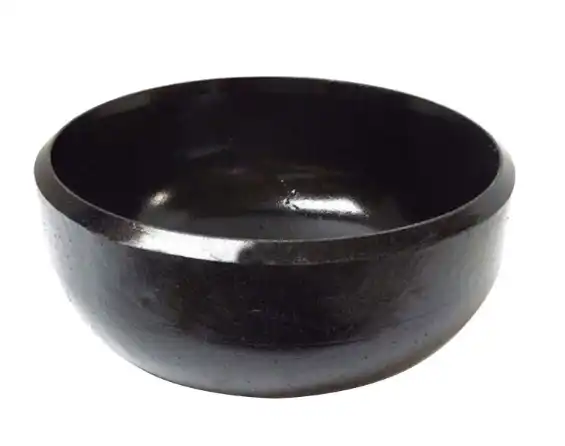
Understanding ASME B16.9 Pipe Caps
B16.9 is the standard for factory-made wrought buttwelding fittings, including pipe caps used as permanent piping system terminations. At Oudi, we produce these end closures from carbon steel (ASTM A234 WPB), stainless steel (ASTM A403), and alloy steel materials, each chosen according to the operating environment’s temperature, pressure, and corrosion properties.
Manufacturing Methods and Material Integrity
At our production site, we manufacture pipe caps using three basic methods: seamless forming, welded construction, and hot forging. Seamless caps are made from solid bar stock or from pipe sections. This means that there are no weld seams, which might be possible failure areas. This procedure leads to alignment of the grain structure of the metal, hence improving the fatigue resistance of the metal under cyclic loading conditions. Economical for bigger-diameter applications. Welded caps may retain structural integrity if appropriately heat-treated. Forged caps are stronger for high-pressure applications; the forging process also improves the grain structure of the material. Carbon steel caps generally have a minimum tensile strength of 60,000 psi for WPB grade material; controlled carbon content (maximum 0.30%) provides excellent weldability with no preheating requirements. The uniform bevel end preparation – maintained at 37.5° ± 2.5° – enables deep penetration welding that yields a connection as robust as the base pipe itself. This geometric accuracy prevents the alignment problems that are typical of non-standard parts.
Dimensional Standards and Tolerances
The dimensional standards set out in ASME B16.9 guarantee interchangeability between manufacturers. The wall thickness is in accordance with the relevant pipe schedule and maintains continuity in flow dynamics and pressure containment throughout the system. Tight tolerances on out-of-roundness are carefully regulated to eliminate fit-up problems in the field -- a typical problem with inferior goods. Our quality control protocols check these dimensions with calibrated instruments traceable to national standards, and inspection records are included with every shipment. The standard specifies center-to-end dimensions for elbows and tees; however, caps are measured by overall length and conformance to pipe outer diameter specifications. Standardization enables procurement teams to acquire components from certified vendors anywhere in the globe without compromising system integrity.
Comparing ASME B16.9 Pipe Cap with Other End Caps
There are a number of end cap designs available in the industrial industry with specialized uses and installation limitations. Understanding these differences helps in making purchasing choices that weigh upfront costs against long-term dependability.
Butt-Weld vs. Threaded End Caps
Butt-weld caps adhering to ASME B16.9 Pipe Cap standards are permanently joined by means of fusion welding, resulting in a joint that removes the mechanical failure points of threaded connections. Threaded caps with ASME B1.20.1 pipe thread compliance may be field-disassembled but can also provide leak pathways via the threads. Threaded connections may eventually loosen in high-vibration situations (shipbuilding, power-generating facilities, etc.), which will need annual repair. The welded junction is much better for pressure retention, especially in systems above 600 psi or containing hazardous fluids. In our experience with petrochemical plants in 40 countries, the number of maintenance calls with butt-weld caps is much less than with threaded caps. The initial installation labor is greater, but the overall lifespan expenses are reduced.
ASME B16.9 vs. ASME B16.11 Forged Fittings
ASME B16.11 addresses forged fittings intended mainly for socket-weld and threaded smaller-bore-size connections (often NPS 4 and smaller). Both standards include high-quality pipe components, whereas B16.9 butt-welding fittings cover greater diameters and higher pressure classes. Forged caps under B16.11 are preferred for compact installations where space is limited and full butt-weld joint prep is not possible, tho they do have a slight reduction in pressure capacity. Socket-weld connections have a crevice between the pipe and the fitting that can trap corrosive media, making them less suitable for highly corrosive services. B16.9 butt-weld caps remove this geometry for smooth interior contours that are resistant to corrosion and erosion. Butt-weld fittings are often specified by procurement specialists for chemical processing systems or offshore platforms for maximum service life.
Seamless vs. Welded Construction Considerations
Seamless pipe caps are pricier but provide exceptional dependability for sensitive applications. Longitudinal welds are eliminated, eliminating a possible weak spot, especially important in sour gas service or high-temperature applications exceeding 800°F. Welded caps are post-weld heat-treated to recover material properties and relieve residual stresses, making them suitable for most general-purpose applications at attractive price points. We can recommend the best solution based on the risk profile of each project and budget parameters, as our manufacturing capacity of 16,000 tons annually includes both seamless and welded production lines. For hydrogen service in the Middle East oil industry, seamless construction is often specified, and normalized welded caps have shown great performance in European water treatment plants.
Key Selection Criteria for B2B Procurement
To specify the right pipe cap, you have to consider a number of technical and commercial aspects that affect the success of the project. Engineering teams and procurement professionals want to have a structured process for selecting components.
Material Grade Selection and Corrosion Resistance
Like other stainless steel classes, grades 304, 316, and 321 resist oxidation and chemical attack in conditions that are acidic or rich in chlorides, such as in coastal installations and chemical factories. The chromium concentration creates a passive oxide film that fixes itself when damaged, giving long-term protection. Carbon steel caps with protective coatings work well in less corrosive environments and offer cost savings that are significant in large projects. Alloy steel grades (e.g., ASTM A234 WP11, WP22) offer high-temperature strength for boiler systems and refinery hot oil services. The working temperature restrictions are dictated by the choice of material. Carbon steel is limited to around 750 °F, while alloy grades will function reliably over 1100 °F. We have the metallurgy knowledge to match material requirements to the actual circumstances of use, avoiding over-specification (inflating prices) and under-specification (compromising safety).
Dimensional Precision and System Integration
Piping systems are interconnected networks. Component compatibility affects the efficiency of installation. Caps manufactured to ASME B16.9 dimensional tables fit perfectly to pipes made to ASME B36.10M and B36.19M standards, eliminating the need for custom fabrication and field modifications that plague projects using non-standard parts. Wall thickness matching between cap and pipe ensures uniform stress distribution under internal pressure, preventing preferential failure at the junction. We verify dimensions and ensure compliance before items leave our Cangzhou site using coordinate measuring equipment and ultrasonic thickness gages. This quality emphasis has allowed Oudi to become the preferred supplier for EPC contractors working on significant infrastructure projects in Africa and Southeast Asia.
Supplier Certification and Supply Chain Reliability
Verifying suppliers’ credentials helps procurement teams steer clear of counterfeit products and shoddy manufacturing techniques. Our ISO 9001:2000 accreditation and our People’s Republic of China Special Equipment Manufacturing License reflect our commitment to quality management concepts and regulatory standards. With each order, material test reports (MTRs) showing chemical analysis and mechanical parameters are sent to provide complete traceability from the steel mill to the installation site. Production capacity is critical when project timetables are shortened and delivery dates are tight. We have an annual production of 16,000 tons and a manufacturing facility of 66,600 square meters near Tianjin Port, which enables us to meet bulk orders of ASME B16.9 Pipe Cap without sacrificing quality or lead times. Customers doing turnaround operations in Singapore and Greece depend on our fast logistics to reduce downtime costs, which are significantly higher than material prices.
Advantages of Choosing ASME B16.9 Pipe Caps
The advantages of standardized plumbing components are seen throughout the project lifecycle—from the original acquisition through decades of operational service. These benefits result in an enhanced safety record and lower total cost of ownership. Enhanced safety is a function of strict testing processes inherent to the ASME B16.9 standard. Testing of prototypes during bursting shows that caps can sustain pressures over the calculated bursting strength of the corresponding pipes, providing safety buffers for persons and equipment.
Minimum wall thickness estimates based on pressure, temperature, and material parameters are required by the standard to provide sufficient strength without unnecessary weight. Consistent quality across manufacturing batches minimizes field surprises that delay commissioning timelines. Our production control systems, from raw material verification to final dimensional inspection, are controlled by written quality plans according to international standards. This methodical approach has allowed us to service more than 300 clients in over 40 countries, developing a reputation for dependability that results in repeat business.
Cost savings are achieved via longer replacement intervals and lower maintenance costs. B16.9 caps in carbon steel duty, when properly specified, reach 20+ year lifespans in water conservancy projects, whereas stainless versions last 30+ years in chemical processing settings. The upfront investment for quality components is cost-effective given the expense of interruption and safety hazards posed by premature failures. B16.9 caps are the standard specification for a wide range of applications across industrial sectors due to their versatility. Our products are used in oil drilling activities in the Middle East, power production facilities in North America, and shipbuilding yards in Asia. This scale of use facilitates the administration of spare parts inventories for enterprises running numerous kinds of facilities, since the standards for common components decrease the number of things to be maintained in stock.
Practical Tips for Inspecting and Installing ASME B16.9 Pipe Caps
Proper handling and installation techniques enhance the inherent quality built into standardized pipe caps, safeguarding your investment and maintaining system dependability.
Pre-Installation Inspection Procedures
Surface faults such as fractures, gouges, or severe corrosion that might affect structural integrity should be apparent upon visual inspection. Inspect the bevel end preparation for any damage incurred during shipment, since deformed bevels result in poor weld joint geometry. Check manufacturer marks for material grade, heat number, and dimensional parameters in accordance with your purchase order requirements. Dimensional verification with calipers and micrometers verifies outer diameter, wall thickness, and overall length per ASME B16.9 tables. Out-of-roundness should be less than 2% of nominal diameter, since excessive ovality complicates fit-up and may create stress concentrations. XRF analyzers are used for Positive Material Identification (PMI) material conformance testing to avoid material mix-ups that might arise in complicated supply chains.
Welding Procedures and Joint Integrity
Sound welds can be obtained only when competent welding processes suitable for the base material and thickness are followed. Carbon steel caps are usually effectively joined using Shielded Metal Arc Welding (SMAW) or Gas Tungsten Arc Welding (GTAW) techniques utilizing suitable filler metals. Preheat requirements are based on material carbon equivalent and ambient temperature. Thick wall sections generally need 200-400F preheat to avoid hydrogen cracking. The quality of the root pass impacts the overall integrity of the joint. Careful attention to penetration and shape is necessary. Back purging using inert gas avoids sugaring (oxide production) within stainless steel joints that might cause corrosion. Multi-pass welding builds up the weld joint in stages, while interpass temperature control prevents excessive heat input that would impair material qualities.
Post-Installation Testing and Validation
Hydrostatic pressure testing is used to verify system integrity prior to commissioning and is commonly performed at 1.5 times design pressure for non-hazardous fluids. Holding time at test pressure may identify leaks that may not show immediately. During pressure testing, visual examination should be concentrated on weld joints, the most prevalent location for flaws. NDT offers extra assurance for key services. The radiographic testing may identify internal problems of the weld, such as porosity or lack of fusion, while ultrasonic testing can verify wall thickness and locate laminations in the base material. Magnetic particle examination is used on carbon steel components to identify surface-breaking fractures not visible to the naked eye. We have found, via our power station building expertise, that a robust NDT program will reduce field failures that take costly equipment offline.
Conclusion
The use of ASME B16.9 Pipe Cap butt-weld caps instead of other end closure options is a trade-off between technical performance, installation restrictions, and life-cycle economics. B16.9 caps are the recommended specification for demanding industrial applications where system integrity directly influences safety and profitability, due to their reliable performance and regulated dimensions. Procurement teams may specify components with knowledge of the material qualities, manufacturing procedures, and inspection standards that will provide decades of trouble-free service. Your success begins with Oudi’s dedication to manufacturing excellence and quality assurance, from the original specification to long-term operation.
FAQ
What distinguishes ASME B16.9 caps from generic pipe end caps?
ASME B16.9 caps meet specific dimensional tolerances, material requirements, and testing protocols defined by the American Society of Mechanical Engineers standards. Generic caps may lack documented material traceability, consistent wall thickness, or proper bevel preparation, leading to installation difficulties and potential safety concerns. Certified B16.9 caps include material test reports and manufacturer markings ensuring compliance.
How can I verify supplier credentials for pipe cap procurement?
Request copies of ISO 9001 certification, special equipment manufacturing licenses, and sample material test reports demonstrating chemical analysis and mechanical properties. Reputable suppliers like Oudi provide full documentation, including heat numbers, enabling traceability to steel mill records. Third-party inspection services can verify manufacturing facilities and quality control procedures before placing large orders.
Are custom specifications available for specialized applications?
Manufacturers can produce caps with modified dimensions, exotic alloys, or special coatings to meet unique project requirements. Custom specifications require detailed drawings, material property requirements, and often minimum order quantities to justify tooling investments. Our engineering team collaborates with clients to develop solutions for challenging applications beyond standard catalog offerings.
Partner with Oudi for Certified ASME B16.9 Pipe Cap Solutions
Oudi brings over two decades of manufacturing expertise to industrial buyers seeking dependable piping components. Our ASME B16.9 Pipe Cap supplier capabilities span carbon steel, stainless steel, and alloy steel materials across comprehensive size ranges, backed by ISO 9001 certification and special equipment manufacturing credentials. The strategic location near Tianjin Port expedites delivery to global markets, while our 16,000-ton annual capacity ensures reliable supply for projects of any scale. Engineering support helps match material specifications to your operational requirements, optimizing both performance and cost-efficiency. Quality assurance protocols—including PMI testing, dimensional verification, and NDT—protect your investment through documented compliance with international standards. Connect with our team at oudi-04@oudiguandao.com to discuss your specific requirements and receive detailed technical proposals that address your project's unique challenges.
References
1. American Society of Mechanical Engineers. (2018). ASME B16.9: Factory-Made Wrought Buttwelding Fittings. New York: ASME Standards.
2. American Society for Testing and Materials. (2020). ASTM A234: Standard Specification for Piping Fittings of Wrought Carbon Steel and Alloy Steel for Moderate and High Temperature Service. West Conshohocken: ASTM International.
3. American Society for Testing and Materials. (2019). ASTM A403: Standard Specification for Wrought Austenitic Stainless Steel Piping Fittings. West Conshohocken: ASTM International.
4. American Petroleum Institute. (2017). API 5L: Specification for Line Pipe. Washington: API Publishing Services.
5. Nayyar, M.L. (2016). Piping Handbook (8th Edition). New York: McGraw-Hill Professional.
6. Singh, R. (2017). Applied Welding Engineering: Processes, Codes, and Standards (2nd Edition). Oxford: Butterworth-Heinemann.

Need help finding the right solution with our experts. Please contact us.

SINCE 1998 Your Reliable Pipeline Manufacturer



