What Is a Chemical Industry Carbon Steel Elbow? Uses and Benefits
A Chemical industry carbon steel elbow is an important pipe fitting used to alter the direction of fluid flow in pipelines of chemical processing. Made of ferrous alloys, mostly iron and carbon (0.05%-0.30%), these elbows allow the engineers to manage space limits while ensuring the pipeline integrity in hostile chemical conditions. Carbon steel elbows for the chemical industry are available in seamless, welded, long radius (LR), and short radius (SR) options and are made to international standards such as ASME B16.9 and ASTM A234 for use with high pressure, high temperature, and corrosive products common in petrochemical and chemical manufacturing processes.
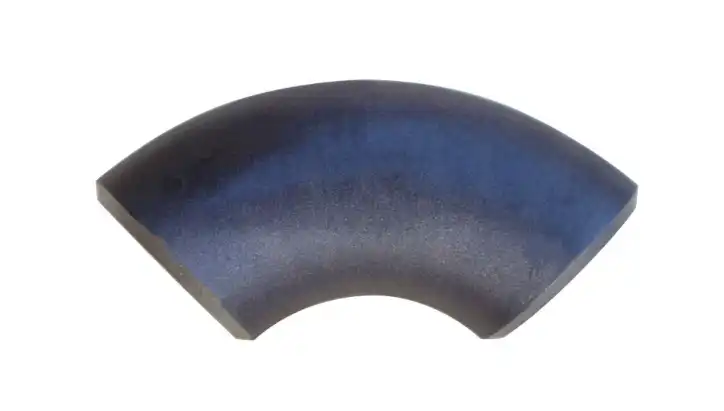
Understanding Carbon Steel Elbows in the Chemical Industry
What Defines a Chemical Processing Pipe Elbow
Piping components for chemical processing plants have to provide both mechanical strength and economic value. Carbon steel elbows are used for just that, to change direction ( most often 45-degree and 90-degree) without affecting the flow characteristics or structural integrity. The carbon content varies from 0.05% to 0.30%, affording sufficient tensile strength (48,000 to 80,000 psi, depending on grade) and good weldability, a key consideration for field installation and plant expansions. Carbon steel equivalents gain their strength from carbon, not from the chromium-based corrosion resistance that is typical of stainless steel. This basic distinction makes them especially economical for situations where corrosive exposure is mild or can be covered with protective coatings and linings. In our 26 years’ experience at Cangzhou Oudi, we’ve seen procurement teams repeatedly choose this material when budgetary limits meet severe mechanical requirements.
Types and Manufacturing Methods
How these elbows are manufactured has a huge impact on their performance profile. The most often used production method is hot forming and consists of two different procedures. Hot pushing is a process where pipe pieces are heated and pushed via specific dies to produce the required radius and angle. This process generates smooth interior surfaces and uniform wall thickness distribution, making it excellent for seamless pipe elbows. Another method is hot induction bending, where concentrated heat is applied to specific sections of the pipe while being bent to the desired angle. This method is advantageous in larger diameter applications. Butt-welded (BW) elbows are connected to adjacent piping with circumferential welds and are available in both seamless and welded formats. Seamless versions are made from solid billet material, avoiding the vulnerability of longitudinal seams. Socket welding elbows have ends that are recessed, allowing the pipe to be inserted and fillet welded. Threaded types are used for mechanical connections in lower-pressure systems. Each connection type is developed for a particular installation situation and pressure rating in a chemical plant.
Critical Standards and Specifications
In chemical industrial applications, dimensions and performance criteria need to be adhered to strictly. ASME B16.9 covers factory-made wrought butt-welding fittings with tolerances for angles, radii, and wall thicknesses. ASTM A234 specifies the specifications for carbon steel and alloy steel pipe fittings for moderate and high-temperature use. Such standards provide dimensional interchangeability between manufacturers and predictable performance under specified operating conditions. Pressure ratings are based on the ASME B16.5 classification system with class designations of 150, 300, 600, 900, 1500, and 2500 corresponding to maximum allowable working pressures at specified temperatures. The chemical engineer will pick the proper class depending on the process fluid properties, operating temperatures, and safety issues. Wall thickness schedules (Schedule 40, 80, 160, XXS) are also used to define the pressure containment capabilities, with more substantial schedules supporting greater internal pressures or more aggressive corrosion tolerances.
Key Applications and Benefits in Chemical Processing
Primary Uses in Chemical Plants
The most basic use is directional changes of pipelines. Chemical processing plants have complicated pipe layouts in 3D. These have to pass through structural impediments, link to equipment, and cater for variations in elevation. Chemical industry carbon steel elbows allow these arrangements with lower turbulence and pressure drop than sharp-angle alternatives. Low flow resistance and erosion are characteristic of long-radius elbows with centerline radii equal to 1.5 times the nominal pipe diameter, making them the preferred choice for slurry and high-velocity services. These fittings are often used in flow control and distribution systems. Elbow designs are used to effectively combine or separate flow pathways when several input streams are required for chemical reactors, distillation columns, or storage tanks. The strength of the carbon steel mechanically supports pipe loads and the fluid momentum forces at these connection sites. Compact layout designs become possible when space restrictions limit straight-run lengths. They enable designers to route pipes through crowded regions while still meeting code-required clearances.
Performance in Demanding Environments
Much of the chemical industrial operation is characterized by high-pressure and high-temperature service. Depending on the pressure class and wall thickness, ASTM A234 WPB carbon steel elbows may be used reliably at pressures in excess of 1,000 psi and temperatures up to 800°F (427°C). The predictable creep resistance and thermal expansion behavior of the material allow for appropriate stress analysis during the design phases, thus decreasing the chances of premature failures or unplanned shutdowns. Careful material selection and surface treatment are required for handling acidic or corrosive chemicals. High alloy materials have built-in resistance to corrosion, whereas carbon steel materials do not. The life of carbon steel is greatly extended by the use of suitable coatings, linings, or cathodic protection. Epoxy-coated, rubber-lined, or cement-mortar-lined ordinary carbon steel elbows are good choices for moderately corrosive applications at a fraction of the cost of exotic alloys. Our engineering team at Oudi often helps customers match surface treatments to particular chemical exposures, using decades of field performance data from the petroleum, natural gas, and chemical industries.
Installation and Maintenance Considerations
Welding methods are important for long-term performance. Qualified welders must follow authorized Welding Procedure Specifications (WPS) which specify preheat temperatures, interpass temperatures, and post-weld heat treatment (PWHT) standards. Carbon steel has a relatively low carbon equivalent (often < 0.40), which promotes high weldability. Procedures must be undertaken to counter the potential for hydrogen cracking, especially in thicker-walled schedules. An ultrasonic or radiographic inspection checks the integrity of the weld before it is pressurized. A pressure test confirms the integrity of the system before it is commissioned. The industry standard for hydrostatic testing is still normally at 1.5 times the design pressure using water as the test medium. The time required for the test is usually ten to sixty minutes, depending on the jurisdiction and code requirements. This permits inspectors to find out whether there are any leaks or deformations. Pneumatic testing is more dangerous owing to stored energy but is used if hydrostatic testing is not possible due to water contamination or cold weather conditions. Corrosion protection improves the life of the operation and maintains safety factors. Regular ultrasonic thickness monitoring finds wall loss before it becomes significant and feeds into choices about repair or replacement. Chemical inhibitor injections, material improvements in recognized difficulty regions, and coating maintenance programs cut lifespan costs. Replacement choices are based on the remaining wall thickness vs minimum values computed in accordance with the ASME B31.3 process piping code, including future corrosion allowances.
Comparing Carbon Steel Elbows with Other Materials
Carbon Steel Versus Stainless Steel
The choice of material may have a big effect on the project costs and operational dependability. Stainless steel elbows are commonly made of 304L or 316L grades with chromium-rich passive oxide layers for good corrosion resistance. This advantage is especially important when extremely corrosive acids, chlorides, or caustics are present, since they damage carbon steel very quickly. Stainless steel has a cost premium of 300%-500% over carbon steel equivalents, which makes it economically unfeasible for large-diameter or extensive piping systems where corrosion rates can be managed with coatings or inhibitors. Mechanical properties vary significantly between these families of materials. Carbon steel has a stronger yield strength (35,000 to 50,000 psi for typical grades) than austenitic stainless steels (30,000 to 40,000 psi); hence, thinner walls may be used in certain pressure-temperature combinations. While carbon steel will start to creep at temperatures where stainless steel will retain its strength. Chemical processing applications requiring cryogenic temperatures benefit from the higher low-temperature toughness of stainless steel, whereas carbon steel becomes brittle below -20°F without specific alloying.
Seamless Versus Welded Construction
Seamless carbon steel elbows are made from solid pipe billets perforated and shaped without longitudinal welds. This manufacturing process avoids the inherent weak spot that welded seams may create, especially if subjected to cyclical pressure or corrosive assault. Typically, seamless construction runs 20% to 40% more but offers peace of mind for vital systems where the repercussions of failure merit the extra cost. For industries dealing with flammable, poisonous, or high-energy fluids, seamless fittings are commonly specified to reduce the danger of catastrophic failure. Welded elbows, made from formed plate or coil stock with longitudinal welds, provide cost benefits and availability of material in greater diameters. Welded fittings have come a long way in dependability with modern welding technology and strict quality control. Radiographic investigation of weld seams may reveal subsurface flaws such as porosity, slag inclusions, or partial fusion before fittings go into operation. The decision to choose seamless or welded construction is generally a function of project requirements, financial restrictions, and perceived risk tolerance – rather than technological superiority.
Low Carbon Versus High Carbon Grades
The carbon content changes the mechanical properties and the manufacturing features profoundly. Low carbon grades (0.05%-0.20% carbon) focus on weldability and ductility and are used for complicated pipe systems that include a lot of field welding. This is the case of ASTM A234 WPB, the workhorse material for Chemical industry carbon steel elbow applications, with a maximum carbon concentration of 0.30%. These grades demonstrate very good formability in manufacturing and are able to withstand thermal cycling without embrittlement. The higher carbon content (0.20%-0.50%) enhances tensile strength and hardness, but decreases weldability and ductility. These grades are of limited use in chemical pipelines, often being used in wear-resistant applications or in mechanical components. The higher hardness improves erosion resistance when abrasive slurries run via pipework, thereby increasing service life in difficult applications. It does, however, need strict welding controls, including required preheat and PWHT, which add to installation costs and complexity.
Procurement Insights for Chemical Industry Carbon Steel Elbows
Essential Supplier Qualifications
Supplier assessment is based on the quality certificates. ISO 9001:2015 accreditation is a symbol of a manufacturer’s dedication to quality management systems, including design control, process monitoring, and continual improvement. We have this accreditation at Cangzhou Oudi with the People’s Republic of China Special Equipment Manufacturing License, which confirms our technical capability and compliance with regulations. These credentials tell the consumer that goods are subjected to rigorous quality controls from the time raw materials are received to final inspection. Third-party inspection and material traceability separate professional manufacturers from marginal suppliers. Each batch of material is supplied with a Mill Test Certificate (MTC) to EN 10204 3.1 that details its chemical composition and mechanical properties. Our quality system provides complete traceability so that each elbow may be tracked back to the original raw material certifications, production documents, and inspection data. This paperwork is a useful tool for regulatory audits or failure investigations.
Evaluating Lead Times and Production Capacity
Project timelines and backup plans are directly affected by the production capacity. Our yearly manufacturing capacity is 16,000 tons, ensuring steady supply even during the most intense market demand spikes. Having this scale enables us to have popular sizes in stock and yet have the flexibility to meet bespoke specs without long lead times. Peak demand times may be a challenge for smaller manufacturers, creating scheduling risks that flow throughout the project timeline. Lead time includes material procurement, production cycles, quality inspection, and logistics. Standard configurations in common materials usually arrive in 4-6 weeks after order confirmation, whereas exotic grades or non-standard dimensions may take 10-14 weeks. Framework agreements with approved suppliers provide priority production slots and predictable delivery times, especially important for major capital projects with tight coordination needs between many contractors.
Volume Purchase Advantages
Economies of scale work for the providers and consumers alike. Volume commitments allow firms to conduct their production runs more efficiently, lowering setup costs and material waste. We transfer these savings on to our customers via tiered pricing that rewards consolidated buying. Beyond unit price savings, volume connections provide opportunities for technical cooperation where our engineering team may help with material selection, specification creation, and quality plan modification. Strategic supplier relationships are more than just transactional. Preferred clients get priority allocation in the event of limited supply, faster delivery for urgent needs, and upgraded technical assistance throughout installation and operation. For 26 years, we have served over 300 clients in more than 40 countries, building relationships based on continual development and innovation via shared achievement.
Installation and Technical Guidance for Chemical Carbon Steel Elbows
Pre-Installation Verification
Chemical industry carbon steel elbow inspections help avoid downstream issues and timetable delays. Upon receipt, check elbows for transportation damage, dimensional conformance, and correctness of material certification. Check that stamped heat numbers on fittings correspond to MTC paperwork and that grades, schedules, and dimensions are as required for the project. Dimensional inspections to validate angles (45° or 90°), centerline radii (long or short), and wall thickness per purchase order specs. Storage conditions impact the fitting condition prior to installation. Store elbows under cover, off the ground, and with their protective end caps intact to avoid contamination or corrosion. The stacking is restricted so that greater-diameter thin-wall fittings are not deformed. If you are in a coastal or industrial area, consider temporary preservation using vapor-phase inhibitors or protective coatings, especially if you are going to store the product for a long time before installing it.
Welding Best Practices
Qualified welding processes preserve the integrity of the joints over the life cycle of the system. Qualification testing under ASME Section IX is performed to demonstrate that the proposed welding settings will provide acceptable mechanical characteristics and defect-free welds. In production welding, procedure factors such as electrode classification, current ranges, travel speeds, and interpass temperatures must be kept within defined limits. Our technical documentation bundle contains suggested WPS settings based on thorough qualification testing throughout typical pipe schedules. Preheat and post-weld heat treatment needs are dependent on material thickness, carbon equivalent, and service circumstances. Preheating is required by ASME B31.3 when the base metal thickness exceeds the specified limits or the carbon equivalent reaches 0.40. Minimum preheat temperatures, usually 200°F to 400°F for carbon steel, limit cooling rates and minimize hardening in the heat-affected zones. PWHT, performed at temperatures between 1,100°F and 1,250°F, alleviates residual stresses and tempers microstructures, enhancing toughness and decreasing susceptibility to stress corrosion cracking.
Ongoing Maintenance and Inspection
Safety assurance vs operational disturbance – trade-off of the inspection interval. Risk-based inspection (RBI) approaches not only direct resources to high-consequence circuits, but also allow for longer intervals for lower-risk systems. Routine plant walkdowns with visible exterior examination identify coating deterioration, external corrosion, or mechanical damage. Internal inspections during turnarounds using radiography, ultrasonics, and visual examination are performed to determine residual wall thickness and identify cracking or erosion patterns. Corrosion management solutions increase asset life, and safety margins are maintained. Internal corrosion is controlled by chemical treatment programs, including pH correction, oxygen scavenging, and corrosion inhibitor injection. External corrosion mitigation via coating systems, cathodic protection, or insulation improvements provides condensation management. Thickness monitoring provides corrosion rates that feed into remaining life predictions and replacement planning, optimizing the timing of capital investment.
Conclusion
The carbon steel elbows used in the chemical industry are a designed blend of mechanical performance, corrosion control, and economic value. Their vast acceptance in the petroleum, chemical, natural gas, and water conservancy industries is proof of their dependability under difficult circumstances. Proper installation techniques, understanding the differences between the seamless and welded construction, and the international standards like ASME B16.9 and ASTM A234 will assure the best performance within the design lifetimes. In material selection, the lifespan costs of carbon steel vs premium alloys are benchmarked against corrosion exposure and preventative measures. The certification of suppliers, control of production capacity, and the creation of connections beyond transactions determine the effectiveness of procurement.
FAQ
What pressure ratings do carbon steel elbows support in chemical applications?
Carbon steel elbows manufactured to ASME B16.9 standards accommodate pressure classes from 150 to 2500, corresponding to maximum allowable working pressures ranging from approximately 285 psi (Class 150 at 100°F) to 6,170 psi (Class 2500 at 100°F). Actual pressure ratings decrease as operating temperature increases, following derating curves specified in ASME B16.5. Wall thickness schedules (40, 80, 160, XXS) provide additional pressure containment options within each class. Chemical processing applications typically employ Class 150 or 300 for moderate pressures, while high-pressure reactors and compression systems may require Class 600 or higher.
How do I determine whether seamless or welded elbows suit my chemical plant?
Seamless elbows eliminate longitudinal weld seams, reducing potential failure points in critical services handling toxic, flammable, or high-energy fluids. They prove advantageous under cyclic loading, severe corrosion, or when failure consequences warrant maximum reliability. Welded elbows offer cost advantages and availability in larger diameters, with modern manufacturing producing reliable fittings when properly inspected. Evaluate your application based on fluid hazard classification, cyclic versus steady-state operation, corrosion severity, and budget constraints. Specifications often mandate seamless construction for critical services while permitting welded fittings in less demanding applications.
What inspection documentation should accompany carbon steel elbow purchases?
Comprehensive documentation packages include Mill Test Certificates (MTC) per EN 10204 3.1 providing chemical composition and mechanical properties; dimensional inspection reports verifying angles, radii, and wall thickness; non-destructive testing records including hydrostatic test pressures and radiographic examination results for welded fittings; heat number traceability linking specific pieces to material certificates; and compliance statements confirming conformance to specified standards like ASME B16.9 and ASTM A234. Material Safety Data Sheets and country-of-origin documentation support customs clearance and regulatory compliance.
Partner with Oudi for Your Carbon Steel Elbow Requirements
Cangzhou Oudi brings 26 years of specialized experience manufacturing high-quality carbon steel pipe elbows for chemical processing and related industries. Our ISO 9001:2015 certified facility produces 16,000 tons annually, offering comprehensive product ranges including seamless and welded configurations in long and short radius designs. We serve demanding applications across petroleum, chemical, natural gas, construction, shipbuilding, and power generation sectors, maintaining stringent quality control from raw material verification through final non-destructive testing. Our engineering team provides technical support for material selection, specification compliance with ANSI, JIS, DIN, and BS standards, and custom solutions for unique project requirements. As a trusted chemical industry carbon steel elbow supplier to over 300 customers across 40 countries, we understand the critical importance of reliable delivery, complete documentation, and responsive technical service. Contact our team at oudi-04@oudiguandao.com to discuss your specific requirements and discover how our proven expertise can support your next project.
References
1. American Society of Mechanical Engineers. (2018). ASME B16.9: Factory-Made Wrought Buttwelding Fittings. New York: ASME Press.
2. ASTM International. (2020). ASTM A234/A234M: Standard Specification for Piping Fittings of Wrought Carbon Steel and Alloy Steel for Moderate and High Temperature Service. West Conshohocken: ASTM International.
3. American Society of Mechanical Engineers. (2020). ASME B31.3: Process Piping. New York: ASME Press.
4. Becht, C. (2017). Process Piping: The Complete Guide to ASME B31.3 (4th ed.). New York: ASME Press.
5. Singh, R. (2019). Applied Welding Engineering: Processes, Codes, and Standards (3rd ed.). Burlington: Butterworth-Heinemann.
6. Mallick, S. K. (2016). Piping Materials Guide. New York: McGraw-Hill Professional.

Need help finding the right solution with our experts. Please contact us.

SINCE 1998 Your Reliable Pipeline Manufacturer



