ASME B16.9 Tee vs ANSI B16.11 Fitting: A Comparison
It's very important to choose the right pipe system parts to make sure they work well, are safe, and last a long time. In business, rules like ASME B16.9 and ANSI B16.11 are used a lot. They list what needs to be done for each type of part. It is the purpose of this blog post to fully compare ASME B16.9 Tee and the ANSI B16.11 Fitting by looking at their major differences, features, and how they are used. Engineers, builders, and building managers can pick the part that best fits their needs if they know these differences. We will talk about the different types of links, sizes, pressure levels, ways to make them, costs, and what they could be used for. In the hard world of pipe parts, this will help you find your way around.
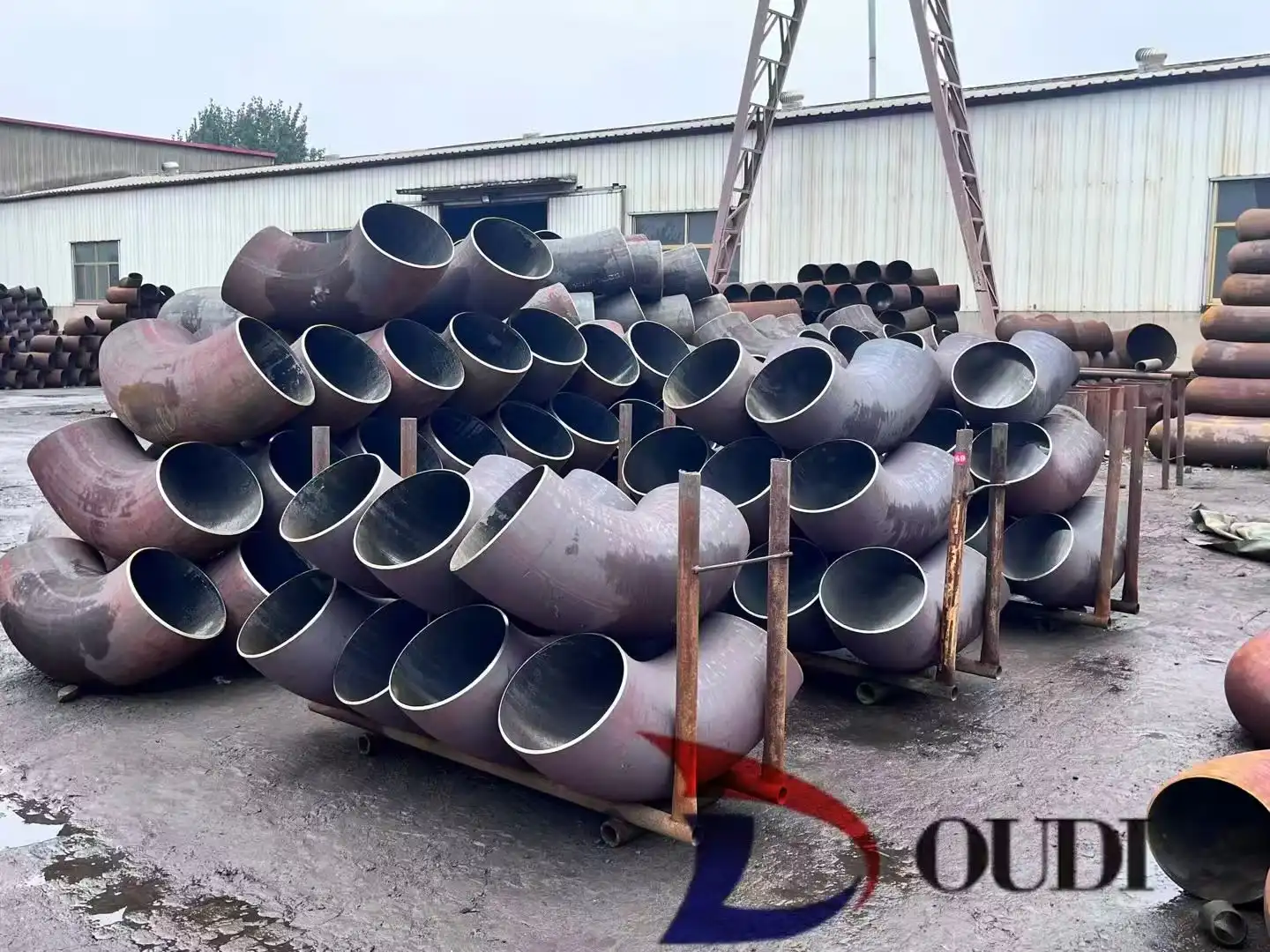
ASME B16.9 Tee: Scope, Sizes & When to Use It
Scope and Standard Overview
A standard fitting called an ANSI B16.9 Tee is used in pipe systems in a lot of different types of businesses. It has tees, elbows, reducers, caps, and a lot more parts for buttwelding. The ASME B16.9 Tee is made to quickly and safely connect branch pipes in pipe systems. Very careful attention is paid to following the instructions when making these parts, so the sizes, wall thickness, and quality are all the same. Different kinds of parts are covered, such as those made of carbon steel, stainless steel, and alloy steel. You can use these parts to make electricity, work with chemicals, and get oil and gas.
Available Sizes and Dimensions
There are a lot of different sizes of ASME B16.9 Tee valves to meet the needs of different types of pipes. There are specified pipe sizes (NPS) from 1/2 inch to 48 inches and matching outside diameters (OD) from 0.840 inches to 48.000 inches covered by the standard. The wall thickness of these fittings is made to match the schedules of the matching pipes. This makes sure that they fit in perfectly with the pipe system. ASME B16.9 Tee valves are usually made with wall thicknesses of standard weight (STD), extra strong (XS), and double extra strong (XXS), so they can meet a range of pressure and temperature needs. ASME B16.9 Tee valves are easy to place and work with other parts of the pipe system because their sizes are all the same.
Suitable Applications and Usage Scenarios
Tee fittings that are made to ASME B16.9 standards are commonly used in situations that need to handle high pressure and high temperatures. These valves work especially well in fields where dependability and performance are very important, like oil and gas, petrochemicals, and power generation. The butt-welding form of ASME B16.9 Tee fits makes them perfect for long-term use in large-scale pipe systems because they make a strong, leak-proof link. When branch links are needed in major pipeline networks, process pipes, and utility systems, these joints are often used. Because ASME B16.9 Tee valves are so flexible, they can be used in setups both above and below ground. This makes them a popular choice for many projects and uses.
Pressure Ratings & Connection Types: ASME B16.9 Tee vs B16.11 Fittings
Pressure Ratings Comparison
It's important to keep in mind that both ASME B16.9 Tee and ANSI B16.11 valves have a range of pressure values to fit different working situations. When it comes to pressure levels, ASME B16.9 Tee valves are usually made to last longer than their B16.11 peers. The ASME B16.9 Tee valves' pressure values depend on things like the weather, the material grade, and the wall thickness. Because they can handle pressures up to Class 2500, these fittings can be used in high-pressure situations. But ANSI B16.11 fittings usually have lower pressure values. For socket-welding fittings, the highest level of pressure is Class 6000, and for threaded fittings, it's Class 9000. ASME B16.9 Tee valves are the best choice for tough industrial uses where system integrity is very important because they can handle higher pressures.
Connection Types and Methods
The ways and types of connections for ASME B16.9 Tee and ANSI B16.11 fits are very different. ASME B16.9 Tee fittings are made for butt-welding connections, which means welding the whole joint around the pipe to connect the fitting to the pipe. This method makes a strong, long-lasting link that works well in high-temperature and high-pressure situations. To make sure the joint is strong and doesn't leak, butt-welding needs trained workers and the right tools. ANSI B16.11 fittings, on the other hand, have two main types of connections: threaded and socket-welding. When you socket-weld a connection, you put the pipe into a fitting's socket and then weld the joint together. Threaded connections, on the other hand, use curved threads to make a mechanical seal. Which of these link types to use depends on things like how easy they are to set up, how often they need to be maintained, and how the system is designed.
Material Compatibility and Selection
When choosing between ASME B16.9 Tee and ANSI B16.11 fits, material matching is very important. Tee valves that meet ASME B16.9 standards can be made from many different types of steel, such as carbon steel, stainless steel, and metal steels. This wide range of materials makes them compatible with a number of different types of pipes and working situations. Most of the time, the material types for ASME B16.9 Tee valves match those of the lines that go with them. This keeps the system consistent. There are also a number of material choices for ANSI B16.11 fittings, but not as many as for B16.9 fittings. When choosing materials for either standard, it's important to think about things like how well they fight rust, how hot they can get, and how well they react chemically with the process fluids. ASME B16.9 Tee valves come in a wider range of materials, which gives designers of pipe systems more options for making systems that work in specific situations.
Fabrication, Cost & Application: Choosing Between B16.9 Tee and B16.11 Fitting
Fabrication Methods and Quality Control
Forging or seamless production processes are usually used to make ASME B16.9 Tee fittings. These methods produce high-quality, uniform goods with great structural stability. To make sure they meet the standard, these parts go through strict quality control steps like measuring, testing the material, and non-destructive inspections. Heat treatment is often used to get the right mechanical qualities and stress release for ASME B16.9 Tee valves during the production process. ANSI B16.11 fittings, on the other hand, can be made in a number of ways, such as by forging, cutting, or casting, based on the type and size of fitting. The rules for checking the quality of B16.11 parts are also very strict, but they can be different based on how they were made and what they are going to be used for. The thorough manufacturing and quality control steps used to make ASME B16.9 Tee fits make them reliable and good for use in important situations.
Cost Considerations and Long-term Value
It is important to look at both the short-term and long-term costs of ASME B16.9 Tee fittings versus ANSI B16.11 fittings when comparing their prices. Because they are bigger, require more materials, and are made in a more complicated way, ASME B16.9 Tee valves usually cost more up front. But because they last longer and are more reliable, these valves often offer better long-term value in high-pressure and high-temperature situations. The butt-welding connection of ASME B16.9 Tee fits also leads to lower upkeep costs over time because these joints don't leak or break as often as threaded or socket-welded connections. ANSI B16.11 valves may be cheaper at first, especially for smaller sizes, but they may need to be maintained or replaced more often in tough situations. When making a choice based on cost, it's important to think about things like the system's needs, how long it's expected to last, and how much it might cost to be down for fixes or upkeep.
Application-specific Considerations and Best Practices
It depends on the purpose whether to use an ASME B16.9 Tee or an ANSI B16.11 fitting. When working with large-diameter pipes, high-pressure situations, or situations where little upkeep is needed, ASME B16.9 Tee fittings are usually the best choice. When dependability and efficiency are very important, these parts really shine in fields like oil and gas, chemical processing, and power generation. Correct welding methods, post-weld heat treatment when needed, and regular checking of weld areas are all good ways to use ASME B16.9 Tee fits. For smaller diameter pipes, lower pressure systems, and situations where parts may need to be taken apart often, ANSI B16.11 valves are often the best choice. As well as connecting monitoring lines and hydraulic systems, these fittings are often used to connect small pieces of equipment. It is very important to think about things like system design, working conditions, upkeep access, and legal requirements when choosing parts for a certain job. To make sure you choose the right size for each application, talking to experienced experts and following best practices in the business can help.
Conclusion
In conclusion, the choice between ASME B16.9 Tee and ANSI B16.11 fittings depends on various factors, including system requirements, pressure ratings, connection types, and application-specific considerations. ASME B16.9 Tee fittings offer superior performance in high-pressure and high-temperature applications, making them ideal for large-scale industrial piping systems. ANSI B16.11 fittings provide flexibility and ease of installation for smaller diameter piping and lower pressure applications. By carefully evaluating the specific needs of each project, engineers and facility managers can make informed decisions to ensure optimal system performance, safety, and long-term value. For expert guidance on selecting the right fittings for your piping system, contact Cangzhou Oudi Pipe Manufacture Co., Ltd. at oudi-04@oudiguandao.com.
FAQ
Q: What is the main difference between ASME B16.9 Tee and ANSI B16.11 fittings?
A: ASME B16.9 Tee fittings are designed for butt-welding connections and are typically used in larger diameter, high-pressure systems, while ANSI B16.11 fittings are available in socket-welding and threaded connections, primarily used in smaller diameter piping.
Q: Which fitting type is better for high-pressure applications?
A: ASME B16.9 Tee fittings are generally better suited for high-pressure applications due to their higher pressure ratings and robust butt-welding connections.
Q: Are ASME B16.9 Tee fittings more expensive than ANSI B16.11 fittings?
A: Initially, ASME B16.9 Tee fittings are often more expensive, but they may offer better long-term value in demanding applications due to their durability and lower maintenance requirements.
Q: What industries commonly use ASME B16.9 Tee fittings?
A: ASME B16.9 Tee fittings are widely used in industries such as oil and gas, petrochemical, power generation, and chemical processing.
Q: Can ANSI B16.11 fittings be used in high-temperature applications?
A: While ANSI B16.11 fittings can be used in some high-temperature applications, ASME B16.9 Tee fittings are generally preferred for extreme temperature conditions due to their higher ratings and more robust construction.
References
1. American Society of Mechanical Engineers. (2018). ASME B16.9-2018: Factory-Made Wrought Buttwelding Fittings. New York, NY: ASME.
2. American Society of Mechanical Engineers. (2017). ASME B16.11-2016: Forged Fittings, Socket-Welding and Threaded. New York, NY: ASME.
3. Nayyar, M. L. (2000). Piping Handbook (7th ed.). New York, NY: McGraw-Hill.
4. Smith, P. (2015). Piping Materials Guide: Selection and Applications. Oxford, UK: Butterworth-Heinemann.
5. American Petroleum Institute. (2018). API Specification 5L: Specification for Line Pipe. Washington, D.C.: API.
6. Antaki, G. A. (2003). Piping and Pipeline Engineering: Design, Construction, Maintenance, Integrity, and Repair. Boca Raton, FL: CRC Press.

Need help finding the right solution with our experts. Please contact us.

SINCE 1998 Your Reliable Pipeline Manufacturer



