ASTM A234 WPB Tee vs ASTM A234 WP11 Tee: What’s the Difference?
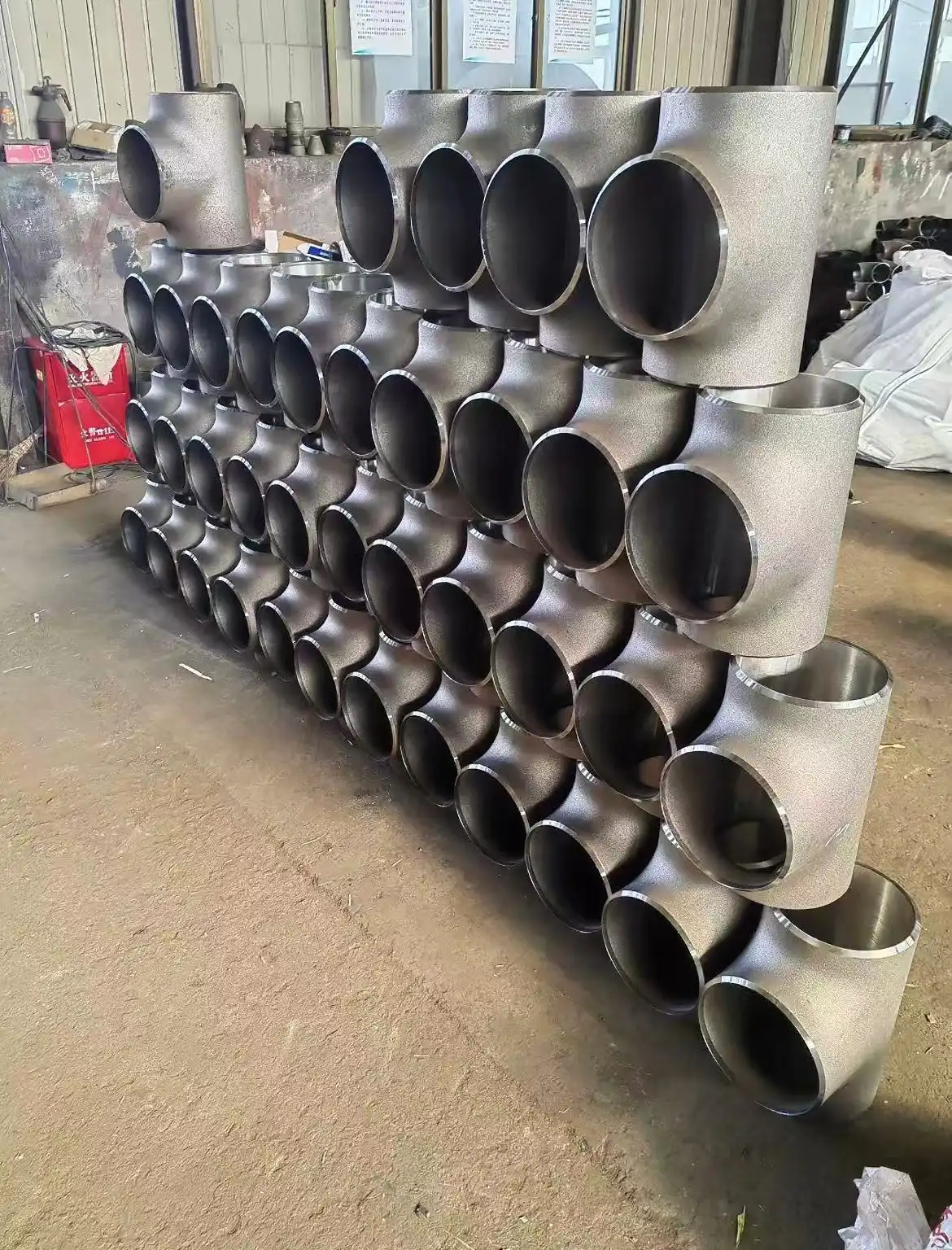
Choosing between an ASTM A234 WPB Tee and an ASTM A234 WP11 Tee is not simply a matter of selecting a stronger or more expensive fitting. Both grades are covered by ASTM A234/A234M for wrought carbon steel and alloy steel fittings used in pressure piping and related services, but their material chemistry gives them different performance characteristics. For engineers, piping contractors, and procurement teams, the more useful question is whether the fitting material matches the temperature, pressure, service environment, fabrication requirements, and applicable design code of the project. ASTM A234 WPB Tees are widely used where a carbon steel fitting provides the required mechanical performance without the need for a higher-alloy material. In contrast, ASTM A234 WP11 Tees belong to the Cr-Mo alloy steel group and are more often preferred for high-temperature applications where the retention of material strength and creep resistance are critical factors. This difference is particularly important in power generation, refining, petrochemical processing, and other systems that are continuously exposed to heat and pressure. It is a good beginning point to understand the chemical makeup but not enough on its own. Mechanical qualities, permissible stress at the service temperature, fabrication requirements and availability, and the actual service conditions as dictated by the project should also be fairly compared. Below are the differences between WPB and WP11 and how those differences should impact tee selection.
How WPB and WP11 Differ in Material Chemistry?
WPB Is a Carbon Steel Grade
ASTM A234 WPB is a carbon steel grade, with a relatively basic alloy system. WPB carbon content is limited to a maximum of 0.30% according to ASTM A234/A234M standards, while manganese is usually managed within the stated limits of 0.29% to 1.06%. Silicon has a minimum requirement, while chromium and molybdenum are only present at relatively low amounts compared with Cr-Mo grades. The standard also restricts elements such as phosphorus and sulphur since they may adversely influence the performance of the material if they are present in excess.
This composition illustrates the reason WPB is usually preferred for general pressure pipe services. The material is a good compromise of strength, formability, weldability, availability and affordability without the extra alloying needs of higher temperature alloy steel fittings. For many pipe systems running at moderate temperatures, the use of a Cr-Mo grade would have no practical advantage over the use of a correctly specified WPB fitting.
However, it is vital not to consider WPB as just suitable for low temperature or low pressure systems. ASTM A234 includes fittings for use at moderate and increased temperatures, however appropriateness of a specific WPB tee relies on the design parameters and the relevant piping code, not just the material designation.
WP11 Uses a Chromium-Molybdenum Alloy System
The chemical composition of ASTM A234 WP11 is somewhat different. Carbon is restricted within the suitable ASTM range depending on the Class and chromium is commonly specified at 1.00% to 1.50% and molybdenum at 0.44% to 0.65%. Silicon is also described at a higher level than in WPB: These alloying elements are not only added to make the fitting "stronger". They are included so as to provide material qualities which are better suited for high-temperature usage.
Chromium and molybdenum are very significant in high-temperature alloy steels. Chromium adds to oxidation resistance at extreme temperatures while molybdenum contributes to high temperature strength and resistance to deformation under continuous stress. WP11 is often considered for pipe systems that will be exposed to temperatures at which a regular carbon steel grade may no longer deliver the requisite mix of strength and long-term performance.
Another essential thing is that WP11 is not a single chemical specification without variances. There are multiple WP11 Classes in ASTM A234 and thus the chemical and mechanical criteria should be validated against the individual Class specified for the project. The whole grade and Class should be included in procurement papers and not the generic phrase “WP11” alone.
Why Temperature Changes the Material Selection?
WPB Can Be Effective for Moderate Temperature Piping
The reason WPB is still so popular is because many industrial plumbing systems don’t need a Cr-Mo alloy fitting. WPB is an inexpensive and feasible option when the operating temperature, pressure and service circumstances are within the permitted range set out by the appropriate design code.
This makes ASTM A234 WPB Tees prevalent in general process piping, utility piping, water systems, steam related systems, and many carbon steel applications when the service circumstances do not warrant a higher alloy material. The appropriateness has to be checked against the design temperature and permitted stress parameters of the governing code.
The usual error is to consider a stated temperature number as a universal limit for WPB. The permissible combinations of pressure and temperature in practice depend on the design standard, the permitted stress of the material, the size of the fittings, the wall thickness and other technical parameters. Therefore, the project specification has to be reviewed before giving a certain maximum operating temperature to a WPB tee.
WP11 Becomes More Relevant as Service Temperature Rises
The main benefit of WP11 is used when the pipe system is operating at high temperatures throughout a long time period. Under these circumstances the room temperature tensile and yield strength measurements are not enough to predict how the fitting will behave. The designer must understand what is the behaviour of the material when the temperature rises, and whether the material will have appropriate strength for the planned service life.
The Cr-Mo chemistry of WP11 makes it a better candidate for applications at high temperatures when creep resistance and long term material stability are critical. This is one reason why comparable Cr-Mo alloys are often used in high temperature pipes in the power and industrial sectors.
This does not imply that all hot piping systems inherently need WP11. The right material relies on the design temperature, pressure, relevant code, allowed stress needed, welding technique, heat treatment requirements and project specification. If the design requirements can be met using WPB, proceeding to WP11 might incur needless material and production expenditures. If, however, the circumstances are beyond the actual capabilities of WPB, then the choice of an appropriate Cr-Mo grade becomes much more critical.
Mechanical Performance Requires More Than Room-Temperature Strength
Why Tensile and Yield Strength Alone Can Mislead?
WPB and WP11 can have comparable minimum tensile strength requirements at room temperature, so a simple comparison of tensile strength does not fully explain why WP11 is used in hotter services. The more important distinction is how each material behaves when temperature increases.
For pressure piping, engineers normally work with allowable stresses rather than selecting a fitting solely because it has a particular room-temperature yield strength. As temperature rises, allowable stress values can change, and the relevant design code determines how those values are applied to the piping system.
This is why a statement such as “WP11 has a higher pressure rating than WPB” is too broad without specifying temperature, dimensions, design code, and service conditions. A better engineering conclusion is that WP11 can offer a more suitable material basis for high-temperature pressure service because its alloy chemistry provides better elevated-temperature performance.
Heat Treatment and Fabrication Must Also Be Considered
Material selection does not end when the fitting grade has been chosen. For ASTM A234 WPB Tees, heat treatment requirements, forming processes, welding procedures, and inspection requirements can differ between carbon steel and Cr-Mo alloy steel fittings. These differences can affect fabrication schedules and the total installed cost of the piping system.
For a project using WP11, the procurement and fabrication teams should confirm the required heat treatment condition and applicable inspection documentation. Welding also deserves particular attention because alloy steel fabrication requires controlled procedures to maintain the intended material properties around the welded joint.
WPB can often be simpler to fabricate because carbon steel is widely understood and commonly processed by piping contractors. That does not make WPB universally easier in every application, but it can reduce the fabrication complexity when the project does not require the characteristics of a Cr-Mo alloy.
When ASTM A234 WPB Tees Are the More Practical Choice?
General Process and Utility Piping
ASTM A234 WPB Tees are often the practical choice when the piping system operates within the temperature and pressure range supported by the governing design requirements and does not require the elevated-temperature characteristics of a Cr-Mo alloy. Their broad availability also makes them convenient for projects where standard carbon steel components are already being used throughout the piping system.
In general process lines, utility services, water systems, and many industrial piping installations, a WPB tee can provide the required mechanical performance without introducing the additional alloy cost associated with WP11. Using a material that meets the engineering requirements without unnecessary over-specification can be an important part of controlling project cost.
Procurement and Availability Advantages
WPB also has a practical advantage in procurement. Carbon steel fittings are widely manufactured and stocked, which can make standard sizes easier to source. For projects with a large number of branch connections, this availability can help simplify purchasing and reduce the possibility that one specialized fitting will delay installation.
The actual lead time still depends on size, wall thickness, dimensional standard, quantity, testing requirements, and supplier capacity. Procurement teams should therefore confirm availability rather than assuming that every WPB tee is immediately in stock.
When an ASTM A234 WP11 Tee Makes More Sense?
High-Temperature Power and Process Services
WP11 becomes a stronger candidate when the piping system operates at elevated temperatures and requires an alloy steel material capable of maintaining appropriate properties under those conditions. Power generation equipment, high-temperature steam piping, refinery process lines, and selected petrochemical applications are examples of environments where Cr-Mo fittings may be specified.
The important point is that the application should be driven by the engineering requirements rather than by the assumption that WP11 is automatically a premium version of WPB. A higher-alloy material is useful when its specific properties solve a real design requirement.
Long-Term Exposure to Heat and Pressure
For high-temperature piping, long-term performance of ASTM A234 WPB Tees can be more important than the initial room-temperature strength shown on a material certificate. Sustained heat and pressure can cause time-dependent deformation, making creep resistance an important design consideration.
The Cr-Mo composition of WP11 is intended to provide characteristics that are better suited to this type of service than conventional carbon steel. When the operating conditions require these characteristics, the additional material and fabrication requirements of WP11 can be justified by the engineering needs of the system.
Cost Differences Between WPB and WP11
Material Cost Is Only Part of the Comparison
WPB is normally more economical when a carbon steel fitting satisfies the project requirements because its alloy content is relatively low and the material is widely produced. WP11 generally costs more because chromium and molybdenum are added to achieve its required alloy characteristics, and the manufacturing and heat treatment controls associated with alloy steel fittings can also affect the final cost.
However, purchasing price should not be the only factor considered. If a WPB tee is selected for a service that actually requires a Cr-Mo grade, the apparent material saving can disappear once redesign, replacement, downtime, or fabrication issues are considered. Conversely, specifying WP11 where WPB is fully adequate can unnecessarily increase procurement and fabrication costs.
A technically sound selection therefore starts with the design requirements and then compares the total cost of the compliant options.
What Buyers Should Verify Before Ordering a WPB or WP11 Tee?
Confirm the Complete Material Specification
Before placing an order, the purchaser should verify the exact ASTM grade, WP11 Class where applicable, fitting dimensions, wall thickness, applicable dimensional standard, and project-specific requirements. This is especially important for WP11 because different Classes have different requirements within ASTM A234/A234M.
The material certificate should also be reviewed against the ordered specification. Chemical composition and mechanical properties should correspond to the specified grade rather than relying solely on a supplier's generic product description.
Match the Tee to the Actual Design Conditions
The selection should then be checked against design pressure, design temperature, fluid service, corrosion considerations, welding requirements, and the governing piping code. A tee that looks appropriate based on its material name may still be unsuitable if its dimensions or allowable stress do not satisfy the project calculation.
This is particularly important when comparing WPB and WP11 because the fundamental question is not which material is universally better. The better choice is the one that provides the required performance under the actual service conditions without unnecessary material or fabrication costs.
Conclusion
ASTM A234 WPB Tee and ASTM A234 WP11 Tee serve different roles in pressure piping. WPB is a carbon steel grade that offers a practical combination of strength, weldability, availability, and cost for many general and moderate-temperature applications. WP11 is a chromium-molybdenum alloy steel grade designed for applications where elevated-temperature material performance becomes more important.
The key difference is therefore not simply that WP11 is “stronger” than WPB. Its Cr-Mo chemistry gives it characteristics that make it more appropriate for demanding high-temperature service, while WPB remains an economical choice when the design conditions do not require those alloying elements. The correct selection should be based on the complete engineering specification, including temperature, pressure, allowable stress, material Class, fabrication requirements, and applicable piping code.
For procurement teams comparing ASTM A234 WPB Tees with WP11 tees, the safest approach is to start with the project's actual service conditions and then verify the material certificate, dimensional requirements, heat treatment condition, testing requirements, and documentation with the manufacturer. This approach produces a more defensible material selection and helps ensure that the tee is not only compliant on paper but also appropriate for the intended piping service. For expert guidance on selecting the right tee for your project, don't hesitate to reach out to Cangzhou Oudi Pipe Manufacture Co., Ltd. at oudi-04@oudiguandao.com.
FAQ
1. What is the main difference between ASTM A234 WPB and WP11 tees?
The main difference lies in their chemical composition, with WP11 containing higher chromium and molybdenum content, making it more suitable for high-temperature applications.
2. What is the maximum operating temperature for ASTM A234 WPB tees?
ASTM A234 WPB tees are generally suitable for service temperatures up to 750°F (399°C).
3. Are WP11 tees more expensive than WPB tees?
Yes, WP11 tees are typically more expensive due to their higher alloy content and specialized manufacturing process.
4. Can ASTM A234 WPB tees be used in corrosive environments?
WPB tees are not ideal for highly corrosive environments; more resistant materials or protective coatings may be necessary.
References
1. ASTM International. (2019). ASTM A234/A234M - 19 Standard Specification for Piping Fittings of Wrought Carbon Steel and Alloy Steel for Moderate and High Temperature Service.
2. American Society of Mechanical Engineers. (2021). ASME B16.9 - Factory-Made Wrought Buttwelding Fittings.
3. Nayyar, M. L. (2000). Piping Handbook (7th ed.). McGraw-Hill Education.
4. Smith, P. (2018). Piping Materials Guide: Selection and Applications for Process Plants. Elsevier.
5. American Petroleum Institute. (2016). API 5L: Specification for Line Pipe.
6. Bringas, J. E. (2004). Handbook of Comparative World Steel Standards (3rd ed.). ASTM International.

Need help finding the right solution with our experts. Please contact us.

SINCE 1998 Your Reliable Pipeline Manufacturer



