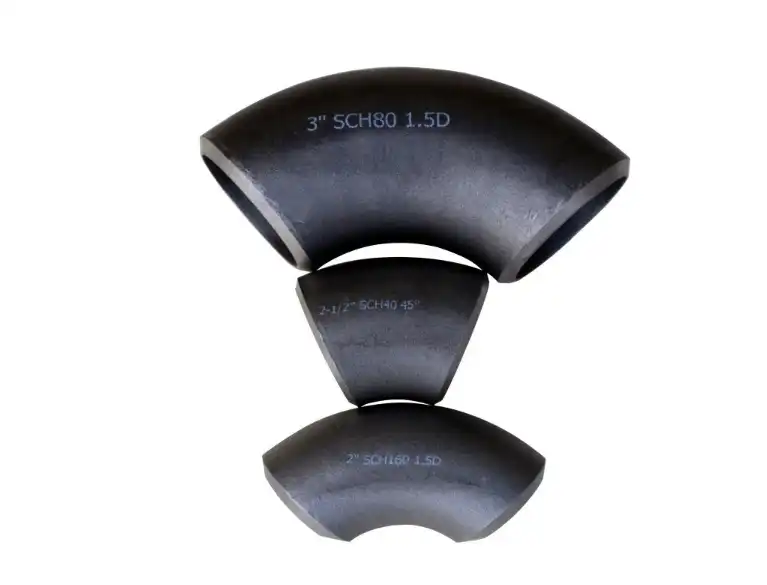
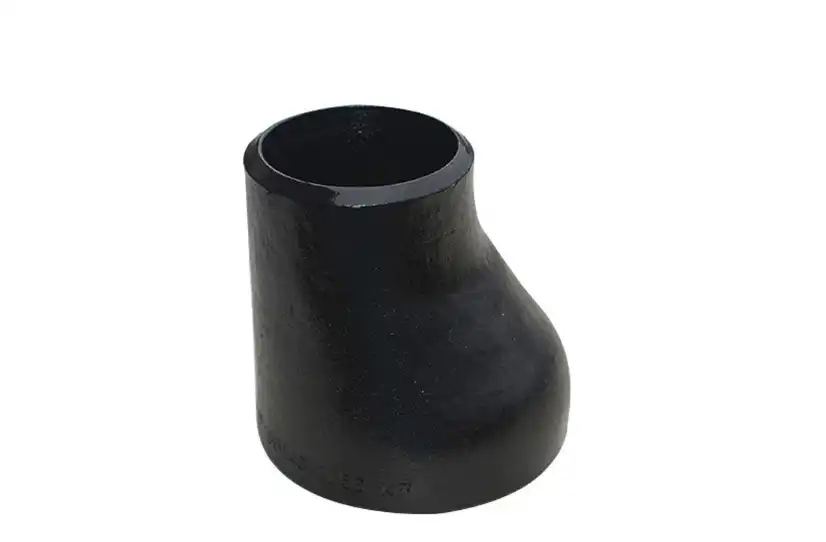
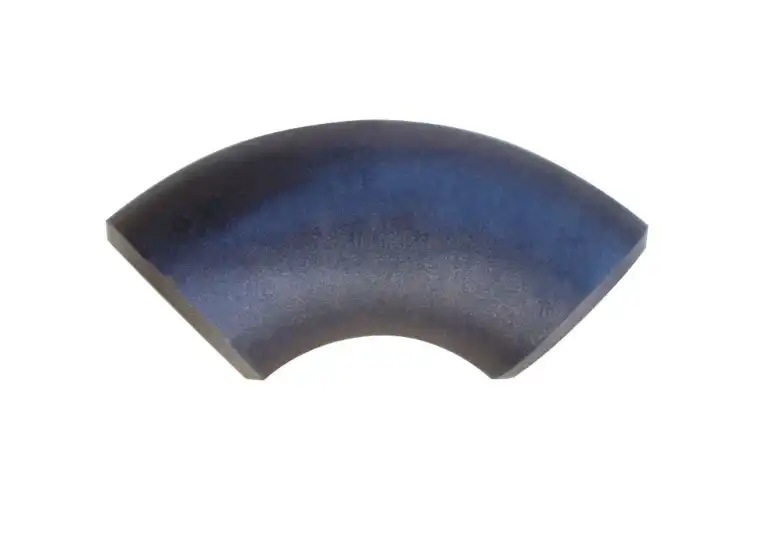
Carbon Steel Reducer – Reliable & Durable Choice
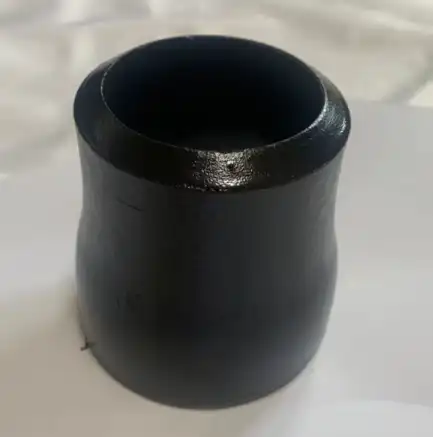
When you need a smooth transfer between pipes of different sizes in your pipeline system, a Concentric Reducer carbon steel is the best choice. This cone-shaped fitting keeps the centerline straight on both sides, which is important for high-pressure uses because it ensures balanced fluid dynamics and structural stability. These reducers are made from strong carbon steel alloys like ASTM A234 WPB. They have exceptional tensile strength, low cost, and long-term reliability, which is why they are used in power generation, chemical processing, and oil refining all over the world.
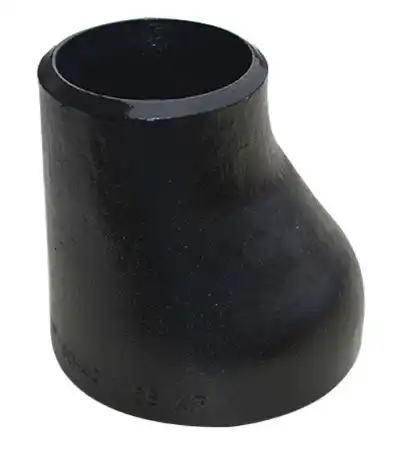
Understanding Carbon Steel Concentric Reducers
What Defines a Concentric Reducer?
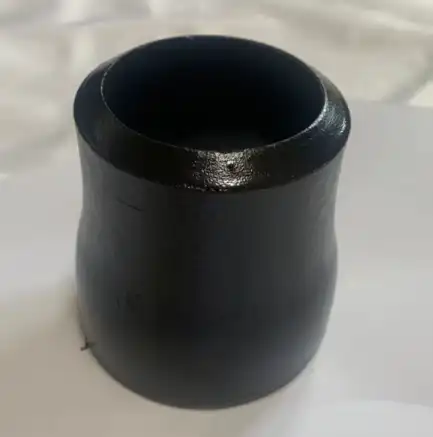
A Concentric Reducer carbon steel has a tapered, symmetrical shape that joins two lines of different standard sizes while keeping their common axis. The concentric reducer carbon steel lines up both pipe centers vertically, while the eccentric type offsets one edge to keep air from getting trapped in horizontal lines. This shape cuts down on turbulence and friction losses the most, especially in high-speed steam systems and vertical pump output lines. The equal decrease around the circle spreads the hoop's stress out evenly, which improves its mechanical integrity when pressure loads are applied and removed repeatedly.
Material Standards and Specifications
Concentric reducer carbon steel units made to ASTM A234 WPB standards are used most often in industrial pipes because they provide the best mix of strength and weldability. This grade has a minimum tensile strength of 60,000 psi and a minimum yield strength of 35,000 psi. It can be used in temperatures up to 800°F. One of the other grades is A105, which is used for cast parts in higher-pressure classes. Sizes range from NPS ½ inch to NPS 48 inches, and wall thicknesses are marked with schedule numbers like SCH 40, SCH 80, or XS to match pipes next to it. Dimensional compliance follows ASME B16.9. End connections usually have beveled ends so that they can be butt-welded. This makes sure that the joints don't leak and can handle pressures of over 1,500 PSI in industrial settings.
Flow Dynamics and Pressure Stability
The concentric design keeps the flow coefficient constant as the diameter changes. This stops rapid changes in speed that could lead to erosion or cavitation. Fluids move quickly through the tapered section of vertical displays without causing dead zones where particles build up. This ability to clean itself is useful in slurry transport and wastewater treatment plants. The centerline alignment also makes support structures easier to build, which lowers the risk of vibration-induced failure in steam pipes that are subjected to repeated stress from heat expansion cycles.
Comparing Carbon Steel Concentric Reducers with Alternatives
Concentric versus Eccentric Designs
Which concentric reducer carbon steel, or eccentric reducer to use depends on the fluid's shape and properties. Concentric models work best in vertical runs because gravity stops air pockets from forming there. This keeps the structure balanced for hanging support systems. Because their flat sides are aligned, eccentric reducers work well in horizontal setups that move gases or liquids that tend to separate into vapors. When you use an eccentric reducer incorrectly, it causes unnecessary uneven pressure. On the other hand, when you use a concentric reducer made of carbon steel in the wrong way, it can trap air pockets in gas lines that stop flow and cause rust. The procurement teams should check the system plans to make sure that the type of reducer matches the pipe slope and phase makeup.
Carbon Steel versus Stainless and Alloy Steel
When choosing a material, you have to weigh the costs, the resistance to rust, and the temperature range it can handle. Carbon steel reducers are more cost-effective than 304 stainless steel equivalents—about 40% less expensive. This makes them perfect for use with non-corrosive hydrocarbons and water systems that aren't too hot or too cold. When working with chloride-containing fluids or needing clean surface finishes in food processing, stainless steel types like ASTM A403 WP316L are needed. Alloy steel types like A234 WP11 or WP22 can handle temperatures above 1,000°F in high-pressure steam uses, but they cost more. To determine the best material grade, the choice matrix should take into account the chemistry of the fluid, the range of working temperatures, and the project's budget.
Performance in High-Pressure Environments
When paired with the right wall plans, concentric reducer carbon steel components work very reliably in Class 1500 and Class 2500 pressure levels. Either seamless forming or hot pressing, the wrought manufacturing process gets rid of the porosity problems that happen with cast fittings. This makes the grain structure regular and resistant to stress cracks. Together with a radiographic or acoustic inspection according to ASME B31.3 and hydrostatic testing to 1.5 times the design pressure, these tests make sure the structure is solid before it is shipped. To ensure that the project design rules are followed, the requirements for the purchase should require mill test reports that list the chemicals used and the mill's mechanical properties.
Applications and Benefits of Carbon Steel Concentric Reducers
Industrial Sector Deployment
In many big businesses, these reducers play important roles. In oil plants, they connect different steps of crude distillation columns. As the vapor density rises, the pipe sizes get smaller and smaller. They are used in chemical plants in reactor discharge lines that connect big process tanks to smaller pipes for transport. Power plants use carbon steel concentric reducers in the water that feeds boilers. In these systems, pumps send water through vertical lines that need a slow narrowing of the width to keep the hydraulic efficiency high. As part of water conservation projects, engineers use them in irrigation main pipes and dam exit works to control flow rates without causing erosion.
These fittings are used in natural gas transport networks at compressor stations, where the shapes of the pipes are changed to get the best speed for compression. They are used in construction for HVAC cold water lifts and fire suppression mains, and they are used in shipbuilding for ballast and fuel transfer systems. They are flexible because they can work with different kinds of fluids, from clean water to rough slurries, and in a range of temperatures, from 800°F steam to freezing LNG service.
Durability and Cost-Effectiveness
Due to its natural toughness, carbon steel can last more than 30 years in well-kept systems. Unlike flimsy cast-iron options, the material can handle being hit by machines during installation and operation. In water lines with a neutral pH, corrosion rates are about 3 to 5 mils per year, which can be controlled with protective coverings or cathodic protection when needed. Large-diameter uses show a clear economic benefit: a 24-inch concentric red carbon steel reducer costs around $800, while one made of stainless steel costs $3,200. This means that projects that use multiple fittings can save a lot of money.
Efficient installation increases the value even more. Beveled ends allow standard SMAW, GMAW, or GTAW welding methods that pipeline workers are familiar with, so they don't need any special tools. When compared to special fabrications, the symmetrical shape makes fit-up and alignment easier, which saves time. Maintenance is still very low—regular checks for wall thinning or external rust are enough—and there is no need to change the seal as often as with flanged options.
Practical Installation Guidelines
The first step in a proper fitting is to make sure that the concentric reducer carbon steel and the pipe schedules next to it are the same size. When wall widths don't match, stress builds up at the weld joints, which speeds up wear failures. When temperatures drop below 50°F, welders should heat carbon steel parts to 200°F to prevent cold cracking in the heat-affected zone. If you heat something after welding at 1,100°F for one hour for every inch of thickness, it will ease any remaining stresses in high-pressure situations.
Support placement is important—hangers for vertical reducers need to be placed so that they don't put bending moments on the tapering section. Allowing thermal expansion through directed supports or expansion loops keeps the fitting from being overstressed when the temperature changes. Radiography or phased-array ultrasonics can be used for a non-destructive inspection of weld quality, especially in ASME B31.3 Category M fluid service. Before the system is put into service, it is tested hydrostatically at 1.5 times the maximum allowed working pressure to ensure it is complete.
Procurement Guide for Carbon Steel Concentric Reducers
Supplier Verification Criteria
To find solid carbon steel concentric reducers, you have to carefully evaluate each seller. Check the manufacturer's ISO 9001:2015 certification to make sure they have written quality control systems in place. Special licenses for making equipment, like China's TSPD approval or the ASME U-stamp permission, show that you obey the rules for making pressure equipment. Ask for inspection reports from outside groups, like TÜV or Bureau Veritas, to make sure that the standards for material science and limits for size are being met.
Check how much you can make by doing site checks or sending out detailed surveys that ask about equipment inventories. Advanced facilities use CNC hot-forming presses, automatic beveling tools, and spectrum analyzers to check the quality of materials. Metrics for capacity are important. For example, companies that make 16,000 tons of goods a year have economies of scale that keep prices stable and make sure there is enough inventory. Exporting to controlled markets like North America and Europe shows that you know how to meet strict paperwork requirements, which cuts down on delays at customs.
Cost Drivers and Lead Time Planning
The price of a concentric reducer carbon steel is directly related to the grade of the material, its size, and the wall thickness. A 6-inch SCH 40 version in A234 WPB costs around $45, while a 24-inch XS version costs more than $800. When you buy in bulk, you can get savings. Usually, orders of 50 or more pieces receive 15-20% off. Nickel and molybdenum prices affect alloy fees more than carbon steel prices. This factor has a bigger effect on stainless and alloy steel choices.
Lead times depend on how complicated the order is. Standard sizes in popular schedules can be shipped within three weeks from when they are stocked, but special sizes need six to eight weeks to be made and inspected. Expedited production incurs extra costs, but it's worth it for things that are needed quickly for a job. Shipments of containers from Asian factories to the U.S. Gulf Coast ports take an average of 30 to 35 days, so buying things early is important to avoid building delays.
Customization and OEM Capabilities
OEM customization services are helpful for projects that have unique needs. Manufacturers offer custom concentric reducer carbon steel angles, which are usually cone slopes of 30°, 45°, or 60°, to fit the needs of each installation. Threading, flanging, or groove-end connections are some of the special end preparations used in mechanical joining systems. Upgrading the materials to A234 WP11 or duplex stainless steels lets them handle work that is too acidic or hot for carbon steel.
Writing with heat numbers, project codes, or arrows pointing in the right direction makes traceability during building easier. Protective coats, such as fusion-bonded epoxy or 3-layer polyethylene, are applied according to the project requirements, so there is no need for coating activities to be done on-site. Customization timelines add two to four weeks to lead times, but they give fittings that are perfectly matched to engineering needs, which cuts down on field changes and the costs that come with them.
Why Choose Oudi's Carbon Steel Concentric Reducers?
Certification and Quality Assurance
The way we make things follows worldwide rules that procurement pros trust. The ISO 9001 certification guides our quality management from receiving the raw materials to the final inspection, making sure that all of our products always meet the standards. We have special equipment production licenses that are known around the world. This certification proves that we are technically skilled at making pressure components. Every concentric reducer made of carbon steel is checked against ASME B16.9 templates to ensure it is the right size, its chemical makeup is analyzed using optical emission spectroscopy, and its mechanical properties are tested using tension and impact tests.
A key part of our quality procedure is non-destructive testing. Radiographic inspection according to ASTM E94 finds cracks inside the material, while magnetic particle testing finds flaws on the surface. Before checking, the structure is checked for stability by hydrostatic testing at 1.5 times the maximum pressure. We provide customers with full mill test records that include all inspection data. This makes it easier to obtain governmental permission and quality audits of projects.
Proven Track Record and Customer Support
We have sold carbon steel pipe fittings to over 300 customers in 40 countries since 1998. These customers include big oil refineries, chemical complexes, and building projects in North America, Europe, and the Middle East. Our reducers have worked reliably in places like Arctic pipeline systems and petroleum plants in the desert, logging millions of hours of service time without breaking down early. A recent project to update a refinery in Europe asked for 1,200 of our concentric reducer carbon steel components to be used for oil distillation upgrades. The installation was finished early, and there were no failures.
At the inquiry stage, technical advice starts. This is when our engineering team looks over the project details and suggests the best material grades, testing plans, and levels. Post-sale support includes help with fixing and welding procedures to ensure the installation goes smoothly. Our quick communication—usually within 24 hours—answers questions right away, which keeps projects from being held up for too long and from costing too much.
Competitive Pricing and Flexible Ordering
Our prices are set up to give you the best value, no matter how much you order. Our full inventory of popular sizes makes it easy for buyers to make small purchases without having to meet a minimum order requirement that leaves them with extra material. Large-scale projects receive discounts based on how efficiently they are made, and bidders can submit bids that remain valid for 60 days to make budget approval processes easier. Letters of credit and open account plans for long-term customers serve as two examples of flexible payment terms that businesses can use for foreign trade.
Our annual production capacity of 16,000 tons makes sure that we are always available, even during busy building seasons. By buying raw materials strategically and planning production well, wait times are 20% shorter than the average for the business. When project deadlines become tight, we can manage rushed orders by leveraging our technical resources to shorten production processes while maintaining quality standards.
Conclusion
Carbon steel concentric reducers, including Concentric Reducer Carbon Steel, are a good investment for pipeline systems that need to make predictable changes in width while keeping the structure strong. Their centerline-aligned geometry improves flow dynamics in vertical installs, and their strong A234 WPB metal can handle high temperatures and pressures in the chemical, power production, and oil and gas industries. When you pair material cost efficiency with easy installation steps, the total ownership value becomes very strong. Choosing certified suppliers with proven manufacturing skills, thorough quality systems, and quick expert help is key to successful procurement. If you choose the right fittings and place them correctly, they will last for decades without needing any repairs. This makes the job more reliable and profitable.
FAQ
How do I select the correct concentric reducer size?
Match the concentric reducer carbon steel end sizes to the standard pipe sizes that need to be linked. Make sure that the wall schedules line up with the piping next to it to avoid stress buildup at the weld joints. Check that the pressure class is equal to or greater than the system's highest allowed working pressure, taking into account the temperature de-rating factors as described in ASME B31.3.
What maintenance practices extend the reducer's lifespan?
Check the concentric reducer carbon steel cone section's ultrasonic thickness on a regular basis to see how fast it is wearing away or corroding, especially in work that is rough or acidic. Check the outside for worn-down coatings and fix them with touch-up paint or paper as needed. Make sure that the support structures are still in place and safe, so they don't put too much stress on the structure during thermal growth cycles.
Can carbon steel reducers be welded using standard procedures?
Concentric reducer carbon steel units made from A234 WPB can be welded using standard SMAW, GMAW, or GTAW methods that are approved for carbon steel pipes. When the temperature drops below 50°F, you must follow the warming requirements. In addition to the above, post-weld heat treatment is also required by code for high-pressure or cycle service. Qualified welders who follow written instructions make joints that meet building codes.
Partner with Oudi for Your Concentric Reducer Carbon Steel Needs
Picking the appropriate concentric reducer carbon steel supplier has a direct effect on the time frame, cost, and long-term dependability of your project. Our 25-year history of making at Oudi means that we can offer approved pipe fittings that are made to meet ASME standards and are backed by ISO 9001 quality management. We want buying professionals and project engineers to try out our customer-focused technology, know-how, and service. Email us at oudi-04@oudiguandao.com to discuss your unique needs, get full technical quotes, and look into ways to buy in bulk that will save you the most money. We have a wide range of products, from NPS ½ inch to NPS 48 inches in plans from STD to XXS, so we can accurately and reliably meet the needs of a wide range of projects.
References
1. American Society of Mechanical Engineers. (2020). ASME B16.9: Factory-Made Wrought Buttwelding Fittings. New York: ASME Press.
2. ASTM International. (2019). ASTM A234/A234M: Standard Specification for Piping Fittings of Wrought Carbon Steel and Alloy Steel for Moderate and High Temperature Service. West Conshohocken: ASTM International.
3. Nayyar, M. L. (2018). Piping Handbook (8th ed.). New York: McGraw-Hill Education.
4. Mohitpour, M., Golshan, H., & Murray, A. (2007). Pipeline Design and Construction: A Practical Approach (3rd ed.). New York: American Society of Mechanical Engineers.
5. Singh, R. (2017). Applied Welding Engineering: Processes, Codes, and Standards (2nd ed.). Oxford: Butterworth-Heinemann.
6. Ellenberger, J. P. (2016). Piping and Pipeline Calculations Manual: Construction, Design, Fabrication, and Examination. Oxford: Elsevier Science.

Need help finding the right solution with our experts. Please contact us.
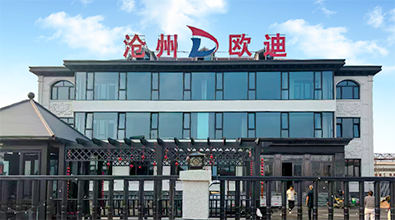
SINCE 1998 Your Reliable Pipeline Manufacturer