Buy Socket Weld Pipe Tee – Get Fast Delivery
Socket weld pipe tees are the best way to connect pipes in an industrial setting because they are stable and won't break under pressure. These precision-forged fittings make branch links in high-pressure systems that don't leak in places like power plants, oil factories, and chemical plants. At Oudi, we make sure that your socket weld pipe tee orders come on time by using our over 25 years of manufacturing experience and streamlined operations. This way, your projects can keep moving forward without any costly delays or quality issues.
Understanding Socket Weld Pipe Tee – Specifications and Benefits
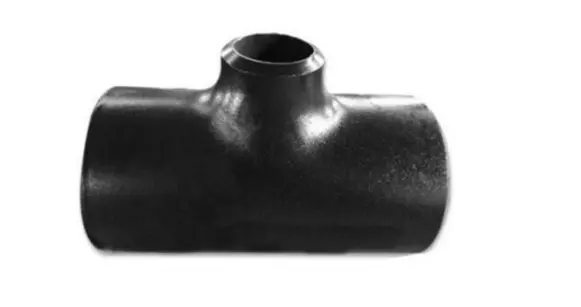
Socket weld pipe tees are special cast joints that join three pipe sections at right angles. They are made for small-bore piping systems that are usually between ½ inch and 4 inches in diameter. Instead of threaded or butt weld options, these fittings have recessed holes at each opening where pipe ends can go before being fillet-welded around the outside circle forever. Because of their functional benefits, this design has made socket weld pipe tees the best choice in harsh industrial settings.
Manufacturing Standards That Matter
Quality socket weld pipe tees are made by forging them, which creates a continuous grain structure that makes them much stronger against pressure and wear. These parts are made to exact measurements that make sure they work the same way in all situations, as required by ASME B16.11 standards. Our factory follows the rules set by ASTM A105 for carbon steel types, ASTM A182 F304/F316 for stainless steel types, and ASTM A182 F11/F22 for alloy steel types. Each choice of material meets a different set of practical needs, such as resistance to corrosion when working with chemicals or steadiness at high temperatures in steam systems.
The available pressure class ratings—Class 3000, 6000, and 9000—are directly linked to pipe schedules 80/XS, 160, and XXS, so engineers can ensure that the parts they use meet the exact needs of the system. This standardization eliminates the need for guessing when buying things and ensures they work with existing systems.
Key Advantages in Critical Applications
Socket-weld pipe tees fix a number of problems that industrial pipe systems keep having. The socket depth serves as an alignment guide, eliminating the need for tack welding during installation and requiring minimal skill for proper fit. This function is especially useful on offshore sites and in rural areas where workers may not have a lot of experience.
The fillet weld design prevents internal weld beads from sticking out into the flow path. This is a typical issue with small-bore joints that are butt-welded, and it can lead to erosion and turbulence. This smooth internal shape makes systems that move acidic chemicals or abrasive slurries last a lot longer. Forging creates a thick grain flow that makes the metal more resistant to mechanical shock and hydraulic hammer effects. These effects often cause cast fittings or threaded connections that are vibrating to break early.
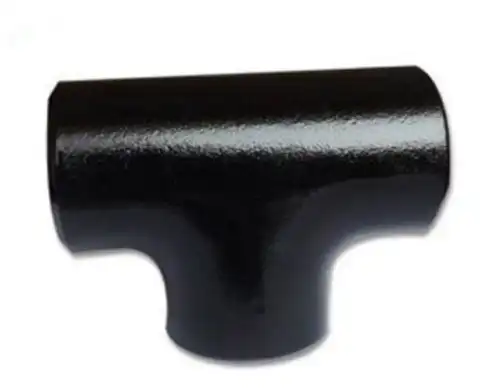
Comparing Socket Weld Pipe Tee with Other Connection Types
Knowing the differences between the different types of tee fittings helps procurement managers make smart choices that match the need for performance with the need to stay within budget. Each linking method has its own pros and cons that affect the total cost of ownership, which is different from the price of the original purchase.
Socket Weld Versus Butt Weld Configurations
To butt weld tees, the pipe ends must be cut, and the welding must go all the way through the pipe wall. This makes the strongest joint possible for pipes with bigger diameters, but it requires very skilled welders and a lot of quality control steps. In small-bore uses of less than 2 inches, it gets harder to achieve good weld penetration, which often leads to partial fusion or too much internal weld buildup that stops flow.
Socket weld pipe tees get rid of these problems by having a part that is already lined up and only needs a simple fillet weld. When compared to butt welding, installation time is cut by about 40%, and thermal warping is kept to a minimum by using less heat. Because of these things, socket weld pipe tee connections are cheaper for small-bore, high-density pipe networks that are common in factories and process plants.
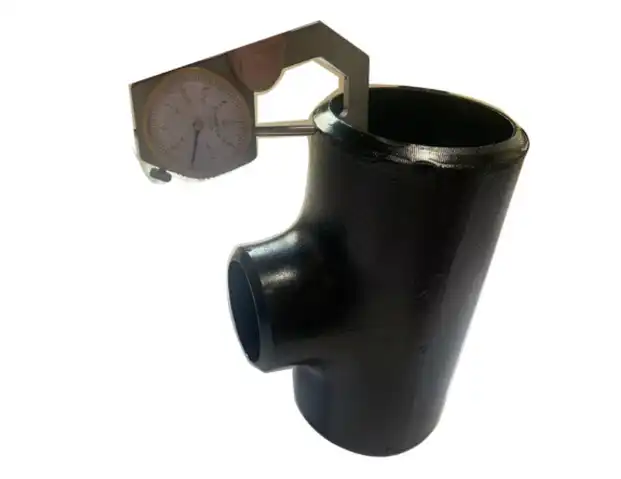
Performance Against Threaded and Slip-On Alternatives
The fastest way to put a fitting is a threaded tee, but they don't work well in places with a lot of pressure or shaking. The thread roots cause stress concentration points that lead to wear cracks, and the mechanical seal depends on the thread compound that breaks down over time when heated and cooled many times. Based on our experience with chemical injection systems, threaded connections start to leak after 18 months in places where socket weld pipe tee fittings usually last 10 years or more without a problem.
Slip-on flanged tees are easier to line up than butt welds, but they make pipe systems much heavier and pricier. It takes more work to install because you have to weld twice, once inside and once outside the flange, and the high face could cause a leak if the seal isn't compressed enough. Socket-weld pipe tees have similar pressure values, but they are much lighter and have fewer ways they could break.
Installation and Welding Procedures for Socket Weld Pipe Tee
A socket weld pipe tee link will either last for decades without breaking or become a pain to maintain if it is not installed correctly. The process needs careful attention to detail, but it can still be done by welders with basic skills as long as the right steps are taken.
Pipe Preparation and Fit-Up
Use a reliable pipe cutter or saw to cut the ends of the pipe into squares. Then, deburr both the inside and outside edges to get rid of any sharp tips that could cause stress to build up. The pipe end should fit into the hole easily and stay there until it hits the shoulder. ASME B16.11 says to leave a 1/16-inch expansion room between the pipe end and socket shoulder so that the metal can expand when it's welded. This keeps the metal from cracking at the roots when it moves too little.
Use a wire brush or solvent to clean all areas within two inches of the joint. This step will get rid of mill scale, oil, and other contaminants that could hurt the quality of the weld. Only use stainless steel or alloy brushes on stainless steel and alloy materials to prevent carbon buildup, which weakens their rust resistance.
Welding Parameters and Quality Control
Apply a continuous fillet weld around the socket-pipe joint, ensuring that the bead shape remains consistent and that the outer diameters of both the socket and the pipe are fully fused. For qualified welding processes, the right filler metal, amperage ranges, and movement speeds are given based on the type of material and the thickness of the wall. Our quality records indicate that the right preheating lowers leftover stress and stops hydrogen from causing cracks in service, especially for specialty steels.
Non-destructive testing checks the quality of the weld without damaging the part. You can see cracks or partial fusion on the surface with the naked eye, but liquid penetrant tests can reveal microscopic surface discontinuities. For important services that use flammable or harmful fluids, x-ray or ultrasound testing proves that the internal weld is sound. These quality control steps provide written proof that projects will meet operating needs for the entire time they are designed to last.
Procurement Guide – How to Buy a Socket Weld Pipe Tee Efficiently?
To get forged socket weld pipe tee fittings, you need to know how the specifications of the materials, the amount you require, and the supplier's skills affect both cost and shipping performance. You can avoid delays in building and commissioning by making smart choices about sources during the planning phase.
Pricing Factors and Value Assessment
Base prices depend on the material used. For general service uses, carbon steel Socket weld pipe tees are the most cost-effective choice. 316L types of stainless steel usually cost three to four times as much, but they don't rust as easily, so they don't need to be replaced as often in harsh chemical conditions. Exotic metals, such as duplex stainless steel or nickel-based materials, are costly, but they work well in specific situations with high salt levels or very high temperatures.
Size and pressure class have a big effect on unit costs. For example, Class 9000 fittings need a lot more raw materials and work to make them than Class 3000 fittings. Order volume creates economies of scale. Projects that need 100 or more pieces can often get a bulk price, which cuts the cost per unit by 15 to 25 percent compared to small orders.
Supplier Evaluation Criteria
Suppliers you can trust show what they can do by using quality badges instead of marketing claims. ISO 9001 approval shows that quality control systems are in place, and special equipment manufacturing licenses show that pressure vessel parts are made in accordance with the law. At Oudi, our quality paperwork includes full material traceability from mill test reports to final inspection records. This gives engineering teams the verification chain they need for important projects.
Technical skills are what set competent producers apart from stock sellers. Ultrasonic testing, spectrometers, and coordinate measuring machines ensure consistent product quality. Our building has a full testing lab that does chemical analysis, non-destructive testing, and testing of mechanical properties, all in-house, so we don't have to rely on outside services that add to wait times.
Logistics and Delivery Optimization
Fast shipping is possible because of effective planning for production and well-known export processes. Our annual production capacity of 16,000 tons ensures that we always have stock for standard requirements while still being able to accommodate custom orders. Being 120 kilometers from Tianjin Port, which is on a major shipping route, makes it possible to quickly load containers and schedule ships, which cuts down on travel times to North American places.
Understanding the minimum order numbers helps make the most of funds for buying things. Standard specs can be shipped in as few as 10 pieces, but custom material grades or measurements that aren't standard usually need at least 50 to 100 pieces to cover the costs of setup. Putting together needs from different stages of a project is often a better use of money than making several small orders, each of which has to pay full shipping and handling costs.
Enhancing Your Projects with Top-Quality Socket Weld Pipe Tees
Real-life examples show how the quality of the materials and the dependability of the suppliers have a direct effect on the results of operations. These case studies from our customers show how performance benefits can change the long-term costs of a project.
Chemical Processing Plant Expansion
For high-pressure sample systems and chemical input skids, a big petrochemical plant that was increasing the amount of ethylene it could make needed 800 socket weld pipe tees of different sizes and materials. In this case, acidic process fluids were used at temperatures up to 450°F and working pressures of over 4,000 PSI. Our ASTM A182 F316L stainless steel tees had the corrosion protection needed for a 20-year design life, and the Class 6000 pressure grade gave us the safety margins we needed.
Coordination of deliveries was very important because the building plan imposed strict deadlines for each milestone and punished delays. Our team is in charge of planning production split deliveries into three shipments that line up with the different stages of building. This way, the installation groups received the materials just in time without having to store them on-site for a long time. The job was finished two weeks early, and there were no leaks linked to fittings during commissioning or the first year of operation.
Offshore Platform Hydraulic Systems
For improved hydraulic control lines that could work at 6,000 PSI, an offshore drilling platform repair needed socket weld pipe tee reducing tees. Materials had to be able to withstand both internal fluid compatibility and external saltwater corrosion in the sea setting. Our duplex stainless steel fittings met both of these needs. The forged construction also gave the equipment that is constantly shaking from drilling operations the impact resistance it needed.
Fast delivery became necessary when the original provider didn't keep their end of the deal, threatening to extend platform downtime that cost the operator $500,000 a day in lost production. We sped up production and set up air freight for the 200-piece order, and all of the materials were delivered within 12 days of receiving the purchase order. Because they were quick to respond, the worker was able to get back on track and finish the retrofit during the planned repair window.
Power Generation Steam Systems
A coal-fired power plant needed 300 carbon steel socket weld pipe tees that could handle superheated steam at 900°F to upgrade the steam trap units across its turbine hall. For the job, the materials had to be able to handle high temperature changes without getting stress cracks at the welded joints. Our ASTM A105 carbon steel parts, which were made with a controlled grain structure through the forging process, had the right mechanical qualities for this tough job.
The maintenance department really liked our full paperwork package, which had material certifications, measurement inspection reports, and records of every fitting's hydrostatic test. This paperwork met both their own quality standards and the requirements of the insurance company, so there were no more administrative delays that often happen before big maintenance. The installation has been operating for five years without any fitting problems. This case proves that the quality control and material selection methods worked.
Conclusion
Choosing the right socket weld pipe tee supplier affects more than just the cost of the original buy. It also affects how well your project stays on schedule, meets quality standards, and performs reliably over time. Quality fittings are made with forged construction, exact dimensional control, and material verification. These features stop leaks, failures, and repairs that drive up project costs. Oudi has been making products for 25 years and is ISO 9001 certified. They can thoroughly test all their products to ensure every part meets your engineers' system requirements. Our long-term export network to more than 40 countries shows that we have the organizational skills to get supplies to your project when and where it needs them.
FAQ
What is the main difference between socket-weld and butt-weld pipe tees?
Butt weld tees need pipe ends to be beveled and fully penetrated through the wall thickness, while socket weld pipe tees have hollow holes where pipe ends go before fillet welding around the outside diameter. For small-bore pipes less than 2 inches in diameter, socket welds make alignment easier and installation faster. Butt welds, on the other hand, give the most strength for larger diameter uses. The choice relies on the size of the pipe, the required pressure, and the welders' skills.
How quickly can you deliver bulk orders of socket weld tees?
Standard sizes in carbon steel or popular stainless steel grades usually ship in 15 to 20 business days for orders of up to 500 pieces. It takes 25 to 35 days for custom material grades or measurements that aren't standard, based on how long it takes to get the raw materials and test them. For urgent projects, we can speed up production, and for destinations in North America, air freight choices cut the total arrival time to 7–10 days when project schedules require it.
Do you offer custom socket weld tees for specialized applications?
Our engineering team often makes special parts that are made to fit specific applications. This includes non-standard types of materials, such as high-nickel alloys, unique combos of pressure classes, or changes to the size of the material to fit connections on secret equipment. For custom orders, you need engineering drawings with full specs, and the minimum order quantity is usually between 50 and 100 pieces, based on how complicated the order is. Within 48 hours of receiving your request, our expert staff can look over your needs and give you an opinion on their viability.
Partner with Oudi for Reliable Socket Weld Pipe Tee Supply
Get socket weld pipe tees from a company that knows how to balance quality, cost, and shipping performance for your next industrial piping job. With more than 25 years of experience working with the oil, chemical, and power generation industries, Oudi's ISO 9001-certified production plant can meet your needs for material certifications, dimensional accuracy, and mechanical qualities. Our strategic position near Tianjin Port and long-term partnerships with foreign freight forwarders make sure that your goods arrive on time, no matter how many you need. For a specific price on your socket weld pipe tee needs, please email our sales team at oudi-04@oudiguandao.com. You can also ask for our full product catalog, which shows all of our carbon steel, stainless steel, and alloy steel pipe fittings. As a reliable socket weld pipe tee provider with shipping experience to more than 40 countries, we offer the expert support and quick service that makes the whole buying process go smoothly, from design to installation.
References
1. American Society of Mechanical Engineers. ASME B16.11-2016: Forged Fittings, Socket-Welding, and Threaded. New York: ASME Press, 2016.
2. Harvey, John F. Theory and Design of Pressure Vessels, 2nd Edition. New York: Van Nostrand Reinhold, 1991.
3. Nayyar, Mohinder L. Piping Handbook, 8th Edition. New York: McGraw-Hill Professional, 2019.
4. American Society for Testing and Materials. ASTM A182/A182M-19: This standard covers forged or rolled alloy and stainless steel pipe flanges, forged fittings, valves, and parts that are used in high-temperature service. West Conshohocken: ASTM International, 2019.
5. Ellenberger, J. Paul. Piping and Pipeline Calculations Manual: Construction, Design, Fabrication, and Examination. Oxford: Butterworth-Heinemann, 2014.
6. Smith, Peter R., and Van Laan, Thomas J. Piping Materials Guide. Houston: Gulf Publishing Company, 1997.

Need help finding the right solution with our experts. Please contact us.
SINCE 1998 Your Reliable Pipeline Manufacturer