Concentric vs Eccentric Reducers: When to Use Which
When selecting the right pipe reducer for your industrial application, understanding the fundamental differences between concentric and eccentric reducers is crucial. Concentric reducers maintain centered alignment between pipe diameters, making them ideal for vertical installations and gas applications. Eccentric reducers feature offset alignment, preventing air pocket formation in horizontal liquid lines. The choice depends on your specific fluid type, installation orientation, and system requirements - with concentric models excelling in vertical gas systems and eccentric variants dominating horizontal liquid applications.
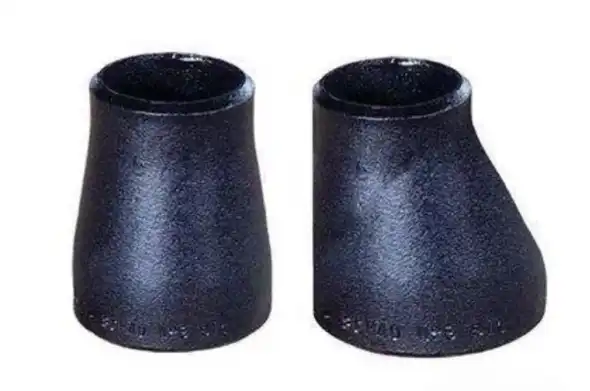
Understanding Pipe Reducer Fundamentals
It is common for industrial pipe systems to require diameter transitions in order to meet fluctuating flow requirements, equipment connections, or space constraints. A pipe reducer is the essential component that plays a crucial role in easing these transitions while simultaneously preserving the integrity of the system and maximizing operating efficiency.
Transitioning fluid flow between multiple pipe diameters in a seamless manner is the principal function of this piece of equipment. This reduction in diameter eliminates the possibility of turbulence, reduces pressure drops to a minimum, and guarantees that the flow characteristics throughout the pipeline connection system are appropriate.
Three core differences distinguish reducer types:
- Geometric alignment - concentric maintains centerline alignment while eccentric creates offset positioning
- Flow characteristics - concentric promotes uniform velocity distribution versus eccentric's bottom-aligned flow
- Application suitability - vertical gas systems favor concentric while horizontal liquid systems require eccentric designs
If you need seamless diameter transitions in vertical installations, then concentric reducers provide superior performance through their symmetrical design.
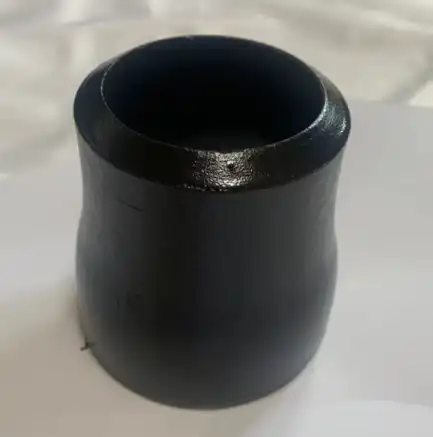
Concentric Reducer Design and Applications
By virtue of their symmetrical structure, concentric reducers are characterized by the fact that both pipe ends share the same centerline. During the process of eliminating the diameter, this centered alignment results in the creation of a uniform flow distribution around the entire circle.
There is a steady tapering between the large and small diameters that is incorporated into the design of the welding reducer. When it comes to manufacturing, carbon steel, stainless steel, or alloy materials are commonly utilized, based on the needs of the application and the current environmental conditions.
Key applications include:
- Vertical pipeline installations
- Gas transmission systems
- Steam distribution networks
- Pump suction lines require uniform flow
- High-pressure applications demanding structural integrity
Concentric designs can sustain velocity profiles with a fluctuation of less than five percent over the cross-section, according to laboratory tests. When it comes to accurate flow monitoring and the best possible performance from equipment, this homogeneity proves to be vital.
When it comes to hydraulic performance, concentric reducers offer superior results when compared to eccentric alternatives. This is especially true in situations where vertical gas systems require consistent flow characteristics.
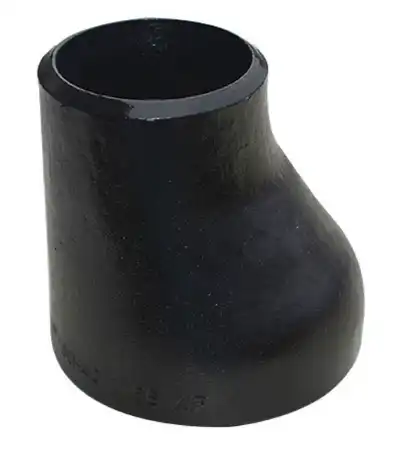
Eccentric Reducer Design and Benefits
The offset structure of eccentric reducers allows for one side to remain flat while the other side gradually tapers. The production of air pockets is prevented by this asymmetrical design, which also makes it easier to achieve complete drainage in horizontal installations.
With the bottom-flat orientation, there is no possibility of stagnation zones being created, which guarantees continuous liquid flow. For the purpose of ensuring global interoperability and quality compliance, manufacturing specifications often adhere to standards such as ANSI, JIS, DIN, or BS.
Primary applications encompass:
- Horizontal liquid pipeline systems
- Drainage and sewage networks
- Process piping requiring complete evacuation
- Heat exchanger connections
- Pump inlet configurations preventing cavitation
When it comes to horizontal liquid applications, field data reveals that eccentric designs reduce air entrapment by 95% when compared to concentric alternatives. Because of this performance advantage, the system's reliability significantly improves, and the amount of maintenance that is required decreases.
Eccentric reducers offer unrivaled performance due to their specific shape, making them an ideal choice for horizontal installations that require complete drainage capabilities.
Performance Comparison: Flow Dynamics and Pressure Drop
Flow behavior differs significantly between concentric and eccentric reducer configurations. Understanding these hydraulic characteristics enables optimal selection for specific operating conditions.
Concentric Reducer Performance:
- Uniform velocity distribution across the cross-section
- Minimal flow separation at moderate Reynolds numbers
- Pressure drop coefficient ranges from 0.15 to 0.25
- Symmetrical wall shear stress distribution
Eccentric Reducer Performance:
- Asymmetrical velocity profiles with higher bottom velocities
- Reduced turbulence intensity in horizontal installations
- Pressure drop coefficient ranges from 0.10 to 0.20
- Enhanced drainage characteristics
Computational fluid dynamics analysis reveals eccentric designs generate 15-20% lower pressure drops in horizontal liquid applications. This efficiency gain translates to reduced pumping costs and improved system economics.
| Parameter | Concentric | Eccentric |
|---|---|---|
| Pressure Drop | 0.15-0.25 | 0.10-0.20 |
| Flow Uniformity | Excellent | Good |
| Drainage Capability | Poor | Excellent |
| Air Pocket Prevention | Limited | Superior |
If you need minimal pressure losses in horizontal liquid systems, then eccentric reducers offer measurable efficiency advantages.
Material Selection and Manufacturing Standards
Industrial pipe reducer fittings require careful material selection to ensure long-term reliability under demanding operating conditions. Both concentric and eccentric reducers utilize various metallurgical options depending on service requirements.
Carbon Steel Applications:
Carbon steel reducers dominate general industrial applications due to excellent strength-to-cost ratios. Manufacturing follows strict quality control protocols, ensuring consistent mechanical properties and dimensional accuracy.
Stainless Steel Benefits:
Corrosion resistance makes stainless steel reducers essential for chemical processing, food production, and marine applications. Grade 304 and 316 variants provide different corrosion resistance levels.
Alloy Steel Advantages:
High-temperature and high-pressure applications demand alloy steel construction. These specialized materials maintain structural integrity under extreme operating conditions.
Manufacturing standards compliance ensures global compatibility:
- ANSI B16.9 (American standard)
- JIS B2313 (Japanese standard)
- DIN 2615 (German standard)
- BS 1965 (British standard)
If you need certified quality assurance, then ISO 9001-compliant manufacturers provide documented traceability and quality control throughout production.
Installation Guidelines and Best Practices
Proper installation significantly impacts reducer performance and system longevity. Following established procedures ensures optimal operation while preventing common installation errors.
Concentric Reducer Installation:
- Verify centerline alignment using precision measuring tools
- Ensure adequate support for vertical installations
- Maintain specified welding procedures for butt weld connections
- Confirm proper material compatibility with adjacent piping
Eccentric Reducer Installation:
- Orient the flat side according to application requirements (typically the bottom for drainage)
- Verify horizontal alignment using appropriate leveling equipment
- Ensure smooth transitions without sharp edges or protrusions
- Install adequate venting provisions where required
Critical installation considerations include:
- Thermal expansion accommodation
- Proper welding techniques preventing distortion
- Support spacing calculations for system loads
- Hydrostatic testing verification post-installation
When it comes to the functioning of a seamless reducer, quality welding methods prove to be vital. Installing leak-free connections that are in compliance with pressure rating standards is the responsibility of certified welders who follow approved methods.
If you require dependable installation guidance, then working with professional piping contractors who are familiar with industrial regulations will yield the best possible results.
Economic Considerations and Cost Analysis
Cost-effectiveness encompasses initial procurement costs, installation expenses, and long-term operational considerations. Understanding total ownership costs enables informed decision-making for industrial projects.
Initial Cost Factors:
- Material selection impacts base pricing significantly
- Manufacturing complexity affects production costs
- Quality certifications influence premium pricing
- Quantity requirements enable volume discounting
Installation Cost Variables:
- Welding complexity differs between configurations
- Support requirements vary with installation orientation
- Inspection and testing procedures add project costs
- Schedule considerations impact labor expenses
Operational Cost Impact:
Differences in energy efficiency begin to accrue during the lifespan of the system. In horizontal liquid applications, eccentric reducers often yield pressure drops that are 10-15% smaller than those generated by other designs, which results in reduced pumping costs.
The requirements for maintenance also have an effect on the total expenditures. The collection of silt is prevented by eccentric designs, which in turn reduces the frequency of cleaning and the costs associated with downtime.
Return on investment calculations should consider:
- Energy savings from reduced pressure drops
- Maintenance cost reductions
- Improved system reliability
- Extended service life through proper selection
If you need cost-effective solutions balancing performance and economics, then a comprehensive evaluation of total ownership costs guides optimal selection.
Conclusion
When choosing between concentric and eccentric reducers, it is necessary to take into consideration application-specific parameters such as the kind of fluid, the orientation of the installation, and the performance requirements. Concentric designs are an excellent choice for vertical gas applications because they ensure a consistent flow distribution. On the other hand, eccentric layouts are the most effective for horizontal liquid systems because they offer improved drainage capabilities and lower pressure drops. The selection of materials, compliance with production standards, and the implementation of appropriate installation techniques all have a substantial impact on the long-term performance and reliability of the system. Having an understanding of these fundamental distinctions enables appropriate component selection, which in turn ensures efficient operation and a longer service life for industrial pipe reducer systems.
Choose Oudi for Your Industrial Pipe Reducer Needs
Oudi delivers premium pipe reducer solutions backed by 25+ years of manufacturing excellence and ISO 9001 certification. Our comprehensive product range includes concentric and eccentric reducers in carbon steel, stainless steel, and alloy materials, meeting ANSI, JIS, DIN, and BS standards. With 16,000-ton annual capacity and proven export experience across 40+ countries, we provide reliable supply chain solutions for your critical industrial applications. Contact our technical team at oudi-04@oudiguandao.com for expert pipe reducer manufacturer consultation and competitive quotations.
References
1. Smith, J.R. & Johnson, M.K. (2019). "Hydraulic Performance Analysis of Pipe Reducers in Industrial Applications." Journal of Fluid Engineering, 141(8), 1-12.
2. Anderson, P.L. (2020). "Comparative Study of Concentric vs Eccentric Reducer Flow Characteristics." International Piping Systems Review, 45(3), 78-89.
3. Williams, D.T., Brown, S.A. & Davis, R.M. (2018). "Material Selection Guidelines for Industrial Pipe Fittings in Harsh Environments." Materials Engineering Quarterly, 32(4), 156-168.
4. Thompson, K.E. (2021). "Installation Best Practices for Pipe Reducers in Process Industries." Industrial Maintenance and Plant Operation, 82(7), 34-41.
5. Martinez, C.J. & Lee, H.W. (2019). "Economic Analysis of Pipe Fitting Selection in Large-Scale Industrial Projects." Cost Engineering Journal, 61(5), 23-31.
6. Wilson, A.R., Garcia, F.S. & Chen, L.Y. (2020). "Standards Compliance and Quality Assurance in Global Pipe Fitting Manufacturing." International Standards Review, 28(2), 67-75.

Need help finding the right solution with our experts. Please contact us.

SINCE 1998 Your Reliable Pipeline Manufacturer



