Guide to Black Steel Pipe Caps: Features and Uses
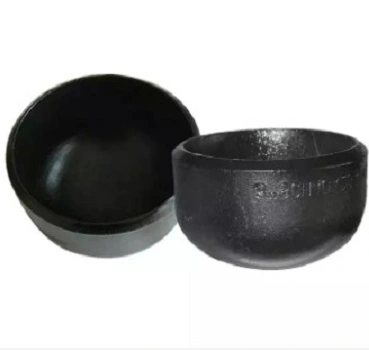
A black steel pipe cap is used to close the end of a pipe when a branch, outlet, or section of piping needs to be sealed. In industrial piping, the cap is more than a simple cover because its dimensions, material, wall thickness, and connection method all need to match the pipe and the service conditions. The black steel pipe caps are usually made of carbon steel pipes. These pipe end caps may be available in several types, such as butt weld type, threaded type, etc. Sometimes “black steel” might lead to a little confusion. The black hue of carbon steel is not a special coating of the fitting to prevent corrosion. Black steel is often carbon steel with a black surface caused by manufacturing scale or surface condition. If a cap will be exposed to moisture, chemicals, salt spray, or outdoor conditions for an extended period of time, further corrosion protection may be necessary. Selecting the right cap for engineers, contractors, and purchasing teams requires more than simply matching the nominal pipe size. # Specify connection type, material, pressure and temperature requirements, dimensional standard, and installation procedure before ordering.
What Makes Black Steel Pipe Caps Suitable for Industrial Piping?
Black steel pipe end caps are not only good-looking, but most importantly, they have the mechanical properties and practicality of carbon steel. The right material grade and manufacturing process may be selected so that the cap can provide a strong closure for the end of a length of pipe while being compatible with the rest of the carbon steel piping system.
Mechanical Strength for Demanding Piping Conditions
Industrial plumbing is often constructed from carbon steel, which is a good compromise of strength, toughness, machinability, and cost. In general, an appropriate grade of carbon steel pipe cap is capable of withstanding the mechanical loads encountered in normal pipeline use if the component has been correctly designed and rated for its intended usage.
There’s more to a hat’s performance than the designation of the material. Fitting in service behavior is impacted by wall thickness, outside diameter, forming method, weld preparation, heat treatment, and connection design. For pressure plumbing, the cap must be selected based on the applicable pipe standard, not only the nominal size.
For example, ASTM A234/A234M covers wrought carbon steel and alloy steel fittings for moderate and elevated temperature service if the required product and design requirements are met. ASTM defines the standard as seamless and welded construction wrought carbon and alloy steel fittings for pressure pipe and pressure-vessel applications.
Practical Compatibility With Carbon Steel Piping
One of the major advantages of a carbon steel cap is that it can be utilized with carbon steel pipe systems. When the cap and pipe are manufactured of the right materials and are the right sizes, the part may be used in new piping assemblies or to update an existing line.
The design of the link is highly important. A butt-weld cap is welded directly to the end of a pipe, whereas a threaded cap has to be threaded. The two variations have different installation requirements and are not interchangeable merely because they have the same nominal pipe size.
ASME B16.9 Wrought, factory-made butt-welding fittings ASME B16.11 Forged, socket-welding and threaded ends These contain important concerns like dimensions, tolerances, materials, ratings, and labeling for the kind of fitting.
Corrosion Performance Depends on the Service Environment
The common misunderstanding is that black steel is automatically corrosion resistant since the surface is dark. In reality, if carbon steel is exposed to water, oxygen, salts, acids, or other unfriendly substances, it will rust.
Thus, the dark appearance should not be regarded as a substitute for corrosion protection. In suitably controlled circumstances, indoor plumbing may be suitable with an uncoated carbon steel cover. Outdoor installations, underground pipes, coastal sites, or systems in contact with corrosive agents may need a protective coating or painting system, a liner, or even an alternate material.
This distinction is particularly relevant in the choice of caps in long-term projects. A carbon steel cap, such as a black steel pipe cap, may be theoretically sufficient but may need additional surface protection to deliver the requisite service life in a particular environment.
How Are Black Steel Pipe Caps Manufactured?
The manufacturing route depends on the type and specification of the cap. A butt-weld cap and a forged threaded cap, for example, are not necessarily produced through the same sequence. Understanding the general manufacturing process helps buyers evaluate whether a supplier has the necessary production and inspection capabilities.
Material Selection Comes Before Forming
Manufacturing begins with the selection of steel that meets the required material specification. Depending on the application, the material may need to satisfy requirements for chemical composition, tensile properties, yield strength, hardness, impact performance, or elevated-temperature service.
Material traceability is also important for industrial projects. A reliable manufacturer should be able to identify the material used for a production batch and provide appropriate documentation when required by the purchase specification. For pressure piping projects, this can include material certificates, inspection records, dimensional reports, and other documents agreed upon before production.
The correct material should be selected according to the operating conditions rather than simply according to the lowest purchase price. A cap used in a high-temperature process line may have different material requirements from one used to protect a pipe during transportation or temporary storage.
Forming Creates the Basic Cap Geometry
Once the material has been approved, the steel is formed into the required cap geometry. The exact process depends on the product design and manufacturing specification. Industrial pipe caps may involve processes such as pressing, forming, forging, machining, or a combination of these operations.
For butt-weld caps, the geometry and end preparation must allow the fitting to be aligned and welded correctly to the pipe. The shape of the cap also needs to provide adequate dimensional consistency so that the finished fitting can be installed without unnecessary adjustment.
For threaded designs, machining becomes particularly important because the thread must correspond to the required pipe connection. Poor thread accuracy can lead to difficult assembly, leakage, or damage during installation. For this reason, dimensional inspection should cover the relevant diameters, wall thickness, overall dimensions, and thread characteristics where applicable.
Heat Treatment and Inspection Support Product Reliability
Depending on the material and manufacturing specification, heat treatment may be required to obtain the required mechanical properties or to control the effects of forming. Heat treatment requirements should be determined by the applicable material specification rather than presented as a universal step for every black steel pipe cap.
After forming and machining, manufacturers may perform dimensional and visual inspections along with other tests specified by the applicable standard or purchase order. For pressure-service fittings, additional examinations or testing may be required depending on the material, manufacturing route, service conditions, and customer requirements.
This is where manufacturing documentation becomes valuable for B2B buyers. Instead of relying on general claims such as “high quality” or “long service life", purchasers can evaluate measurable information such as material certificates, inspection results, dimensional tolerances, heat-treatment records, and applicable compliance documentation.
Where Are Black Steel Pipe Caps Commonly Used?
Black steel pipe caps can be found in a range of piping applications because closing the end of a pipe is a common requirement during construction, maintenance, fabrication, and system modification. However, the appropriate cap design depends on whether the closure is permanent, temporary, welded, threaded, pressure-bearing, or mainly intended to protect an open pipe end.
Oil and Gas Piping Projects
Carbon steel fittings are widely used in oil and gas infrastructure, particularly where the material and fitting specification are appropriate for the service conditions. Pipe caps may be used to close pipe ends during fabrication, isolate sections of a system, complete a piping assembly, or prepare a line for future modification.
For permanent pressure service, the cap should not be selected simply because it is described as “heavy duty". The purchaser needs to verify the material grade, dimensional standard, wall thickness, connection type, pressure-temperature requirements, and compatibility with the piping specification.
Temporary pipe-end protection is a different application. During transportation or storage, a cap may be used to keep dirt, moisture, and foreign objects from entering the pipe. In that situation, the primary requirement may be protection and handling convenience rather than pressure containment.
Construction, HVAC, and Plumbing Systems
Carbon steel pipe caps are also used in construction and mechanical piping projects. During building installation, an open pipe end can collect dust, construction debris, or moisture. A temporary cap can help keep the pipe interior clean until the next stage of installation.
Permanent caps can also be used when a branch is no longer required or when the design calls for a closed pipe end, with a black steel pipe cap providing a suitable option for certain applications. In HVAC and mechanical systems, the choice between a welded and threaded cap depends on the piping design, accessibility, pipe size, and applicable specification.
For contractors, dimensions and connection details are particularly important because a cap that appears suitable by nominal size may still be unsuitable if its connection type or wall dimensions do not match the pipe.
Industrial Processing and Equipment Piping
Manufacturing facilities often contain interconnected process lines, utility systems, storage equipment, and transfer piping. Pipe caps can be used during fabrication and maintenance to close unused sections or complete piping assemblies.
The material choice becomes especially important when the piping carries elevated-temperature fluids or chemically aggressive media. Carbon steel can be an economical option in many applications, but it should not automatically be selected for every chemical service. The compatibility of the material with the process fluid, temperature, pressure, and corrosion environment needs to be established before the component is specified.
This is also an area where documentation can make a difference. For industrial projects, buyers may need material certificates, dimensional inspection records, test reports, and traceability information to support project quality requirements.
How Should You Select the Right Black Steel Pipe Cap?
Choosing a pipe cap begins with identifying the actual piping requirement. Nominal pipe size is important, but it is only one part of the specification.
Start With the Connection Type
The first question is whether the cap needs to be butt welded, threaded, or manufactured with another specified connection. A butt-weld cap requires suitable weld preparation and installation space, while a threaded cap is more convenient where welding is undesirable or where the system design specifically calls for a threaded connection.
The applicable dimensional standard should be confirmed at the same time. ASME B16.9 is associated with factory-made wrought butt-welding fittings, whereas ASME B16.11 covers forged socket-welding and threaded fittings.
Confirm Material, Size, and Wall Thickness
The material grade should match the requirements of the piping system. Buyers should provide the pipe material, nominal size, schedule or wall thickness, operating temperature, operating pressure, and service medium whenever possible.
This information allows the manufacturer to determine whether the proposed cap is suitable for the intended application. For example, a cap intended only for temporary pipe-end protection has very different requirements from a cap installed as part of a permanent pressure-containing system.
Consider Surface Protection Separately
If the piping will be exposed to moisture or corrosive conditions, surface protection should be discussed separately from the selection of black steel itself. Depending on the project, this may involve painting, coating, wrapping, or another corrosion-control system.
This approach is more reliable than assuming that a dark-coloured carbon steel surface provides sufficient corrosion resistance. In demanding environments, the protection system should be selected according to the exposure conditions and expected service life.
What Should Buyers Ask a Pipe Cap Manufacturer?
A supplier evaluation should focus on specifications that can be verified rather than broad statements about quality. Before placing an order, the buyer should make sure the manufacturer understands the required cap type, nominal size, wall thickness, material grade, end connection, applicable standard, quantity, and service conditions.
For projects with formal quality requirements, it is also useful to confirm what documentation the supplier can provide. Depending on the project, this may include a material certificate, dimensional inspection report, heat-treatment record, test report, certificate of conformity, or other documents required by the purchase order.
Manufacturing capability is another useful consideration. A supplier producing carbon steel fittings should be able to explain its forming and machining processes, inspection procedures, material traceability system, and packaging method. Clear answers to these questions provide much stronger evidence of manufacturing capability than generic claims about being a “leading” or “professional” manufacturer.
Packaging should not be overlooked either. Pipe caps can be damaged during transportation if the ends, threads, or machined surfaces are inadequately protected. Proper packaging helps maintain dimensional and surface condition between the factory and the installation site.
Conclusion
Black steel pipe caps provide a practical way to close, isolate, or protect the ends of carbon steel piping, but their suitability depends on more than their black appearance. Material grade, connection type, dimensions, wall thickness, manufacturing process, and service conditions all influence the performance of the finished fitting.
For permanent pressure piping, buyers should verify the applicable standards and material requirements rather than relying on general descriptions such as “strong” or “rust resistant". ASME B16.9, ASME B16.11, ASTM A234/A234M, and other specifications may be relevant depending on the type of fitting and application.
The most important point is that black steel pipe cap selection should begin with the piping requirements. Once the size, connection, material, pressure and temperature conditions, corrosion environment, and documentation requirements are clearly defined, it becomes much easier to select a cap that fits the system and meets the project's quality expectations.
China’s Leading Manufacturer of Carbon Steel Pipe Fittings and Valves
Since 1998, Cangzhou Oudi Pipe Manufacture Co., Ltd. has been the biggest company in China that makes pipe parts, valves, and flanges out of carbon steel. Located in Mengcun Hui Autonomous County, a "China fitting" hub, our firm has state-of-the-art manufacturing equipment and expert technical knowledge. Parts made of alloy steel, carbon steel, and stainless steel are our forte. These parts include bends, flanges, tees, reducing pipes, steel pipes, and black steel pipe cap products. We make 16,000 tonnes of high-quality goods every year, so we can offer a wide range of goods. For more information or enquiries, please contact us at oudi-04@oudiguandao.com.
References
1. Smith, J. (2020). "The Complete Guide to Steel Pipe Fittings and Caps." Industrial Piping Quarterly, 45(2), 78-92.
2. Johnson, R. & Williams, T. (2019). "Corrosion Resistance of Black Steel Pipe Caps in Industrial Applications." Journal of Materials Engineering and Performance, 28(6), 3456-3470.
3. Brown, A. (2021). "Manufacturing Processes for Black Steel Pipe Caps: Innovations and Best Practices." Advanced Manufacturing Technology, 12(4), 567-582.
4. Lee, S. et al. (2018). "Applications of Black Steel Pipe Caps in the Oil and Gas Industry: A Comprehensive Review." Petroleum Engineering Journal, 33(3), 234-250.
5. Garcia, M. & Thompson, K. (2022). "Black Steel Pipe Caps in Modern Construction: Trends and Challenges." Building and Construction Materials, 56(1), 123-138.
6. Wilson, D. (2020). "Performance Analysis of Black Steel Pipe Caps in High-Pressure Industrial Systems." International Journal of Pressure Vessels and Piping, 187, 104160.

Need help finding the right solution with our experts. Please contact us.

SINCE 1998 Your Reliable Pipeline Manufacturer



