How Pipe Cap Fittings Reduce Leakage and Corrosion?
Pipe cap fittings play a practical role in protecting the ends of piping systems and maintaining the integrity of lines that are no longer open to flow. A well-chosen and placed cap may prevent process fluids from escaping from industrial pipes, block moisture and impurities from entering an idle line, and decrease the exposure of the pipe end to ambient conditions that may hasten corrosion. These advantages are particularly critical in water treatment, chemical processing, oil and gas, construction, and general industrial service applications where an inadequately secured pipe end might ultimately become a cause of leakage, pollution, or premature component replacement. The reliable performance of the pipe cap fitting does not rely on the cap alone. The ultimate outcome depends on the technique of connection, material compatibility, dimensional precision, installation process, operational environment, and maintenance procedures. A cap acceptable for a low-pressure water line may not be suitable for a corrosive chemical service or a high-temperature operation. So, while choosing and installing pipe cap fittings, attention should be paid to leakage and corrosion prevention combined.
How Properly Selected Pipe Caps Help Control Leakage?
A Secure Connection Starts With the Correct Cap Design
The basic function of a pipe cap is to shut off the end of a pipe securely. But how the closure is accomplished relies on the cap type and the connection type. For example, butt weld caps, threaded caps, and socket weld caps do not make a connection in the same manner. Their performance is consequently governed by differing installation and inspection criteria.
A cap of the right size should correspond with the pipe in outer diameter, wall thickness, type of connection, and other applicable specifications. An exact dimensional fit enables the cap to be properly seated and avoids the likelihood of gaps, misalignment, or overstress at the joint. For welded applications, the geometry of the cap and pipe end is also important for weld preparation and the quality of the final connection.
That’s why dimensional precision is more than a production detail. If a cap is difficult to align or does not fit the pipe correctly, it may extend the installation time and make it more difficult to achieve a consistent connection. Consistent batch-to-batch dimensions may also ease manufacturing and save needless modification during installation for projects with a high number of fittings.
Connection Quality Has a Direct Effect on Leak Risk
A high-grade pipe cap fitting might leak if the connection is not fitted properly. In welded systems the leakage risk may be due to insufficient fusion, inadequate penetration, cracking, porosity, poor fit-up, or unsatisfactory welding techniques. The particular inspection criteria are dictated by the appropriate pipe service and project standards, but the underlying idea stays the same: the finished joint must be acceptable for the working circumstances.
Threaded pipe caps are a separate matter. Threads must be clean, perfectly matched, and free from substantial damage. An adequate thread sealant may be needed for servicing and connection design. Over-tightening should be avoided, as it might damage threads or produce extra stress in the fitting and pipe.
The objective isn’t only to create the link as tight as feasible. The objective is to design a connection that is mechanically compatible with the pipe system and is dependable in the face of pressure, temperature variations, vibration, and any other anticipated operating circumstances.
Dimensional Consistency Supports Reliable Installation
This is especially crucial when pipe cap fittings are ordered for OEM manufacturing, prefabricated piping assemblies, or big industrial projects. Dimensional variations might impact fit-up and generate extra effort in manufacturing.
Thus, a supplier should be able to supply the essential dimensions information and material documents as requested by the project. Depending on the application, the purchasers may need details like grade of material, dimensions, wall thickness, manufacturing standard, heat number, inspection records, or certificates of compliance.
These facts do not exclude all conceivable sources of leakage, but they do give a better foundation for quality control when selecting and installing pipe cap fittings.
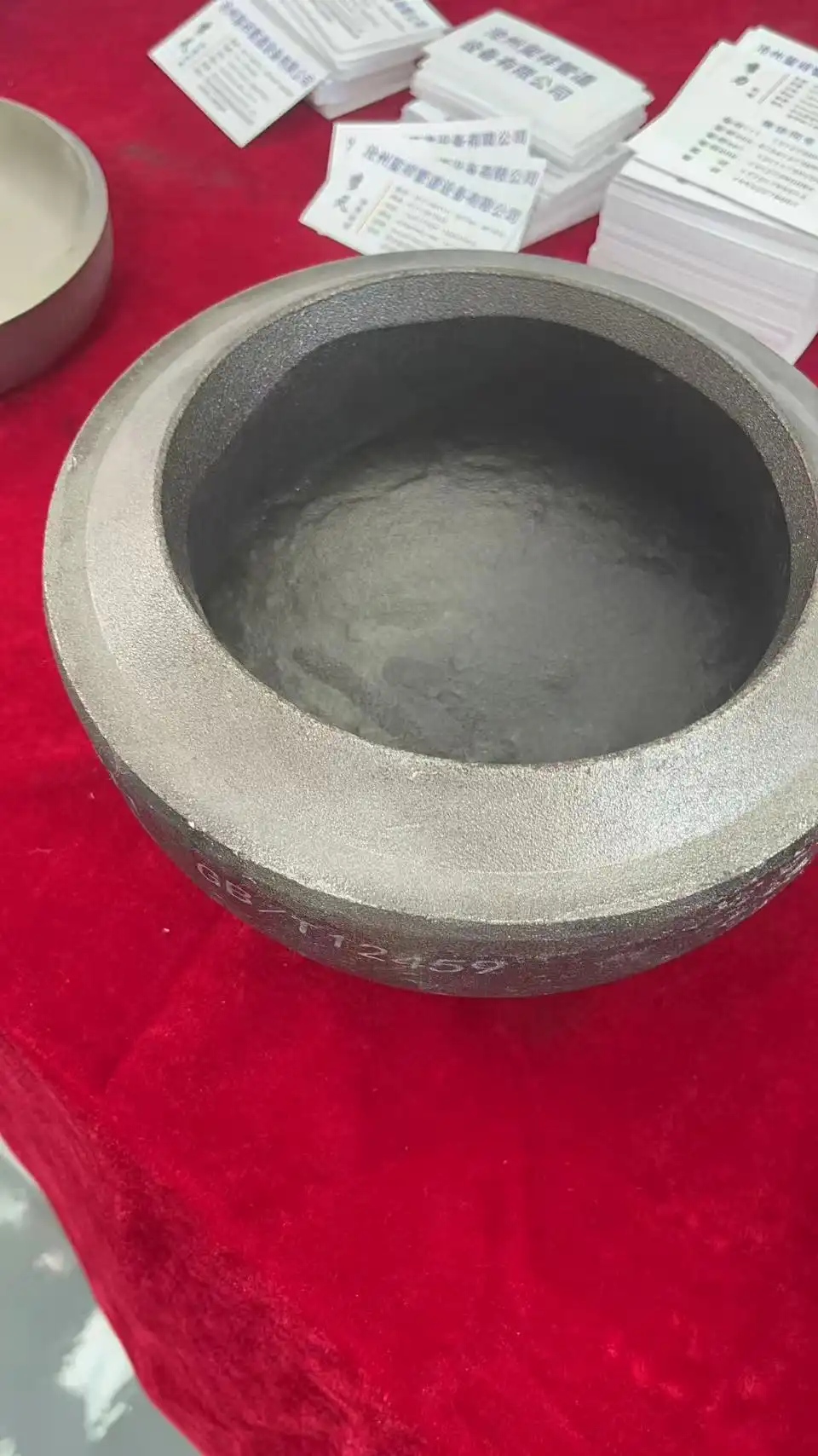
Choosing Materials That Resist Corrosion in Real Service Conditions
Match the Material to the Piping Environment
Don’t assume corrosion resistance because a material is labelled “stainless” or “corrosion resistant". The real environment matters. The service life of a pipe cap fitting is affected by water chemistry, chlorides, acids, alkalis, process chemicals, temperature, humidity and exposure to external pollutants.
Most regular industrial situations typically employ 304 stainless steel, although 316 stainless steel is generally selected for higher resistance to exposure to chlorides. Duplex stainless steel, nickel-based alloys, or other specialised materials may be required for more demanding applications. If the mechanical qualities and corrosion protection criteria are suitably met, carbon steel may also be useful for various services.
So the choice of the right grade has to begin by considering the real operating circumstances and not with the choice of a grade. The chemical or environmental conditions vary from one pipe system to another; thus, a material that is doing well in one system may be corroding at a faster pace in another.
Consider Internal and External Corrosion Separately
A pipe cap may be vulnerable to corrosion both within and outside the piping system. Internal corrosion may develop when leftover process fluid, moisture or chemical deposits stay in contact with the material. External corrosion of the cap may occur due to exposure to rain, moisture, salt-loaded air, chemicals, dirt or other harsh environmental conditions.
This difference helps to decide whether more surface protection is required. A cap fitted in a saltwater environment outside may need a different scheme of corrosion protection than an identical cap fitted within a dry industrial structure.
Moisture management may also be critical for lines that are temporarily closed. Simply putting a lid on does not immediately halt corrosion in the isolated area. If water or corrosive material is retained within the pipe, the internal corrosion may continue even if the pipe end is physically closed.
Surface Treatment Can Provide Additional Protection
Where the application requires, surface treatments and coatings may provide extra protection in combination with proper material selection. Depending on the material and the service, techniques such as passivation, painting, epoxy coatings or specialised fluoropolymer systems may be used.
Passivation may enhance the state of the passive surface for stainless steel components following adequate manufacturing and cleaning operations. However, coatings may offer a physical barrier between the fitting and a harsh external environment, but their applicability is dependent on temperature, chemical exposure, surface preparation and predicted service conditions.
A coating should not be considered a replacement for appropriate base material. If the underlying material is not well suited to the service, applying a surface treatment may not be a viable long-term solution. The optimum approach to corrosion control typically includes a combination of material selection, proper manufacturing, surface condition, quality of installation and environmental management.
How Pipe Cap Fittings Can Reduce Corrosion-Related Leakage?
Preventing Moisture and Contaminants From Reaching the Pipe End
An exposed pipe end may be an accessible entrance site for water, dirt, dust and other impurities. Leaving the terminus of a pipe uncovered may raise the potential for contamination and corrosion in systems that are temporarily shut off or saved for future expansion.
A proper pipe cap fittings solution offers a physical closure of the pipe interior to separate it from the surrounding environment. This is especially helpful for storage, shipping, building, and temporary system shutdowns.
Protection given by the cap relies, however, on the kind of connection and upon circumstances under which the line is stored or used. A temporary closure should not be taken as a permanent pressure-retaining connection unless the cap and connection have been specially developed and certified for such purpose.
Reduce Opportunities for Corrosion at Vulnerable Connections
Moisture that forms around ill-fitting parts or between different materials combined without proper consideration of galvanic effects may open the pipe end and its connection zone to attack. Proper selection of fittings may lessen these hazards by ensuring dimensional compatibility and enabling the connection to be made appropriately.
The galvanic corrosion when various metals are coupled in the presence of an electrolyte must be paid special attention. For example, a pipe assembly consisting of dissimilar metallic components may be prone to localised corrosion if the material combination and ambient circumstances combine to form a galvanic cell.
It is not always the answer to employ the most resistant material against corrosion that is available. In many circumstances it is more practicable to pick suitable materials, to separate dissimilar metals when appropriate, and to prevent moisture or other electrolyte exposure.
Avoid Creating New Corrosion Problems During Installation
Installation procedures might also be a factor in the corrosion performance. Certain stainless steel surfaces may be contaminated by improper equipment, abrasive particles, chemicals or manufacturing residues. Depending on the application and project requirements, welded stainless steel components may also need adequate post-weld cleaning or surface treatment.
This is especially true for situations where the pipe cap is part of a clean process system or where corrosion resistance is a major design issue. Therefore, good fabrication processes must be regarded as part of corrosion prevention, not a distinct quality concern.
Installation Practices That Improve Long-Term Reliability
Prepare the Pipe and Fitting Before Assembly
Before installing a pipe cap fitting, the pipe end and fitting should be inspected for visible damage, excessive corrosion, contamination, deformation, or dimensional problems. Threads should be clean when a threaded connection is used, while weld ends should be properly prepared according to the applicable welding procedure.
Cleaning is important because dirt, scale, moisture, or foreign material can interfere with proper assembly or welding. It is also useful to inspect the fitting itself before installation rather than assuming that every component is ready for immediate use.
For projects with formal quality requirements, inspection and traceability procedures should be followed before the component is released for installation.
Use the Correct Procedure for the Connection Type
Installation of pipe cap fittings should follow the requirements applicable to the specific connection. A welded pipe cap requires appropriate fit-up, welding parameters, qualified procedures, and inspection where required. A threaded cap requires suitable thread engagement and an appropriate sealing method.
The same installation technique should not be applied to every type of cap. This distinction is especially important when purchasing fittings from different suppliers because dimensions and connection details should be confirmed against the project specification rather than assumed from appearance alone.
Correct installation also reduces the temptation to compensate for poor fit by excessive force. If a component does not seat correctly, forcing it into position can create mechanical damage that may not be visible until the system is pressurised.
Inspect the Connection Before Putting the System Into Service
Inspection provides an opportunity to identify installation problems before they become operating problems. Depending on the application, this may involve visual inspection, dimensional checks, pressure testing, nondestructive examination, or other project-specific procedures.
For welded connections, inspection requirements can vary significantly according to the service, piping class, applicable codes, and project quality plan. Threaded connections may require visual and dimensional checks as well as appropriate leak testing when specified.
The important point is that inspection should be based on the risk and requirements of the actual piping system. A small utility line and a high-consequence process line should not necessarily be managed under identical inspection criteria.
Conclusion
Pipe cap fittings can contribute significantly to leakage control and corrosion prevention when they are selected according to the piping system and installed under appropriate procedures. Their value comes not simply from closing the end of a pipe but from providing a connection that is dimensionally compatible, mechanically suitable, and appropriate for the service environment.
Material selection is equally important. Stainless steel, carbon steel, duplex stainless steel, nickel-based alloys, and other materials each have different performance characteristics, so the final choice should consider the fluid, temperature, pressure, chloride exposure, external environment, and expected service life. Coatings and surface treatments can provide additional protection, but they work best as part of a broader corrosion control strategy.
Installation and maintenance complete the process. Proper preparation, alignment, welding or threading, inspection, and routine monitoring can help identify problems before they develop into costly failures. For buyers, working with a manufacturer that can provide accurate dimensions, suitable materials, quality documentation, and application-specific support is therefore an important part of reducing long-term piping risks.
Cangzhou Oudi Pipe Manufacture Co., Ltd. has been manufacturing pipe fittings since 1998 and can support customers looking for pipe cap fittings for different industrial applications. For projects with specific material, dimensional, connection, or quality requirements, providing the supplier with complete operating information can make it easier to determine a suitable fitting configuration and avoid problems caused by incorrect selection. If you'd like to learn more about our selection of pipe cap fittings and other plumbing parts, please email us at oudi-04@oudiguandao.com.
FAQ
1. What are the main benefits of using pipe cap fittings?
Pipe cap fittings provide a tight seal, prevent leaks, protect against corrosion, and extend the lifespan of piping systems.
2. How do pipe cap fittings prevent corrosion?
They are made from corrosion-resistant materials and often feature protective coatings or surface treatments.
3. What materials are commonly used for pipe cap fittings?
Common materials include stainless steel, carbon steel, and various alloys, depending on the application.
4. How often should pipe cap fittings be inspected?
Regular inspections should be conducted as part of routine maintenance, with frequency depending on the system and environment.
References
1. Smith, J. (2019). Advanced Piping Systems: Design and Maintenance. Industrial Press.
2. Johnson, R. (2020). Corrosion Prevention in Industrial Piping. Journal of Materials Engineering, 45(3), 278-292.
3. Brown, A., & Davis, C. (2018). Best Practices for Pipe Fitting Installation. Plumbing Engineer, 32(4), 56-63.
4. Lee, S. (2021). Materials Selection for Corrosive Environments. Chemical Engineering Progress, 117(8), 38-45.
5. Wilson, M. (2017). Leak Prevention Strategies in Industrial Piping Systems. Plant Engineering, 71(5), 42-48.
6. Taylor, P. (2022). Advancements in Pipe Fitting Technology. Industrial Maintenance & Plant Operation, 83(2), 18-24.

Need help finding the right solution with our experts. Please contact us.

SINCE 1998 Your Reliable Pipeline Manufacturer