How to Calculate Dimensions for Sch 40 Carbon Steel Elbows?
Engineers, designers, and other people who work in the piping business need to be able to figure out the sizes of Schedule 40 carbon steel elbows. These bends are very important in many industrial settings because they let you change the direction of fluid flow in a pipe system. Correctly figuring out the sizes of things makes sure they fit well, work well, and meet industry standards. This blog post will go into detail about how to figure out the sizes of Sch 40 carbon steel elbows, including the most important things to think about, the rules to follow, and real-life examples to show how to do it. If you can do these calculations well, you'll be able to build piping systems that work well and meet project needs and industry standards.
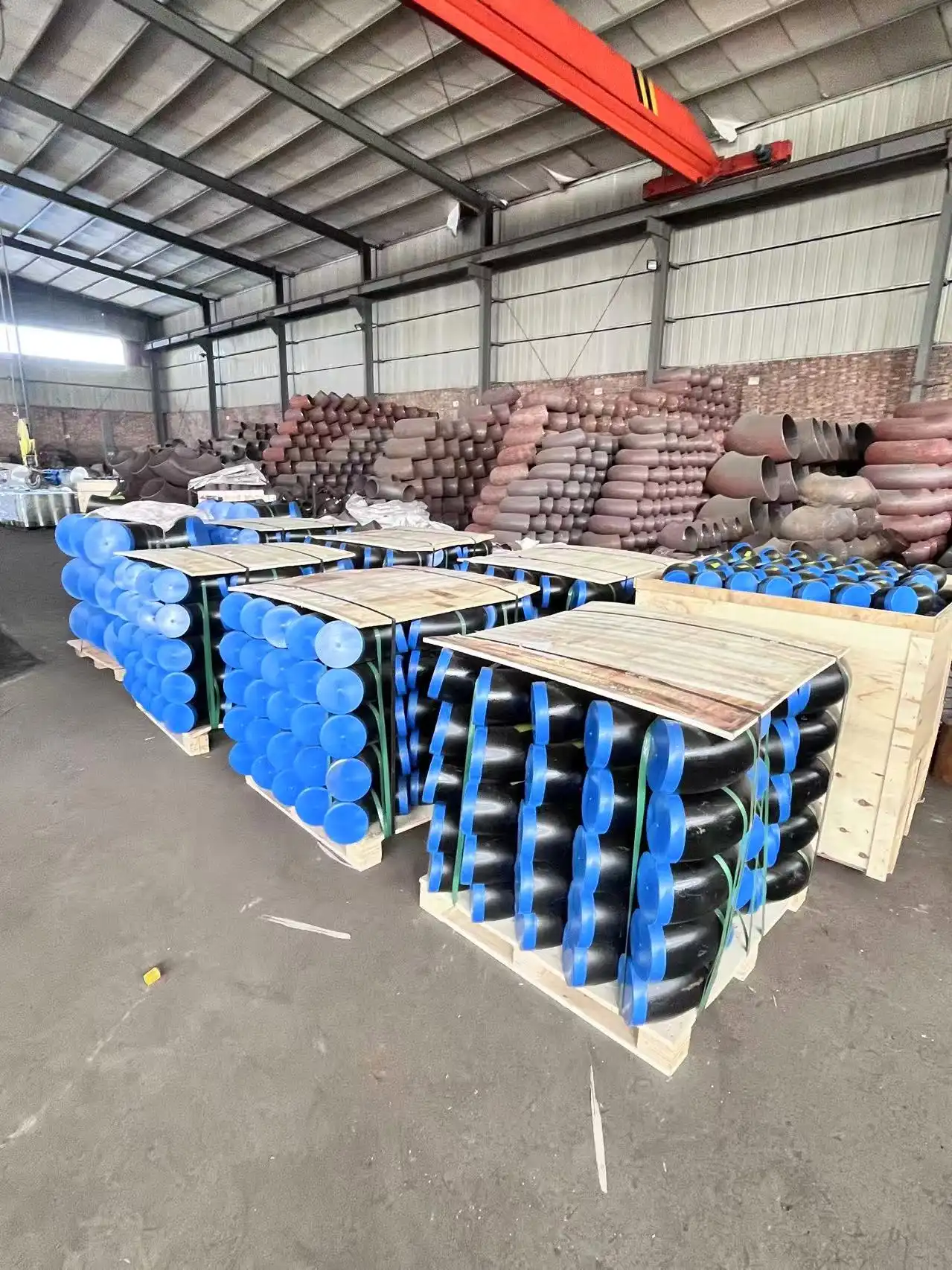
Understanding Schedule 40 Specifications: Wall Thickness and Pressure Ratings
Defining Schedule 40 and Its Significance
People who work with pipes use the number 40 to show how thick the wall of a pipe is. This rule tells you how thick the wall of a Sch 40 carbon steel elbow should be based on the size of the pipe. When measuring, it's important to know what Schedule 40 means because it changes how strong the elbow is, how well it can hold pressure, and how well it works in general. They are strong and cheap, which is why Sch 40 carbon steel elbows are a popular choice in many business settings. When you compare the elbows to the standard pipe size, the wall thickness goes up. All pipes of the same size will be strong enough because of this. The pressure levels will stay the same.
Wall Thickness Variations Across Pipe Sizes
It's important to know that different pipe sizes have different wall thicknesses when choosing the right Sch 40 carbon steel joints. There is more wall in the elbow when the pipe is made bigger. To find the exact wall thickness for a certain pipe size, engineers need to use math or tables since this isn't a straight line. If you use the same plan, a 2-inch Sch 40 carbon steel elbow and a 6-inch Sch 40 carbon steel elbow will have different wall thicknesses. When you compare these changes, you can see that the fitting's center-to-end length and total weight are different. These differences are very important when planning and setting up a pipe system.
Pressure Ratings and Their Impact on Dimensions
When figuring out the sizes of Sch 40 carbon steel elbows, pressure values are very important. The highest allowable working pressure (MAWP) that the elbow can safely handle is shown by these ratings. The pressure number depends on how thick the wall of the elbow is and how the material works. Engineers need to make sure that the Sch 40 carbon steel elbow they choose can handle the system's pressure needs once the sizes are set. So that they can handle more pressure, the walls or materials might need to be bigger or stronger. This could change how big the elbow is generally. It is important to find the best mix between the pressure needs and the pipe system's size limits so that it works well and is safe.
Utilizing ASME B16.9 Standards for Accurate Dimension Calculation
Key Dimensions Specified in ASME B16.9
The standard for factory-made wrought steel buttwelding fittings is ASME B16.9. This includes Sch 40 carbon steel elbows. This standard gives you important knowledge for doing accurate calculations of dimensions. The standard pipe size, outside diameter, wall thickness, and center-to-end measurement are some of the most important measurements listed in ASME B16.9. These measurements are standard for Sch 40 carbon steel elbows so that they are the same size and can be used by different makers. Engineers can safely figure out the elbow's dimensions so that it fits and works properly in a pipe system by following these rules, no matter where the elbow comes from or who made it.
Interpreting Dimensional Tables and Tolerances
You need to know all the limits and numbers in ASME B16.9 in order to correctly figure out the sizes of Sch 40 carbon steel elbows. There are different sizes for fittings like elbows in these tables. They are based on the standard pipe size and schedule. When you try to figure out what these numbers mean, remember the tolerances. There can be small changes in output because of tolerances, but the parts still need to fit and work right. This could mean the outside width, the wall thickness, or the distance from the middle of a Sch 40 carbon steel elbow to its end. These limits need to be thought about by engineers when they choose the elbow sizes to make sure the elbows will fit correctly in the pipe system and meet all the design needs.
Applying ASME B16.9 to Different Elbow Configurations
One type of elbow is the long radius elbow. Other types are the 45-degree elbow and the 90-degree elbow. You need to take the right measures based on the shape of the elbow to get the right size Sch 40 carbon steel elbows. A 90-degree Sch 40 carbon steel elbow and a 45-degree elbow of the same size will have different center-to-end sizes. The radius of a long radius elbow is bigger than that of a normal radius elbow, so they are not the same size. Follow the ASME B16.9 rules for different elbow configurations to be sure that your size calculations are correct. They will use these rules to help them figure out what each type of Sch 40 carbon steel elbow in the system needs and how it is made.
Practical Examples: Calculating Center-to-End and Weight for Different Sizes
Step-by-Step Calculation for a 4-inch 90-degree Elbow
You can use a 4-inch 90-degree elbow to help you figure out what size Sch 40 carbon steel elbow you need. First, use the ASME B16.9 measurement table to find the standard pipe size and plan. The outside of a 4-inch Sch 40 carbon steel elbow is 4.5 inches wide and 0.237 inches thick. From the bend in the pipe to the end, it should be 1.5 inches longer. To make a 90-degree curve, turn your arms in this way. In other words, 6 inches is 4 inches times 1.5 inches. In other words, it's 6 inches long from start to finish. How thick is the steel, and how much of it was used? Then we'll know how much it weighs. The answer is in a table or with the person who made the question.
Comparing Calculations for Different Elbow Sizes
There are several ways to figure out what size Sch 40 carbon steel elbows you need. These pictures show a 2-inch elbow, a 4-inch elbow, and an 8-inch 90-degree elbow. Outer diameter of the 2-inch Sch 40 carbon steel elbow is 2.375 inches, and thickness is 0.154 inches. Two inches across, three inches long, and one and a half inches deep. Outer diameter of the 8-inch elbow is 8.625 inches, and thickness is 0.322 inches. Twelve inches long, eight inches wide, and five and a half inches thick. Thoughtfully observe how the numbers alter as you move the pipe. It's not logical. As you can see, having arms that are the right size and shape is critical.
Adjusting Calculations for 45-degree Elbows
Something a little different needs to be done to find out the sizes of 45-degree Sch 40 carbon steel elbows than for 90-degree elbows. The main thing that's different is the length from middle to end. When the angle is 45 degrees, this number is 1.06 times the normal pipe size. It's 1.5 times the size of the pipe when the elbow is straight out. From one end to the other, a 4-inch 45-degree Sch 40 carbon steel elbow would be 4.24 inches long, which is 4 inches times 1.06 inches. The outside width and wall thickness are the same as they were on the 90-degree elbow that was the same size. Make sure you have the right number before you try to figure out what sizes 45-degree elbows are. Before you choose the sizes of pipe bends made of Sch 40 carbon steel, you should think about how they will be set up. That is very important, as shown by the change in the numbers.
Conclusion
To plan and set up pipe systems, you need to be able to figure out the sizes of Sch 40 carbon steel elbows. If engineers and designers know Schedule 40 specifications, use ASME B16.9 standards, and know good ways to do calculations, they can be sure that the results they get are right and reliable. These numbers are needed to make sure the product fits well, works well, and meets standards in the business. Even as the plumbing industry changes, people who work with Sch 40 carbon steel elbows and other pipe parts will still need to know how to use these ways of figuring things out. For further assistance or inquiries regarding Sch 40 carbon steel elbows, please contact us at oudi-04@oudiguandao.com.
FAQ
Q: What is the significance of Schedule 40 in carbon steel elbows?
A: Schedule 40 determines the wall thickness of the elbow based on the nominal pipe size, balancing strength and cost-effectiveness.
Q: How does ASME B16.9 contribute to dimension calculations for Sch 40 carbon steel elbows?
A: ASME B16.9 provides standardized specifications for key dimensions, ensuring consistency and interchangeability across manufacturers.
Q: What is the difference in calculating center-to-end measurements for 90-degree and 45-degree elbows?
A: 90-degree elbows use a multiplier of 1.5 times the nominal pipe size, while 45-degree elbows use 1.06 times the nominal pipe size.
Q: How do pressure ratings affect the dimensions of Sch 40 carbon steel elbows?
A: Higher pressure ratings may require thicker walls, which can impact the overall dimensions and weight of the elbow.
Q: Why is it important to consider tolerances when calculating dimensions for Sch 40 carbon steel elbows?
A: Tolerances account for slight manufacturing variations while ensuring proper fit and function within the piping system.
References
1. American Society of Mechanical Engineers. (2018). ASME B16.9-2018: Factory-Made Wrought Buttwelding Fittings. New York, NY: ASME.
2. Nayyar, M. L. (2000). Piping Handbook (7th ed.). McGraw-Hill Education.
3. Smith, P. (2015). Piping Materials Guide: Selection and Applications. Elsevier Science.
4. American Society of Mechanical Engineers. (2019). ASME B31.3-2018: Process Piping. New York, NY: ASME.
5. Antaki, G. A. (2003). Piping and Pipeline Engineering: Design, Construction, Maintenance, Integrity, and Repair. CRC Press.
6. Kannappan, S. (1986). Introduction to Pipe Stress Analysis. John Wiley & Sons.

Need help finding the right solution with our experts. Please contact us.

SINCE 1998 Your Reliable Pipeline Manufacturer



