How to Choose the Right Butt Weld Reducer for Your Pipeline Project?
Choosing the right butt weld reducer is not simply a matter of matching one pipe diameter to another. When the reducer is welded into the pipeline, it becomes part of the pressure boundary, and the material, dimensions, wall thickness, configuration, and quality of manufacture must be suitable for the actual service circumstances. A fitting may seem right on a design, but if it does not match the material grade, pressure-temperature capabilities, or dimensions of the rest of the pipe system, it is not acceptable. The optimum selection procedure for purchasers working on oil and gas lines, chemical processing systems, water infrastructure, power projects, or industrial pipelines begins with the pipeline specification, not the fitting. Before you can approve a reducer, you need to know the pipe diameters being joined, the fluid being carried, the operating pressure and temperature, the installation orientation, the governing standards, and any welding requirements. Cangzhou Oudi Pipe Manufacture Co., Ltd. has been a supplier of pipe fittings since 1998. This article discusses practical considerations for purchasers to consider when considering a butt weld reducer for a new or replacement pipeline installation.
Start With the Pipeline Service Conditions
Before you compare reducer size or materials, you need to know what the fitting will encounter after installation. Many needs are determined by the working environment and cannot be inferred from pipe diameter alone.
Particular importance is given to the conveyed medium. The material requirements for a reducer used in regular water service might be substantially different from those for a reducer used in an oil, gas, chemical, or corrosive process line. The chemical nature of the medium, its chloride content, humidity, abrasive particles, and other parameters might impact the selection of the material and the estimated service life.
Also, the operating temperature has to be considered, as both the strength of the material and the corrosion behavior may vary with increasing or decreasing temperature. Pressure should be assessed in conjunction with temperature, not as a standard in isolation. The reducer should be appropriate for the pressure-temperature envelope of the pipeline, including any circumstances that may arise during startup, shutdown, or other changes in operating conditions.
The setting in which it is installed is also important. Very varied circumstances of corrosion and maintenance may occur in indoor process pipes, subterranean pipelines, offshore systems, and exposed outdoor lines. First, understanding these characteristics offers the customer a much better foundation on which to judge the fitting.
Match the Reducer to the Connected Pipe
The reducer should match both portions of pipe that it links. That entails looking at the nominal pipe diameters as well as the actual dimensions and material requirements called for in the project.
For butt-welded construction, the ends of the fitting should be appropriate for welding to the connecting pipe. The outside diameter, wall thickness, bevel arrangement, and dimensional tolerances should consequently be verified against the appropriate fitting and pipe standards. If the actual sizes or wall thicknesses are not suitable, a nominal size match will not suffice.
This is also where procurement teams should pay attention to the project pipe class. Selecting a reducer independent of the pipe specification might cause issues later if the reducer is not manufactured to the stated material grade, schedule, or design criteria of the line.
Consider What the Fluid Will Do Inside the Reducer
Change in pipe diameter will always result in a change in flow conditions. The reducer should allow for a gradual transition and not a sudden shift that creates additional turbulence or pressure loss.
But its relevance depends on the application. In a very basic water line, a modest transition is probably not a big design consideration. But in high-flow process systems, reducer geometry may have a significantly larger effect on system performance, especially in pump suction lines or systems conveying sensitive fluids.
So you have to choose based on the whole pipe design, considering how a butt weld reducer integrates with the system, and not on the assumption that any reducer with the proper size would perform the same.
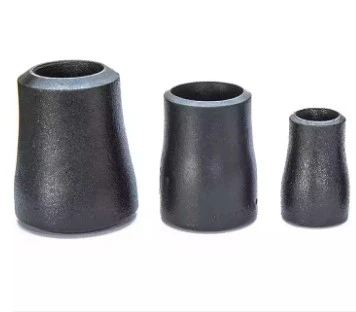
Choose the Correct Reducer Configuration
One of the most crucial issues is to decide whether the pipeline needs a concentric reduction or an eccentric reducer. These two configs are for distinct installation demands, especially in horizontal pipework.
When a Concentric Reducer Makes More Sense?
A concentric reducer has the midline of the bigger and smaller ends in common. This design is easy for many applications since the transition is symmetrical.
It is often appropriate for vertical pipework and instances where a centred flow route is advantageous. It may also be used for horizontal systems if the pipe design does not need a flat-side structure for drainage, venting or equipment protection.
The decision should still be dependent on the pipe architecture and not just a blanket assumption that concentric reducers are always better. The right arrangement relies on how the line links to pumps, tanks, valves and other equipment.
When an Eccentric Reducer Is the Better Choice?
The eccentric reducer has its centre lines offset, and one section of the fitting has a flat surface. This design may be especially beneficial in horizontal pipework since the orientation of the flat side can be adjusted according to unique system needs.
For example, a horizontal line attached to a pump may need a certain reducer orientation to aid in preventing undesirable air collection or to maintain the proper connection between the pipe and equipment nozzle. In other uses, the orientation may be chosen to aid drainage or to provide clearance in the pipe layout.
The crucial thing to note is that an eccentric reduction is not merely a variation of a concentric reducer. Orientation has to be addressed in the engineering and installation. Where the required configuration and orientation impinge on system operation, this must be made clear in the procurement documents.
Verify Size, Wall Thickness, and Dimensions
Proper sizing is not only checking if the reducer goes from one nominal diameter to another. Buyers are encouraged to check the full dimensional specifications before ordering.
Check Both Ends of the Reducer
The big and small ends should be the size of the pipes they join, but all dimensions, including overall length and end preparation, should be checked. A reducer that is theoretically suitable for the two nominal pipe diameters but does not meet the project requirement in terms of dimensions may cause installation complications.
This is particularly important when the fitting is being fitted in an existing line or when space is restricted. For a replacement project, the amount of available face-to-face or end-to-end space may decide whether or not a certain reducer may be placed without having to alter surrounding pipe sections.
Therefore, when the fitting is in a closely regulated pipe arrangement, dimensional drawing should be verified before manufacturing.
Wall Thickness Needs to Suit the Piping System
Wall thickness is another crucial factor since after welding the butt weld reducer becomes a member of the pressure-containing system. The fitting should be chosen on the basis of the design requirements of the linked pipe and not on the basis of exterior dimensions alone.
For projects where a certain pipe schedule or wall thickness is required, the buyer should verify the fitting specification and manufacture details with the supplier. This helps to avoid fit-up mismatches and minimises the chances of dimension issues being found after the parts are on site.
Select a Material That Fits the Application
Material selection should reflect both the mechanical requirements and the service environment. Carbon steel, stainless steel, and alloy steel may all be suitable for different pipeline applications, but they are not interchangeable in every service.
Carbon Steel for General Industrial Applications
Carbon steel reducers are widely used in industrial piping where the operating environment and fluid characteristics are compatible with the material. They are often considered for oil and gas, water, structural processes, and general industrial systems where strength, availability, and cost are important factors.
The specific material grade still needs to be verified against the project specification. Saying that a reducer is simply “carbon steel” does not provide enough information for a controlled procurement process.
Stainless and Alloy Steel for More Demanding Service
Stainless steel may be appropriate where corrosion resistance or product cleanliness is more important. Certain food-processing, chemical, pharmaceutical, and water-related applications may require stainless steel because of the service environment and cleaning requirements.
Alloy steels can be considered where the pipeline operates under demanding temperature, pressure, or mechanical conditions. The correct choice depends on the actual grade, heat treatment, design conditions, and applicable specification.
Rather than selecting the material based on a general industry category, buyers should provide the supplier with the required material grade and service conditions whenever possible. This makes the quotation and technical review much more reliable.
Review Pressure, Temperature, and Operating Conditions
Pressure and temperature ratings should be assessed as part of the complete piping design. The reducer must be suitable for the conditions it will experience throughout its intended operating range.
Look Beyond Normal Operating Pressure
Normal operating pressure is not necessarily the only condition that matters. Design pressure, pressure fluctuations, startup and shutdown conditions, and other transient events may influence the fitting requirements.
The same principle applies to temperature. If the pipeline experiences significant temperature changes, the material and fitting specification should account for those conditions rather than relying only on an average operating temperature.
Buyers should provide the supplier with the design conditions specified by the engineering team. The supplier can then confirm whether the proposed reducer meets the required material and manufacturing specification.
Pay Attention to Equipment Connections
Reducers are often installed near pumps, vessels, valves, and other equipment where flow behaviour can become particularly important. A fitting that works adequately in a simple straight pipeline may need closer review when installed close to sensitive equipment.
Pump suction piping is a good example. The reducer configuration and orientation can affect the flow entering the pump, so the fitting should be selected according to the equipment manufacturer's requirements and the overall piping design rather than treated as an isolated component.
Examine Manufacturing and Weld Preparation
Because a butt weld reducer is joined directly to the pipeline, the quality of its end preparation and manufacturing has a direct effect on installation.
Confirm Bevel and End Preparation
Butt welding normally requires suitable end preparation so that the fitting can be properly joined to the pipe. Bevel angle, root face, wall thickness, and dimensional tolerances should be compatible with the welding procedure specified for the project.
The supplier should be able to provide dimensional information or drawings where required. If a project has a specific welding procedure specification, those requirements should be communicated before production rather than after the fitting has been delivered.
Consider the Quality of the Finished Surface
The internal surface of the reducer should be suitable for the intended service. A clean and properly finished internal surface can help reduce unnecessary flow disturbance and may be particularly important for applications where contamination, buildup, or product retention is a concern.
External appearance alone should not be treated as proof of fitting quality. Buyers should place greater emphasis on dimensions, material traceability, manufacturing controls, inspection records, and compliance with the specified standard.
Check Standards and Inspection Requirements Before Ordering
A reliable procurement process should identify the applicable standards before the purchase order is issued. For butt weld fittings, dimensional and manufacturing requirements may be governed by standards such as ASME B16.9, while material and project-specific requirements may come from other specifications.
Ask for the Documents Your Project Requires
Depending on the application and contractual requirements, buyers may need material certificates, dimensional inspection records, heat numbers, test reports, or other quality documentation. The exact document package should be established by the project specification rather than assumed to be identical for every order.
This is particularly important for B2B projects where the fitting will become part of a traceable piping system. Proper documentation can make receiving inspection easier and provides evidence that the delivered component corresponds to the ordered specification.
Use Appropriate Inspection Methods
Visual and dimensional inspection are basic parts of quality control, but some projects may require additional examination. Depending on the specification and service conditions, non-destructive testing may include methods such as radiographic testing or ultrasonic testing.
These methods should not be added simply to make a product description sound more technical. The appropriate inspection level should come from the applicable standard, project specification, quality plan, or customer requirement.
Evaluate the Supplier Before Finalising the Purchase
Even when the technical specification is correct, supplier selection can affect the final result. A capable manufacturer should be able to understand the fitting requirement, confirm the relevant dimensions and material, and provide appropriate documentation.
A useful supplier evaluation should focus on whether the manufacturer can consistently produce the required size and material, communicate clearly about drawings and specifications, and support inspection requirements. For custom or project-specific orders, responsiveness during the technical review can be just as important as the quoted price.
Cangzhou Oudi Pipe Manufacture Co., Ltd. has been engaged in pipe fitting supply since 1998 and offers carbon steel, stainless steel, and alloy steel components. For buyers comparing suppliers, discussing the pipeline service conditions and required specifications with the manufacturer before ordering can help identify potential compatibility issues early and reduce costly changes during installation.
Conclusion
Choosing the right butt weld reducer requires more than matching two pipe sizes. The fitting needs to work as part of the entire pipeline, which means considering the transported medium, operating pressure and temperature, pipe dimensions, material grade, reducer configuration, installation orientation, welding requirements, applicable standards, and inspection documentation together.
A good selection process starts with the project specification and then works through the fitting details in a logical order. Concentric and eccentric reducers should be selected according to the piping arrangement, while material and wall thickness should be verified against the service conditions and connected pipe. Dimensional accuracy, end preparation, manufacturing quality, and documentation should also be confirmed before the order is finalised.
For projects requiring carbon steel, stainless steel, or alloy steel pipe fittings, working with an experienced manufacturer can make the technical review and procurement process more straightforward. Cangzhou Oudi Pipe Manufacture Co., Ltd., which has supplied pipe fittings since 1998, can support buyers evaluating reducer requirements for different industrial pipeline applications. By providing the supplier with accurate pipe specifications and operating conditions from the beginning, you can reduce fitting compatibility issues and select a reducer that is better suited to the pipeline's long-term requirements. For more information or assistance with your pipeline project, don't hesitate to contact their team at oudi-04@oudiguandao.com.
FAQ
1. What is the main purpose of a butt weld reducer in a pipeline system?
A butt weld reducer connects pipes of different diameters, allowing for smooth transitions and maintaining optimal flow rates.
2. How do I determine the right material for a butt weld reducer?
Consider factors such as the piping system material, media being transported, temperature, pressure, and chemical composition of the fluid.
3. What's the difference between concentric and eccentric reducers?
Concentric reducers have aligned centrelines, while eccentric reducers have offset centrelines, with one side remaining flush.
4. How often should butt weld reducers be inspected?
Regular inspections should be scheduled based on the specific operating conditions and environmental factors affecting your pipeline.
References
1. Smith, J. (2019). "Pipeline Engineering: Principles and Practice." CRC Press.
2. Johnson, A. (2020). "Welding Metallurgy and Weldability of Stainless Steels." Wiley.
3. Brown, R. (2018). "Handbook of Reliability in the Process Industries." Elsevier.
4. Davis, M. (2021). "Piping and Pipeline Calculations Manual." Butterworth-Heinemann.
5. Wilson, P. (2017). "Maintenance of Process Plant and Equipment." Springer.
6. Thompson, L. (2022). "Advanced Materials for Pipeline Construction." ASM International.

Need help finding the right solution with our experts. Please contact us.

SINCE 1998 Your Reliable Pipeline Manufacturer



