How to Choose the Right Elbow Radius (1D, 1.5D, 3D) for Your Pipeline?
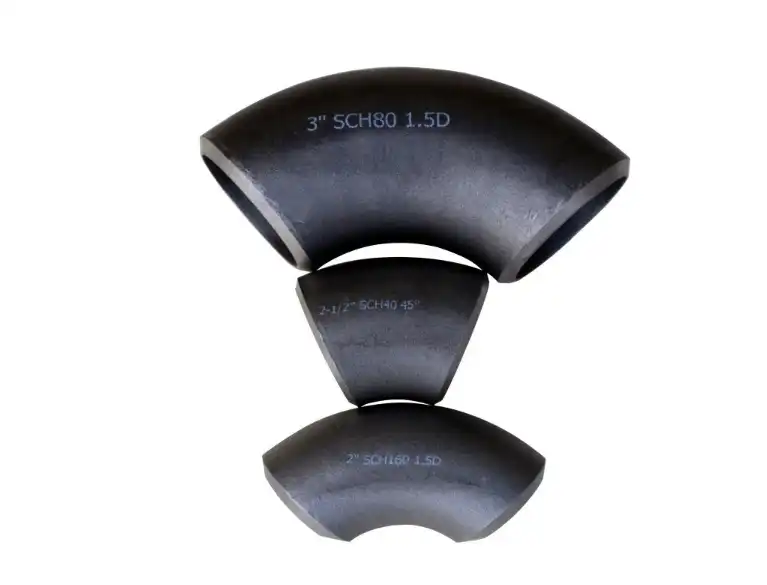
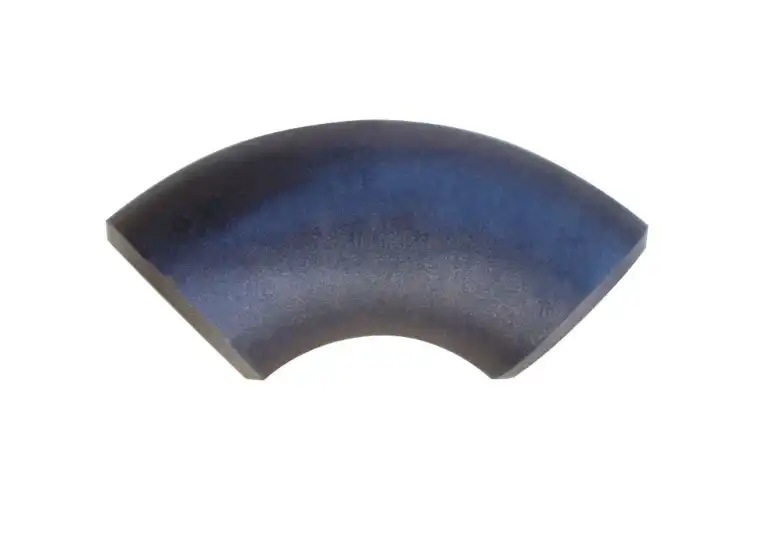
Selecting an elbow radius is not simply a matter of choosing the smallest fitting that will fit into a drawing. The radius affects how sharply the flow changes direction, how much space the piping layout requires, and how the system behaves during operation. For projects using carbon steel elbows, the decision usually comes down to finding a practical balance between installation space, pressure loss, flow conditions, maintenance access, and project requirements. Common options include 1D, 1.5D, and 3D elbows, where the number is the estimated centerline radius divided by the nominal pipe diameter. A 1D elbow makes a tight turn, but a 3D elbow takes a significantly longer sweep. The 1.5D design is a compromise between the two and is often beneficial if you don't want either extreme. Thus, the decision relies upon what the pipeline has to perform, rather than upon the radius alone. A compact 1D elbow could be OK in a crowded pipe location, whereas a larger-radius elbow would be better in a high-flow line where minimizing local pressure losses is important. The same applies to the selection of other components, such as tee fittings, for the same pipe configuration—every fitting must operate within the constraints of the whole system.
How Do 1D, 1.5D, and 3D Elbows Differ in Actual Pipeline Design?
What the D Dimension Really Means?
The “D” in 1D, 1.5D, and 3D refers to the relationship between the elbow centerline radius and the pipe diameter. For example, for a 100 mm diameter pipe, the nominal 1D elbow will have a centerline radius of around 100 mm, the 1.5D elbow about 150 mm, and the 3D elbow about 300 mm.
This difference is more essential than it would at first seem, because altering the radius modifies the physical route the fluid follows. A short-radius elbow changes direction in a shorter distance; a long-radius elbow spreads that shift across a greater arc.
Actual dimensions should still be verified using the appropriate fitting standard and the manufacturer's dimensional data. “1.5D” should not be considered an alternative to a dimensional specification, especially if the pipe is being built for a regulated industrial project.
How Radius Changes Flow Through the Bend?
The flow pattern within an elbow is more complex than in a straight stretch of pipe because the fluid is changing direction. Secondary flow, turbulence, and local changes in velocity may emerge around the curve. The intensity of these effects relies not only on the radius but also on the flow velocity, Reynolds number, fluid characteristics, and the design of the whole pipe system.
A 1D elbow tends to induce a more sudden change of direction and might thus create a bigger local flow disruption than an option with a longer radius. This does not imply that every 1D elbow will result in an unacceptable pressure drop. For a short connection with modest flow rates, the change can have little practical significance.
The greater radius of a 3D elbow gives a longer turning path, which normally gives a smoother change in direction and perhaps reduces the local loss associated with the bend. This may be more important for big flow systems, particularly when several elbows are placed or when pumping energy is a substantial percentage of the operational cost.
Often a 1.5D elbow is a suitable compromise. It takes up less space than a 3D elbow and gives a smoother bend than a 1D arrangement. That tradeoff could be worth more than just going for the biggest radius possible for ordinary industrial plumbing.
When Limited Space Makes 1D the Practical Choice?
Piping layouts are seldom planned in isolation. Equipment, structural members, valves, pumps, cable trays, access routes, and other lines share space. In these cases, a 1D elbow may address a real installation challenge, since its compact design enables the pipe to reverse direction without extending the line as far.
The trade-off is that the compact design might induce more local pressure loss and stronger flow disruption than a larger-radius elbow. The importance of such a trade-off depends on the operational circumstances. If the line is short and the pressure-loss budget is not tight, it may be more necessary to save installation space than to reduce the loss at one fitting.
Therefore, carbon steel elbows with a compact design should not be immediately considered a lesser product. They could well be the most logical solution if the layout is cramped and the hydraulic penalty is tolerable.
What Should Engineers Consider Before Selecting an Elbow Radius?
Start With Flow Rate, Pressure, and Fluid Properties
The first inquiry should be what is carried by the pipeline and how it works. Water, compressed gas, crude oil, chemicals, and abrasive slurry do not act the same. Therefore, the same elbow radius might have quite different implications in various services.
The flow velocity should get special attention. Higher velocities may enhance pressure loss and may aggravate erosion in systems containing solid particles. If the line is carrying a clean liquid at modest velocity, the problem is essentially hydraulic efficiency. If it has abrasive solids, erosion resistance might be substantially more critical.
Selection of materials and fitting requirements are also affected by pressure and temperature. A carbon steel elbow that is good for one service may not be suited for another due to differing process conditions. The radius should be chosen as part of the overall pipe design and not as an independent parameter.
Check the available installation envelope
Measure space before finalizing the kind of elbow. A 3D elbow may take up much more space along the pipe run than a 1D or 1.5D design. That extra length may not matter in an open pipe rack but might be hard to fit near equipment connections.
Installation access is also important. The fitting has to fit on the design, but welders and inspectors require ample access to make and check the connection correctly. If the increased radius puts the pipe into an inconvenient position, the potential flow benefit may not be worth the manufacturing complexity.
This is especially significant when many fittings are used near together. Elbows close to a tee, valve, reducer, or flange need sufficient straight length and physical clearance for manufacture and inspection. Looking at each piece in isolation might lead to a plan that is dimensionally sound but difficult to construct.
Consider Maintenance Before Looking Only at Purchase Price
Only one portion of the choice is the first price differential between elbow configurations. A fitting that results in a tiny increase in pressure loss may not be of much concern financially in a small utility line but may be costly if the same loss occurs in a process system running continuously at high flow rates.
Maintenance needs can depend on the service used. Routine examination of clean fluid systems may be quite easy. Solids may also concentrate wear at bends in lines with abrasive particles. Elbow geometry is among the elements that impact inspection intervals and replacement plans.
That is why the lowest purchasing price is not always the lowest total price. The most pertinent consideration is whether the chosen radius offers an acceptable compromise of purchase cost, operational efficiency, service life, and maintenance needs.
Does a Larger Elbow Radius Always Last Longer?
Understanding Erosion and Localized Wear
A longer radius can reduce the severity of the flow change, but it should not automatically be described as a guarantee of longer service life. Wear depends heavily on what is flowing through the pipe.
In abrasive slurry service, for example, solid particles can strike or slide along the elbow wall and gradually remove material. Higher velocity and changes in particle trajectory can increase the problem. A larger radius may help distribute the change in flow direction over a longer path, but material grade, wall thickness, particle concentration, particle size, and velocity remain important.
Corrosion introduces another layer of complexity. If the process fluid is chemically aggressive, increasing the elbow radius will not by itself solve a corrosion problem. For carbon steel elbows, material compatibility, corrosion allowance, internal lining, coating, and process control may be more important than whether the fitting is 1D or 3D.
Think About Inspection and Cleaning Requirements
Pipeline maintenance can also influence radius selection. Some lines need regular pigging, while others are cleaned using flushing, chemical cleaning, or mechanical methods. The ability of the chosen fitting to accommodate the required inspection or cleaning method should be confirmed during design.
A tight-radius elbow may present more challenging geometry for certain inspection or cleaning tools, depending on the tool and pipeline configuration. A longer-radius bend can provide a more gradual path, but the complete system still needs to be assessed because valves, tees, reducers, and other fittings may also affect tool passage.
If inspection is important to the project, engineers should confirm the requirements with the pipeline operator and inspection-tool supplier rather than assuming that a particular radius will automatically provide sufficient access.
Which Elbow Radius Works Best for Different Industrial Applications?
Oil and Gas Pipeline Systems
Oil and gas systems often combine demanding operating conditions with strict requirements for reliability and inspection. The appropriate elbow radius depends on whether the line is a process pipe, utility line, gathering line, transmission pipeline, or another service.
In a congested plant or offshore module, the compact geometry of a 1D elbow can be useful when layout space is extremely limited. In a high-flow line where pressure loss and energy consumption are more significant, a longer-radius elbow may offer a more attractive hydraulic profile.
For pipelines that require pigging, however, the fitting geometry must be compatible with the selected pig and the entire pipeline configuration. The decision should therefore be based on the operating system rather than on a general rule that one radius is always preferable.
Chemical and Petrochemical Processing
Chemical and petrochemical facilities may handle fluids with corrosive, toxic, high-temperature, or otherwise demanding characteristics. In these applications, elbow selection should begin with process conditions and material compatibility.
A larger radius may help reduce local turbulence and pressure loss, but it cannot compensate for an unsuitable material. Engineers should confirm the required carbon steel grade, wall thickness, corrosion allowance, temperature rating, and applicable project specification before choosing the final fitting.
The piping arrangement also deserves attention. Process systems frequently contain many directional changes and branches, so the interaction between elbows, reducers, valves, and tee fittings can be more important than the performance of one individual fitting.
Water and Utility Piping
Water systems generally provide more flexibility in elbow selection, and carbon steel elbows can be a practical option, although pumping requirements and available space still matter. A compact 1D elbow may work well in a small pump station where layout space is limited, provided the additional local loss is acceptable.
For larger transmission lines or systems that operate continuously, reducing unnecessary pressure loss can become more valuable. A 1.5D or 3D elbow may then be considered where the additional installation space is available.
Water quality should also be considered when carbon steel is used. Internal corrosion, water chemistry, coating requirements, and expected operating life can influence the overall fitting specification. Radius selection should support the hydraulic design, but it should not be treated as a replacement for proper material and corrosion engineering.
How Can You Make the Final Elbow Radius Decision?
A practical selection process starts by establishing the pipe diameter, design pressure, design temperature, fluid properties, normal flow rate, expected velocity, and available installation space. Once these parameters are known, the engineer can determine whether the hydraulic benefit of a larger radius justifies its additional footprint.
The next step is to check the applicable dimensional and material requirements. The fitting should match the project's pipe size, wall thickness, connection method, material specification, and relevant standards. Manufacturer drawings should also be reviewed before fabrication because nominal radius terminology alone does not provide every dimension needed for installation.
It is also worth looking beyond the individual elbow. If the pipeline contains multiple elbows, branches, reducers, valves, and other fittings, the combined pressure losses and layout constraints should be evaluated. A small difference at one elbow may not matter much, but repeated fittings across a continuously operating system can have a measurable effect.
For procurement, the specification should clearly state the required elbow radius, nominal size, wall thickness or schedule, material grade, end preparation, applicable standard, quantity, inspection requirements, and documentation. If the project has special requirements for corrosion resistance, non-destructive testing, heat treatment, or traceability, those should also be included before an order is placed.
Conclusion
Choosing between 1D, 1.5D, and 3D elbows is ultimately a matter of matching the fitting to the pipeline's actual operating and installation requirements. A 1D radius is attractive when space is limited and the additional pressure loss is acceptable. A 1.5D radius often provides a practical compromise for general industrial applications, while a 3D radius can be worthwhile when smoother flow, lower local losses, or a gradual change in direction has greater value than compact installation.
The important point is that radius should never be selected in isolation. Flow rate, fluid characteristics, pressure, temperature, erosion and corrosion risks, maintenance methods, available space, applicable standards, and the cost of operating the system all deserve consideration. By evaluating these factors together, engineers and purchasing teams can choose a carbon steel elbow that fits both the physical layout and the long-term requirements of the pipeline.
For expert guidance and high-quality carbon steel elbows, contact Cangzhou Oudi Pipe Manufacture Co., Ltd. at oudi-04@oudiguandao.com.
FAQ
1. What is the main difference between 1D, 1.5D, and 3D radius elbows?
The main difference lies in the centerline radius of the elbow in relation to the pipe diameter. 1D has a radius equal to the pipe diameter, 1.5D is 1.5 times the diameter, and 3D is 3 times the diameter.
2. Which elbow radius is best for minimizing pressure drop?
The 3D radius elbow is best for minimizing pressure drop due to its gentler curve and smoother flow transition.
3. Are 1D radius elbows suitable for all applications?
While 1D radius elbows are compact and suitable for tight spaces, they may not be ideal for all applications due to higher pressure drop and potential for increased wear.
4. How does the elbow radius affect maintenance requirements?
Smaller radius elbows (1D) generally require more frequent inspections and maintenance due to increased wear, while larger radius elbows (3D) typically have lower maintenance needs.
References
1. Smith, J. D. (2018). "Pipeline Engineering: Principles and Practice." CRC Press.
2. Johnson, A. R. (2019). "Fluid Dynamics in Piping Systems: A Comprehensive Guide." Elsevier.
3. Brown, L. M. (2020). "Material Selection for Carbon Steel Piping Components." ASME Journal of Pressure Vessel Technology.
4. Davis, E. F. (2017). "Optimizing Flow Characteristics in Industrial Piping Systems." Chemical Engineering Progress.
5. Wilson, R. T. (2021). "Long-Term Performance of Carbon Steel Elbows in Various Industrial Applications." Corrosion Science and Technology.
6. Thompson, K. L. (2019). "Cost-Benefit Analysis of Elbow Radius Selection in Pipeline Design." Journal of Pipeline Engineering.

Need help finding the right solution with our experts. Please contact us.

SINCE 1998 Your Reliable Pipeline Manufacturer