Advantages of Using Seamless Steel Tee Fittings in Critical Pipelines
Critical pipeline systems cannot afford poorly selected fittings. A tee may look like a relatively simple component, but it has an important role in changing flow direction, splitting a process line, or combining flows from different branches. When a pipeline operates under high pressure, elevated temperature, vibration, or repeated thermal cycling, the quality and manufacturing method of each fitting can have a direct effect on system reliability. This is one reason. Seamless steel tee fittings are commonly considered for demanding industrial applications. A seamless tee is formed from seamless steel tube or pipe using shaping and other controlled manufacturing steps, as opposed to a welded tee, which is produced by welding together pieces of steel. The beginning material may be free of a longitudinal weld, which may be advantageous when engineers desire to minimize problems related to welded seams. But seamless construction doesn’t automatically mean a fitting is suited for every application. The material grade, dimensions, wall thickness, pressure rating, temperature, quality of manufacture, and relevant standards still have to be assessed together. Therefore, the actual benefit of seamless construction, for engineers and buying teams, is not merely that the fitting has “no weld.” The value resides in the production technique, the uniformity of the material, and the completed shape that can allow dependable performance in severe pipeline operations. Understanding these benefits helps to identify when seamless tee fittings make sense for important pipe systems.
Why Seamless Construction Matters in Demanding Pipeline Service?
A More Consistent Pressure-Bearing Structure
A tee fitting is subjected to complicated loading because of the change in the distribution of internal pressure and mechanical forces through the component due to the main run and branch connection. In critical systems, local stress surrounding the branch region has to be treated specially since the fitting might be simultaneously influenced by pressure fluctuation, vibration, thermal expansion, and external loads.
Seamless design eliminates the longitudinal weld present in the initial pipe material. This may minimize one class of worry associated with production and results in a continuous material structure across the pipe wall. However, the actual pressure capacity still varies on the steel grade, wall thickness, fitting geometry, heat treatment, and manufacturing quality.
This is why the engineer should not pick a seamless tee solely because it is said to be stronger. The fitting should be suited to the design conditions of the pipeline and built to the dimensions and material requirements needed. Proper regulation of such parameters may offer a reliable base for pressure-bearing applications with seamless construction.
Better Suitability for Pressure Fluctuations and Cyclic Loading
Critical pipelines do not run under completely consistent circumstances. Pumps start and stop, production rates go up and down, valves open and shut, and process temperatures go up and down. These operational changes may cause cyclic stresses in fittings, especially around branch connections, where the shape naturally leads to variations in load distribution.
A well-made seamless tee may work dependably under these circumstances if the material and dimensions are carefully chosen. The engineers have no need to include a longitudinal welded seam as part of the pressure boundary of the beginning pipe since there is no longitudinal weld. This does not remove the danger of fatigue since fatigue performance is also a function of geometry, surface condition, stress concentration, material qualities, and the number and severity of load cycles.
The advantage is the increased confidence in applications with time-varying pressure and mechanical loads in practice. This may be crucial in process plants, power facilities, oil and gas installations, and other systems where an unexpected fitting failure might cause a production stoppage or an expensive repair event.
How Seamless Tee Fittings Can Support Long-Term Pipeline Reliability?
Stable Performance Under Temperature Changes
Temperature is a vital design factor for industrial pipes. Many chemical applications, steam systems, process lines, and refining equipment undergo large fluctuations in operating temperature during startup, shutdown, or regular operations. These temperature variations cause the pipe system to expand and compress, adding strains at fittings and connections.
If the material grade is chosen for the desired temperature range, then seamless steel tee fittings may be appropriate for these types of conditions. These should be examined in conjunction with the suitable material specification, heat treatment, material chemistry, and wall thickness. A seamless joint built from a wrong steel grade is not temperature resistant.
The main benefit is therefore the combination of suitable seamless construction and appropriately chosen material. By controlling these parameters, the fitting may help to provide a robust connection in systems that are susceptible to recurrent heat cycling. This is especially true in industrial plants, where frequent switching between running and standby states puts extra demands on the pipe network.
Reduced Concerns Associated with Longitudinal Welds
Welded components are successfully made. Welded components are commonly employed in industrial plumbing. However, welded construction brings in extra production factors such as welding settings, heat input, weld quality, heat-impacted zones, and inspection requirements. Seamless fittings provide a realistic solution for situations where reducing these factors is required.
The original seamless material has no longitudinal weld; hence, there is no consideration of this specific seam as a part of the pressure boundary. That doesn’t imply that the completed tee is not inspected or doesn’t go through quality control. The forming, heat treatment, dimensional correctness, surface condition, and material qualities must still comply with the respective criteria.
This difference is essential to procurement teams. Seamless construction may eliminate some of the weld-related problems but should be seen as one aspect of an entire quality plan rather than a substitute for testing and inspection.
Potentially Lower Maintenance Exposure
One should also understand the practical advantages of a seamless shirt with regard to upkeep. Properly chosen and constructed fittings may decrease the probabilities of issues related to improper material, poor dimensional compatibility, or faults in the pressure boundary. This may be very useful in pipelines when shutdowns are costly or access to the piping system is restricted.
But seamless connections do not remove the requirement for maintenance. However, their service life might be reduced by corrosion, erosion, vibration, temperature cycling, and poor installation and operating conditions. Routine inspection is still vital, especially in critical systems conveying hazardous or high-temperature media.
The true maintenance benefit comes from choosing a fitting that is right for the application. Under the same material grade, dimensions, pressure requirements, and installation circumstances, the pipeline will encounter fewer preventable issues with fittings over its service life.
Flow and Installation Benefits in Process Piping
Efficient Branch Connections
The primary aim of a tee fitting is to form a branch off the main pipeline. In a well-planned system, the tee enables a regulated transition from the main run to the branch line with necessary connection dimensions.
A seamless tee constructed to the specified specifications will be of a uniform geometry and of a high grade. This is critical during installation because dimensional irregularity may complicate alignment and induce additional stress in the pipe system.
A minimal pressure loss is not guaranteed by the fitting alone. Flow behavior is dependent on tee geometry, branch diameter, flow direction, flow rate, internal surface condition, and overall pipe design. Therefore, it is important for engineers to consider the whole system rather than assuming that all seamless tees would operate hydraulically the same.
Cleaner Internal Geometry Can Support Process Efficiency
The quality of internal surfaces is a concern in pipelines carrying liquids, gases, steam, and process fluids. For seamless steel tee fittings, too many surface imperfections might cause turbulence or find places for deposits to settle. The real impact varies much with fluid characteristics and operating circumstances.
A well-made seamless fitting may give a smooth interior surface without a longitudinal weld bead. This might be a valuable quality in situations where cleanliness and regular flow behavior are crucial. It may be especially significant for processing lines when internal deposits, pollution, or hard-to-clean places may impact productivity.
However, the hydraulic performance of a tee depends mostly on its geometry and not just on the fact that it is seamless or not. The engineers should evaluate the branch arrangement, diameter ratio, flow direction, and the needs of the whole pipe system design before making the final decision.
Where Seamless Steel Tee Fittings Are Commonly Considered?
Oil and Gas Pipeline Applications
Oil and gas systems often operate under demanding combinations of pressure, temperature, vibration, and environmental exposure. Pipeline fittings may be used in gathering systems, processing facilities, transmission systems, refineries, and other infrastructure where reliability is closely connected to operational safety.
Seamless steel tee fittings can be considered for these applications because their construction can reduce concerns associated with longitudinal welds in the starting material. Their suitability still depends on the selected material grade and the service environment. For example, systems exposed to sour service require careful material selection and compliance with the applicable corrosion and sour-service requirements.
For procurement teams, the important point is that a seamless tee should be specified as part of the complete piping design. Material certification, dimensions, pressure requirements, inspection requirements, and applicable standards should all be confirmed before purchase.
Chemical and Petrochemical Processing
Chemical and petrochemical facilities frequently handle fluids that may be hot, pressurized, corrosive, toxic, or otherwise difficult to manage. Pipeline failures in these environments can result in more than repair costs because they may interrupt production and create environmental or safety concerns.
The material used for a seamless tee therefore needs to be compatible with the process medium. Carbon steel may be appropriate for some services, while alloy steel or stainless steel may be required for others. Choosing a seamless fitting without checking chemical compatibility would not provide meaningful protection against corrosion.
When the material grade and design conditions are correctly specified, seamless tee fittings can provide a reliable branch connection for demanding process piping. Their value is strongest when seamless construction is combined with suitable steel chemistry, controlled manufacturing, and appropriate inspection.
Power Generation and High-Temperature Piping
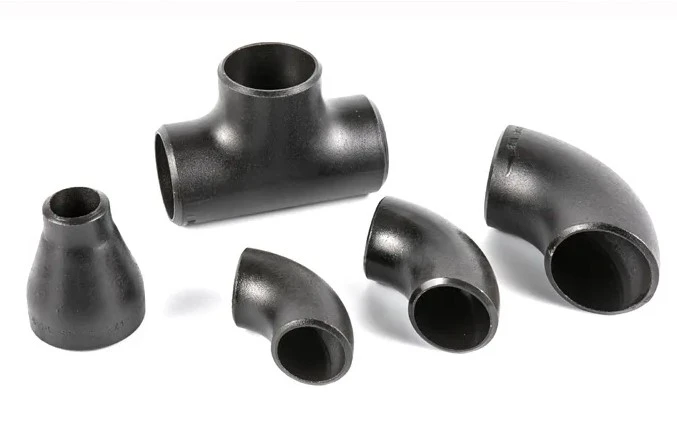
Power plants contain many piping systems that operate under elevated pressure and temperature. Steam, feedwater, cooling water, and other process fluids must be transported through networks containing numerous bends, reducers, tees, and other fittings.
In these environments, dimensional accuracy and material suitability are particularly important. Thermal expansion can place repeated loads on fittings, while high pressure increases the consequences of any weakness in the pressure boundary. Seamless steel tee fittings can be considered where their material and manufacturing specifications meet the requirements of the system.
The choice should also take into account the operating temperature, pressure, material grade, wall thickness, heat treatment, and inspection requirements. For critical power piping, purchasing a fitting based solely on price or the word “seamless” is not enough. Documentation and traceability are equally important when long-term reliability is a priority.
What Should Engineers Check Before Purchasing Seamless Tee Fittings?
Selecting the right tee requires more than confirming the nominal pipe size. Engineers should first establish the operating pressure and temperature because these conditions influence the required material and wall thickness. The pipeline medium should also be identified so that corrosion and material compatibility can be evaluated properly.
Dimensional compatibility is another important consideration. The tee must match the connected pipe in terms of outside diameter, wall thickness, branch configuration, and connection requirements. The applicable manufacturing and dimensional standard should be confirmed as well, particularly when the project involves international suppliers or equipment designed according to specific ASME, ASTM, EN, or other regional requirements.
Quality documentation should also be part of the purchasing process. Depending on the project, buyers may need material certificates, dimensional inspection records, heat treatment records, non-destructive testing reports, or other quality documents. These records help demonstrate that the fitting supplied is consistent with the specification ordered.
It is also worth considering the manufacturer's ability to control forming, heat treatment, machining, inspection, and final dimensional accuracy. A seamless tee is only as reliable as the material and manufacturing controls behind it. For critical pipelines, supplier experience and quality traceability can therefore be just as important as the fitting's basic construction.
Why the Right Fitting Specification Matters More Than Construction Alone?
Seamless construction offers several useful characteristics, but it should not be treated as a universal solution. A welded tee produced under strict quality controls may be entirely suitable for many pipeline applications, while a seamless tee made from an unsuitable material would not meet the requirements of a demanding service.
The best selection is based on the complete operating environment. Pressure, temperature, fluid composition, pipe size, wall thickness, corrosion risk, cyclic loading, installation requirements, applicable standards, and inspection requirements all contribute to the final decision.
This approach also helps companies control long-term costs. A fitting that matches the application from the beginning can reduce the risk of compatibility problems, premature replacement, installation delays, and unplanned maintenance. In critical pipelines, spending more attention on specification and supplier quality before installation is usually more effective than dealing with fitting problems after the system is operating.
Conclusion
Seamless steel tee fittings can offer meaningful advantages in critical pipeline applications, particularly where pressure, temperature variation, cyclic loading, and demanding operating conditions require dependable pressure-bearing components. Their seamless construction removes the longitudinal weld from the starting material and can reduce certain weld-related concerns, while consistent manufacturing and suitable material selection can support reliable long-term service.
The benefits are especially relevant to oil and gas, chemical and petrochemical processing, power generation, and other industrial systems where pipeline reliability directly affects safety and operating continuity. At the same time, seamless construction should never be considered a substitute for proper engineering. Material grade, dimensions, wall thickness, pressure and temperature ratings, corrosion conditions, applicable standards, inspection, and supplier quality all need to be considered together.
For companies purchasing fittings for critical pipelines, the most reliable approach is to evaluate the complete specification rather than selecting a product based on construction type alone. When the fitting is correctly matched to the pipeline and supplied with appropriate quality control and documentation, seamless steel tee fittings can provide a durable and dependable solution for demanding branch connections while helping engineers build safer and more maintainable piping systems.
Please email us at oudi-04@oudiguandao.com to learn more about our premium seamless steel tee fittings and other pipeline components. Cangzhou Oudi Pipe Manufacture Co., Ltd. has been dedicated to offering clients all over the globe the finest carbon steel pipe fittings, valves, and flanges since 1998. Because we use cutting-edge manufacturing equipment, possess extensive scientific expertise, and are committed to quality, more than 40 nations trust us as a supplier. We can help you make the most of your most crucial plumbing systems with our superior seamless steel tee fittings.
References
1. Smith, J. R. (2019). Advanced Materials in Pipeline Engineering. Journal of Industrial Piping Systems, 45(3), 215-230.
2. Johnson, A. M., & Thompson, L. K. (2020). Corrosion Resistance of Seamless Steel Fittings in Critical Applications. Corrosion Science and Technology, 55(2), 178-195.
3. Garcia, R. P., et al. (2018). Flow Characteristics and Pressure Drop Analysis in Seamless Tee Fittings. International Journal of Fluid Dynamics, 12(4), 412-428.
4. Williams, S. D., & Brown, E. T. (2021). Fatigue Performance of Seamless vs. Welded Steel Fittings in High-Pressure Pipelines. Engineering Failure Analysis, 128, 105621.
5. Lee, H. S., et al. (2017). Thermal Stability and Mechanical Properties of Seamless Steel Fittings for Power Generation Applications. Materials Science and Engineering: A, 701, 215-225.
6. Anderson, K. L. (2022). Cost-Benefit Analysis of Seamless Steel Fittings in Long-Term Pipeline Operations. Journal of Pipeline Engineering, 21(3), 301-315.

Need help finding the right solution with our experts. Please contact us.
SINCE 1998 Your Reliable Pipeline Manufacturer