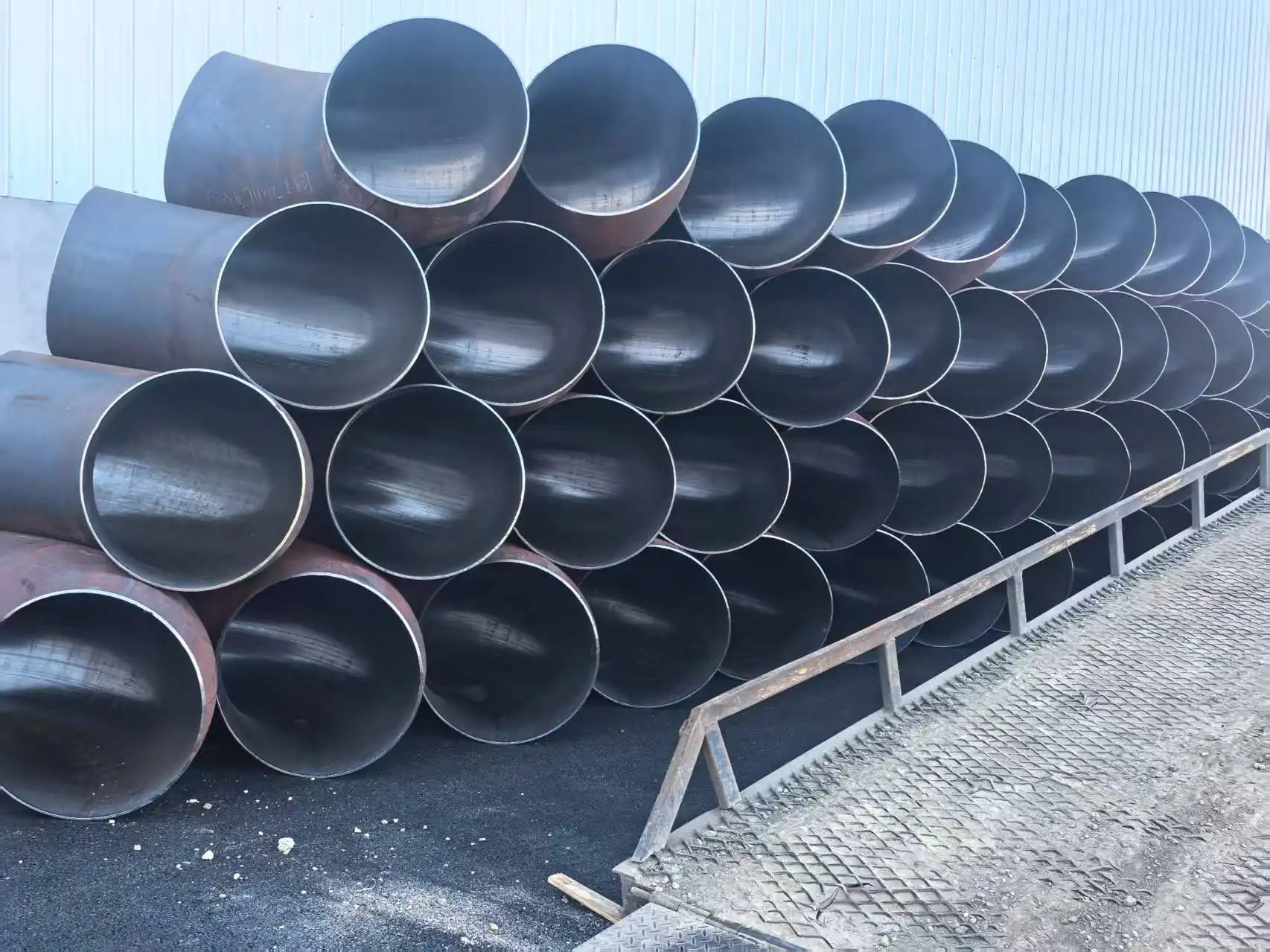
Choosing Surface Protection for the Actual Operating Conditions
Epoxy Coatings for Controlled Industrial Protection
Epoxy coatings are often chosen for a carbon steel surface when a barrier is required against moisture and certain chemical conditions. With a correctly developed and applied epoxy solution, the steel may be isolated from the surrounding environment, decreasing the metal’s interaction with corrosive substances.
The quality of an epoxy coating is strongly dependent on preparation and application. Normally, the surface of the steel has to be cleaned and prepared to a suitable state before coating. Even if the coating material is acceptable, the coating may be compromised in performance by contamination, surface rust, excessive roughness, insufficient adhesion, or inadequate cure.
Operating temperature and chemical exposure should also be examined before choosing an epoxy system. High temperature or very aggressive chemical service should not immediately be given a common coating. If the carbon steel elbow is used in chemical processing, industrial water systems, or outside equipment, the coating specification should be consistent with the particular service environment, not a generic “anti-corrosion” designation.
Hot-Dip Galvanizing for Atmospheric Exposure
Galvanizing is another well-known way to prevent air corrosion of carbon steel. It applies the zinc to the steel surface. The zinc creates a protective barrier so that the steel underneath it is not exposed to the surrounding environment. Zinc can also give sacrificial protection under the right circumstances, which is a major benefit over a merely barrier sort of coating.
Hot-dip galvanizing is of special interest for components exposed to outside weather, humidity, and occasional wetness. It may be practical for situations where long-term atmospheric protection is desired without total reliance on organic paint systems.
However, galvanizing is not a one-size-fits-all answer. Before specifying the zinc coating, check the compatibility of the coating with the process fluid, operating temperature, fabrication details, and service environment. The quality of the coating after manufacturing and installation is particularly important, as damaged regions may need proper repair techniques.
Ceramic and Specialized Coatings for Demanding Services
When the elbow is exposed to a combination of chemical exposure, abrasion, or increased temperature, which would tend to make ordinary coatings less suited, ceramic-based and other specialty coating methods might be explored. Performance may vary widely depending on coating chemistry, mode of application, thickness, substrate preparation, and service circumstances.
Rather than seeing ceramic coating as an inherently better answer, it has to be seen as one choice within a wider coating strategy. If chemical assault is the primary issue, review chemical compatibility. If particle impact and flow-related wear are the main issue, then it is more vital to be resistant to erosion. The thermal cycling behavior and allowed temperature range of the coating system should be assessed for increased temperature service.
This method avoids the typical pitfall of choosing a coating based on its good overall reputation, but without taking into account the factors that truly determine its service life.
Improving Corrosion Performance Through Material Selection
When Alloy Steel Is a Better Engineering Choice?
Material selection can sometimes solve corrosion problems, but alloying should not be seen as an easy alternative to corrosion protection. For appropriate pipe applications, low-alloy Cr-Mo steels such as ASTM A234 WP11 and WP22 are often preferred for their combination of strength and good high-temperature strength. The choice of their usage should thus be determined by the whole design requirements and not by an assumption that they are a generic answer to corrosion.
If the pipe system is under increased temperature and pressure, the engineer may have to simultaneously address material strength, creep-related behavior, weldability, thermal conditions, and corrosion processes. In such instances, carbon steel elbows may be suitable for certain applications, while the right alloy might provide a superior overall technical solution than normal carbon steel.
The key issue is that the alloy selection must be based on service circumstances. Adding alloy content without understanding the actual mechanism of corrosion may increase cost and not solve the problem.
Stainless Steel Cladding for a Carbon Steel Base
Another technique to connect a corrosion-resistant surface with a carbon steel structural basis is by cladding the base with stainless steel. Rather than making the whole elbow out of solid stainless steel, one may attach a corrosion-resistant layer to the carbon steel base or metallurgically apply it using a suitable manufacturing technique.
This method is appropriate when the process environment needs improved surface corrosion resistance but the mechanical and economic benefits of a carbon steel basis are still significant. Depending on the design and production approach, consideration may be given to procedures such as weld overlay or other cladding technologies.
The quality of the connection and the integrity of the protective layer are of the utmost importance. The cladding should stay suitable for the planned service conditions, and manufacturing techniques should take care of the behavior of both materials. Especially in demanding applications, inspection and documentation of the produced component play a major role.
Duplex Stainless Steel for Severe Corrosion Conditions
Duplex stainless steel might be a useful option if the corrosion conditions are severe and carbon steel is not suited. Duplex grades have both austenitic and ferritic phases, providing an optimal balance of mechanical strength and corrosion resistance, useful in many challenging settings.
Duplex grades are resistant to pitting and stress corrosion cracking in chloride environments and are appropriate for applications such as desalination, chemical processing, and certain oil and gas services. Their enhanced strength may also enable designers to explore thinner sections in certain applications; however, this will depend on the appropriate design code and operating circumstances.
Duplex stainless steel should, however, be chosen on the basis of grade and condition of service, not material class. Must consider chloride concentration, temperature, welding technique, heat treatment, fabrication quality, and corrosion resistance needed. The added material cost may be justified if it decreases the danger of early replacement or unnecessary maintenance, but the choice should be based on the whole lifetime needs.
Design and Installation Also Affect Corrosion Resistance
Avoiding Moisture Traps and Deposit Accumulation
Even a suitable material and coating can perform poorly if the piping arrangement creates areas where water or corrosive deposits remain for long periods. Drainage, accessibility, support design, and the position of the elbow within the piping system can therefore influence long-term corrosion performance.
External surfaces should be designed so that water does not remain trapped around the fitting. Coating systems should also be continuous across the elbow and compatible with adjacent pipe surfaces. Particular attention should be given to welds, connections, supports, and areas where coating damage is more likely to occur.
Inside the piping system, deposits can create localized environments that differ from the bulk process fluid. Where the service is susceptible to erosion, deposition, or under-deposit corrosion, flow conditions and internal surface protection may need to be considered together.
Managing Flow-Related Corrosion and Erosion
An elbow changes the direction of fluid flow, which means the flow pattern around carbon steel elbows is different from that in a straight pipe. High velocity, suspended solids, turbulent flow, or unsuitable geometry can contribute to erosion-corrosion in some services.
This does not mean every elbow will experience serious erosion. The risk depends on the fluid, velocity, particle content, temperature, geometry, and material. Where erosion is a concern, simply increasing the corrosion resistance of the steel may not be enough. The design may also need to address velocity, piping configuration, wall thickness, or internal surface protection.
This is an important distinction because corrosion and erosion-corrosion require different engineering responses. Understanding which mechanism is actually affecting the elbow can prevent unnecessary material upgrades or ineffective coating choices.
How to Select the Right Corrosion Protection Strategy?
Start With the Complete Service Conditions
The most reliable corrosion-control strategy begins with the operating environment rather than with a particular coating or material. The engineer should understand what fluid is being transported, its temperature and pressure, whether chlorides or other aggressive components are present, and whether the elbow will be exposed to water, seawater, chemicals, or atmospheric moisture externally.
The expected service life and maintenance strategy should also be considered. A coating that is economical for a short-term installation may not be the best choice for equipment expected to remain in service for decades. Likewise, an expensive corrosion-resistant alloy may not be justified in a relatively mild environment.
Verify the Fitting Specification and Protection Requirements
Once the service conditions are understood, the elbow specification can be matched to the system requirements. Material grade, dimensions, wall thickness, pressure rating, manufacturing requirements, heat treatment, and applicable standards should all be reviewed together.
For coated elbows, the coating specification should define the required surface preparation, coating system, application conditions, curing requirements, and inspection criteria. This is more useful than simply specifying that the component must be “corrosion resistant.”
The same principle applies to alloy or clad elbows. Material certificates, inspection records, dimensional verification, and appropriate testing can provide greater confidence that the supplied component matches the engineering specification.
Consider Total Cost Instead of Initial Price Alone
Corrosion protection should ultimately be evaluated as part of the piping system's lifecycle cost. A low-cost elbow that requires frequent coating repair, replacement, or shutdown may become more expensive than a higher-quality solution with a longer service interval.
For critical piping, the consequences of failure can also extend beyond the component itself. Leakage may result in production interruption, environmental concerns, safety issues, or expensive maintenance. Therefore, the most economical choice is not necessarily the material with the lowest purchase price.
A balanced decision considers initial material cost, coating and fabrication costs, expected maintenance, accessibility, replacement frequency, downtime, and the consequences of corrosion-related failure. This provides a more realistic basis for selecting carbon steel elbows and their protection system.
Conclusion
Enhancing corrosion resistance in carbon steel elbows requires more than choosing a single coating or upgrading the material. The most suitable approach depends on the actual combination of process fluid, temperature, pressure, chloride exposure, moisture, flow conditions, and expected service life. Epoxy coatings, galvanizing, specialized surface treatments, alloy steel, stainless steel cladding, and duplex stainless steel can all have a role when they are matched to the right application.
Good corrosion control also depends on surface preparation, sound piping design, appropriate installation, inspection, and ongoing maintenance. For demanding industrial systems, the elbow should be evaluated as part of the complete piping system rather than as an isolated component. By connecting material selection and protective measures to real operating conditions, engineers and procurement teams can improve reliability while avoiding unnecessary material or maintenance costs. For more information on corrosion-resistant carbon steel elbows and other piping components, please contact us at oudi-04@oudiguandao.com.
References
1. Smith, J. R., & Johnson, T. K. (2019). Advances in Corrosion Protection for Carbon Steel Piping Components. Journal of Materials Engineering and Performance, 28(4), 2145-2160.
2. Zhang, L., & Chen, X. (2020). Surface Treatments for Enhanced Corrosion Resistance in Industrial Pipe Fittings. Corrosion Science, 165, 108412.
3. Brown, A. E., & Davis, R. M. (2018). Comparative Study of Coating Technologies for Carbon Steel Elbows in Aggressive Environments. Industrial & Engineering Chemistry Research, 57(42), 14120-14135.
4. Lee, S. H., & Kim, Y. S. (2021). Novel Alloy Designs for Corrosion-Resistant Steel Piping Components. Materials Science and Engineering: A, 802, 140660.
5. Garcia, M. P., & Rodriguez, C. L. (2017). Electrochemical Evaluation of Coated Carbon Steel Elbows in Simulated Industrial Environments. Electrochimica Acta, 255, 127-136.
6. Wilson, E. J., & Thompson, K. L. (2022). Long-Term Performance of Ceramic-Coated Carbon Steel Elbows in High-Temperature Corrosive Services. Journal of Protective Coatings & Linings, 39(3), 30-38.