How to Read a Carbon Steel Elbow Weight Chart: A Complete Guide
If you are buying, designing, fabricating, or installing industrial piping, a carbon steel elbow weight chart can be much more useful than it first appears. The chart is not simply a list of numbers showing how heavy a fitting is. When read together with the dimensional standard, material specification, nominal pipe size, wall thickness, and elbow radius, it can help you verify a material takeoff, estimate transportation requirements, prepare lifting plans, and catch specification mistakes before an order reaches the job site. For procurement teams, the weight is also useful when comparing quotations. Two elbows may have the same nominal size but different wall thicknesses, pressure design requirements, radii, or material specifications, so their weights may not be identical. For engineers, the chart provides a quick reference when developing equipment layouts, pipe supports, and installation plans. For manufacturers and fabricators, it helps connect the finished fitting to the dimensional and material requirements specified on the purchase order. The important point is that weight should never be read in isolation. A number in a chart only makes sense when you know exactly which fitting it represents. The following guide explains how to identify the relevant information and how to use a weight chart without confusing NPS, schedule, outside diameter, wall thickness, and elbow radius.
Start by Identifying What the Weight Chart Actually Represents
Before reading any number from a chart, determine what type of elbow the table covers. This is an easy step to overlook, especially when several fitting tables are provided on the same website or in the same catalog.
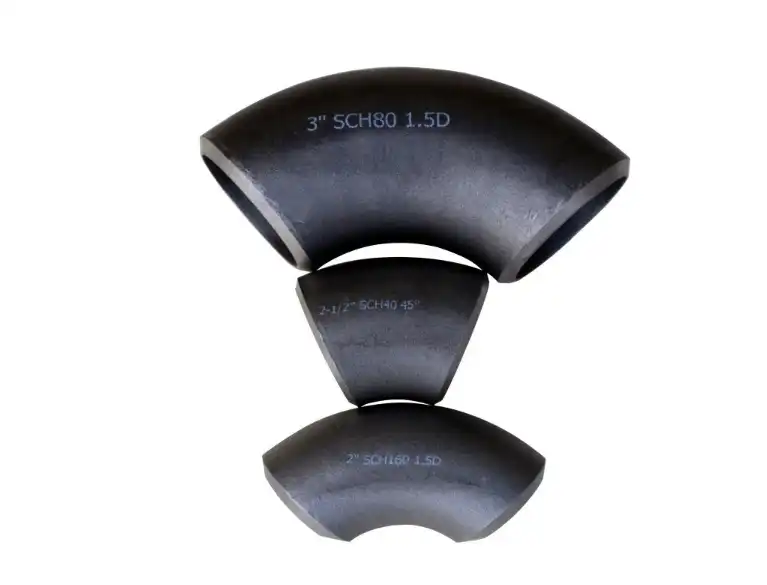
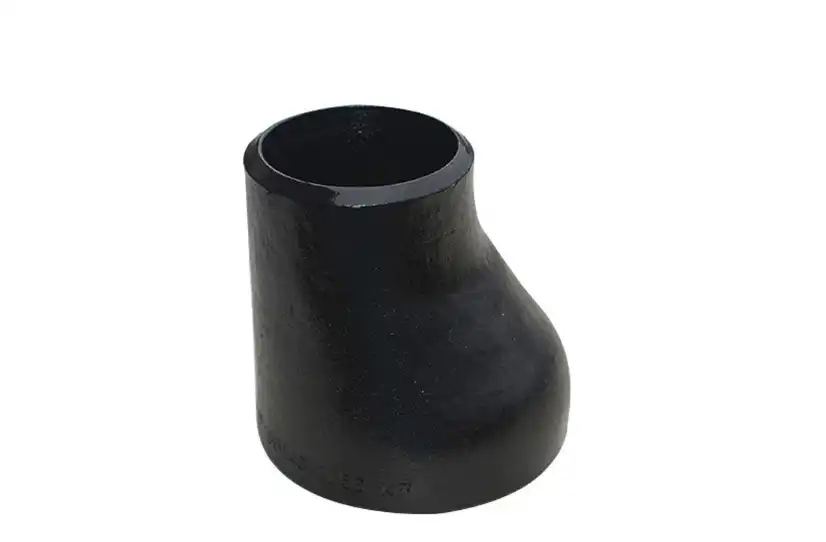
A chart may be prepared for long-radius butt-welding elbows, short-radius elbows, reducing elbows, or fittings manufactured according to a particular dimensional standard. The weight can change when the geometry changes, even if the nominal pipe size appears similar.
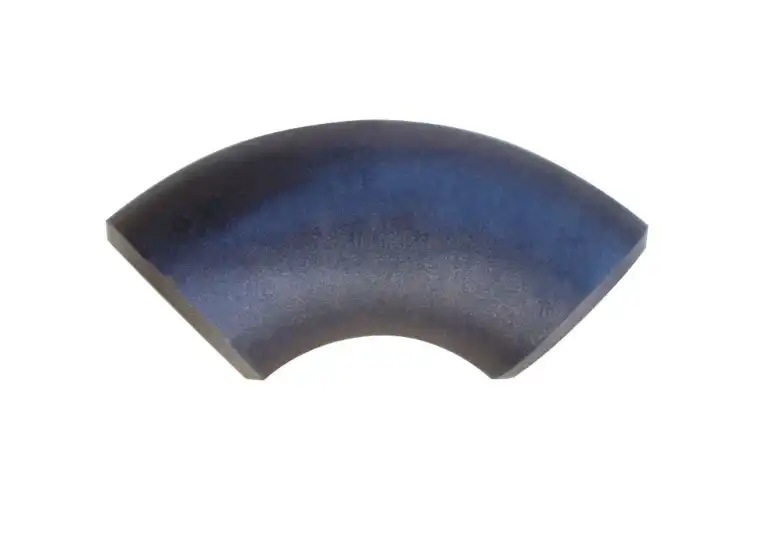
The chart should therefore be read as part of a complete specification rather than as an independent reference. If a table is identified as a 90-degree long-radius elbow chart, for example, it should not automatically be used to estimate the weight of a 45-degree or short-radius elbow.
This distinction becomes particularly important during procurement. A purchase order that says only “6-inch carbon steel elbow” does not provide enough information for a manufacturer to determine the exact fitting. The buyer may also need to specify the elbow angle, radius, schedule or wall thickness, material grade, applicable dimensional standard, end preparation, and quantity.

Find the Nominal Pipe Size First
Why NPS Is the Starting Point?
The first column in many carbon steel elbow weight charts is NPS, or nominal pipe size. NPS is a standardized designation used to identify the nominal size of pipe and compatible components. It is not the same thing as the actual measured outside diameter.
For example, a pipe identified as NPS 2 does not have an outside diameter of exactly 2 inches. The nominal designation is used within the standardized piping system so that pipes, elbows, tees, reducers, flanges, valves, and other components can be selected as compatible parts.
This is why an engineer reading a weight chart should not try to match NPS directly with a tape-measured outside diameter without checking the applicable dimensional standard. A fitting may have a nominal designation that looks quite different from its measured dimensions.
Once the correct NPS has been located, the next step is normally to identify the wall thickness or schedule.
NPS Does Not Tell You the Weight by Itself
An NPS value alone is not enough to determine the weight of an elbow. A 4-inch elbow, for example, may be available in several wall thicknesses. The physical amount of steel used in the fitting therefore changes with the selected wall thickness.
The elbow radius and angle can also affect the final geometry and weight. For that reason, a complete chart usually requires the reader to move across several columns before reaching the weight per piece.
A practical way to read the table is to treat NPS as the first filter rather than the final answer. First identify the nominal size, then match the fitting type, schedule, or wall thickness, and finally the corresponding weight.
Match the Schedule or Wall Thickness Carefully
Schedule Changes the Wall's Thickness
"Schedule" is commonly used to identify standardized pipe wall thickness series. For a given NPS in a conventional ASME dimensional system, a higher schedule generally corresponds to a thicker wall and therefore a smaller internal diameter, which is an important consideration when selecting a carbon steel elbow for a piping system.
This usually means that a Schedule 80 elbow will contain more steel than a comparable Schedule 40 elbow of the same nominal size and configuration. The heavier fitting may also have different pressure design implications, but it would be incorrect to conclude that the schedule alone determines the allowable pressure of the fitting.
Actual pressure suitability depends on factors such as material grade, design temperature, wall thickness, manufacturing requirements, applicable piping code, corrosion allowance, and the design conditions of the system.
This distinction matters because purchasing teams sometimes treat “SCH80” as if it were a complete pressure rating. It is not. The schedule identifies a wall thickness series; it does not replace the engineering calculation required to establish whether the component is suitable for a particular service.
Check Wall Thickness When the Chart Uses Millimeters
Not every manufacturer presents the data using schedule numbers. Some charts provide nominal wall thickness directly in millimeters or inches.
When this happens, do not assume that two charts are directly interchangeable simply because they show the same NPS. First confirm whether the listed wall thickness corresponds to the same dimensional standard and fitting type.
This is especially important when comparing suppliers from different markets. A metric dimensional table, an ASME-based table, and a manufacturer-specific table may use different conventions. The purchase specification should always identify the governing standard rather than relying on an isolated weight number.
Understand What “Weight Per Piece” Means
Read the Unit Before Comparing Numbers
Weight per piece is usually the figure most people are looking for in an elbow weight chart, but even this number needs context.
A table may express weight in kilograms per piece, pounds per piece, kilograms per meter, or another unit. Fittings are normally sold as individual components, so a weight listed as kg/pc is particularly useful for procurement and logistics.
If one supplier quotes a weight in kilograms and another provides pounds, the numbers must be converted before making a comparison. More importantly, both figures should refer to the same fitting configuration.
A 6-inch Schedule 40 long-radius 90-degree elbow should not be compared directly with a 6-inch Schedule 80 short-radius elbow simply because both are described as 6-inch elbows.
Use weight to check the material takeoff
Once the weight per piece has been identified, it can be multiplied by the required quantity to obtain an estimated total fitting weight.
Suppose a project requires 120 identical elbows and the chart gives a theoretical weight of 8.5 kg per fitting. The chart-based material estimate would be approximately 1,020 kg before considering packaging and other shipment-related weight.
This calculation can help a procurement team estimate freight requirements for carbon steel elbow shipments and can also provide a useful cross-check against the supplier's commercial quotation. If a quoted shipment weight is dramatically different from the expected value, the difference deserves investigation rather than being ignored.
The discrepancy may be caused by packaging, pallets, a different fitting schedule, a different radius, or a difference between theoretical and actual product weight.
Read the elbow dimensions alongside the weight
Center-to-End Dimension Defines the Fitting Geometry
The center-to-end dimension, often abbreviated as C or A depending on the drawing convention, is the distance from the fitting centerline to the end of the elbow.
For a standard long-radius 90-degree elbow, the center-to-end dimension is commonly associated with a 1.5D radius relationship under the applicable dimensional standard. A 4-inch long-radius elbow therefore has a nominal center-to-end dimension of approximately 6 inches in the familiar NPS-based convention.
However, this should be treated as a dimensional rule of the relevant standard, not as permission to replace the manufacturer's dimensional drawing with a simple multiplication. Actual ordering should be based on the applicable standard and the supplier's approved dimensional data.
The C-E dimension matters because it determines how much space the elbow occupies inside the piping layout. A fitting can have the correct NPS and weight but still be unsuitable if its center-to-end dimension does not match the design.
Outside Diameter Is Not the Same as NPS
Outside diameter is another measurement that is frequently misunderstood.
For a conventional NPS piping system, the outside diameter is standardized and does not simply become larger when the schedule increases. Instead, for the same nominal size, increasing wall thickness generally reduces the internal diameter while the outside diameter remains governed by the applicable dimensional standard.
This is why an engineer should not select an elbow by measuring only its outside diameter and assuming that this measurement reveals the schedule. Wall thickness must be checked separately.
For welded installations, OD is especially important because the elbow must mate correctly with the pipe. An apparent mismatch may create additional fabrication work, welding problems, or delays during installation.
Consider Long-Radius and Short-Radius Elbows Separately
Long-Radius Elbows Are Common in Process Piping
Long-radius elbows have a larger centerline radius and are commonly selected where smoother directional changes and lower local flow disturbance are desirable.
They also occupy more space than short-radius elbows. In a large process plant, this may not be a problem, but in a compact piping arrangement, the additional center-to-end dimension can affect equipment clearance and routing.
Because the geometry is different, the weight of a long-radius elbow should not be assumed to match the weight of a short-radius elbow with the same NPS and wall thickness.
Short-Radius Elbows Suit More Compact Arrangements
Short-radius elbows are useful where installation space is limited and a tighter change in direction is required. Their smaller radius changes the geometry of the fitting and can also influence flow behavior.
For this reason, the weight chart should clearly identify whether it applies to LR or SR fittings. If the catalog does not clearly state the radius, the buyer should request the dimensional drawing before placing an order.
This is a small procurement detail that can prevent a surprisingly expensive mistake when specifying a carbon steel elbow. Replacing incorrectly supplied elbows after fabrication has started can involve material costs, welding labor, transportation, and schedule delays.
Do Not Confuse Weight With Pressure Rating
Weight Is a Reference, Not a Design Calculation
A heavier elbow is not automatically a safer elbow, and a lighter elbow is not automatically unsuitable.
Weight is influenced by geometry, wall thickness, material density, dimensions, manufacturing tolerances, and configuration. Pressure capability, on the other hand, depends on the complete engineering design and applicable requirements.
For this reason, a weight chart should never be used as a substitute for pressure design calculations.
If a project requires an elbow for high-pressure service, the engineer should confirm the material specification, dimensional standard, design pressure, design temperature, corrosion allowance, and applicable piping code. The supplier should then provide the documentation needed to demonstrate compliance with the purchase specification.
This is a much more reliable approach than selecting the heaviest available fitting and assuming that it provides the highest pressure resistance.
Check the material specification before ordering
ASTM A234 WPB for Common Carbon Steel Piping Service
ASTM A234/A234M covers wrought carbon steel and alloy steel fittings for pressure piping and pressure vessel fabrication at moderate and elevated temperatures. ASTM's published scope also identifies seamless and welded fittings covered by relevant ASME and MSS dimensional standards.
For many conventional carbon steel butt-welding fittings, ASTM A234 WPB is a familiar material specification. However, the material designation should always be checked against the project specification rather than assumed from the phrase “carbon steel elbow.”
The material specification establishes requirements that are separate from the dimensional information shown in the weight chart. Two elbows with identical dimensions can be manufactured from different materials for different service conditions.
ASTM A420 WPL6 for Low-Temperature Applications
ASTM A420/A420M covers wrought carbon steel and alloy steel fittings intended for low-temperature service. The specification includes requirements associated with mechanical properties and notch toughness, including Charpy V-notch impact requirements.
This means A420 WPL6 should not simply be presented as another interchangeable “carbon steel grade” alongside A234 WPB. It serves a different engineering purpose.
If a project involves low ambient temperatures, refrigerated service, or other conditions where notch toughness is important, the material specification needs to be selected accordingly.
MSS SP-75 Has a Different Role
MSS SP-75 is another standard that may appear in specifications for carbon and low-alloy steel butt-welding fittings, particularly in high-pressure gas and oil transmission and distribution systems. The current MSS SP-75-2025 covers high-strength wrought butt-welding fittings and includes requirements related to dimensions, tolerances, ratings, testing, materials, heat treatment, inspection, certification, and marking.
It is therefore more accurate to treat MSS SP-75 as a fitting standard with its own scope and requirements rather than listing it as though it were simply another material grade.
Conclusion
Reading a carbon steel elbow weight chart correctly requires more than finding a number beside an NPS value. You need to identify the fitting type, confirm the nominal pipe size, match the schedule or wall thickness, check the elbow radius and angle, verify the dimensional standard, and make sure the material specification suits the intended service.
Weight is useful for estimating material quantities, checking supplier quotations, planning transportation, and preparing handling arrangements, but it should not be treated as a substitute for pressure design or material selection. A heavier elbow is not automatically the correct elbow, and a weight listed in a catalog does not by itself prove that the fitting is suitable for a particular operating condition.
For procurement and engineering teams, the most reliable approach is to compare complete specifications rather than isolated numbers. When NPS, wall thickness, radius, material grade, standard, quantity, and documentation requirements are clearly defined, a weight chart becomes a practical tool for reducing purchasing errors and improving project planning. If you are sourcing a carbon steel elbow for an industrial piping project, the supplier should be able to confirm the applicable dimensions, material specification, weight reference, inspection documents, and manufacturing standard before the order is finalized. For further assistance or inquiries about carbon steel elbows, don't hesitate to contact us at oudi-04@oudiguandao.com.
FAQ
1. What is the difference between long radius and short radius carbon steel elbows?
Long radius elbows have a centerline radius of 1.5 times the nominal pipe size, while short radius elbows have a centerline radius equal to the nominal pipe size. Long-radius elbows are more common and offer less flow resistance.
2. How do I determine the appropriate schedule for a carbon steel elbow?
Consider the system's operating pressure, temperature, and potential corrosive elements. Higher pressure and temperature requirements typically necessitate a higher schedule (thicker-walled) elbow.
3. Can I use the weight of a carbon steel elbow to estimate shipping costs?
Yes, the weight-per-piece information in the chart can be used to estimate shipping costs. However, also consider packaging and handling requirements for a more accurate estimate.
4. Are carbon steel elbows suitable for all types of fluids?
While carbon steel elbows are versatile, they may not be suitable for highly corrosive fluids. Always check the fluid compatibility and consider protective coatings or alternative materials if needed.
References
1. Smith, J. (2019). Understanding Carbon Steel Fittings: A Comprehensive Guide. Industrial Piping Quarterly, 42(3), 78-92.
2. Johnson, R., & Brown, T. (2020). Interpretation of Piping Component Weight Charts. Journal of Pressure Vessel Technology, 142(4), 041302.
3. Anderson, L. (2018). Material Selection for Piping Systems: Carbon Steel vs. Alternatives. Chemical Engineering Progress, 114(9), 45-52.
4. Wilson, M. (2021). Corrosion Resistance in Carbon Steel Piping Components: Challenges and Solutions. Corrosion Science and Technology, 56(2), 123-135.
5. Thompson, K., & Davis, E. (2017). Pressure Ratings and Temperature Considerations in Elbow Selection. Piping and Pressure Vessels: Design and Analysis, 3rd Edition, Springer, 201-220.
6. Lee, S. (2022). Advanced Techniques in Reading and Interpreting Piping Component Specifications. Industrial Engineering Handbook, 5th Edition, McGraw-Hill, 456-478.

Need help finding the right solution with our experts. Please contact us.

SINCE 1998 Your Reliable Pipeline Manufacturer