ANSI vs ASME vs DIN Standards for Carbon Steel Elbows: What’s the Difference?
In industrial piping systems, carbon steel elbows play a critical role in changing flow direction while maintaining the strength and reliability of the pipeline. These fittings are used in everything from oil and gas installations up to chemical plants, power stations, and water treatment projects, chosen for rigorous dimensional, material, and performance criteria. The ANSI, ASME, and DIN standards are the most respected specifications globally, and they reflect varied technical techniques and geographical needs. It is vital for engineers, contractors, and buying teams working in multinational projects to grasp the distinctions between these standards. ANSI, ASME, and DIN requirements may look comparable in certain aspects but are not totally interchangeable. Differences in dimensions, pressure ratings, material systems, testing requirements, and paperwork may all impact installation compatibility, operational safety, and long-term pipeline performance. This article discusses how ANSI, ASME, and DIN standards relate to carbon steel elbows, what distinguishes each system from one another, and how experts may choose the proper specification based on project needs. Knowing the correlation between these standards enables purchasers to make better judgments when acquiring industrial pipe fittings.
Understanding the Role of ANSI, ASME, and DIN Standards in Carbon Steel Elbow Manufacturing
How ANSI Standards Influence Industrial Pipe Fitting Specifications?
The American National Standards Institute, known as ANSI, is best known for coordinating and approving standards across several sectors. Many of the standards that were once under the umbrella of ANSI are now created and maintained by technical bodies such as ASME for pipe applications. So when engineers speak to ANSI standards for carbon steel elbows, they are usually referring to those standards that have been approved by ANSI and that provide dimensional compatibility and industry criteria.
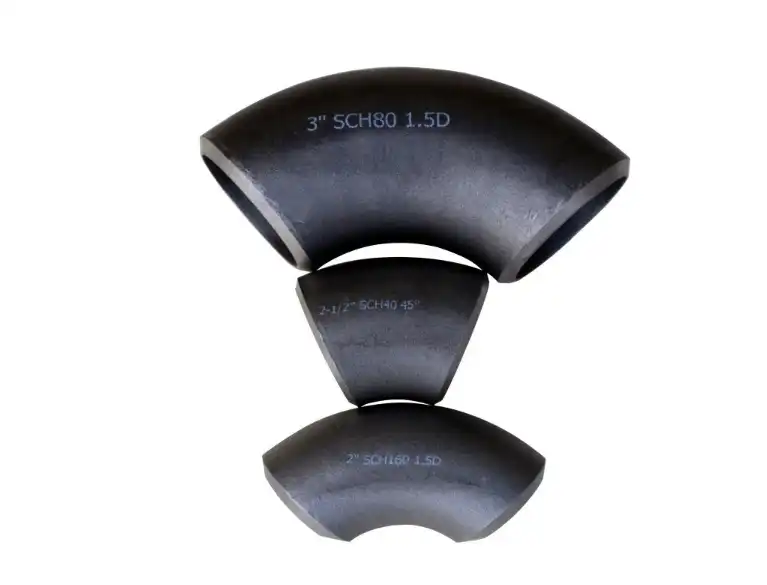
One of the most cited standards for carbon steel elbows is ASME B16.9. This standard covers factory-built wrought butt-welding fittings, including elbows, and specifies critical dimensional criteria such as outer diameter, wall thickness, center-to-end dimensions, and tolerances. These criteria ensure that elbows from various manufacturers may be installed into standardized pipe systems.
Consistency is the biggest benefit of ANSI-based dimensional systems. For example, a contractor working on a refinery expansion project may replace a broken elbow with another fitting that meets the same dimensional specifications without needing to redo the whole pipe layout. But dimensional comparability is not sufficient for full interchangeability. Engineers still have to check the material quality, pressure rating, temperature conditions, and relevant project parameters before replacement.
Why ASME Requirements Are Widely Used for Carbon Steel Elbows?
ASME, short for American Society of Mechanical Engineers, sets some of the most popular standards worldwide in pressure and mechanical engineering. ASME standards are particularly crucial in industrial plumbing because they provide technical criteria for components that will be utilized in challenging conditions.
ASME B16.9 is used for factory-made butt weld fittings such as carbon steel elbows. The standard largely covers dimensions and tolerances. Carbon steel elbows used in pressure applications are commonly made with material standards such as ASTM A234 WPB. Together they give a full foundation for fitting geometry and material performance.
Projects in sectors like petroleum processing, power generation, and chemical manufacture demand tight quality control, traceability, and inspection processes. ASME related requirements are generally selected. Manufacturers may be required to provide paperwork such as material test certifications, dimensional inspection reports, and heat number traceability records.
For instance, engineers don’t merely focus on the size of a carbon steel elbow when they are installing it in a high-temperature steam pipeline. They also assess the material chemistry, mechanical qualities, pressure-temperature rating, and welding requirements to guarantee safe operation throughout the system’s service life.
The Characteristics of DIN Standards for Carbon Steel Elbow Applications
DIN standards are German and are in widespread use in Europe and in many international engineering projects. German methodology has historically put a high value on dimensional correctness, uniformity of manufacture, and extensive technical documentation.
DIN specifications may have different dimensional requirements, material designations, and performance expectations than American standards for carbon steel elbows. Depending on the application, engineers may refer to standards like DIN 2605. There are also comparable European standards, some of which have supplanted or augmented earlier DIN standards (EN standards).
The way in which the material is designated is one big distinction between DIN and ASME-based systems. The American standards usually provide ASTM material grades such as ASTM A234 WPB. European standards may be referred to as P235GH or P265GH, etc., according to European material standards. Some materials may have comparable mechanical qualities but should not be regarded as equal without checking chemical composition and certification documentation.
DIN-based carbon steel elbows are often used for European industrial equipment and mechanical engineering projects, or in systems where the end user specifies European standards. When importing or substituting fittings from area to region, the engineer has to carefully check the whole specification and not just the nominal size.

Comparing Material Requirements and Performance Expectations Between Different Standards
Material Selection Differences in Carbon Steel Elbows
The selection of materials is one of the most critical variables impacting the performance of carbon steel elbows. The selected material sets the mechanical strength, corrosion resistance, temperature capability, and service life.
Carbon steel elbows are often made from materials such as ASTM A234 WPB and are typically used in various ASME-based applications. This material is extensively used for pressure pipe fittings because it offers good tensile strength, weldability, and performance at moderate and high temperatures.
DIN and European requirements might employ various material systems. European grades may be specified to EN standards with criteria for chemical composition, yield strength, and operating temperature. Some materials may operate similarly, but technical validation is necessary for direct replacement.
A frequent error in international procurement is the assumption that a fitting built to one standard may be directly substituted with a product made to another standard. For example, an elbow with the same nominal diameter may nonetheless have variations in wall thickness, pressure rating, or material certification. Such discrepancies may impact welding, alignment, and safety of the pipeline.
Therefore, it is essential for engineers to verify material certifications, relevant requirements, and operating conditions before choosing carbon steel elbows for important systems.
Dimensional Compatibility and Installation Considerations
The size of the carbon steel elbow has a direct effect on the pipeline architecture, installation efficiency, and flow performance. In ANSI, ASME, and DIN systems, several dimensional tables may be used. So two elbows with the same nominal size do not have to have the same dimensions.
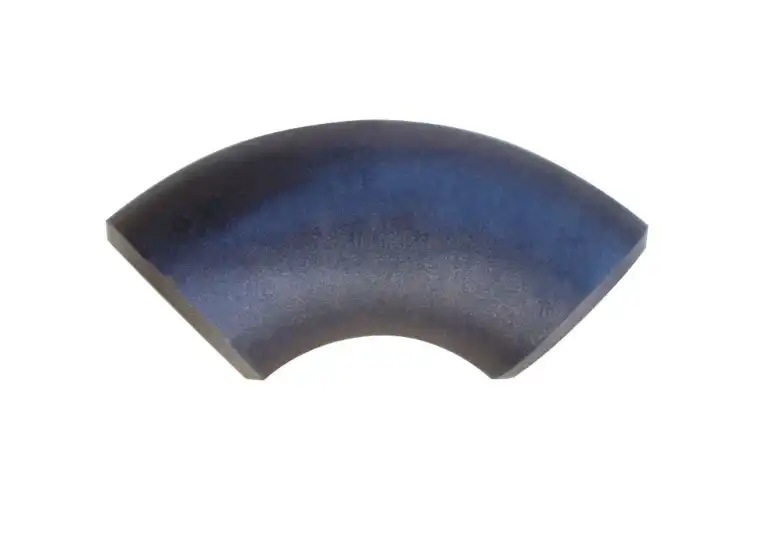
ASME B16.9 usually provides specifications for long-radius and short-radius elbows, center-to-end dimensions, and tolerances. This is particularly true in prefabricated pipe systems where several components must fit together precisely.
According to the specifications used, the dimensional conventions used by DIN standards may change. There may be variations in elbow radius, range of wall thickness, and size of connector. These variances might be a problem in pipeline modification projects if engineers try to mix and match components from various standard systems without sufficient verification.
For example, if you replace an ASME B16.9 elbow with a product having a DIN standard, you may have to examine the face-to-center dimension, welding preparation, and pressure requirements. Minor differences in dimensions might influence pipe alignment and increase installation time.
Hence, professional purchasers would normally supply full technical requirements and not only order by nominal diameter. The details such as kind of elbow, radius, material grade, schedule, pressure class, and standard compliance should be clearly specified.
Key Differences in Testing, Certification, and Quality Control Requirements
How Testing Requirements Affect Carbon Steel Elbow Reliability?
Testing requirements are another big variation between ANSI, ASME, and DIN systems. The inspection techniques may be different from application to application, but all of the key standards are designed to assure product dependability.
ASME projects frequently need thorough documentation and quality control methods, particularly in areas where a failure of a pipeline might generate major safety issues. The manufacturer may execute chemical analysis, mechanical testing, dimensional inspection, and non-destructive inspections in accordance with client needs and relevant standards.
Typical inspection procedures for carbon steel elbows in challenging situations include ultrasonic testing, radiographic testing, hardness testing, and visual examination. These methods assist in finding faults that might compromise the structural integrity.
DIN-based applications could highlight precise dimensional control and repeatable production. European buyers typically want evidence that items meet certain requirements, in the form of thorough technical documentation.
When choosing a supplier, the purchasers shouldn’t only verify that the product fulfills a certain standard. They should also check that the manufacturer can offer comprehensive quality paperwork, including material certifications, inspection records, and product traceability information.
Marking and Traceability Requirements for Industrial Applications
Traceability is important for industrial pipe systems because it enables engineers to trace back the material source, manufacturing records, and inspection results throughout the product life cycle.
Typically, carbon steel elbows conforming to ASME and ASTM are marked with manufacturer identity, material grade, heat number, size, and specification information. These indications provide users with the opportunity to determine if the fitting meets the relevant documents.
The labeling techniques of DIN and European systems might vary, depending on the material identification and area standards. But the objective is identical: to make sure that each component can be inspected after delivery and during operation.
Traceability is particularly crucial for major projects such as refineries, power plants, and offshore facilities, as maintenance teams may need to locate replacement components many years after the initial installation.
A reputable carbon steel elbow supplier should label the product correctly and give the necessary paperwork to assist the client in maintaining project requirements.
Choosing the Right Standard for Carbon Steel Elbow Applications
Choosing the most appropriate standard for carbon steel elbows involves a thorough study of the project needs, the operational circumstances, and the local engineering practices. Distinct sectors and markets have distinct standards; therefore, you should not choose between ANSI, ASME, DIN, or EN specs only on availability or pricing. The chosen elbow standard must also satisfy the design criteria of the whole pipe system in an effort to guarantee correct installation, performance, and long-term dependability.
For projects designed and built in American engineering practice, the dimension requirements of ASME B16.9 and ASTM material specifications are often used. These are typical needs in sectors such as oil and gas, chemical processing, petrochemical plants, and power production facilities. They assist in guaranteeing fittings are uniform in size, have the right wall thickness, and are compatible with other pipes to which they are attached.
In European and other foreign markets, DIN or EN standards may be preferable, as they are consistent with local design regulations, material classifications, and production methods. It is far more critical for organizations working on worldwide projects to verify that the carbon steel elbows chosen can be integrated into the existing pipeline system rather than selecting a standard based on regional preference.
The working environment is also crucial in the choosing of a standard. For example, a carbon steel elbow in a typical water supply line may have different needs than one fitted in a high-temperature refinery process line. Before deciding, engineers and purchasers should take into account aspects such as working pressure, temperature changes, corrosion potential, welding processes, and inspection needs.
From a procurement perspective, providing complete technical information helps suppliers recommend suitable products and avoid compatibility issues. Buyers should clearly specify details such as the following:
- Applicable standard
- Material grade
- Elbow radius
- Pipe size and schedule
- Pressure and temperature requirements
- Testing requirements
- Inspection and documentation requirements
Although industry standards provide important guidance for quality control and product compatibility, the final choice should always be based on the actual service conditions of the piping system. A properly selected carbon steel elbow can improve installation efficiency, reduce maintenance risks, and support reliable operation throughout the pipeline’s service life.
Why Standard Compliance Matters When Purchasing Carbon Steel Elbows?
Choosing compliant carbon steel elbows is not only about meeting a drawing requirement or checking a specification box. It plays an important role in ensuring that the entire piping system can be installed smoothly, operate safely, and remain reliable throughout its service life. A correctly specified elbow provides accurate dimensional compatibility with connected pipes, helps maintain proper flow direction changes, reduces unnecessary turbulence and pressure loss, and minimizes the possibility of installation issues during construction.
When the wrong standard, material grade, or dimensional requirement is selected, problems may occur during fabrication and assembly. These issues can lead to poor fitting alignment, additional machining work, project delays, or higher maintenance expenses after the system is put into operation. In critical industries such as oil and gas, chemical processing, power generation, and industrial water systems, even small fitting deviations can affect overall system performance.
Professional manufacturers understand that global projects often involve different engineering standards and customer requirements. They should be able to provide technical support, confirm dimensions, review material specifications, and offer documentation such as material certificates and inspection records. Whether a project requires ASME B16.9 carbon steel elbows, ASTM A234 WPB fittings, or products manufactured according to DIN standards, selecting a supplier with strong knowledge of international specifications helps reduce purchasing risks, improve installation efficiency, and ensure long-term piping reliability.
Conclusion
ANSI, ASME, and DIN standards for carbon steel elbows share the same goal of ensuring reliable piping connections, but they approach design requirements, material systems, dimensional control, and documentation in different ways. ANSI-related references are often connected with standardized dimensional requirements, ASME specifications are widely used in pressure and industrial piping applications, and DIN standards reflect European engineering practices with their own material and dimensional systems.
Understanding these differences helps engineers, contractors, and purchasing teams avoid common mistakes during specification and sourcing. The correct carbon steel elbow is not selected only by size; it must also match the required material grade, pressure conditions, temperature environment, testing requirements, and applicable regulations.
For international piping projects, careful comparison between ANSI, ASME, and DIN requirements ensures better compatibility, easier installation, and long-term system reliability. By working with experienced suppliers and verifying technical documentation before purchase, companies can select carbon steel elbows that meet both engineering expectations and operational demands.
For more information on high-quality carbon steel elbows and other piping components, please contact Cangzhou Oudi Pipe Manufacture Co., Ltd. at oudi-04@oudiguandao.com. With our extensive experience and commitment to quality, we can help you select the right carbon steel elbows for your specific application, regardless of the standard required.
References
1. American National Standards Institute. (2018). ANSI B16.9: Factory-Made Wrought Buttwelding Fittings. New York: ANSI.
2. American Society of Mechanical Engineers. (2019). ASME B16.9: Factory-Made Wrought Buttwelding Fittings. New York: ASME.
3. Deutsches Institut für Normung. (2016). DIN 2605: Butt-Welding Pipe Fittings—Part 1: Steel Elbows and Bends with Reduced Pressure Factor. Berlin: DIN.
4. Smith, J. R. (2020). Comparative Analysis of International Standards for Carbon Steel Piping Components. Journal of Pressure Vessel Technology, 142(3), 031301.
5. Johnson, M. K., & Thompson, L. E. (2019). Performance Evaluation of Carbon Steel Elbows Manufactured to Different International Standards. Materials Performance, 58(6), 48-54.
6. Lee, C. H., & Park, S. Y. (2021). A Review of Global Standards for Carbon Steel Pipe Fittings: Implications for Design and Procurement. International Journal of Pressure Vessels and Piping, 189, 104270.

Need help finding the right solution with our experts. Please contact us.

SINCE 1998 Your Reliable Pipeline Manufacturer