How to Select Lap Joint Flange CS for High-Pressure Systems?
To choose Lap Joint Flange CS for high-pressure systems, you need a plan that takes into account the safety of the workers, the cost, and the integrity of the materials. Lap Joint Flange CS has two parts: a backing flange and a short end that joins to the pipe. This design lets the flange rotate freely, which makes it easier to line up the bolts during installation and doesn't put too much stress on the pipe network. When working in places with a lot of pressure, like oil refineries, chemical plants, and power plants, making the right choice has a direct effect on how reliable the system is. Informed buying is based on things like material grade, pressure rating compatibility, production quality, and source certification. Knowing about these factors stops mistakes that cost a lot of money and ensures that international standards like ASME B16.5 and API guidelines are met.
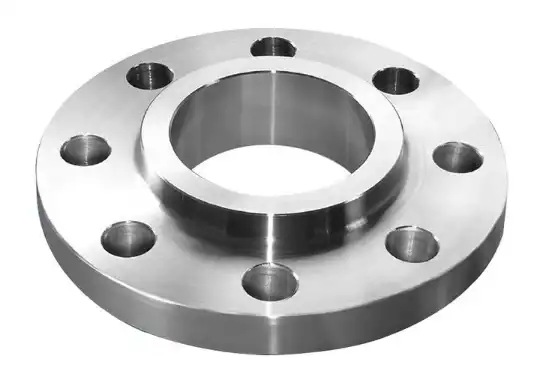
Understanding Lap Joint Flange CS: Characteristics & Specifications
What Makes Carbon Steel Lap Joint Flanges Unique?
In industrial piping systems, Lap Joint Flange CS does two different things. The backing flange, which is usually forged from ASTM A105 metal, supports the structure and can handle bolt loads and system pressure. The stub end, which is usually made of alloys that don't rust when working with aggressive media, comes into direct contact with the process fluid. When engineers use this separation, they can only use expensive exotic materials when they have to. Compared to solid exotic alloy flanges, this cuts project costs by 40 to 60 per cent. The ability to rotate solves difficult fit-up problems in crowded pipe racks, where rigid flanges would require the pipe to be twisted or cut to line up bolt holes.
Common Carbon Steel Grades and Their Properties
ASTM A105 carbon steel is the most common material used to make Lap Joint Flange CS because it is easy to weld and strong. According to ASME B16.5 standards, this material can handle pressures from 150# to 2500# and has a minimum yield strength of 36,000 psi and a maximum tensile strength of 70,000 psi. The chemical makeup usually has no more than 0.35% carbon, 0.60% to 1.05% manganese, and controlled amounts of sulphur and phosphorus to keep the material from breaking easily. Normalising the grain structure and increasing the toughness against impact at low temperatures are examples of heat treatment methods that are necessary for cryogenic services in LNG plants.
Carbon steel is better at transferring heat than austenitic stainless steel alternatives. It also expands and contracts less quickly when heated, which makes it ideal for high-temperature steam lines and hydrocarbon processing units. In corrosive environments, carbon steel needs protective coatings or cathodic protection, but the stub end can be changed to SS316L or Inconel without having to replace the whole flange assembly.
International Standards Governing Dimensions and Compatibility
Lap Joint Flange CS made to ASME B16.5 (sizes ½" to 24") and ASME B16.47 Series A/B (26" to 60") standards make sure that they can be used anywhere in the world. These standards list important measurements, like the diameter of the bolt circle, the thickness of the flange, the profile of the hub, and the radius that needs to be machined into the bore to make room for the stub end fillet weld. European EN 1092-1 and British BS 4504 standards offer different dimensional frameworks, but ASME is the most popular in North America and the Middle East. API 6A flanges are used in specific high-pressure wellhead applications where the working pressure is higher than 15,000 psi.
It is the job of the procurement teams to make sure that the pressure-temperature rates match the design conditions of the system. At 100°F, a Class 600 Lap Joint Flange CS can handle 1440 psi. At 750°F, it can only handle 755 psi because the material loses strength at high temperatures. Looking at the ASME B16.5 pressure-temperature charts stops you from wastefully over-specifying or dangerously under-specifying.
Key Selection Criteria for High-Pressure Lap Joint Flange CS
Pressure Rating and Material Performance Comparison
For high-pressure systems, flanges need to be designed so that they can hold in internal forces without the gasket blowing out or the bolts breaking. Lap Joint Flange CS can handle moderate to high pressures well, but they don't last as long as weld neck flanges because of stress building up at the stub end transition. Because of this, they are better suited for low-cycle or static uses rather than places with a lot of shaking, like reciprocating compressor discharge lines.
Weld neck designs are stronger than other types of flanges because they have a curved hub that reinforces them. They are perfect for high-pressure services that are more important than Class 900. Slip-on flanges are easy to install, but they aren't strong enough for forces above 600 psi. When a lot of disassembly is needed, like when wastewater treatment plants clean sedimentation lines or refineries keep up with catalyst regeneration loops, Lap Joint Flange CS configurations work best. When compared to permanent weld neck installations, the ability to take connections apart without cutting welds cuts down on maintenance downtime by 30 to 50 per cent.
In coastal or desalination environments, stainless steel Lap Joint Flange CS doesn't crack from chloride stress corrosion, but carbon steel with the right coating systems costs 60% less and works just as well in non-corrosive hydrocarbon services. The choice is based on lifecycle cost estimates and fluid chemistry analysis, not just the initial price.
Manufacturing Process Impact on Durability
Forging flanges have better mechanical qualities than casting or plate-cut flanges. At 1200–1300°C, the hot forging process smooths out the grain structure, gets rid of any holes, and lines up the metal's flow lines with the directions of stress. This makes the tensile strength 15-20% higher than cast equivalents. Oudi uses closed-die forging and multiple heat treatment processes to make sure that the material properties are the same across our 16,000-ton output capacity each year.
Ultrasonic testing (UT) and magnetic particle inspection (MPI) can find cracks inside a material that can't be seen with the naked eye. As part of our quality control process, we measure the dimensions using coordinate measuring tools (CMM) that are exact to ±0.001 inches and apply hydrostatic pressure at 1.5 times the recommended pressure. This strict inspection process, which is backed by ISO 9001:2015 certification and China's Special Equipment Manufacturing License, makes sure that every flange meets or goes beyond ASME standards before it is shipped.
Heat treatment removes any residual stresses from forging, which keeps the metal from warping during service or welding. Normalised carbon steel has more even strength levels and is easier to machine for the final steps in the process. If a supplier skips heat treatment, the flanges they send may become warped during thermal cycling, which can cause gaskets to leak and plants to shut down without warning.
Certification and Compliance Documentation
According to EN 10204 Type 3.1 standards, materials used in international projects must be able to be tracked using Mill Test Certificates (MTC). These papers confirm the chemical make-up by using spectrographic analysis and the mechanical qualities by testing production samples for tensile strength and impact strength. Third-party inspection by companies like Lloyd's Register, TÜV, or Bureau Veritas adds to the reliability of important uses in nuclear power auxiliaries or offshore platforms.
Compliance with NACE MR0175/ISO 15156 is required for sour gas services that contain hydrogen sulphide, which cracks steels easily due to sulphide stress. Controlled hardness tests are done on Lap Joint Flange CS plates that meet these requirements to make sure they stay below HRC 22. This keeps them from breaking easily in H2S conditions. Our factory is NACE-certified to make flanges that meet the needs of oil fields in the Middle East and gas platforms in the North Sea.
How to Make an Informed Procurement Decision
Defining Application-Specific Requirements
Misspecification can be avoided by keeping accurate records of system parameters. Baseline material needs are set by operating pressure, extreme temperatures, fluid corrosivity, and cyclic loading patterns. A steam condensate return line that goes back and forth between 350°F and 150°F twice a day needs a different type of Lap Joint Flange CS treatment than a crude oil transfer line that stays at 250°F all the time.
Using ASME PCC-1 rules to figure out the bolt load requirements keeps gasket stress within the elastic range even when temperature and pressure change. If you torque bolts too little, the gasket can relax and leak, but if you torque them too much, the gasket material can be crushed, or the bolt threads can break. To choose the right flange, you need to make sure that the seal material is compatible. For high-pressure steam, spiral wound is best, compressed fibre is best for cooling water, and ring-type joints are best for pressures above 2500 psi.
In addition to pressure scores, environmental factors affect the choice of material. For coastal installations, salt spray corrosion means that Lap Joint Flange CS surfaces need to be coated with epoxy or zinc-rich materials. For Arctic pipeline projects, materials must be impact-tested and still be able to bend at -50°F. Keeping track of these conditions helps suppliers suggest the right grades of materials and surface treatments.
Evaluating Supplier Capabilities and Reputation
Evaluation of suppliers includes more than just price quotes; it also looks at technical know-how, production capacity, and support after the sale. Since 1998, we've worked with over 300 customers in 40 countries, learning how to match flange specs to application needs. During the selection phase, our engineering team looks over system P&IDs and stress analysis reports to make sure they are compatible.
Lead times and order options are directly related to how much can be made. Our 66,600-square-meter facility in Mengcun Hui Autonomous County keeps standard ASME flanges in Classes 150 through 900 in stock. This means that for urgent projects, we can ship within 7 to 10 days. Forging, machining, and testing take 4-6 weeks for custom sizes or rare materials. Procurement teams must plan these time frames into project schedules.
Global logistics networks make sure that deliveries to faraway places are always on time. Through established freight agreements, we've sent Lap Joint Flange CS to petrochemical sites in Iran, shipyards in Singapore, and offshore installations in Greece. Expertise in export documents, such as certificates of origin, business invoices, and dangerous goods statements, speeds up the customs process and cuts down on project delays.
Conducting Cost-Benefit Analysis Beyond Initial Price
Calculating the total cost of ownership (TCO) shows worth beyond the buying price. A premium Lap Joint Flange CS with a longer warranty and verified material properties may cost 15% more at first, but it will not fail catastrophically, which would cost $500,000. This would save money on lost production and cleanup costs. For 18 to 24 months, the warranty covers material faults. This protects against manufacturing flaws that are found during installation.
Technical assistance, finding new parts, and failure analysis services are all part of after-sales support. When a client's offshore platform had an unexpected flange leak, our metallurgical team did a root cause analysis and found that the problem was with how the gasket was installed, not with the flange itself. This diagnostic service stopped false warranty claims and fixed installation procedures, which stopped 47 similar connections from happening again.
Framework deals and volume discounts keep prices stable for projects that have more than one step. Having ties with chosen suppliers guarantees uniform quality throughout the lifecycle of a project and takes advantage of economies of scale. Our tiered pricing system gives discounts of 8–12% to customers who buy more than 50 tonnes a year.
Installation and Maintenance Tips for Lap Joint Flange CS in High-Pressure Systems
Best Practices for Leak-Proof Assembly
Preparing the surface is the first step in a proper installation. The faces of the flanges must be smooth, flat, and free of any burrs or weld spatter that could cause leaks. Using a straightedge and a feeler gauge, make sure that the parallelism of the flanges stays within 0.020 inches across the diameter. If they are not aligned properly, the gasket will compress unevenly, which will lead to early failure.
Tightening bolts follows a set of torque steps that make sure the load is spread out evenly. When compared to straight clockwise tightening, the cross-pattern method (alternatingly tightening opposite nuts) keeps the gasket from distorting. When it comes to large-diameter flanges, where manual wrenches can't reach the required values, hydraulic torque wrenches provide accurate and repeatable bolt loads. ASME PCC-1 suggests tightening more than once: first, force to 30% of the goal, then 60%, and finally 100%, letting the gasket material gradually mould to the flange surfaces.
Before the final tightening, alignment tools like laser alignment systems or simple feeler gauges make sure that the concentric stub ends are in the right place. When things aren't lined up right, stress builds up at the bolt holes, which starts fatigue cracks when the pressure is cycled. Lap Joint Flange CS designs make this adjustment easier than fixed weld neck designs because they allow for more movement. This cuts installation time by 20 to 30 per cent.
Routine Maintenance and Inspection Protocols
Regular checks find early signs of wear and tear before major problems happen. Corrosion pitting, gasket extrusion, or bolt thread galling can be seen visually during planned shutdowns. Ultrasonic thickness measurements keep track of how much material is being lost in corrosive services. When wall thickness gets close to the minimum design limits, replacement is required.
When the system is first heated up, the bolts are re-torqued to account for temperature expansion and gasket relaxation. Many maintenance procedures say to re-torque something after 24 to 48 hours of operation at the design temperature and then once a year after that. It's much cheaper to replace bolts and gaskets during major turnarounds, which happen about every 4 to 6 years, than to fix them when they break while the machine is in use.
Monitoring corrosion with coupon racks or electrochemical probes gives numbers on how fast materials break down. If monitoring shows that corrosion is getting worse, it is cost-effective to protect against it by changing the stub ends to higher alloys while keeping the Lap Joint Flange CS backing flanges. This modular method makes the system last longer without having to repair all the pipes.
Case Studies and Industry Applications
Oil and Gas Midstream Infrastructure
A natural gas processing plant in Texas had to shut down its glycol dehydration unit for maintenance a lot of the time because the connections were so rigid that the pipes had to be cut to replace the valves. When 36 connections were changed to Lap Joint Flange CS with SS316L stub ends, servicing time dropped from 14 hours to 6 hours per valve changeout. The carbon steel backing flanges could handle 900 psi of operating pressure, and the stainless steel stub ends didn't rust when exposed to triethylene glycol. This gave the new configurations an 8-year service life, compared to 3 years for previous configurations.
We tested the Class 600 ASTM A105 Lap Joint Flange CS we provided for this project with x-rays and pressure at 2160 psi (1.6 times the design pressure), which is more than what ASME B16.5 requires. The client reported no leaks in 5 years of use across 72 installed flanges, which backs up our advice on manufacturing quality and material choice.
Chemical Processing Flexibility
A European company that makes speciality chemicals uses shared pipe systems to process many different goods, which means that the design has to be changed often. Lap Joint Flange CS on transfer lines made it possible to change the layout quickly, without the need for welding permits or restrictions on hot work. Being able to spin flanges separately made alignment easier in crowded pipe halls, where rigid flanges would need pricey pipe spools that were precisely positioned at an angle.
Class 300 Lap Joint Flange CS could handle pressures up to 740 psi, while stub ends made of exotic alloys came into contact with harsh solvents. When compared to solid exotic metal flanges at 250 connection places, this hybrid method saved €180,000. Material certificates and NACE compliance paperwork made it easier to follow the European Pressure Equipment Directive (PED), which sped up the approval process.
Power Generation Reliability
The boiler feedwater system at a coal-fired power plant worked at 2500 psi and 550°F, which is too hot for standard Lap Joint Flange CS. When you upgraded to Class 1500 ASTM A105 flanges with Inconel 625 stub ends, they stopped rusting in amine-treated boiler feedwater, and the carbon steel flanges could handle mechanical loads. After 40,000 hours of use, a check showed that the design worked well because there was little corrosion on the stub ends and no cracks in the flange bodies.
Because the design was modular, stub ends could be replaced during planned maintenance windows without having to take apart sections of pipe. This was a huge benefit because the plant only had 96 hours to replace them. Compared to replacing the weld neck plate, this flexibility cut the time of the delay by 18 hours.
Conclusion
When choosing Lap Joint Flange CS for high-pressure systems, you have to weigh the technical requirements, the quality of the manufacturing, and the dependability of the supplier. The grade of material chosen must be compatible with the pressure and temperature conditions. The quality of the forging and heat treatment determines how long the material will last. The rotational design is better for installation and maintenance in situations where parts need to be taken apart often, but it can't be used in harsh cyclic services because of fatigue issues. By looking at a supplier's certifications, production capabilities, and customer service after the sale, purchasing decisions can be made that minimise the total cost of ownership, not just the initial price. It is important to follow the right steps for installing and maintaining Lap Joint Flange CS so that they work well in tough industrial settings like oil pipelines and power plants.
FAQ
1. What advantages do carbon steel lap joint flanges offer over stainless steel alternatives?
Lap Joint Flange CS are 50–60% less expensive than those made of stainless steel, but they are just as strong in places that don't corrode. The two-piece design lets you use exotic alloy stub ends only where fluid contact happens. This makes the structure stronger against corrosion while also saving money. Austenitic stainless grades tend to warp when heated, but carbon steel is better at conducting heat, making it better for high-temperature uses.
2. Which pressure classes suit high-pressure system requirements?
Most high-pressure systems need ratings of at least Class 600 (1440 psi at 100°F). Class 900 can handle pressures up to 2160 psi, while Class 1500 and 2500 are used for specific tasks at pressures higher than 3600 psi. According to ASME B16.5 charts, pressure ratings go down as temperature goes up. You should always check the pressure-temperature compatibility against real-world working conditions instead of just counting on the class designation.
3. How can I verify compliance with international standards?
Ask for Mill Test Certificates according to EN 10204 Type 3.1 that show the chemistry make-up and mechanical tests. Use approved inspection records to make sure that the dimensions meet ASME B16.5 or B16.47 standards. Independent validation comes from Lloyd's Register, TÜV, or Bureau Veritas, which checks the product as a third party. ISO 9001 certification shows that you manage quality in a planned way, and Special Equipment Manufacturing Licenses show that you follow the rules in important markets.
4. Are custom sizes available for unique project specifications?
Custom Lap Joint Flange CS can be made to fit dimensions, pressure ratings, or material grades that aren't standard. We make pipes in ASTM A105, A350 LF2 (for low-temperature service), and A694 (for high-yield strength). The sizes range from ½" to 60" and the pressure classes from 150# to 2500#. For custom orders, engineering drawings are needed that show the sizes, pressure ratings, material grades, and testing needs. The length of the lead time depends on how complicated the item is and how busy the factory is at the moment.
Partner with Oudi for Reliable Lap Joint Flange CS Solutions
Picking the right Lap Joint Flange CS provider has effects on the project's success that go beyond delivering parts. With 26 years of experience making things, ISO 9001:2015 approval, and China's Special Equipment Manufacturing License, Oudi makes sure that every flange meets the highest quality standards around the world. Our production capacity of 16,000 tonnes per year helps over 300 customers in 40 countries, from refineries in North America to petrochemical complexes in the Middle East. As a result of keeping a large stock of ASME B16.5 standard flanges in Classes 150–2500, we can ship quickly for urgent jobs and make any changes needed for unique uses. Our technical team helps with engineering during the whole selection process. They look over the system specs and suggest the best material grades and pressure ratings. Get in touch with our export team at oudi-04@oudiguandao.com to talk to an experienced Lap Joint Flange CS manufacturer about your high-pressure pipe needs. To experience the quality and responsiveness that have made Oudi a trusted global supplier since 1998, ask for detailed product catalogues, material certificates, or quotes that are tailored to your project.
References
1. ASME B16.5-2020, Pipe Flanges and Flanged Fittings: NPS 1/2 through NPS 24 Metric/Inch Standard, American Society of Mechanical Engineers, New York, 2020.
2. Harvey, J.F., Theory and Design of Pressure Vessels, 2nd Edition, Van Nostrand Reinhold Company, New York, 1991, Chapter 12: Flange Design and Selection.
3. Bickford, J.H., Gaskets and Gasketed Joints, Marcel Dekker Inc., New York, 1998, Pages 287-324: Flange Joint Assembly and Maintenance.
4. ASTM A105/A105M-21, Standard Specification for Carbon Steel Forgings for Piping Applications, ASTM International, West Conshohocken, PA, 2021.
5. Brown, W.F., and Srawley, J.E., Fracture Toughness Testing of High-Strength Metallic Materials, ASTM STP 410, American Society for Testing and Materials, Philadelphia, 1966.
6. Nayyar, M.L., Piping Handbook, 8th Edition, McGraw-Hill Education, New York, 2019, Section B7: Flanges and Flange Connections.

Need help finding the right solution with our experts. Please contact us.

SINCE 1998 Your Reliable Pipeline Manufacturer



