Custom carbon steel elbow Factory: OEM Solutions for Industries
When you need precise pipe parts for an industrial project that can handle high pressure, changing temperatures, and corrosive environments, the supplier you choose is very important. Custom carbon steel elbows are the most important part of fluid transport systems in chemical plants, oil refineries, water treatment plants, and shipbuilding yards. For more than twenty years, Cangzhou Oudi Pipe Manufacture Co., Ltd. has been making pipe fittings that don't just meet standards but also go above and beyond what's needed in the toughest industrial settings in the world. Every year, our factory makes 16,000 tonnes of fittings out of carbon steel, stainless steel, and alloy steel for more than 300 customers in 40 countries. Every elbow that leaves our factory in Mengcun Hui Autonomous County is certified by ISO 9001:2000 and meets ANSI, JIS, DIN, and BS standards. It's not enough to just make pipe parts; we also need to provide designed solutions that keep important systems running smoothly and safely.
Understanding Custom Carbon Steel Elbows: Specifications and Benefits
Carbon steel elbows change the direction of fluid flow in piping systems. This seems like a very easy task, but it is actually very important in the field of engineering. These parts change the flow of oil through plant networks, clean water through city systems, and natural gas across huge distribution lines.
Material Grades and Industry Standards
The performance characteristics of Custom carbon steel elbows are based on their metallurgical makeup. The most common grade for moderate-temperature service is ASTM A234 WPB, which is very easy to weld and has a high mechanical strength. For flanged connections and higher-pressure uses, A105 carbon steel is better for forging than other steels. Our manufacturing methods can handle both types, and the materials we use are chosen based on how your system works.
Material verification is more than just analysing its makeup. We give mill test reports (MTRs) that list the chemical makeup, mechanical properties, and heat treatment history of the material. During plant completion and regulatory reviews, this paperwork is very important, especially for projects that have to follow ASME B16.9 piping standards.
Bend Angles and Radius Classifications
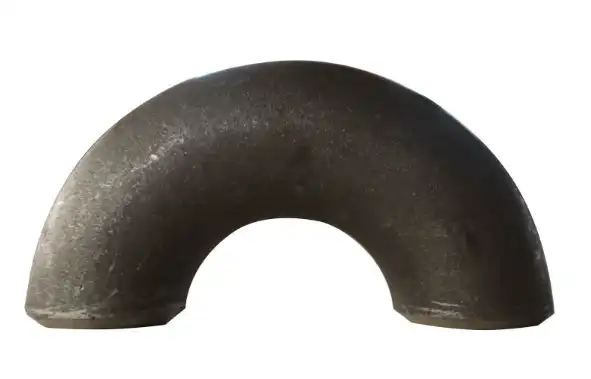
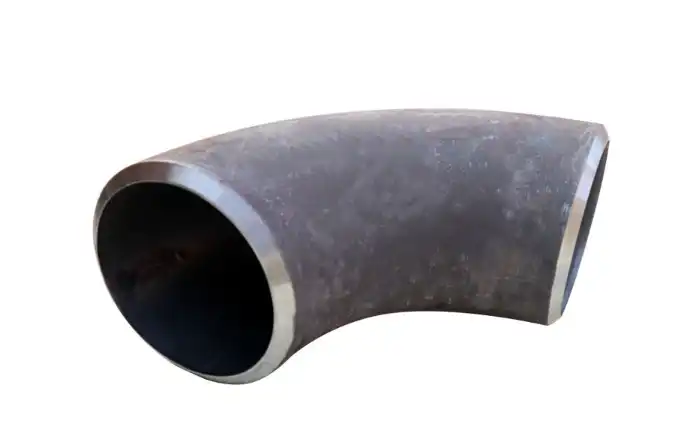
Elbow specs are often based on how complicated the piping system is. The 90-degree configuration can handle changes in direction that are perpendicular, while the 45-degree elbows can handle gradual changes that keep pressure drop to a minimum. Our plant makes 180-degree return bends for situations where the flow needs to be completely turned around in a small area.
Radius classification has a big effect on how flows and what needs to be installed. Long radius (LR) elbows have a central radius that is 1.5 times the standard pipe diameter. This makes high-speed systems less turbulent and less likely to wear down. Short radius (SR) versions, whose centerline radius is the same as the pipe diameter, work well in installations with limited space where compact geometry is more important than flow optimisation.
Operational Advantages in Demanding Environments
Carbon steel is great for systems that are subject to temperature cycles and mechanical stress because it is both strong and flexible. Unlike rigid materials that fail in terrible ways, carbon steel deforms in expected ways that plant engineers can keep an eye on through regular inspection processes.
Carbon steel doesn't have corrosion resistance because of the steel itself, but because of protective layers and cathodic protection systems that are built into the design of the pipeline. As part of our manufacturing process, we prepare the surface so that the coating sticks well. This makes the product last longer in corrosive environments like saltwater, acidic condensates, and hydrogen sulfide.
When you look at lifecycle economics, you can see how cost-effective carbon steel is. Lower material costs compared to exotic alloys, along with replacement parts being available all over the world and standard ways of connecting them, lower both the initial capital expenditure and the long-term maintenance budgets.
Comparing Carbon Steel Elbows with Other Materials: Making Informed Choices
One of the most important choices in pipeline building is choosing the right materials. Even though Custom carbon steel elbows are most often used in moderate-temperature situations, it is important to know how they perform compared to other materials so that the best system design can be made.
Carbon Steel Versus Stainless and Alloy Alternatives
Because stainless steel elbows are made of chromium and nickel, they don't need any coatings to protect them from corrosion. These materials work great in making medicines, processing food, and other tasks where the purity of the product can't stand corrosion byproducts. The higher cost of the material—usually 300–500% more than carbon steel—means that stainless steel can only be used in systems where the resistance to rust makes the investment worth it.
Elbows made of alloy steel have molybdenum, chromium, and other metals added to them that make them stronger and less likely to bend at high temperatures. Power plants and petrochemical crackers that work above 450°C need alloy materials that can keep their mechanical properties even when they are under a lot of heat. We can make low-alloy versions of our products for customers who are switching from carbon steel to high-temperature alloys.
Carbon steel is useful because it can be used in a wide range of temperatures, from -29°C to 427°C, which is enough for 80% of industrial piping needs. Because so many people use the material, connection sizes, inspection methods, and repair methods have become more uniform. This lowers project risk and makes supply chain management easier.
Manufacturing Methods: Seamless Versus Welded Construction
Carbon steel bends that are seamless are made from solid pipe stock that is hot-formed without lengthwise welds. Since there are no weld seams, there are no weak spots. This makes seamless construction better for critical services like high-pressure steam, sour gas, and systems that are loaded and unloaded many times. Before mechanical forming makes the bend radius and angle you want, our hot-pushing process heats pipe sections to the forging temperature.
To make a welded elbow, a formed plate is folded and linked with longitudinal welds. This way of building can handle bigger diameters—often more than 24 inches—where seamless manufacturing would be too expensive. Modern submerged arc welding and x-ray checking make sure that the weld is strong enough to be as strong as the base material.
When deciding between seamless and welded, cost is often the main factor. For diameters less than 16 inches, seamless elbows usually cost 15 to 30 per cent more than welded ones. Welded construction is better for large-bore uses, though. During specification development, our engineering team helps clients find a balance between performance needs and budget limits.
Standards Compliance and Quality Assurance
ANSI B16.9 sets the material standards, pressure-temperature values, and size limits for wrought steel fittings that are made in a plant. To prove compliance, measurements must be taken, water pressure must be tested, and material approval paperwork must be kept. We keep measurement tools that are calibrated and can be traced back to national standards. This way, we can be sure that every dimension meets the requirements of the specification.
The design of pressure vessels and pipes is governed by ASME standards, which spell out methods for stress analysis, welding processes, and rules for non-destructive examination. Our quality management system is in line with these codes because we have procedure qualification records (PQRs) and welder performance qualifications (WPQs) that show our manufacturing skills meet the needs of the codes.
OEM Solutions for Custom Carbon Steel Elbows: Manufacturing and Tailoring
Many uses can be met by standard catalogue items, but engineered solutions are often needed for complicated projects that standard products can't meet. Through joint planning and flexible production, our OEM services turn what our clients want into Custom carbon steel elbows that can be made.
Advanced Manufacturing Processes
Our main way of making carbon steel elbows is by hot forming and shaping. We use induction furnaces to heat pipe sections to about 950°C, and then hydraulic pushing equipment is used to apply controlled mechanical pressure. This process keeps the even distribution of wall thickness while making precise bend geometries. Keeping an eye on the temperature during the whole making process stops grains from growing and makes sure that the metal's mechanical properties meet ASTM standards.
Forging is used to make elbows for high-pressure uses where better mechanical qualities support more processing. We use closed-die forging, which shapes hot carbon steel billets under a lot of pressure. This makes grain structures that are more refined and have better resistance to impact and fatigue. Facilities that make electricity and offshore platforms, where safety must be the top priority, use these parts.
Customisation Capabilities for Specialised Applications
Because our dimensions are flexible, we can make elbows with non-standard bend angles, custom radius requirements, and special end preparations. For a recent job with a petrochemical client, we needed 37.5-degree elbows with extended tangents to join nozzles. These shapes are not available in standard catalogues. Our engineering team created forming tools and skilled manufacturing methods that made sure the parts we sent to the client exactly met their needs.
You can choose a material grade that goes beyond the common ASTM names. For Arctic service, we get low-temperature carbon steels that are more resistant to impact. For sour gas applications, we get fine-grain materials, and for field construction, we get normalised grades that are easier to weld. Before production starts, our metallurgical lab checks the properties of materials by analysing them chemically and mechanically.
Surface Treatments and Coatings
Certain corrosive environments can't damage elbows because of surface treatments and coatings. For underground pipeline service, we use fusion-bonded epoxy. For marine environments, we use high-build epoxy systems, and for offshore platforms, we use thermal spray aluminium. Internal coatings lower friction when moving slurry and keep products from getting dirty in systems that refine oil.
Lead Times and Project Scheduling
Standard configurations are usually shipped within three weeks of confirmation of the order. They are taken from our stock of common sizes and pressure classes. Custom-engineered goods take between six and ten weeks to make, based on how long it takes to get the materials and how many inspections are needed. When the needs of a project require faster delivery, rush orders are given priority scheduling.
Our production planning system organises the buying of raw materials, the machining operations, the heat treatment cycles, and the inspection tasks so that we can get the most work done while still meeting quality standards. Real-time order tracking lets clients know how their orders are being made, which can be integrated with the schedules for building projects. Through disciplined production management and proactive communication, we've kept our on-time delivery rates at or above 95% across our 300+ clients.
Procurement Guide: Buying Custom Carbon Steel Elbows for Your Industry Needs
Finding the lowest price quote is only one part of a successful procurement process. Smart sellers check the skills of suppliers, make sure they have good quality control systems, and build relationships that will help the project succeed in the long run.
Key Ordering Considerations
Minimum order numbers find a mix between how efficiently the product is made and how much inventory the client needs. Our standard MOQ is 500 kg, which is enough for small projects. Our annual capacity of 16,000 tonnes, on the other hand, supports large construction projects. With price tiers starting at 5 tonnes, volume savings take into account the economies of scale that come with making a lot of units.
Prices depend on many things, like the cost of raw materials, how hard the product is to make, how many inspections are needed, and how the product will be delivered. Prices for carbon steel change with the global steel market, but for normal types, they usually fall between $800 and $1,200 per tonne. Specifications that are unique and need special materials, a lot of machining, or faster delivery come with extra costs that reflect the need for more resources.
Evaluating Supplier Reliability
Verification of certification shows that a company's quality management system meets established standards. The ISO 9001:2000 certification shows that we follow set procedures for design control, process management, inspection protocols, and systems for taking corrective action. With a Special Equipment Manufacturing License from China's regulatory officials, you can make Custom carbon steel elbows and pipes while the government keeps an eye on things.
Production skills include more than just a list of equipment. They also include technical know-how and process control. We use CNC machining centres to precisely control the sizes of parts, spectroscopic analysers to make sure the materials are correct, ultrasound inspection systems to find flaws, and hydrostatic test equipment to make sure the pressure stability is correct. This infrastructure helps manufacturing operations run smoothly, from receiving raw materials to shipping finished goods.
Customer references show how well a supplier really does in the real world. Europe, North and South America, Africa, Southeast Asia, and the Middle East are just some of the places where we have clients. Construction companies, EPC contractors, and industrial plant operators keep coming back to us. Potential customers are encouraged to talk to current customers about our technical support, how reliable our delivery is, and how good our products are.
OEM Partnership Benefits
Suppliers can add value beyond just making parts when they work together on engineering projects. Our expert team helps with choosing materials, making sure pressure-temperature ratings are correct, and figuring out what the codes mean. This help is especially helpful for clients who are entering new markets or developing systems that aren't their main area of knowledge.
Custom fabrication lets you meet the specific needs of a project that standard products can't. For abrasive slurry service, we've made elbows with explosion-bonded cladding, and for corrosive media, we've made elbows with built-in instrumentation connections. These specialised solutions come about after clients talk about operational problems and performance needs.
Ensuring Durability and Performance: Carbon Steel Elbow Maintenance and Industry Standards
How long a component lasts depends on how it was installed, how often it is inspected, and how well it is maintained so that it stops breaking down before it does.
Corrosion Mechanisms and Prevention Strategies
Custom carbon steel elbows are damaged by external rust, which happens when moisture in the air and the metal's surface react electrochemically. Corrosion rates in the atmosphere range from 10 microns per year in dry climates to 100 microns or more in salty marine environments. When they are taken care of properly, protective coating systems block moisture and stop the corrosion process.
Internal corrosion results from process media characteristics, including pH, dissolved oxygen level, flow rate, and temperature. Corrosion inhibitor programs that cover internal areas with protective films are needed for water systems. When sulphur compounds react with iron, they form iron sulphide scales that need to be removed on a regular basis.
Inspection and Maintenance Protocols
Cathodic protection systems add extra corrosion protection for buried and submerged pipelines. When you use sacrificial anodes or impressed current systems, the potential of the pipe moves into protective ranges where corrosion reactions can't happen. When asked during the design phase, our elbows can accommodate connection points for monitoring cathodic protection and injecting current.
During regular plant inspections, visual inspection shows that the outside coating is wearing off, there is mechanical damage, and the support system is breaking down. These problems need to be fixed. Inspectors write up reports and take pictures of what they find, which helps set priorities for maintenance and budget needs.
Ultrasonic thickness measurements count how much wall loss is due to erosion and corrosion, so they can be compared to calculations of the minimum thickness that are needed. In severe service, systems are usually inspected once a year, while non-critical systems are checked every five years. Trending thickness data shows corrosion rates that help predict how long something will last and plan for replacement.
Real-World Performance Validation
After fixes or changes, pressure testing makes sure the system is still working properly. When 1.5 times the maximum allowed working pressure is applied, hydrostatic tests find leaks and structural problems in systems before they are put back into service. Our elbows are made with pressure margins that allow these proof tests to be done without permanently changing the shape of the elbow.
During a 2018 shutdown, a petrochemical complex in Southeast Asia put our ASTM A234 WPB elbows all over their oil distillation unit. Ultrasonic testing showed that the wall thickness had dropped below 5% after five years of handling sour oil at temperatures as high as 380°C. This is well within acceptable limits. The maintenance manager of the building said that this success was due to using the right materials, making sure the products were well-made, and having good corrosion management plans.
A water utility in Africa used our coated carbon steel parts to replace elbows that were breaking down in their treatment plant's distribution system. After twelve years of use, the original fittings that weren't coated showed severe pitting corrosion. Our fusion-bonded epoxy coating system has worked well for eight years with no signs of coating separation or substrate corrosion, proving that the design of the protective system was correct.
Conclusion
Choosing the right Custom carbon steel elbow supplier affects the success of the project by ensuring timely delivery, high-quality products, and technical support that goes beyond the purchase. Pipe parts that work reliably in tough conditions are needed for industrial processes like refining oil, processing chemicals, making electricity, and treating water. Our manufacturing skills, quality management systems, and global service network make it possible for us to build long-term relationships with clients who can't stand disruptions in the supply chain or broken parts. Because Oudi uses tried-and-true manufacturing methods, thorough inspection protocols, and quick customer service, they are a trusted partner for important piping applications all over the world.
FAQ
1. What factors determine pricing for Custom carbon steel elbows?
Price depends on the cost of raw materials, how hard the product is to make, what certifications are needed, how much you order, and when you need it delivered. Standard sizes made of common materials are the least expensive choices. Custom specs that need special materials, a lot of machining, or faster production cost more. By making production more efficient, volume agreements lower the cost per unit. To make sure that procurement choices are clear, we give thorough quotes that list all of these factors.
2. How can buyers verify compliance with ANSI and ASME standards?
Manufacturers should give you material test reports that show what the materials are made of and how they work, as well as dimensional inspection reports that show they meet ANSI B16.9 tolerances and quality management system certifications that show they follow documented procedures. We provide full documentation packages that include mill certificates, inspection records, and process qualification records. These help verify code compliance during plant startup and regulatory checks.
3. What are typical lead times for bulk orders?
Standard configurations from stock that is kept on hand ship three weeks after an order is confirmed. Custom-engineered goods take between six and ten weeks to make, depending on how long it takes to get the materials and pass the inspections. Orders of more than 50 tonnes may take up to twelve weeks longer to be produced. When project circumstances require faster delivery, rush services can handle emergency needs with faster processing, but there are extra fees for shortening the schedule.
Partner with Oudi for Your Custom Carbon Steel Elbow Requirements
Since 1998, Cangzhou Oudi Pipe Manufacture Co., Ltd. has been working with businesses around the world to make high-quality pipe parts that meet the strict requirements of important building projects. With a yearly production capacity of 16,000 tonnes, ISO 9001:2000 certification, and a Special Equipment Manufacturing License, you can be sure that your Custom carbon steel elbow components will come on time and work properly for as long as they are used. Prospective buyers, project managers, and people who run industrial plants are welcome to talk to our technical team directly and experience the Oudi difference. Please email us at oudi-04@oudiguandao.com to talk about your specific needs with skilled manufacturers who know how your industry works. Our engineering staff is ready to look over your requirements, suggest the best solutions, and give you quotes that are competitive while also providing quality, dependability, and quick service.
References
1. American Society of Mechanical Engineers. (2020). ASME B16.9: Factory-Made Wrought Buttwelding Fittings. New York: ASME Press.
2. Davis, J.R. (2006). Corrosion of Carbon Steels in Process Industries. Materials Park, OH: ASM International.
3. Nayyar, M.L. (2019). Piping Handbook, 8th Edition. New York: McGraw-Hill Education.
4. British Standards Institution. (2018). BS 1965: Specification for Butt-Welding Pipe Fittings for Pressure Purposes. London: BSI Standards.
5. Guo, B., Song, S., Ghalambor, A., & Lin, T.R. (2014). Offshore Pipelines: Design, Installation, and Maintenance, 2nd Edition. Oxford: Gulf Professional Publishing.
6. American Petroleum Institute. (2021). API 570: Piping Inspection Code: In-Service Inspection, Rating, Repair, and Alteration of Piping Systems. Washington, DC: API Publishing Services.

Need help finding the right solution with our experts. Please contact us.

SINCE 1998 Your Reliable Pipeline Manufacturer



