Is a High-temperature carbon steel elbow Right for Your Pipeline?
If you are responsible for procurement or engineering choices for industrial pipes, you know that an incorrect fitting choice may lead to expensive downtime, safety risks, and compliance issues. The issue is not whether a High-temperature carbon steel elbow will function. It is whether it is the correct fit for your particular operating circumstances, fluid type, pressure class, and budget. With more than 20 years of manufacturing expertise, this manual will provide you with the important details you need to know to make an informed decision.
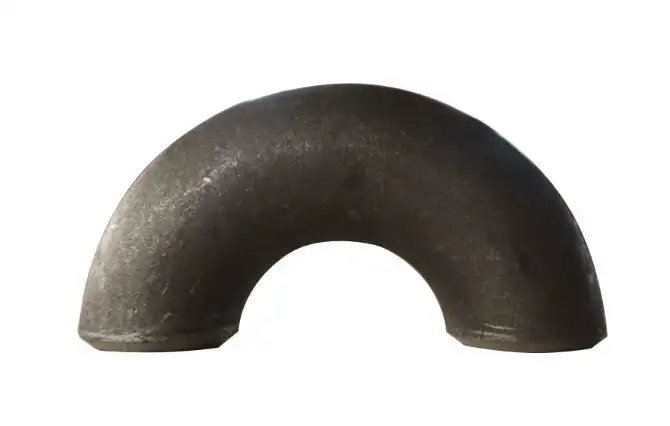
What Exactly Is a High-Temperature Carbon Steel Elbow?
Definition and Core Function
Carbon steel elbows are pipe fittings used to change the direction of fluid flow by a certain angle, often 90°, 45°, or 180°. In high-temperature service, the elbow is subjected to heat cycling and mechanical stress without any dimensional distortion or material deterioration. These fittings are produced using hot pushing, hot heating, bending, and hot forming methods. The fittings are seamless or welded according to the pressure and purity requirements of the system.
Dimensional Standards and Pressure Ratings
High-temperature carbon steel elbows are manufactured as per globally accepted standards such as ASME B16.9 butt-welding fittings. Common grades such as ASTM A234 WPB cover broad high-temperature service up to about 427 °C (800 °F), whereas grades such as A234 WP11 and WP22 push the performance envelope into more severe thermal ranges. High-flow systems favor long-radius (LR) arrangements, which decrease turbulence and pressure drop — a quantifiable advantage in petrochemical and power production lines — with the radius being 1.5 times the nominal pipe diameter.
Another structural benefit of seamless elbows is that the elimination of weld seams removes possible weak areas, making them much more dependable under situations of fast pressure fluctuations and heat cycling.
How Does Carbon Steel Compare to Stainless and Alloy Steel?
Choosing between materials requires honest trade-off analysis. The table below summarizes the key differences relevant to high-temperature pipeline procurement.
| Criteria | Carbon Steel Elbow | Stainless Steel Elbow | Alloy Steel Elbow |
|---|---|---|---|
| Max Service Temp | ~450°C (ASTM A234) | ~870°C (316L grade) | ~600°C+ (Cr-Mo grades) |
| Corrosion Resistance | Moderate (coating needed) | Excellent | Good |
| Tensile Strength | High | Moderate–High | Very High |
| Cost | Low–Moderate | High | Moderate–High |
| Ideal Application | Oil, gas, water, boilers | Chemical, food-grade | Boilers, high-pressure steam |
| Weldability | Excellent | Good | Moderate |
High-temperature carbon steel elbows provide a very attractive cost-to-performance ratio if the operating temperature is in the rated range of the carbon steel elbow and if the corrosion exposure can be mitigated by coatings or cathodic protection. If the temperature is continuously over 450°C, or if hydrogen service is involved, alloy steel is the preferable option. Stainless steel is used in corrosive media situations when the danger of contamination is unacceptable.
The bottom line? Carbon steel elbows are the most inexpensive alternative for oil pipelines, natural gas transmission, water conservancy systems, and normal boiler applications—as long as adequate material certification and wall thickness are chosen.
How Do You Select and Inspect the Right Elbow for Your Pipeline?
Matching Specifications to Operating Conditions
The selection starts with the three criteria of operating temperature, design pressure, and fluid composition. Once they are established, the wall thickness schedule (SCH 40, SCH 80, SCH 160), radius type (SR or LR), and end connection (butt weld, socket weld, threaded) will automatically fall out of the governing code, often ASME B31.3 for process piping or ASME B31.1 for power piping.
Quality Control and Inspection Protocols
Reliable procurement demands more than a mill certificate. Reputable manufacturers apply a full-process inspection system — from incoming raw material verification through in-process dimensional checks to finished-product non-destructive testing (NDT). Accepted NDT methods for high-temperature carbon steel elbows include:
- Ultrasonic testing (UT) detects internal laminations and wall thickness variations, critical for seamless elbows in high-pressure steam service.
- Magnetic particle inspection (MPI) identifies surface and near-surface discontinuities that thermal fatigue may initiate.
- Hydrostatic pressure testing validates the fitting's structural integrity under simulated service pressure before shipment.
This comprehensive series of checks is performed on each fitting at Cangzhou Oudi Pipe Manufacture Co., Ltd. The firm is ISO 9001:2000 quality management system certified and possesses a People's Republic of China Special Equipment Manufacturing License - two certifications that are commonly required by procurement teams in the U.S. and throughout the world as part of vendor qualification.
Where Should You Source High-Temperature Carbon Steel Elbows?
A good high-temperature carbon steel elbow supplier should have an auditable ISO 9001 certification, product-specific material test reports (MTRs), and dimensional inspection records traceable to recognized standards (ANSI, DIN, JIS, BS). The paperwork and the yearly production capacity are indicators of the reliability of the supply chain — a provider capable of generating 16,000 tons per year is structurally able to accept huge project orders without interruption.
Oudi has sold to more than 300 clients in over 40 countries and regions, including North America, Europe, Southeast Asia, the Middle East, and Africa, since 1998. Our staff has expertise in all these export areas, so we know local code requirements, shipping paperwork expectations, and project timetable constraints.
Here are the core procurement criteria buyers should assess before placing an order:
- Certification verification: Confirm ISO 9001 and any special equipment licenses are current and product-specific.
- Material traceability: Each batch should carry heat numbers traceable to mill certificates.
- Custom fabrication capability: Look for the ability to supply American standard, Japanese standard, German standard, and British standard configurations from a single source.
- Inspection access: Leading manufacturers allow third-party inspection before shipment.
These criteria collectively reduce procurement risk and protect project timelines. Buyers who skip this verification step frequently encounter specification mismatches or delayed replacements mid-project.
Where Are These Elbows Actually Used?
High-temperature carbon steel elbows perform reliably across multiple heavy industries. Oudi's products serve the following sectors:
- Oil and natural gas: Transmission and gathering lines where elevated temperatures and pressures demand dimensionally stable fittings with full material traceability.
- Petrochemical processing: Reactor feed and product lines where thermal cycling between ambient and process temperatures creates fatigue stress that only properly rated fittings can absorb.
- Power generation and boilers: Steam distribution headers operate continuously at elevated temperatures, where weld joint integrity and material consistency directly affect plant safety.
- Water conservancy and construction: Large-diameter distribution systems where cost efficiency and long service life are the primary drivers.
- Shipbuilding and electric power: Applications where space constraints make precision-bent elbows essential for routing piping within confined structures.
Emerging trends in these sectors include internal epoxy coatings to extend service life in mildly corrosive environments, digital pipeline monitoring integration, and growing demand for third-party certified products that satisfy ESG procurement frameworks.
Conclusion
High-temperature carbon steel elbow is suited for the majority of pipelines in the oil, gas, water, and power generating industries working within the material's rated thermal and pressure limits. The selection is based on correct specifications, confirmed material grades, and a manufacturer with proven quality standards and worldwide delivery expertise. Since 1998, Oudi has developed its reputation on these same grounds – 16,000 tons of yearly capacity, full-process inspection, and multi-standard manufacturing capabilities servicing customers on four continents.
FAQ
1. What is the maximum operating temperature for a standard carbon steel elbow?
ASTM A234 WPB carbon steel elbows are generally rated for continuous service up to approximately 427°C (800°F). For sustained temperatures above this threshold, Cr-Mo alloy grades such as WP11 or WP22 are more appropriate.
2. How do I verify that an elbow meets the required standard?
Request the material test report (MTR), dimensional inspection certificate, and the manufacturer's ISO 9001 certification. For pressure-containing applications, confirm the manufacturer holds a special equipment manufacturing license. Oudi provides complete documentation with every shipment.
3. Can carbon steel elbows handle mildly corrosive media?
Yes, with appropriate protective coatings or cathodic protection measures. For aggressive corrosive media — acids, chlorides, or wet hydrogen sulfide — stainless or alloy steel grades are the technically correct selection.
4. What is the difference between long-radius and short-radius elbows?
A long-radius (LR) elbow has a centerline radius equal to 1.5 times the pipe nominal diameter. It produces lower pressure drop and reduced turbulence. A short-radius (SR) elbow uses a 1× radius, conserving space at the cost of slightly higher flow resistance. LR configurations are standard for most high-temperature applications.
Partner with Oudi for Certified High-Temperature Carbon Steel Elbow Supply
Oudi has delivered ISO-certified pipe fittings to industrial clients across 40+ countries since 1998. Whether you need a single specification or a multi-standard High-temperature carbon steel elbow order, our team provides full documentation, competitive pricing, and reliable logistics. Contact our export team directly at oudi-04@oudiguandao.com to request a product catalog or custom quotation.
References
1. ASME B16.9 — Factory-Made Wrought Buttwelding Fittings, American Society of Mechanical Engineers, 2018.
2. ASTM A234/A234M — Standard Specification for Piping Fittings of Wrought Carbon Steel and Alloy Steel for Moderate and High Temperature Service, ASTM International, 2021.
3. ASME B31.3 — Process Piping Code, American Society of Mechanical Engineers, 2022.
4. Nayyar, M. L. — Piping Handbook, 7th Edition, McGraw-Hill, 2000.
5. Smith, P. R. & Van Laan, T. J. — Piping and Pipe Support Systems: Design and Engineering, McGraw-Hill, 1987.
6. Pipeline & Gas Journal — "Material Selection Criteria for High-Temperature Carbon Steel Piping Systems," Oildom Publishing, 2020.

Need help finding the right solution with our experts. Please contact us.

SINCE 1998 Your Reliable Pipeline Manufacturer



