Lap Joint Flange CS Procurement Guide for Industrial Buyers
To find the right Lap Joint Flange CS, you need to know about the technical specs, whether the materials will work together, and how reliable the seller is. Buyers in the oil, chemical, natural gas, and water conservation industries need flanges that meet international standards and are both cost-effective and good at what they do. This complete purchase guide talks about important selection factors, use cases, quality assurance methods, and common mistakes people make when buying things. Whether you're an EPC contractor in charge of projects across multiple regions or a plant engineer rebuilding old infrastructure, this guide gives you the information you need to make smart purchasing choices that will reduce downtime and improve operational safety.
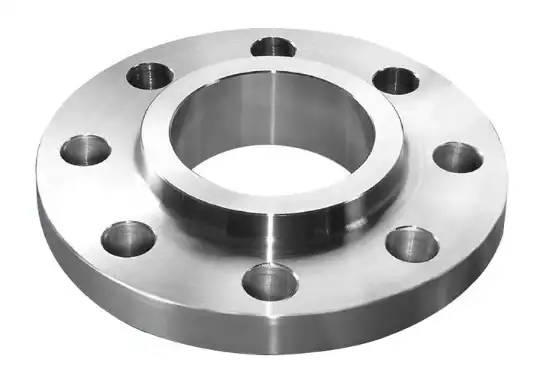
Understanding Lap Joint Flange Assemblies: What Industrial Buyers Must Know
Instead of being one piece, a lap joint flange system is made up of two parts that work together. The short end part is butt-welded straight to the pipe, and the backing lip can move around on top of the pipe before welding. The flange ring stays loose and can spin on its own after fitting, which is a unique benefit of this design.
It's common for procurement workers to call the whole structure a "lap joint flange," but that's actually only what the backing ring is called. Some other names used in the business world are stub end flange assembly, Vanstone and backing ring arrangement, and free flange. Understanding this language keeps you from making design mistakes when you're doing business across borders.
The binding surface is on the stub end, which can be smooth, toothed, or curved based on the needs of the gasket. The process fluid never comes in touch with the backing lip. Its only job is to clamp the bolts together mechanically and spread their weight evenly around the joint. This split of tasks makes it possible to use material optimisation methods that greatly lower the cost of buying things.
When you pair carbon steel backing flanges with corrosion-resistant stub ends, you get great value in harsh settings. Oudi makes full lap joint systems that meet American, Japanese, German, and British standards. They can make up to 16,000 tonnes of products every year. The company's IS09001:2000 certification and special equipment production licence make sure that the quality of each batch order is the same.
Material Selection Strategy for Carbon Steel Lap Joint Flanges
Carbon steel dominates industrial flange applications due to its mechanical strength, machinability, and cost advantages, among which Lap Joint Flange CS is a commonly used type. Grades like ASTM A105 for forged components and A36 for plate-cut flanges serve most non-corrosive applications effectively. Buyers must match material specifications to operating conditions including temperature ranges, pressure cycles, and environmental exposure.
The duplicate metal strategy represents a sophisticated procurement approach. High-value alloys like Hastelloy C276 or titanium comprise only the stub end that contacts corrosive media. The backing flange uses standard galvanized carbon steel, reducing material costs by 40-60% compared to full exotic-metal assemblies. This hybrid configuration maintains chemical resistance while controlling project budgets.
Temperature ratings directly influence material selection. Standard carbon steel flanges perform reliably from -29°C to 427°C. Applications beyond these thresholds require alloy steel variants with modified carbon content and alloying elements. Buyers should request mill test reports verifying chemical composition and mechanical properties for critical service conditions.
Surface treatment extends carbon steel service life substantially. Hot-dip galvanizing, electroplating, or painting protects against atmospheric corrosion during storage and operation. Oudi's quality control system includes surface preparation verification before dispatch, ensuring flanges arrive ready for installation without additional processing delays.
Dimensional tolerances affect assembly performance. Bore diameter must match stub end outer diameter with minimal clearance. Hub thickness provides structural rigidity against bolt-induced bending moments. Insufficient hub height causes premature joint failure through flange warping and gasket crushing. Procurement specifications should reference ASNI B16.5, DIN 2576, or equivalent standards clearly.
Critical Application Scenarios Where Lap Joint Flanges Excel
High-maintenance piping systems benefit tremendously from loose flange designs. Food processing facilities, pharmaceutical plants, and pulp-paper mills require frequent dismantling for sanitation and inspection. The rotational alignment capability reduces maintenance downtime by approximately 40% compared to welded neck flanges. Technicians simply unbolt the joint, rotate components as needed, and reassemble without cutting or rewelding.
Cost-sensitive corrosive environments represent another ideal application. Desalination plants handling seawater, petrochemical facilities processing acids, or wastewater treatment systems with high chloride content all benefit from material optimization. Using exotic alloy stub ends with carbon steel backing flanges maintains integrity at wetted surfaces while keeping total installed costs manageable.
Confined space retrofits present unique installation challenges. Offshore platforms, dense refinery pipe racks, and underground utility corridors often lack clearance for rotating rigid pipe sections. Lap joint assemblies allow installers to position the stub end first, then rotate the backing flange independently to align bolt holes with existing patterns. This flexibility proves geometrically impossible with pre-welded weld neck configurations.
Systems requiring frequent realignment during operation also favor loose flanges. Thermal expansion in steam lines, settling in foundation-mounted equipment, or vibration in pump discharge piping creates ongoing alignment challenges. The rotating flange accommodates minor angular misalignment without imposing stress on welded joints or generating leak paths.
However, Lap Joint Flange CS lap joint flanges prove unsuitable for high-pressure cyclic services. Their fatigue life reaches only 10% of weld neck equivalents under vibration and pressure fluctuation. Applications like compressor discharge lines or reciprocating pump outlets demand rigid flange designs. Buyers must evaluate service conditions thoroughly to avoid premature joint failure.
Verification Checklist: Ensuring Supplier Quality and Compliance
Certification documentation forms the foundation of quality assurance. Request current ISO 9001 certificates demonstrating systematic quality management. Special equipment manufacturing licenses indicate regulatory compliance for pressure-containing components. Oudi holds both certifications plus self-managed import-export authority, streamlining international transactions for buyers in Europe, the Americas, Africa, Southeast Asia, and Middle Eastern markets.
Material traceability prevents substitution fraud. Reputable manufacturers provide mill test certificates linking each production lot to raw material heat numbers. These documents verify chemical composition, mechanical properties, and origin. Cross-reference flange markings with certificate data during receiving inspection to confirm authenticity.
Dimensional inspection capabilities reveal production sophistication. Suppliers should demonstrate caliper measurement, ultrasonic thickness gauging, and coordinate measuring equipment. Oudi's inspection protocols include full-dimension verification and nondestructive testing for every finished product, ensuring compliance with customer specifications before shipment.
Production capacity assessment helps evaluate delivery reliability. Suppliers with annual output below project requirements risk delays when multiple orders coincide. Oudi's 16,000-ton annual capacity supports large-scale EPC projects while maintaining quick turnaround for maintenance buyers needing urgent replacements.
Export experience indicates familiarity with international standards and documentation requirements. Suppliers serving 40+ countries understand customs procedures, packing requirements, and destination-specific regulations. This expertise prevents shipment delays and ensures flanges arrive installation-ready regardless of geographic location.
Reference projects provide real-world performance validation. Request case studies from similar industries and operating conditions. Successful installations in chemical plants, offshore platforms, or power generation facilities demonstrate proven reliability under comparable stress factors.
Navigating International Standards: ANSI, DIN, JIS, and BS Specifications
Standard selection impacts interchangeability, bolt pattern compatibility, and pressure-temperature ratings. ANSI B16.5 dominates North American and Middle Eastern projects, defining dimensions for Class 150 through 2500 pressure ratings. European projects typically specify DIN 2576 or EN 1092-1 standards with PN designations. Japanese industrial facilities follow JIS B2220 conventions, while British Standard BS 4504 appears in Commonwealth nations.
Pressure class designations differ across standards despite similar service conditions. ANSI Class 150 approximates DIN PN16, but bolt hole quantities and flange thickness vary. Direct substitution without engineering review risks assembly mismatches. Buyers should specify required standards explicitly in purchase orders to prevent incompatible deliveries.
Facing finish requirements affect gasket sealing performance. ANSI standards define serrated, smooth, and ring-type joint faces with specific surface roughness ranges. The stub end facing must match gasket material—soft gaskets like compressed fiber need smoother finishes, while spiral-wound gaskets perform better with serrated surfaces providing mechanical grip.
Temperature-pressure correlations establish safe operating limits. Each standard publishes rating tables correlating maximum allowable working pressure with temperature. Carbon steel lap joint flanges typically serve applications up to 427°C at reduced pressure ratings. Buyers must verify that selected pressure classes accommodate both normal operation and upset conditions.
Material grade equivalencies require careful cross-referencing. ASTM A105 carbon steel corresponds to DIN 1.0460 and JIS SF440A, but slight compositional differences exist. Procurement specifications should list both primary and acceptable equivalent grades to maximize supplier options while maintaining performance requirements.
Common Procurement Mistakes and How to Avoid Them
Confusing slip-on and lap joint designs causes frequent specification errors. Slip-on flanges require double fillet welding directly to pipe surfaces. Lap joint assemblies never weld the backing flange—only the stub end receives heat. Welding the backing flange destroys rotational functionality and induces thermal stress. Clear drawings and explicit installation instructions prevent this costly mistake.
Undersizing hub thickness leads to premature joint failure. The hub resists bending moments generated by bolt tensioning. Inadequate thickness allows the flange to warp, crushing gaskets unevenly and creating leak paths. Buyers should verify hub dimensions match standard specifications rather than accepting generic "lap joint flange" descriptions without detailed drawings.
Ignoring thermal expansion differentials between stub end and backing flange materials causes operational problems. When dissimilar metals experience temperature changes, differential expansion rates induce stress at the bearing interface. Severe cases cause galling or seizing. Buyers should consult metallurgical compatibility tables when specifying hybrid material combinations.
Overlooking gasket selection compromises joint integrity. The stub end facing type must match gasket design—ring grooves require corresponding gasket profiles, while flat faces work with full-face gaskets. Procurement packages should specify complete gasket assemblies rather than assuming field personnel will select appropriate types.
Accepting generic "suitable for service" claims without specific certification documentation exposes buyers to liability. Regulatory agencies in petroleum, chemical processing, and power generation mandate traceable quality records. Suppliers unable to provide material certificates, hydrostatic test reports, and dimensional inspection records should be disqualified regardless of price advantages.
Neglecting to verify bolt hole quantity and diameter creates assembly impossibilities. Different pressure classes and standards use varying bolt patterns. A flange delivered with sixteen 22mm holes won't mate with an existing pattern designed for twelve 25mm bolts. Buyers must specify complete bolt circle details including diameter, quantity, and hole size.
Price Analysis: Balancing Cost and Quality in Global Markets
Raw material costs comprise 60-70% of Lap Joint Flange CS and carbon steel flange pricing. Fluctuations in iron ore, scrap steel, and coking coal markets directly impact quotations. Buyers planning large projects should consider forward pricing agreements to stabilize budgets when commodity markets show volatility.
Manufacturing complexity influences labor content. Forged flanges require more processing steps than plate-cut variants, commanding 15-25% premium pricing. However, forged components offer superior grain structure and mechanical properties for critical services. Buyers should evaluate whether application demands justify additional costs.
Finishing operations add measurable value. Hot-dip galvanizing costs more than simple painting but extends service life substantially. Corrosion-prone environments justify protective coating investments that exceed initial flange costs. Calculating total lifecycle expenses rather than purchase price alone reveals true economic value.
Geographic sourcing affects total landed costs differently across regions. Asian suppliers like Oudi offer competitive manufacturing costs with robust production capacity. Transportation from China to European ports typically requires 30-35 days, while Middle Eastern destinations receive shipments within 20-25 days. Buyers should factor logistics timing and costs into procurement decisions.
Order volume significantly impacts unit pricing. Small maintenance orders of 10-20 pieces carry higher per-unit costs than project quantities exceeding 500 pieces. Buyers with recurring needs might consolidate multiple small purchases into quarterly bulk orders, negotiating volume discounts that reduce annual expenditures.
Quality-related risks carry hidden costs that cheap suppliers create. Rejected flanges require return shipping, replacement ordering, and project delays. Installation labor costs often exceed material values—defective flanges waste expensive contractor time. Established manufacturers with comprehensive quality systems eliminate these downstream expenses despite slightly higher initial pricing.
Conclusion
Procuring carbon steel lap joint flanges requires balancing technical specifications, quality verification, and cost optimization. Industrial buyers in oil, chemical, natural gas, and water conservancy sectors benefit from understanding assembly fundamentals, material selection strategies, and application suitability. Rigorous supplier evaluation focusing on certifications, production capacity, and export experience prevents costly procurement mistakes. By following this comprehensive guide, purchasing managers, EPC contractors, and plant engineers can confidently specify lap joint flange assemblies that deliver reliable performance while controlling project budgets across global infrastructure projects.
FAQ
1. Can lap joint assemblies withstand high-pressure cyclic loading?
Generally, these configurations prove unsuitable for severe vibration and pressure fluctuation environments. Fatigue testing reveals lap joint designs achieve approximately 10% of the cycle life that weld neck flanges demonstrate under identical conditions. Applications like reciprocating compressor discharge or high-frequency pump pulsation demand more rigid flange types. Buyers should reserve lap joint assemblies for relatively stable pressure conditions to prevent premature joint degradation.
2. How does hub geometry affect long-term performance?
Hub thickness and height directly influence the flange's ability to resist bending moments created during bolt tightening. Insufficient hub dimensions allow the backing ring to warp under load, creating uneven gasket compression. This distortion produces leak paths and accelerates gasket deterioration. Procurement specifications must verify hub dimensions match recognized standards rather than accepting generic designs that compromise structural integrity.
3. What installation errors cause lap joint assembly failures?
Welding the backing flange to the pipe represents the most damaging mistake. This practice eliminates rotational adjustment capability and introduces thermal stress that warps the flange face. The stub end alone receives welding—the backing ring must remain completely loose. Additional common errors include mismatched gasket types, incorrect bolt tightening sequences, and using incompatible stub end facings that don't match gasket profiles.
4. How do material combinations affect corrosion resistance?
Strategic material pairing optimizes both performance and cost. Specifying corrosion-resistant alloys like Hastelloy or titanium for the stub end protects wetted surfaces exposed to aggressive chemicals. The backing flange uses standard carbon steel since it never contacts process fluids. This hybrid approach maintains chemical compatibility while reducing material expenses by 40-60% compared to full exotic-metal construction. Buyers should verify galvanic compatibility when mixing metals to prevent accelerated corrosion at contact interfaces.
Oudi: Your Trusted Carbon Steel Lap Joint Flange CS Supplier
Oudi delivers complete Lap Joint Flange CS assemblies meeting international specifications for buyers in petroleum, chemical, natural gas, and water conservancy sectors. Operating from Mengcun Hui Autonomous County since 1998, the company maintains 66,600 square meters of modern production facilities producing 16,000 tons annually. Comprehensive certification, including IS09001:2000 and special equipment manufacturing licenses, ensures every carbon steel lap joint flange CS meets strict quality requirements. Contact oudi-04@oudiguandao.com to discuss your project specifications and receive detailed quotations backed by technical expertise serving 300+ customers across 40 countries.
References
1. American Society of Mechanical Engineers (2020). ASME B16.5 Pipe Flanges and Flanged Fittings: NPS 1/2 Through NPS 24 Metric/Inch Standard. New York: ASME Press.
2. European Committee for Standardization (2018). EN 1092-1 Flanges and Their Joints - Circular Flanges for Pipes, Valves, Fittings and Accessories - Part 1: Steel Flanges. Brussels: CEN Publications.
3. Bickford, J.H. (2018). Gaskets and Gasketed Joints: Second Edition. Boca Raton: CRC Press, Taylor & Francis Group.
4. Japanese Standards Association (2019). JIS B2220 Steel Pipe Flanges: General Rules for Dimensions, Design and Testing Methods. Tokyo: JSA Publications.
5. Mohitpour, M., Golshan, H., and Murray, A. (2017). Pipeline Design & Construction: A Practical Approach, Third Edition. New York: American Society of Civil Engineers.
6. Nayyar, M.L. (2019). Piping Handbook: Eighth Edition. New York: McGraw-Hill Education, pp. 456-512.

Need help finding the right solution with our experts. Please contact us.

SINCE 1998 Your Reliable Pipeline Manufacturer



