Pipe Cap Sourcing Guide: What Global Buyers Should Know
Global sourcing gives industrial buyers access to a much wider range of pipe caps manufacturers, materials, sizes, and production capabilities. Also, purchasing from an international supplier involves more factors that a simple price comparison can account for. The appropriateness of a shipment to the project may be impacted by factors such as material traceability, production standards, dimensional correctness, inspection needs, packing, paperwork, and transportation arrangements. The most reliable way for EPC contractors, distributors, fabricators, and industrial purchasing groups is to assess the whole supply package and not only evaluate a supplier based on quote pricing. A supplier may propose an appealing unit price but utilize a different material quality, have insufficient inspection paperwork, or estimate a delivery time without taking into consideration the availability of raw material and export processing. These discrepancies might be costly when installation, inspection, or project scheduling starts. The practical sourcing process begins with identifying the technical criteria and determining whether the manufacturer has the manufacturing and quality processes to achieve them consistently. Here are some elements that might aid international buyers in making a more informed selection when obtaining pipe caps from foreign suppliers.
Start With the Supplier, Not the Quotation
Assess Whether the Manufacturer Matches Your Application
The first stage is to assess whether a supplier’s real-life production expertise is applicable to your project. A firm might call itself a provider of pipe fittings and yet outsource the majority of its manufacturing, or it can specialize on items other than caps. This does not inherently disqualify the supplier, but the buyer has to know where the production is happening and which procedures are internally regulated.
Experience should be looked at in connection to the product needed and not in terms of the number of years the firm has been in business. Experience with tiny stainless steel fittings does not automatically reveal equal skill if a job calls for carbon steel butt-weld caps in big sizes. This also applies to orders for low-temperature service, alloy steel, corrosion-resistant materials, large wall thicknesses, or particular dimensional requirements.
A meaningful supplier evaluation should thus take account of the manufacturer's usual material range, available size range, manufacturing procedures, production capacity, inspection resources, and expertise with comparable orders. In contrast, a declaration of generic manufacturing expertise is not as beneficial for a supplier that has made similar items for industrial purposes; it would be better to ask for non-confidential project references or representative inspection paperwork.
Treat Certifications as Evidence, Not as the Entire Evaluation
Quality certifications may help a supplier assessment but do not necessarily mean that all of the products will automatically fit a given project standard. For example, ISO 9001 is a quality management system. By itself, it does not demonstrate that a given lot of pipe caps has the necessary material grade, dimensions, wall thickness, or inspection findings.
In a more strict examination, the supplier’s quality system is connected to the product-level documentation. Buyers may inquire about the identification of incoming materials, management of manufacturing lots, recording of dimensional inspections, and handling of non-conforming goods. It helps us get a better sense of whether the vendor has a repeatable procedure or just a certificate.”
The same applies to industry norms. ASTM, ASME, API, NACE, and other regulations should be matched to the real product, material, service condition, and destination market. A quote that just cites a few standards without saying how they are used does not provide enough information to make a technical buying decision.
Define the Technical Specification Before Comparing Offers
Confirm the Material Grade and Service Conditions
Material selection is one of the most significant aspects of sourcing pipe caps, as the grade needed will depend on temperature, pressure, exposure to corrosion, welding requirements and characteristics of the fluid being handled.
Carbon steel is the typical choice for regular industrial plumbing; however, stainless steel could be utilised if corrosion resistance is a concern. Alloy and low-temperature grades may be needed if the working circumstances surpass the capabilities of conventional carbon steel. The decision should be based on the technical requirements for the project, not the normal product selection of the provider.
For example, wrought carbon steel fittings for pressure service are most often connected with ASTM A234 WPB, whereas ASTM A403 covers wrought austenitic stainless steel fittings and includes grades like WP304 and WP316. Wrought carbon steel and alloy steel fittings for low-temperature usage should conform to the requirements of ASTM A420. These standards are not to be taken as merely interchangeable labels. The suitable grade must be as specified in the pipe specification and operating conditions.
Review Material Test Reports. The report should include information allowing the buyer to verify the material grade, chemical composition, mechanical qualities, heat or lot identification and any other project-specific needs as stated. Where traceability is relevant, material identification should also be associated with the completed product throughout production and inspection.
Separate Product Dimensions From Pressure Design Requirements
Dimensions are another place where assumptions might cause issues. A cap that looks to be the proper nominal size may nevertheless not be acceptable if the outer diameter, wall thickness, overall length, bevel or end preparation are not compatible with the mating pipe and project requirements.
Butt-Weld Pipe Caps. Fittings of wrought material created in the factory for butt-welding are frequently referenced dimensionally and for manufacturing to ASME B16.9. Depending on the product type and configuration, ASME B16.11 may also be forged fittings. Therefore, the buyer needs to make sure that the standard chosen is appropriate to the mode of manufacture and the product being bought.
Pressure requirements must be taken apart from dimensional requirements. Nominal pipe size alone is not enough to determine whether a cap is adequate for a certain pressure and temperature environment. The technical specification, material qualities, wall thickness, appropriate design code and service circumstances must be examined together.
This is especially vital for high-pressure, high-temperature, cryogenic or other sensitive systems. Procurement teams need to offer the design circumstances and the relevant project standards so that the manufacturer may propose a suitable configuration, not just ask a supplier for a “high-pressure cap".
Clarify Manufacturing Method and End Preparation
The manufacturing process may impact the uniformity and cost of the product. Manufacturers will utilise a variety of procedures depending on the size, material, specification and production needs; these may include hot forming, pressing, spinning, machining and other controlled forming methods.
The buyer does not have to detail the full production path, but he must know what procedure the supplier is proposing when the application is technically challenging. If two suppliers are offering goods to the same nominal material and dimensional standards but via different production methods, then in the comparison their inspection controls and their ability to maintain the appropriate geometry and wall thickness should be included.
End preparation is similarly crucial for goods that are going to be welded into a pipe system. Bevel proportions, root face, surface condition and dimensional uniformity may impact fit-up and the welding process. These specifics should be agreed upon before manufacturing, not found after the cargo reaches the fabrication site.
Build Quality Verification Into the Purchase
Review Inspection Requirements Before Production Starts
Quality inspection should not be seen as an activity that occurs just after the production process for pipe caps has been completed. The inspection strategy is better if agreed at the quote and order stage.
Depending on the product specification and use, verification of incoming raw material, dimensional inspection, visual examination, mechanical testing and non-destructive testing may all be significant. Buyers should remember that not all orders need the same mix of tests and should not rely on a generic inspection list without reference to the governing specification.
For a typical industrial order, it may be enough to examine the dimensions and the way it looks and to have the material documentation. Other NDT procedures may be necessary for critical service applications, including ultrasonic testing, radiographic testing, magnetic particle testing, or other inspections. The right approach relies on the material, product configuration, specification and project need.
The main thing is to specify the inspection scope before production. The supplier should be aware of any requirement for third-party inspection when preparing the quotation, as inspection access, witness points, documentation and production scheduling may impact on the final delivery time and cost.
Make Traceability Part of the Documentation Package
A comprehensive documentation bundle is as crucial as the actual product for industrial customers. If the project needs material traceability, the final pipe caps should be traceable to the associated material records and inspection documentation.
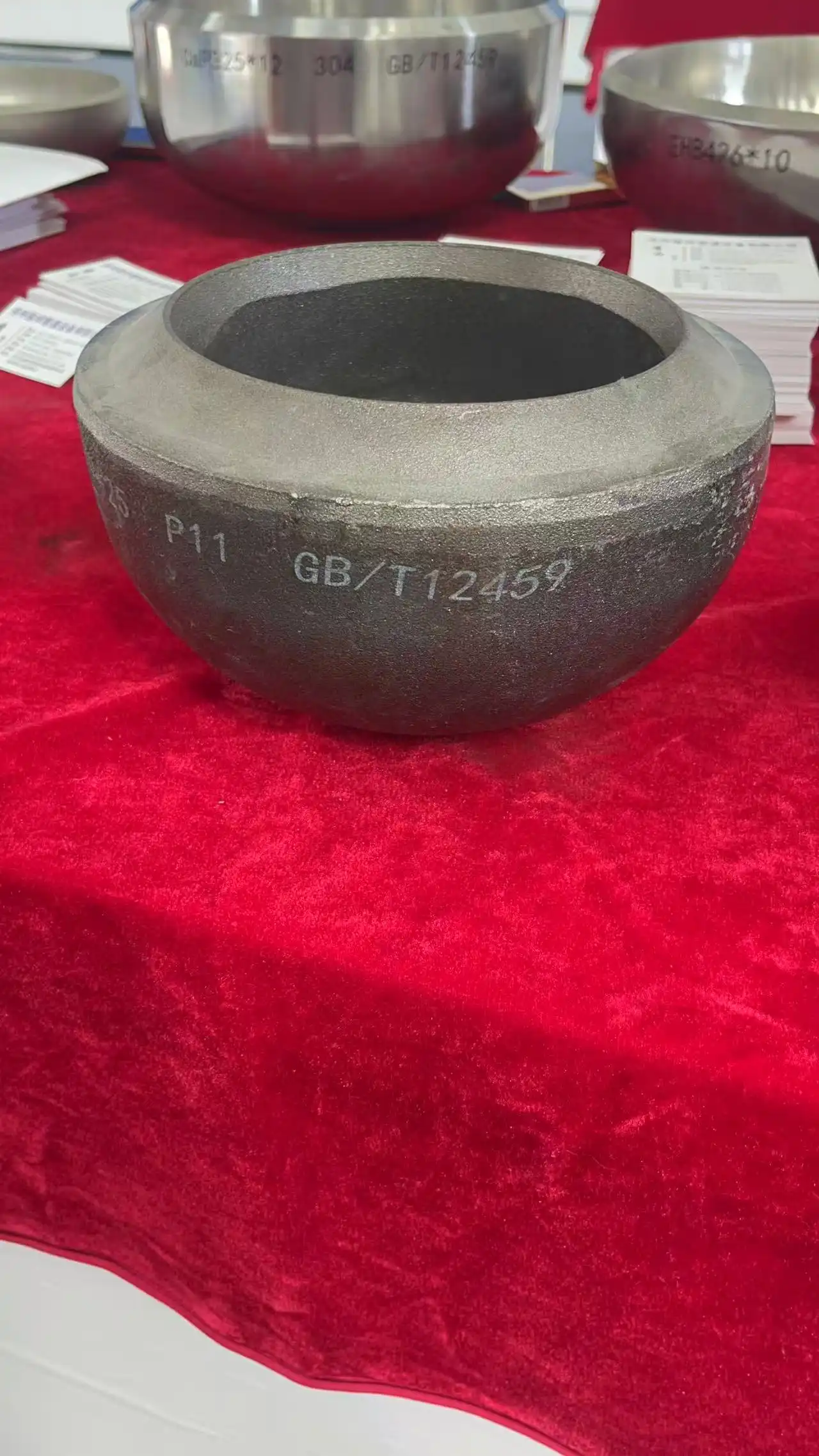
The marking needs may include material grade, nominal size, manufacturer identity, heat number, standard or other information as required by the project. The actual marking requirements will depend on the product and specification. The buyer should mention these in the purchase order and not assume that each manufacturer will use the same marking method.
The documentation package may comprise MTRs, inspection reports, dimensional records, certificates of conformity, NDT reports and other papers needed by the contract. Having these documents together enables the buyer and end user to make a better link to the production history of the product provided.
Consider Surface Condition, Packaging, and Storage
Match Surface Protection to the Transportation and Service Environment
Surface treatment is not simply a cosmetic consideration. Overseas shipments may spend considerable time in warehouses, containers, ports, or outdoor storage areas before installation. Moisture and salt exposure can therefore affect unprotected carbon steel products even before they reach the job site.
Depending on the project, protection may involve temporary rust-preventive oil, painting, galvanising, epoxy systems, or other specified coatings. Shot blasting may also be used as part of surface preparation. The appropriate treatment depends on whether the protection is intended for transportation and storage or is part of the permanent corrosion-control system.
For offshore, marine, chemical processing, and other corrosive environments, the buyer should specify the required coating system and surface preparation for pipe caps rather than accepting a generic “anti-rust treatment". If the cap will later be welded, the coating requirements around the weld area may also need to be addressed.
Do Not Overlook Export Packaging
Packaging becomes more important as transportation distance increases. Pipe fittings can be exposed to moisture, impact, contamination, and handling damage during international transportation, even when the product itself has been manufactured correctly.
The supplier should understand whether the goods will be shipped by container, breakbulk, or another method and whether the products require individual protection, separators, pallets, crates, or other packaging arrangements. Smaller fittings may be packed differently from large and heavy caps, while machined or coated surfaces may require additional protection against scratches and deformation.
Packaging should also be considered together with the destination warehouse and installation schedule. A shipment that arrives several months before installation may need protection suitable for extended storage rather than only short-term transportation.
Compare the Total Cost Instead of the Unit Price
Understand Why Two Similar Quotations Can Differ?
The lowest unit price is not necessarily the lowest procurement cost. Two quotations for apparently identical pipe caps may differ because one includes a higher material grade, more extensive inspection, better traceability, special packaging, coating, or more realistic delivery terms.
International buyers should therefore compare quotations on the same technical basis. The comparison should consider material grade, dimensions, applicable standards, inspection scope, documentation, surface treatment, packaging, quantity, delivery terms, and lead time. Otherwise, a lower initial quotation may simply reflect a smaller scope of supply.
Total procurement cost can also include inspection expenses, freight, customs-related charges, additional handling, replacement costs, and the consequences of late delivery. For a project with a fixed installation window, a reliable shipment arriving on schedule may have considerably more value than a cheaper shipment that creates downstream delays.
Check the Quoted Lead Time Against the Manufacturing Reality
Lead time should be discussed in practical terms. A supplier's stated production period may begin only after technical approval, raw material confirmation, or receipt of an advance payment. It may not include inspection, packing, port handling, or international transportation.
For custom sizes, special materials, or large-volume orders, raw material availability can have a significant influence on the schedule. Procurement teams should ask whether the quoted lead time assumes that the required material is already available or must first be produced or purchased.
It is also useful to establish clear milestones for drawing approval, material procurement, production completion, inspection, packing, and dispatch. This creates a more realistic schedule and makes it easier to identify delays before they affect the installation programme.
Conclusion
Sourcing pipe caps internationally requires more than finding a manufacturer with a competitive quotation. A dependable purchasing decision comes from evaluating the supplier's relevant manufacturing experience, confirming the correct material and dimensional requirements, establishing an appropriate inspection and traceability process, and making sure that packaging and surface protection are suitable for the transportation and service environment.
International buyers should also look beyond the product price and examine the complete cost and delivery picture. A quotation becomes much more useful when its material grade, manufacturing standard, inspection scope, documentation, packaging, lead time, and delivery terms can be compared directly with competing offers.
The strongest sourcing strategy is therefore based on clear technical requirements and verifiable supplier capability. When manufacturers can provide consistent production, traceable materials, appropriate inspection records, complete documentation, and realistic delivery schedules, buyers have a stronger basis for controlling procurement risk. Keeping these factors in view allows global buyers to select pipe caps that are not only competitively priced but also suitable for the project's engineering, quality, and operational requirements. For assistance or to request high-quality pipe caps, do not hesitate to contact us at oudi-04@oudiguandao.com.
FAQ
1. What are the most common materials used for pipe caps?
The most common materials for pipe caps include carbon steel, stainless steel, and alloy steel, each suitable for different applications based on factors like corrosion resistance and pressure ratings.
2. How do I determine the correct size of pipe cap? I need?
To determine the correct size, measure the outside diameter of the pipe and match it to the corresponding pipe cap size. Consider factors like wall thickness and end preparation as well.
3. What certifications should I look for when sourcing pipe caps?
Look for suppliers with ISO 9001 certification for quality management. Additionally, certifications specific to pipe fittings, such as compliance with ASME or API standards, are important.
4. How can I ensure the pipe caps I source meet pressure and temperature requirements?
Verify that the pipe caps have appropriate pressure class ratings and temperature resistance for your application. Request pressure test reports and material certifications from the supplier.
References
1. Smith, J. (2020). Global Trends in Pipe Fitting Sourcing. International Journal of Industrial Engineering, 45(3), 278-295.
2. Johnson, R., & Brown, T. (2019). Quality Control Standards for Pipe Caps: A Comprehensive Review. Materials Today: Proceedings, 12, 1567-1580.
3. Garcia, M. (2021). Cost Optimisation Strategies in Global Pipe Component Sourcing. Supply Chain Management Review, 25(4), 62-75.
4. Lee, S., & Park, H. (2018). Supplier Evaluation Criteria for Pipe Fittings: An Industry Perspective. Journal of Purchasing and Supply Management, 24(2), 145-158.
5. Wilson, D. (2022). Compliance Challenges in International Pipe Cap Sourcing. Regulatory Affairs Quarterly, 36(1), 89-102.
6. Thompson, E. (2021). Advancements in Pipe Cap Manufacturing Technologies. Journal of Materials Processing Technology, 290, 116-128.

Need help finding the right solution with our experts. Please contact us.

SINCE 1998 Your Reliable Pipeline Manufacturer



