Pipe Tee Applications in Fire Protection Systems
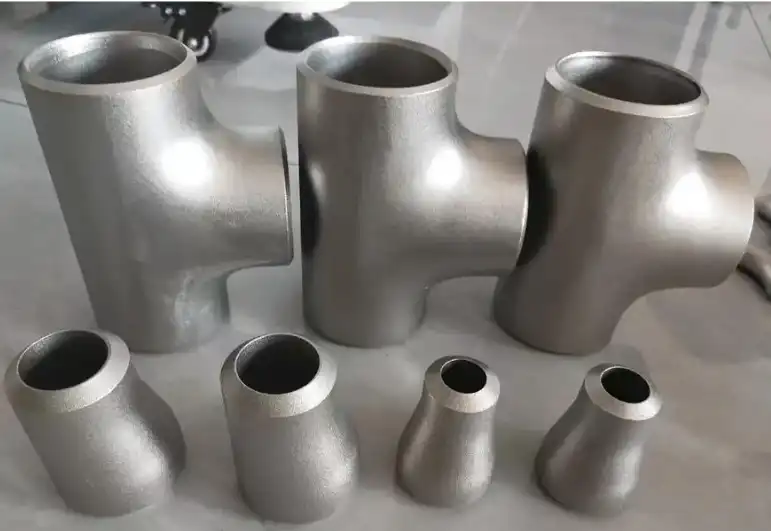
Pipe tees are widely used in fire protection piping because they allow a main pipe to connect with a branch line without requiring a separate routing arrangement. In sprinkler networks, standpipe systems, hydrant piping, and other water-based fire protection installations, a tee can provide a practical connection point for distributing water to different sections of the system. Its role may look simple, but the selection of a tee has to match the pipe size, material, connection method, pressure requirements, and applicable fire protection standards. For engineers and purchasing teams, choosing a tee is therefore more than selecting a fitting with the correct nominal diameter. The fitting needs to be compatible with the piping system and suitable for the operating conditions defined by the project. Product markings, applicable certifications or listings, dimensional requirements, material specifications, and inspection documents can also become important during project approval and installation. This article examines how pipe tees are used in fire protection systems and explains the main factors that should be considered when selecting, installing, and maintaining them.
How Pipe Tees Fit into Fire Protection Piping Networks?
Branch Connections in Sprinkler Systems
A sprinkler system normally consists of a network of main, cross, and branch piping that carries water from the supply source to individual sprinkler heads. Pipe tees provide connection points where a branch can be taken from a larger or continuous section of pipe. This arrangement allows the piping network to follow the building layout while maintaining access to the areas that require sprinkler coverage.
The size and orientation of the tee need to correspond with the hydraulic design. A branch connection that is too small may restrict the available flow, while an incorrectly selected fitting can create installation problems or require additional adapters. For this reason, the tee should be selected together with the pipe dimensions and connection method rather than treated as an isolated component.
In a typical sprinkler installation, the tee may be threaded, grooved, welded, or manufactured for another approved connection method, depending on the piping system. The appropriate configuration is determined by the project specifications, pipe material, installation method, and applicable requirements.
Connections for Standpipe and Hydrant Piping
Fire protection piping is not limited to automatic sprinklers. Standpipe and hydrant systems also require branch connections to route water toward hose valves, hydrants, monitors, and other firefighting equipment. In these applications, tees can connect the main distribution line with branches serving different sections of a building or site.
Hydrant networks can cover considerable distances, particularly in industrial facilities, warehouses, campuses, and outdoor installations. The location of each branch connection therefore needs to be considered as part of the overall hydraulic design. Engineers need to account for pipe diameter, equivalent length, friction losses, elevation changes, required flow, and available pressure when determining the configuration of the network.
A tee does not independently “balance” the pressure in a fire protection system. Instead, its geometry and location form part of the piping arrangement used in the hydraulic calculation. The final performance depends on the complete network, including pipe sizes, valves, pumps, water supply, fittings, elevation, and discharge devices.
Selecting Pipe Tees for Fire Protection Service
Pressure Rating Should Match the System Design
Pressure rating is one of the first specifications that should be checked when selecting pipe tees for a fire protection project. The required rating should be appropriate for the maximum pressure expected in the piping system, including conditions that may occur during pump operation or other abnormal operating scenarios identified by the design.
It is important not to assume that a particular pipe schedule automatically gives every tee the same pressure rating. The pipe schedule describes the wall thickness of the pipe, while the pressure capability of a fitting depends on factors such as its material, dimensions, manufacturing design, connection type, and applicable product specification.
For procurement, the fitting documentation should therefore identify the applicable pressure rating or service limitation rather than relying only on the pipe schedule. This is particularly important for high-rise buildings, industrial facilities, and systems where pump-generated pressure can be substantially higher than normal static pressure.
Material and Connection Type Need to Work Together
Carbon steel is widely used in fire protection piping because it offers a practical combination of strength, availability, and compatibility with common piping systems. Depending on the environment and project specification, galvanized carbon steel may also be selected where additional corrosion protection is required.
The connection method is equally important. A threaded tee, grooved tee, and butt-weld tee cannot simply be treated as interchangeable products. Each configuration requires compatible pipe ends, installation procedures, tools, and associated components. A grooved tee, for example, needs to match the grooved piping and coupling system being used on the project. A threaded tee requires compatible threads and appropriate installation practices, while a welded tee requires a welding procedure suitable for the specified material and piping system.
Purchasing teams should confirm the fitting designation, material grade, nominal size, schedule or wall thickness, end connection, pressure requirement, and required inspection documentation before placing an order. Providing these details to the manufacturer reduces the possibility of receiving a fitting that matches the diameter but not the actual system requirements.
Understanding NFPA and Product Compliance Requirements
NFPA 13 and the Broader Compliance Framework
NFPA 13 is an important reference for the design and installation of automatic sprinkler systems, but compliance should not be reduced to a simple statement that a pipe tee is “NFPA compliant.” The fitting must be appropriate for the specific application and installed as part of a system that meets the applicable requirements.
Depending on the project, product listing or approval may also be relevant. Fire protection components can be subject to requirements from certification organizations, local authorities, insurers, project specifications, and other applicable standards. The exact requirements vary according to the type of system, jurisdiction, building, and application.
For this reason, engineers and procurement teams should verify the project documentation before ordering. When a listed or approved component is required, the product should be supplied with the appropriate evidence rather than relying on a general marketing statement.
Product Markings and Documentation
Product markings can make inspection and installation easier because they provide information about the fitting and its specification. Depending on the applicable product requirements, markings may identify details such as the manufacturer, size, material, standard, pressure information, or certification.
Documentation is equally useful during procurement. A supplier should be able to provide the technical information required by the project, which may include material certificates, dimensional information, inspection reports, test records, or certification documents where applicable.
For large fire protection projects, document control can be particularly important because pipe tees may be installed across multiple buildings or piping zones. Clear product identification helps engineers, inspectors, and contractors confirm that the components delivered to the site correspond with the approved specifications.
Corrosion Considerations for Carbon Steel Pipe Tees
When Galvanized Pipe Tees May Be Considered?
Corrosion control is an important consideration in fire protection piping because some systems remain filled with water for long periods. Environmental humidity, water chemistry, temperature, and the internal condition of the piping can all influence corrosion behavior.
Galvanized carbon steel provides a zinc coating that can protect the underlying steel from corrosion under suitable service conditions. This can make galvanized fittings a practical option for certain fire protection installations, particularly where the project specification calls for galvanized components.
However, galvanization should not be presented as a universal solution for every corrosion problem. The suitability of galvanized fittings depends on the actual system conditions and project requirements. Internal corrosion in a water-filled system, external atmospheric corrosion, and corrosion associated with dissimilar metals are different issues and may require different approaches.
Installation Practices Affect Long-Term Performance
Careful installation helps preserve the condition of galvanized fittings and maintain the integrity of the piping network. Handling equipment should not unnecessarily damage the zinc coating, and threaded or cut areas should be treated in accordance with the applicable installation requirements when the protective coating has been removed.
Compatibility between different metals should also be considered. Where dissimilar metals are connected, the system designer or installer may need to consider measures that reduce the possibility of galvanic corrosion. Insulation, dielectric separation, coating systems, or other protective methods may be appropriate depending on the materials and environment.
The fitting should also be installed according to the manufacturer's instructions. Excessive force, incorrect tools, poor alignment, or unsuitable joining practices can damage the component or create leakage problems even when the tee itself meets the required specification.
Hydraulic Performance of Pipe Tees in Hydrant Systems
Tee Geometry and Flow Direction
A tee changes the direction in which water travels through the piping network, so its geometry becomes part of the hydraulic calculation. When water enters a branch connection, local changes in velocity and direction can create additional pressure loss. The magnitude of that loss depends on the tee configuration, flow conditions, pipe size, and direction of flow.
For a large hydrant network, engineers consider the cumulative effect of fittings rather than looking at one tee in isolation. Pipe tees contribute to the overall fitting loss and equivalent length, which can influence the available pressure at downstream outlets. Proper sizing and layout help the designer achieve the required flow at the locations where firefighting equipment is expected to operate.
This is why simply choosing the largest available tee is not necessarily the correct solution. The fitting needs to correspond with the pipe diameter and hydraulic design while maintaining a practical and compliant installation arrangement.
Supporting Multiple Firefighting Outlets
A main hydrant line may serve several branches, particularly in industrial plants, warehouses, commercial facilities, and large outdoor sites. Tees allow these branches to be connected at planned locations so that water can reach hydrants, hose stations, monitors, or other designated outlets.
The hydraulic performance of the network depends on more than the tee itself. Pipe diameter, total system length, elevation, valves, pumps, water source characteristics, and simultaneous demand all affect the pressure available at an outlet.
For this reason, the tee should be considered part of the complete hydraulic model. Its size and location need to support the flow requirements established by the fire protection engineer rather than being selected solely on the basis of physical convenience.
Connecting Pipe Tees with Valves and Fire Monitors
Coordination with Hydrant Valves
Hydrant valves are often installed on branches serving firefighting outlets, and the connecting tee needs to provide the appropriate pipe size and connection arrangement. The branch should be positioned so that the valve and downstream equipment can be installed, operated, inspected, and maintained without unnecessary obstruction.
Clear coordination between the piping layout and valve arrangement is especially important in industrial facilities where multiple services may occupy the same area. The tee, valve, pipe supports, and access space should be considered together during design.
A fitting that technically connects two pipes may still be unsuitable if its orientation creates an installation or maintenance problem. Good coordination at the design stage can prevent costly modifications after the piping has been installed.
Connections to Fire Monitors
Fire monitors can require substantial water flow, particularly in industrial and outdoor fire protection applications. Where a monitor is supplied through a branch connection, the tee and downstream piping need to be sized according to the required flow and pressure.
Mechanical loading should also be considered. A monitor can generate significant reaction forces when operating, so the piping and support arrangement must be designed to withstand the forces associated with the equipment. The tee should not be treated as the only structural element responsible for supporting the monitor.
This makes coordination between hydraulic design and mechanical support design particularly important. The tee provides the branch connection, while the surrounding piping and support system must collectively maintain a stable installation during operation.
Conclusion
Pipe tees are fundamental connection components in fire protection piping, providing branch points for sprinkler systems, standpipes, hydrant networks, and other water-based firefighting installations. Their correct selection affects more than physical pipe connection because pressure requirements, hydraulic performance, material, corrosion conditions, connection method, certification, and installation practices all need to be considered together.
For engineers and purchasing teams, the most important step is to match the tee with the actual requirements of the fire protection system. The appropriate product should have the required dimensions, material, connection configuration, and pressure capability, while any applicable listing, approval, testing, and documentation requirements should be verified before installation.
When pipe tees are selected as part of a properly engineered piping system and installed according to the relevant requirements, they can provide a dependable branch connection for long-term fire protection service. Working with a manufacturer that can supply consistent product specifications and supporting quality documentation also helps reduce procurement uncertainty and makes project inspection and maintenance more straightforward. For more information on our high-quality pipe tees and other fire protection system components, please contact us at oudi-04@oudiguandao.com.
FAQ
1. What is the primary function of pipe tees in fire protection systems?
Pipe tees connect pipes at right angles, enabling the creation of branch lines and even distribution of water in fire sprinkler and hydrant systems.
2. Why is the pressure rating of pipe tees important?
Pressure ratings ensure that pipe tees can withstand the high pressures in fire protection systems without failing, maintaining system integrity.
3. What advantages do galvanized carbon steel pipe tees offer?
Galvanized carbon steel pipe tees provide excellent corrosion resistance, extending the lifespan of fire protection systems and reducing maintenance needs.
4. How do pipe tees affect water distribution in hydrant systems?
Properly designed and placed pipe tees help maintain consistent pressure and flow across multiple hydrants, ensuring efficient water distribution.
References
1. National Fire Protection Association. (2022). NFPA 13: Standard for the Installation of Sprinkler Systems. Quincy, MA: NFPA.
2. American Society of Mechanical Engineers. (2021). ASME B16.3: Malleable Iron Threaded Fittings: Classes 150 and 300. New York: ASME.
3. Cote, A. E., & Bugbee, P. (2018). Principles of Fire Protection Engineering. Quincy, MA: National Fire Protection Association.
4. Fleming, R. P. (2019). Automatic Sprinkler Systems Handbook. Quincy, MA: National Fire Protection Association.
5. American Water Works Association. (2020). AWWA C606: Grooved and Shouldered Joints. Denver, CO: AWWA.
6. Friedman, R. (2017). Principles of Fire Protection Chemistry and Physics. Burlington, MA: Jones & Bartlett Learning.

Need help finding the right solution with our experts. Please contact us.

SINCE 1998 Your Reliable Pipeline Manufacturer