The Difference Between Seamless and Welded Carbon Steel Elbows
When you are setting up an industrial pipe system, the decision to use either welded or seamless carbon steel bends is very important because it will affect the network's safety, longevity, and efficiency. These important parts can change the flow in the pipe. They are needed by many businesses, such as those that make power, handle chemicals, and drill for oil and gas. The people who want to make pipe systems better, including engineers, project managers, and others, need to know about the major differences between welded and seamless carbon steel elbows. The kinds of the reservoirs in terms of their construction, stability, cost, and pressure capacity are going to be discussed. Choosing between seamless and welded carbon steel elbows is not only about selecting the strongest product. The difference between the two kinds lies mostly in how they are made, how the completed elbow is judged, and where each makes practical and economic sense. In a pipeline project, all aspects, including pressure, temperature, pipe size, material grade, relevant standards, welding quality, inspection requirements, and budget, must be evaluated simultaneously. Understanding the distinctions between the various types of elbows may assist engineers and buying teams in selecting an elbow that meets the real needs of the pipe system, rather than making a generalized assumption that one kind is always superior to the other.
How Seamless and Welded Elbows Are Manufactured?
Seamless Elbows Are Formed Without a Longitudinal Weld
The seamless carbon steel elbow is often made from a seamless steel pipe, tube, or appropriate steel billet, depending on the production process and product requirements. Many carbon steel elbows are usually hot-formed. The initial material is heated and molded to the appropriate curved geometry using controlled tooling and forming techniques. Because the beginning pipe has no longitudinal weld seam, the final elbow does not have the longitudinal welded junction characteristic of a product made from a welded pipe.
One rationale for using seamless elbows for severe pipe applications is that this production technique might provide a substantially continuous material structure. But the pressure capacity of the completed fitting is not determined by seamless construction alone. When assessing the product, wall thickness, outer diameter, material grade, heat treatment, dimensional tolerances, and the appropriate production standard still matter.
Welded Elbows Depend More on Controlled Joint Fabrication
Welded elbows should be made of steel tubing, plate, or other appropriate material, shaped to the desired elbow configuration, and welded together. The weld could be on the entire component, or it might have particular welded parts, again depending on design and production. Therefore, the quality of the completed product relies not only on the base material but also on welding techniques, welder qualification, heat treatment if necessary, and inspection of the welded area.
Modern welding technology enables manufacturers to make welded elbows for a broad variety of sizes and applications. A welded elbow properly constructed and examined should not be immediately recognized as not fit for pressure duty. For most pipe systems, the applicable standard and project specification will establish whether welded construction is permitted and what inspection or testing is necessary.
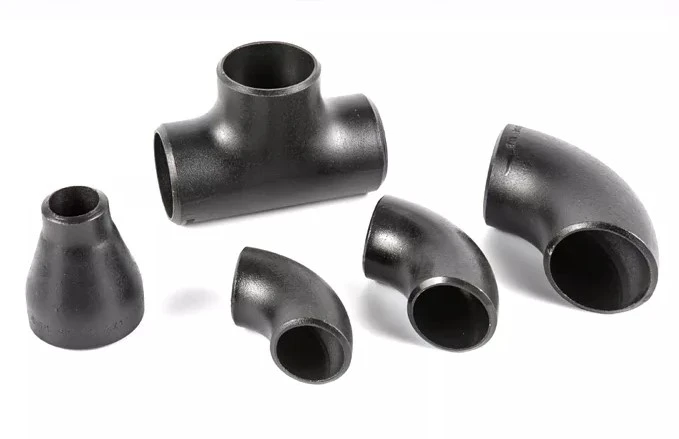
Comparing Strength and Pressure Performance
Product Strength Depends on More Than the Manufacturing Route
The structural strength of an elbow is affected by several elements; thus, comparing seamless and welded items by name alone may be misleading. Seamless elbows have no longitudinal weld seam, which might simplify the material structure in that location. In contrast, a welded elbow has a welded area that must comply with the prescribed joint quality and integrity.
For this reason the quality of the manufacture is of special importance for welded items. Proper welding processes, regulated heat input, adequate filler materials when applicable, heat treatment needs, and inspection may all impact the completed fitting. In many industrial pipe systems a high-quality welded elbow fabricated to the appropriate standard may be relied on to work dependably.
Hence, the real strength of either kind should be judged from the whole product specification and not from the phrase “seamless” or “welded” alone. The pressure and temperature capabilities of the fitting are dependent on the material grade, nominal pipe size, wall thickness, design parameters, and relevant standards.
Pressure Rating Should Be Verified Against the Project Requirements
For high-pressure pipes, engineers generally evaluate the pressure rating or acceptable operating conditions provided for the fitting and system. In certain severe situations a smooth elbow may be desirable, as it does not need the evaluation of a longitudinal weld seam in the starting material. This might be a significant factor if the project standards demand seamless construction.
But it would be wrong to state that all seamless elbows can resist more pressure than all welded elbows. For a given service, a thick-wall welded elbow meeting the required specification may be preferable over a thinner seamless elbow. So, the appropriate comparison should be the real dimensions, material qualities, design pressure, design temperature, and the needed standard.
This differentiation is important for the procurement teams. Just because carbon steel elbows are marked “seamless” does not mean they will satisfy the pressure requirements of a project. Before ordering, product documentation should be validated against the technical specification.
Where Seamless Carbon Steel Elbows Can Be a Practical Choice?
Demanding Pressure and Temperature Conditions
Seamless elbows are often considered for demanding piping services where the project specification favors seamless construction or where minimizing welded seams in pressure-containing components is an important design consideration. Applications can include certain oil and gas, petrochemical, power generation, boiler, and process piping systems.
The advantage is not that seamless construction makes the fitting immune to failure. Rather, the absence of a longitudinal weld seam removes one manufacturing feature that would otherwise require control and inspection. When combined with suitable material selection, wall thickness, forming, heat treatment, and inspection, this can make seamless elbows a practical choice for demanding service.
The operating environment still needs to be evaluated carefully. High temperature, cyclic pressure, corrosive media, vibration, and thermal expansion can all affect piping performance. A seamless elbow must be correctly specified for the same reasons as a welded elbow.
Applications Where Consistent Material Structure Matters
Some projects place particular emphasis on the material structure of pressure-containing components. In these situations, the lack of a longitudinal weld in a seamless product can be an advantage from a design and manufacturing perspective. It can also simplify certain considerations related to welded joints in the starting material.
That does not mean the entire elbow is free from manufacturing variables. Hot forming, heat treatment, dimensional control, and inspection still influence product quality. A seamless elbow that does not meet the required material or dimensional specification is not a better choice simply because it has no weld seam.
This is why experienced buyers normally evaluate the complete technical specification instead of treating seamless construction as a standalone quality indicator.
When Welded Carbon Steel Elbows Make Economic Sense?
Lower Manufacturing Cost Can Be an Important Advantage
One of the main reasons buyers consider welded elbows is cost. Depending on size, material grade, wall thickness, manufacturing route, and order quantity, welded construction can provide a more economical option than a comparable seamless product. This can be especially relevant for projects that require large quantities of fittings or dimensions that are readily produced through welded manufacturing processes.
A lower purchase price does not necessarily mean lower quality. If a welded elbow is manufactured according to the applicable standard and the required welding and inspection procedures are followed, it can provide dependable service in many piping systems.
The important point is to match the product with the application. For a general industrial pipeline operating within moderate design conditions, paying a premium for seamless construction may not always provide a meaningful engineering benefit. Conversely, a project with strict seamless requirements should not select a welded alternative simply because it is cheaper.
Welding Quality and Inspection Become Critical
Because welded elbows contain welded regions, quality control plays an important role in determining their suitability. Manufacturers may use visual inspection, dimensional inspection, and non-destructive testing according to the applicable product standard or customer specification. The exact inspection method depends on the material, manufacturing process, application, and contractual requirements.
For buyers, asking for appropriate documentation can provide much more useful information than simply comparing the words “seamless” and “welded.” Material test certificates, dimensional inspection records, heat treatment records where applicable, and non-destructive testing reports can help verify that the supplied fittings meet the agreed specification.
This is particularly important for critical projects where traceability and inspection documentation are part of the procurement requirements.
Seamless vs Welded: How Should Buyers Compare the Total Cost?
Purchase Price Is Only One Part of the Decision
Seamless elbows are often more expensive because their manufacturing process and raw material requirements can involve additional production costs. Welded elbows may offer a lower initial price, making them attractive when the application does not require seamless construction.
However, the cheapest product is not necessarily the most economical product for the entire project. If a project specification requires seamless carbon steel elbows, choosing a welded product simply to reduce the purchase price can create problems during inspection, installation, or project approval. On the other hand, if both manufacturing routes are acceptable and the operating conditions are not especially demanding, a welded elbow may provide a sensible balance between performance and cost.
The better approach is to compare the total procurement requirements, including product price, inspection, documentation, delivery, installation considerations, and compliance with the project specification.
Availability and Project Schedule Also Matter
Product availability can influence the practical choice between seamless and welded elbows. Some sizes, wall thicknesses, or material grades may be more readily available through one manufacturing route than another. Lead time can become particularly important when a project has a fixed installation schedule.
A procurement decision should therefore consider not only technical suitability but also whether the required size, material grade, quantity, and documentation can be supplied within the project timeline. Early confirmation with the manufacturer can reduce the risk of selecting a technically suitable product that later proves difficult to source.
For customized orders, buyers should also confirm dimensions, tolerances, material requirements, applicable standards, surface condition, marking, packaging, and inspection requirements before production begins.
What Should You Check Before Ordering Carbon Steel Elbows?
Material, Dimensions, and Applicable Standards
Before purchasing, the first step is to confirm the basic technical requirements. These normally include nominal pipe size, outside diameter where relevant, wall thickness or schedule, elbow angle, radius, material grade, and the applicable product standard. Depending on the project, requirements may also cover heat treatment, impact testing, hardness, chemical composition, mechanical properties, and non-destructive testing.
These details are more useful for product selection than a general statement such as “seamless is stronger.” They allow the supplier and buyer to evaluate whether the proposed elbow is actually suitable for the intended piping system.
Quality Documents Should Match the Order
Documentation is another important part of a professional procurement process. Depending on the project requirements, buyers may need material certificates, inspection reports, dimensional records, heat numbers, test results, and other quality documents. The documentation should correspond to the actual products supplied so that material and production traceability can be maintained.
For pressure piping and other critical applications, it is also important to clarify inspection requirements before manufacturing starts. If third-party inspection or specific non-destructive testing is required, these conditions should be included in the purchase specification rather than discussed only after production is completed.
Choosing the Right Elbow for the Piping System
Seamless Is Not Always Better, and Welded Is Not Always Cheaper in the Long Run
The choice between seamless and welded construction should ultimately be based on the conditions of the piping system. Seamless elbows can be attractive when the application or project specification requires seamless pressure-containing components, particularly in demanding services where minimizing welded seams is desirable.
Welded elbows can be a practical and economical solution when the applicable standard permits them and the manufacturing and inspection requirements are properly controlled. Their suitability should be judged from the finished product's specifications and quality documentation rather than from the presence of a weld alone.
For engineers and procurement teams, the most reliable decision comes from comparing the actual service conditions with the manufacturer's technical data. Pressure, temperature, fluid characteristics, pipe size, material grade, installation conditions, applicable standards, inspection requirements, delivery schedule, and budget should all be considered together.
Conclusion
Finally, when deciding between bonded and seamless carbon steel elbows, there are a lot of things to think about, like how they are made, how strong they are, how much pressure they can take, how much they cost, and how easy they are to get. Welded elbows are generally cheaper, but seamless ones are stronger and more reliable, especially in systems that deal with high pressure. It is important to consider the way things are done, the long-term costs, and the details of the job when making a decision. Both types of elbows are needed to keep pipe systems working well and safely in a variety of areas, especially since rules for industry are always changing.
Global Pipe Solutions – Quality You Can Trust
If you want to know more about our carbon steel elbows and other pipe parts, please email us at oudi-04@oudiguandao.com. Cangzhou Oudi Pipe Manufacture Co., Ltd. has been making pipe fittings, valves, and flanges that over 300 buyers in 40 countries are happy with since 1998. Because we are committed to quality and innovation, customers around the world in industries ranging from petrochemicals to power production trust us to meet their unique needs.
References
1. Smith, J. R. (2019). "Comparative Analysis of Seamless and Welded Carbon Steel Piping Components in High-Pressure Systems." Pressure Vessel Technology, Journal of, 141(3), 031301.
2. Johnson, M. K., & Brown, L. A. (2020). "Carbon Steel Elbows in Industrial Applications: Manufacturing Processes and Quality Control." International Journal of Metalcasting, volume 14, pages 516–528.
3. Thompson, R. D. "Seamless vs. Welded Fittings in Oil and Gas Pipelines: An Economic Evaluation" (2018). SPE Production & Operations, vol. 33, no. 2, pages 366–378.
4. Garcia, E. F., & Lee, S. H. (2021). "Structural Integrity Assessment of Carbon Steel Elbows Under Extreme Operating Conditions." Engineering Failure Analysis 120, 105101.
5. Wilson, P. J., & Taylor, C. M. (2017). A Comparative Study of Pressure Drop and Flow Characteristics in Carbon Steel Pipe Fittings, Chemical Engineering Research and Design 125, pages 224–235.
6. Anderson, K. L., & Roberts, T. S. (2022). "Looking at the Long-Term Performance of Welded and Seamless Carbon Steel Elbows in Environments That Corrode Them" 110133 in Corrosion Science, 198.

Need help finding the right solution with our experts. Please contact us.

SINCE 1998 Your Reliable Pipeline Manufacturer



