The Hidden Costs of Buying Cheap Carbon Steel Flanges
In industrial piping projects, the purchase price of a flange is easy to compare. A quotation arrives, the unit price looks competitive, and choosing the lower offer can seem like a straightforward way to control the project budget. Yet the purchase price is only one part of what a piping component ultimately costs. When carbon steel flanges are selected primarily because they are cheaper, differences in material control, manufacturing accuracy, inspection, documentation, and service performance can create expenses that do not appear on the original quotation. This is not to say that every cheap flange is a bad one or that the most costly is the right choice. A more practical approach is to look at what is behind the pricing. A flange to the necessary specification, made using regulated methods, carefully inspected, and with the right paperwork, may cost more at the purchase stage but will cause fewer issues in installation and operation. For contractors, distributors, and equipment makers, that differential may translate directly to the total cost of ownership. Knowledge of these hidden expenses allows customers to evaluate vendors on more than price alone. It is also instructive to examine when an apparently beautiful quote leaves some critical criteria unanswered.
Why the Lowest Flange Price Is Not Always the Lowest Project Cost?
The purchase order isn’t the end of a flange’s expense. The components arrive at the project site, get examined, installed, aligned, fastened, and integrated into the pipe system. If a part is not made to the specified dimensions or material specification, the work might be substantially more than the initial difference in price.
A little save on a flange, for example, could not mean much if the component needs further inspection, machining, replacement, or installation. The same is true when a piece of the system must be taken out of service to replace a component. Depending on the application, the labor and downtime needed might easily become a much bigger expenditure than the difference between two quotes.
That is why experienced buyers frequently go beyond the unit pricing and analyze the whole procurement and operational picture. The issue is not how much a flange costs to purchase; how much will it cost to install, maintain, verify, and replace during its estimated service life?
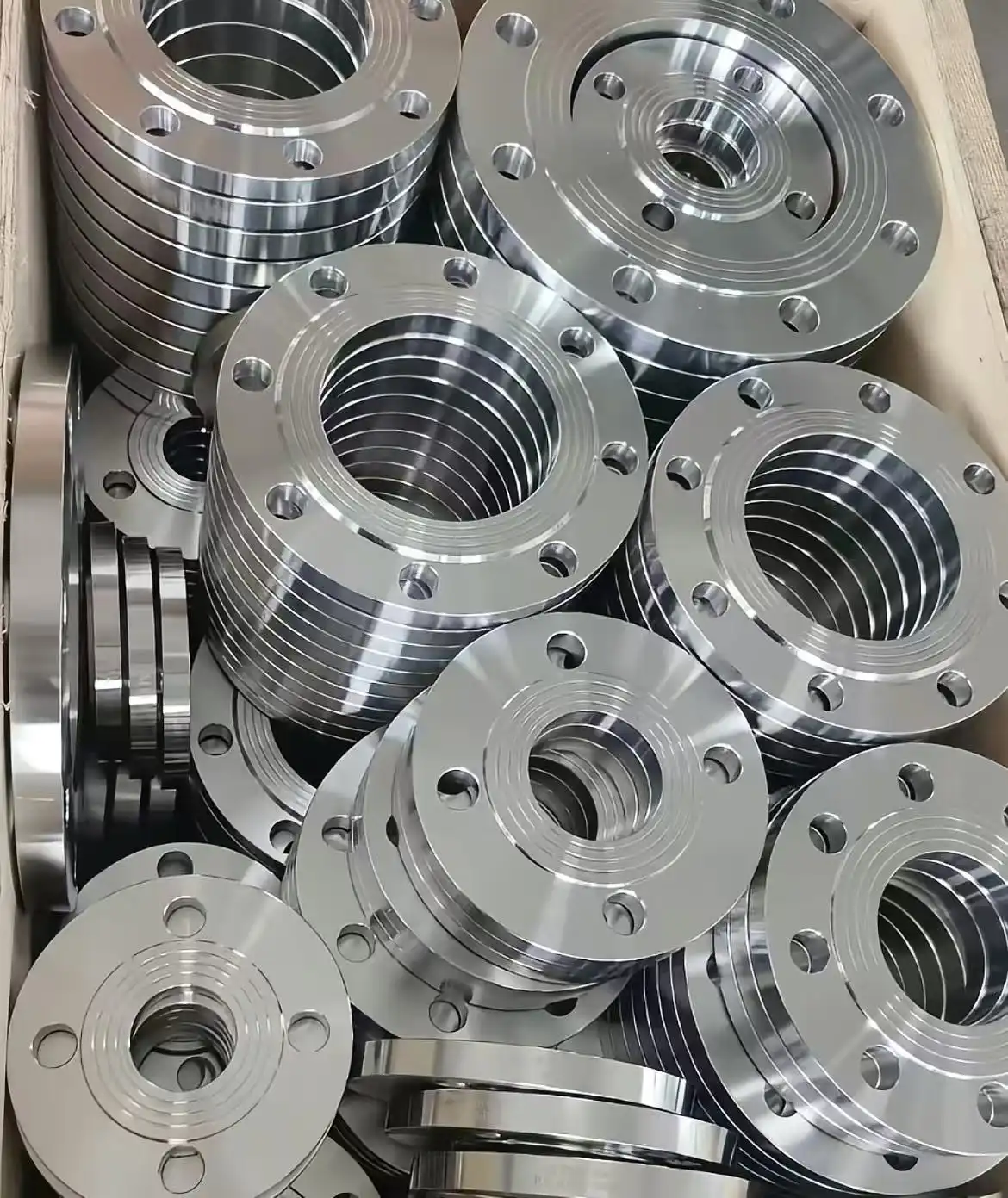
Material Control Can Have a Direct Impact on Service Performance
Why Raw Material Traceability Matters?
Carbon steel is not a single material, and the qualities are not the same for every application. Diverse grades and requirements are designed for diverse chemical compositions, mechanical qualities, and service situations. Therefore, selection of the right material becomes a key aspect of flange procurement, especially when pressure, temperature, corrosive conditions, or other operational requirements need to be addressed.
Further reassurance that the completed flange is really the material specified might be provided by an attentive provider of material identity and traceability. Material certifications and batch information in documentation may also help a project team to verify what was given.
If material control is bad, then customers may have to do further verification after receipt. If the material provided doesn’t meet the project requirement, the issue might be more than just changing a few components. It may be shown by inspection records, installation schedules, and acceptance of the final pipe system.
Manufacturing Quality Is More Than Surface Appearance
A flange might seem fine when it arrives at a warehouse, but it still needs extra scrutiny before it is utilized. Manufacturing quality is more than just the look. To summarize, the forging or forming processes, heat treatment where required, machining, dimensional control, and inspection all have an impact on whether or not a flange can fulfill its intended function.
Dimensional precision is a significant concern for carbon steel flanges, since a flange must interact properly with the pipe, gasket, bolts, valves, and other components attached to it. Changes in dimensions or sealing surfaces might complicate installation and may introduce extra stress during assembly.
Thus, the cleanliness or shine of a flange does not reflect upon the manufacturing quality. Much more important proof of consistency are production controls and inspection records.
Poor Dimensional Control Can Increase Installation Costs
Small Dimensional Differences Can Create Bigger Problems
In a plumbing system, the constituent components do not function in isolation. They have to fit together when installed. If flange dimensions are not uniform, installers could spend extra time fixing alignment or dealing with connection issues.
This may be especially troublesome on pre-fabricated plumbing systems when components have to fit together to preset specifications. An out-of-spec flange may need further changes in the assembly, so adding labor and perhaps interrupting the installation procedure.
The situation may not always be that dramatic. Even tiny differences might entail extra labor when installing many components on a big project. That’s why dimensional examination should be a part of the purchase decision, not an optional afterthought.
Sealing Surfaces Deserve Particular Attention
The flange and gasket make a sealed connection; thus, the quality and shape of the sealing surface are important in the installation. Surface damage, wrong finish, or dimensional variations can make it more difficult to reach the desired connection.
If a fault is found before the component has been installed, it may be fixed or replaced with little disturbance. If found after the piping system is assembled, the same problem can add labor and testing costs.
Little advantage is gained from a low purchase price if the product causes repeated installation issues. For projects involving a large number of flanges, even a small increase in the time to install each connection can amount to a considerable labor cost.
Inspection and Documentation Can Reduce Unplanned Procurement Costs
Quality Records Give Buyers More Than Paperwork
Though inspection documents are occasionally seen as an administrative requirement, they may have practical value throughout the project lifecycle. Depending on project specification, buyers may require material certificates, dimensional inspection records, test documentation, or other quality records.
The availability of the correct documentation makes it easier for the contractors and quality teams to verify that the components supplied are in compliance with the purchase requirements. It can also help in communication between supplier, purchaser, inspector, and end customer.
When records are missing or don’t line up, project staff may spend extra time requesting documentation or doing more verification. “That administrative delay can become a part of the real cost of procurement on a tightly scheduled project, especially when sourcing carbon steel flanges.”
Certification Should Match the Actual Project Requirement
Certification also needs to be seen in context. Not all piping applications require the same degree of documentation or testing. The suitable requirements are determined by the relevant specification, the project circumstances, and the client expectation.
A reputable provider should thus be able to clarify the relevant standards and paperwork rather than merely asserting that a product is “certified.” Buyers may thus compare prices on an analogous basis and avoid finding essential paperwork requirements only after the order has been made.
Maintenance Costs Can Change the Economics of a Cheap Purchase
More Attention May Be Required During Service
The service life of a flange relies on a number of parameters, such as material selection, operating circumstances, installation quality, environment of corrosion, loading, and maintenance procedures. To say that pricing alone dictates the service life of a flange would be deceptive.
Poor material control or production consistency, however, might increase the chance of issues requiring inspection or remedial work. The cost of investigating a connection, isolating equipment, replacing components, and retesting is much more than the original component price when maintenance staff are required to do it.
This is particularly true in places where pipe access is limited or where maintenance needs extensive preparation. A part that is somewhat less costly to acquire might be far more expensive if it results in more labor later.
Replacement Costs Include Labor and Downtime
When a flange has to be changed, the replacement is merely a fraction of the cost. Depending on the application, workers may be required to isolate the applicable pipe segment, remove bolts and the old flange connection, install the replacement, verify the assembly, and restore the system to service.
The replacement work may also have to be coordinated with the industrial facilities’ production schedules. Even a brief delay might have significant ramifications if the afflicted connection serves an essential activity.
This is why customers cannot get a whole picture when comparing flanges using just the purchase price. A more relevant comparison would include factors in the estimated cost of installation, maintenance, replacement, and downtime.
Safety and Compliance Should Not Be Treated as Price Variables
Flange Selection Has to Match the Intended Service
The selection of flanges must always be governed by the actual service requirements, since they are part of pressure containment pipe connections. All factors like pressure rating, temperature, material specification, dimensions, connection type, relevant standards, etc. should be evaluated simultaneously.
Choosing a component without verifying these needs might lead to difficulties that are hard to detect just by looking at price comparisons. What may seem to be the lowest quote may not always be a comparable product if the standards, testing, or documentation are different.
Thus, the correct comparison is between items that satisfy identical technical specifications. Price becomes a far more relevant purchase issue after the technological baseline has been established.
Nonconformance Can Affect the Entire Project
The implications may go beyond the flange itself if the provided carbon steel flanges do not fulfill the stipulated standards. Nonconforming merchandise may need further examination, segregation, replacement, or customer approval. In projects with tight quality controls, an open nonconformance may potentially delay installation or final approval.
These problems are especially vexing since they are typically identified after procurement choices have been made. The project team will have to bear the increased cost, even if the buying team may have gotten a cheaper unit price.
Hence, quality criteria, inspection, and documentation are part of the product value and not separate administrative issues in a dependable procurement process.
How Buyers Can Compare Carbon Steel Flanges More Effectively?
The best strategy to eliminate hidden expenses is to define a technical baseline before comparing supplier bids. Buyers should first specify the material quality, dimensions, pressure class or rating, relevant standards, connection type, quantity, and documentation requirements. This enables comparison of suppliers on an analogous basis.
Checking the supplier’s management of manufacturing and inspection is also helpful. Questions on material traceability, dimensional inspection, production methods, quality documentation, packaging, and batch identification might highlight variations that are not seen in the unit pricing.
Another crucial factor for huge projects is consistency across batches. Just because one sample is acceptable doesn’t mean the whole production order will be the same. If you need hundreds or thousands of components, then you may be more certain of a provider with established quality standards and predictable production procedures.
Pre-order communication has its own value. When the supplier knows the application, specs, delivery timeline, and documentation requirements upfront, there is less chance for misunderstanding later in the project.
Why Supplier Capability Matters When Evaluating Long-Term Value?
The supplier relationship becomes particularly important when carbon steel flanges are purchased for OEM projects, EPC contracts, industrial plants, or other applications where consistency matters. Buyers need more than a competitive quotation; they need confidence that the supplier can manufacture the required products repeatedly and support the documentation and quality requirements associated with the order.
Cangzhou Oudi Pipe Manufacture Co., Ltd. provides carbon steel flange solutions for industrial piping applications, giving buyers an option to evaluate product quality, specifications, and supply capability alongside price. For procurement teams, the value of working with an established manufacturer is not simply the expectation of receiving a higher-priced product. It is the ability to discuss technical requirements clearly and establish the inspection and documentation conditions before production begins.
That approach makes price comparisons more useful because the buyer is comparing complete solutions rather than isolated unit prices. When technical requirements, quality controls, and delivery expectations are clearly defined, the risk of unexpected costs becomes easier to manage.
Conclusion
The attraction of cheap carbon steel flanges is understandable, particularly when a project involves a large quantity of components and procurement teams are under pressure to reduce costs. However, the purchase price does not represent the full financial impact of a flange. Material verification, dimensional accuracy, manufacturing consistency, inspection, documentation, installation labor, maintenance, replacement, and downtime can all influence the final cost.
This does not mean buyers should automatically choose the most expensive supplier. A better strategy is to compare products that meet the same technical requirements and then evaluate the supplier's manufacturing capability, quality controls, inspection practices, documentation, and service support. In this way, the purchasing decision is based on total value rather than a single number on a quotation.
For industrial piping projects, a flange is a relatively small component, but problems with that component can affect a much larger system. Choosing a supplier that can provide consistent products and clear quality documentation can help reduce unnecessary installation work, procurement disputes, replacement costs, and project delays. By considering the total cost of ownership from the beginning, businesses can make a more informed decision and avoid allowing a low initial price to become an expensive choice later. For more information on our premium carbon steel flanges and other piping products, please contact us at oudi-04@oudiguandao.com.
FAQ
1. What are the main risks of using cheap carbon steel flanges?
The main risks include early failure, increased maintenance costs, and potential safety hazards due to substandard materials and manufacturing processes.
2. How can I identify high-quality carbon steel flanges?
Look for proper certifications, consistent manufacturing processes, and flanges produced by reputable manufacturers with a track record of quality.
3. Are cheap carbon steel flanges always non-compliant with industry standards?
While not always, cheap flanges are more likely to be non-compliant due to cost-cutting measures in materials and manufacturing.
4. How does the lifespan of cheap carbon steel flanges compare to quality ones?
Cheap flanges typically have a significantly shorter lifespan, often requiring more frequent replacements compared to high-quality alternatives.
References
1. Smith, J. (2020). "The Impact of Material Quality on Industrial Piping Systems." Journal of Industrial Engineering, 45(2), 78-92.
2. Johnson, R., & Williams, T. (2019). "Cost Analysis of Substandard Flanges in Chemical Processing Plants." Chemical Engineering Quarterly, 33(4), 215-230.
3. Brown, A. (2021). "Safety Implications of Low-Quality Carbon Steel Components in High-Pressure Systems." Industrial Safety Review, 56(3), 112-128.
4. Lee, S., & Park, H. (2018). "Long-term Economic Impact of Quality Control in Manufacturing Processes." International Journal of Production Economics, 201, 321-335.
5. Garcia, M. (2022). "Regulatory Compliance and Its Effect on Operational Costs in the Piping Industry." Journal of Regulatory Affairs, 29(1), 45-60.
6. Taylor, D., & Thompson, E. (2020). "The Hidden Costs of Maintenance: A Study of Industrial Piping Systems." Maintenance Engineering Quarterly, 41(2), 180-195.

Need help finding the right solution with our experts. Please contact us.

SINCE 1998 Your Reliable Pipeline Manufacturer



