Tips for Importing Steel Pipe Flanges from Asia
Importing steel pipe flanges from Asia can be a practical sourcing strategy for distributors, EPC contractors, engineering companies, and industrial buyers, but the lowest quotation is rarely the only factor that determines whether an order is successful. It may appear OK, but if the material grade, size, pressure rating, facing, marking, or inspection documentation of the flange are not as per the project specifications, it may give us trouble. Logistics is no different. A low manufacturing pricing might be less appealing after you include customs fees, inspection expenses, port charges, inland transportation, or unforeseen delays to the ultimate landed cost. That’s why buyers should think about Asian sourcing as an end-to-end procurement process, not just a way to locate a cheaper manufacturer. The ideal supplier should be able to grasp the technical specification, consistently produce the needed flange, offer verifiable quality documentation, and organize packing and shipping according to the buyer’s delivery requirements. The following principles may enable importers to better assess suppliers and prevent frequent difficulties before ordering.
Start With a Complete Flange Specification
Confirm Standards, Dimensions, and Material Requirements
Make sure you know the flange type you need for your project before you contact your suppliers. A request for only “steel pipe flanges” is typically not specific enough to provide you an exact quote. There are many various flange designs, sizes, materials, and pressure ratings, and they all have quite varied production needs.
The purchase specification should specify the appropriate standard, nominal pipe size, pressure class or pressure rating, flange type, face type, material grade, dimensional requirements, and any project-specific testing or documentation needs. Depending on the application, the purchaser may additionally have to specify specifications for bolt-hole size, flange thickness, bore dimensions, tolerances, surface finish, heat treatment, labelling, and packaging.
Different flange requirements may apply depending on the standard, such as ASME B16.5, ASME B16.47, EN, and DIN. The customer should not just name a number of standards and expect the supplier to select which one to follow. The quote request must include the standard to which the product is to be manufactured and mention whether there are any other project parameters. If a drawing is provided, it may be sent together with the textual specification to avoid misunderstanding and to offer the provider a much better foundation for pricing.
Special importance should be paid to the choice of material. Carbon steel, alloy steel, and stainless steel flanges are not interchangeable, and even within the same material family, there might be variable chemical, mechanical, and thermal requirements for various grades. If the application is pressure equipment, petrochemical service, oil and gas facilities, or other challenging conditions, the buyer should check the needed material specification before manufacturing starts.
Define Inspection and Documentation Before Production
If quality criteria are agreed upon before the purchase order is issued, it is simpler to manage. Buyers should state the documentation and testing necessary at the quote and order confirmation stage rather than waiting until the items are ready for shipping to discuss inspection.
For example, the buyer may request a material test certificate, dimensional inspection records, heat number traceability, visual inspection records, or special non-destructive testing based on the application and relevant specification. Where third-party inspection is necessary, the supplier should be notified in advance of production so that the schedule of the inspection may be coordinated with the manufacturing and testing operations.
This also avoids a typical procurement issue when the actual steel pipe flanges satisfy the buyer’s expectations, but the paperwork is lacking. For industrial components, documentation is usually part of the delivery, not an extra administrative attachment.
Evaluate the Asian Supplier Beyond the Quotation
Look at Actual Manufacturing Capability
The second stage after knowing the technical requirements is if the supplier can provide the requisite steel pipe flanges on a continuous basis instead of just sourcing them from another source.
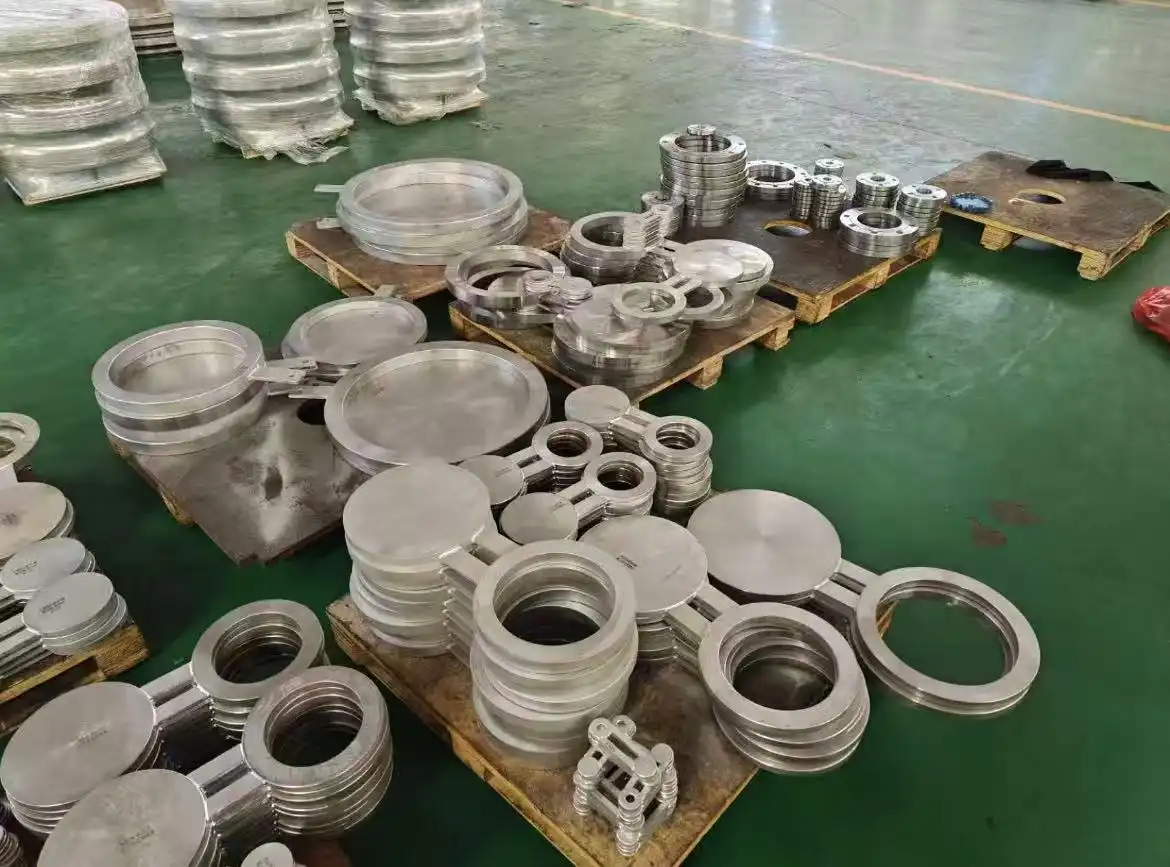
Buyers should enquire about the supplier's manufacturing process, production equipment, inspection facilities, heat-treating capabilities, machining capacity and quality-control processes. The amount of manufacturing capabilities required will depend on the product and order requirements, but the supplier must be able to describe the movement of the flange from raw material through to forming or forging, heat treatment where necessary, machining, inspection, marking and final packaging.
A visit to the plant may be valuable for bigger or longer-term buying projects, but an in-person visit is not always practicable. If a visit is not feasible, buyers might request production photos, equipment details, inspection methods, sample paperwork and references to similar projects. The point is not to assess a factory by its appearance. A neat facility is helpful, but process control, traceability, inspection capabilities and consistency are more essential markers of production dependability.
It’s also worth considering whether the supplier consistently manufactures the exact sizes and materials of flange that are needed by the project. A producer familiar with typical carbon steel flanges may not be familiar with big-diameter goods, exotic alloys or stringent dimensional standards. Aligning supplier current production expertise to buyer real needs may eliminate wasteful qualifying effort.
Verify Certifications and Traceability
Certifications may be used to assist in the assessment of suppliers but should never be considered a replacement for product inspection. An individual cargo still has to be checked for correct material and dimensional inspection even if a supplier holds a valid quality management certification.
For instance, ISO 9001 certifies that a firm has a quality management system but does not certify each flange produced by that company. Buyers should thus examine the authenticity and the breadth of necessary certifications and enquire how the supplier implements its quality system for the particular items to be bought.
For orders of industrial flanges, the traceability of the material is of special importance. The customer must know how the raw material or heat number correlates with the completed steel pipe flanges and their relevant material certificate from the supplier. When the traceability is done correctly, it will be easier for the buyer to determine whether the material on the certificate matches the real items delivered.
Instead of trying to gather up as many certifications as possible, check that each is relevant to the application. A provider that can describe its quality system, inspection process, traceability technique and flow of paperwork may give more meaningful assurance than a supplier who merely issues a large number of certifications.
Compare Total Import Cost Instead of Factory Price
Calculate the Landed Cost of the Order
An Asian quote may seem very competitive on a unit pricing basis, but the total procurement cost is worked out when the items arrive at the buyer’s plant. Freight, insurance where applicable, customs fees, taxes, inspection costs, port handling, customs clearance and interior transportation may impact the final total.
The customer should then assess the suppliers on the basis of the estimated landed cost rather than on the factory quote alone. This is especially true when comparing vendors from various countries in Asia – freight routes, port conditions, tariffs and delivery arrangements might vary.
The citation should also explicitly indicate the Incoterms. The scope of cost and responsibility is not the same for a price under EXW, FOB, CIF or any other delivery term. Two quotes that seem quite similar might result in significantly different bottom-line expenses if you don’t know what’s included.
Packaging should be addressed concurrently. Steel flanges are sturdy items, but in transit improper packing might result in damaged machining surfaces, rust or mixed sizes. Packaging requirements should be appropriate to the weight, size, surface condition of the product, the transportation distance and way of handling.
Consider Trade Duties and Country-Specific Requirements
It’s a good idea to examine import restrictions before completing the purchase order, since steel items might be subject to product-specific customs procedures, duties, trade remedies or paperwork standards depending on the country of destination and country of origin.
The right HS classification should be validated with the relevant customs authorities or a competent customs specialist rather than relying exclusively on a supplier's proposed code. Classification may decide the tariff rate and customs procedure; hence, a wrong classification might lead to extra expenditures or clearance complications.
Buyers should also check for the presence of anti-dumping duties, countervailing tariffs, safeguard measures or other trade restrictions on the specific steel product and the origin nation. When the original manufacturing pricing is low, these steps may drastically affect the economics of an import programme.
Rules may vary; therefore, importers should check current requirements before shipping rather than relying on information from a previous order. For recurrent purchases, assessing these needs frequently is especially critical since a sourcing selection that was inexpensive many years ago may have a different cost structure subsequently.
Build Quality Control Into the Purchasing Process
Use Samples or Trial Orders When Appropriate
For a new supplier, a sample or trial order can provide useful information before a buyer commits to a large production quantity. The purpose is not simply to inspect whether the flange looks correct. The buyer can use the initial order to evaluate dimensional consistency, material documentation, marking, packaging, communication, production lead time, and document accuracy.
For repeat orders, the first approved sample or reference specification can also serve as a baseline for future production. If the supplier changes material sources, manufacturing processes, subcontractors, or other important production arrangements, the buyer should determine whether the change requires another review.
Trial orders are especially useful when the supplier has not previously produced the buyer's exact steel pipe flanges configuration. They give both sides an opportunity to identify unclear requirements before those issues are repeated across a larger shipment.
Arrange Inspection According to the Product and Application
Inspection should be proportionate to the importance of the component and the requirements of the project. A standard commercial order may require a different inspection approach from flanges intended for a critical oil and gas installation.
Dimensional inspection can confirm key measurements against the applicable standard or approved drawing, while visual inspection can identify surface defects, machining issues, damaged sealing faces, or incorrect markings. Material verification and mechanical or non-destructive testing may be required when specified by the purchase order, material standard, or end-use application.
Third-party inspection can add an independent layer of verification, particularly for larger orders or when the buyer has limited ability to inspect the supplier's facility directly. However, third-party inspection works best when the inspection scope has already been defined. The inspector needs clear acceptance criteria, relevant drawings or specifications, sampling requirements, and document requirements rather than a general instruction to “check quality".
Plan Shipping and Delivery Around the Project Schedule
Choose a Freight Method That Fits the Order
For most industrial flange shipments, sea freight is likely to be considered because of the weight and volume of the products, especially for larger quantities. Air freight can be appropriate for urgent or relatively small shipments, but the higher transportation cost needs to be weighed against the value of avoiding a production or installation delay.
The decision should therefore be based on more than transportation price. Buyers should consider production lead time, port schedules, customs clearance, inland transportation, project deadlines, and the consequences of a late delivery. A cheaper route is not necessarily the better option if it introduces uncertainty that could interrupt the project schedule.
The selected route should also be discussed with the freight forwarder and supplier before the goods are ready. Confirming the port of loading, destination port, expected transit time, shipping documents, and delivery responsibilities in advance can make the process considerably easier to manage.
Protect Flanges During Transportation
Packaging requirements should be discussed before production rather than treated as a final warehouse task. Flange sealing faces and machined surfaces need appropriate protection during handling and transportation, while the packaging should also make it possible to identify different sizes and specifications after arrival.
For long-distance shipments, moisture and environmental exposure should be considered as well. Appropriate wrapping, protective materials, separation, and labelling can help maintain product condition during transportation and storage.
Clear marking is equally important when a shipment contains multiple flange sizes, materials, or pressure classes. Product identification should correspond with the packing list and relevant quality documents so that warehouse staff and project personnel can identify the products without opening every package.
Conclusion
Importing steel pipe flanges from Asia can provide competitive sourcing opportunities, but successful procurement depends on controlling the entire process from technical specification through final delivery. A low factory quotation is only one part of the decision, and it should never replace careful evaluation of material requirements, applicable standards, manufacturing capability, quality documentation, inspection procedures, and total landed cost.
The most effective approach is to begin with a complete specification, communicate the requirements clearly, and evaluate suppliers according to their ability to produce the exact flange required rather than simply their general product range. Certifications and quality systems should be verified, while material traceability and inspection documentation should be reviewed as part of the purchasing process. At the same time, customs requirements, trade duties, freight arrangements, packaging, and delivery schedules should be considered before the order is placed.
When these factors are addressed together, buyers can make more informed decisions when sourcing from Asia and build a supply chain that is based on predictable quality and delivery rather than price alone. For companies purchasing steel pipe flanges regularly, establishing clear technical specifications and working with a supplier that understands both manufacturing requirements and export procedures can make future orders faster, easier to verify, and more consistent. For more information or assistance with your steel pipe flange import needs, please contact us at oudi-04@oudiguandao.com.
FAQ
1. What are the main advantages of importing steel pipe flanges from Asia?
Lower production costs, high-quality manufacturing capabilities, and a wide range of suppliers are the main advantages.
2. How can I ensure the quality of steel pipe flanges imported from Asia?
Verify supplier certifications, conduct thorough quality inspections, and implement material testing procedures.
3. What documentation is typically required for importing steel pipe flanges?
Common documents include commercial invoices, packing lists, bills of lading, certificates of origin, and material certifications.
4. How long does it typically take to import steel pipe flanges from Asia?
Lead times can vary but generally range from 4 to 12 weeks, depending on the shipping method and customs clearance process.
References
1. Smith, J. (2021). "Global Steel Flange Market Analysis: Trends and Opportunities." International Steel Journal, 45(3), 112-128.
2. Chen, L., & Wang, Y. (2020). "Quality Control Practices in Asian Steel Manufacturing." Asian Journal of Engineering and Technology, 18(2), 76-92.
3. Johnson, R. (2022). "Navigating International Trade Regulations for Steel Products." Journal of International Business Studies, 53(4), 301-315.
4. Lee, S., & Park, H. (2019). "Supply Chain Optimisation in Steel Flange Imports: A Case Study". International Journal of Logistics Management, 30(2), 189-205.
5. Brown, T. (2023). "Comparative Analysis of Steel Flange Manufacturing Processes in Asia and the West." Journal of Materials Processing Technology, 301, 117456.
6. Wilson, M. (2021). "Best Practices in Customs Clearance for Steel Product Imports." International Trade Review, 28(1), 45-60.

Need help finding the right solution with our experts. Please contact us.

SINCE 1998 Your Reliable Pipeline Manufacturer



