The Impact of Raw Material Costs on Carbon Steel Elbow Prices
Raw material costs are one of the factors that influence the price of carbon steel pipe fittings, but they are not the only factor that determines what a buyer eventually pays. For carbon steel elbows, the connection between commodity prices and the final quotation is more complicated because steelmaking, forming, heat treatment, inspection, logistics, inventory, and commercial conditions all contribute to the total cost. Iron ore and coking coal are particularly important to integrated steelmaking, while scrap and electricity play a larger role in other production routes. The World Steel Association notes that both blast furnace/basic oxygen furnace and electric arc furnace routes are used in steel production, which means the effect of a particular raw material can vary between suppliers and regions. For buyers, understanding this cost structure makes it easier to interpret changes in quotations instead of assuming that every increase in steelmaking commodities should result in the same percentage increase in fitting prices. A quotation for carbon steel elbows reflects not only the underlying steel cost but also the specification of the fitting, manufacturing route, production volume, inspection requirements, delivery location, and the supplier's current inventory position. All these elements together give a more accurate approach to understanding the reasons elbows change in price and why two providers may quote different pricing for seemingly equivalent items.
How Steelmaking Costs Feed Into Elbow Pricing?
Iron Ore and Metallurgical Coal as Upstream Cost Drivers
Iron ore and metallurgical coal are key inputs to the blast furnace pathway used to create steel. Iron ore is the iron-containing material, and coking coal is converted to coke, which is used as a fuel and reducing agent in the blast furnace. According to the World Steel Association, the integrated blast furnace/basic oxygen furnace route employs iron ore, coal, limestone, and recycled steel, whereas an electric arc furnace route depends considerably more heavily on recycled steel and energy.
This difference is important for carbon steel elbow pricing since a rise in one commodity will not affect all steel producers equally. A mill that sells steel to a factory may have its production costs tightly tied to iron ore and coking coal, so fluctuations in those commodities might ultimately affect the mill’s selling price. That steel may then cost more for a fitting maker to acquire. But the increase is usually passed through a number of phases before it arrives at the final estimate for a pipe elbow.
It might be at different points in time too. A manufacturer retaining steel or completed fittings in inventory may continue quoting from existing stock for a length of time, whereas a producer acquiring fresh steel at current market prices may alter its quote sooner. This is one reason raw material market fluctuations and fitting quotes may not usually move simultaneously on the same day.
Scrap, Steel Prices, and the Choice of Production Route
Raw material analysis should not concentrate exclusively on iron ore and coking coal. Scrap steel is also a key input to the global steel industry, and electric arc furnace manufacturing may employ recycled steel as a primary charge material. Electricity is another important input for this approach. The World Steel Association classifies the inputs of materials and energy used in contemporary steelmaking as scrap, iron ore, coal, limestone, electricity, and other fuels.
So for a customer looking at a carbon steel elbow quote, the most valuable question is not only whether iron ore has become more costly. The appropriate thing to ask is: has there been a major change in the cost of the steel grade and product utilised by the supplier? Steel plate, seamless tube, welded tube, bar, or other feedstock might all have various market dynamics, and the cost of the completed fitting will rely on the material route used for its manufacturing.
This is especially significant when comparing bids from providers in various locations. One supplier may buy material from local mills, while another would use foreign steel or have a higher stock position. Accordingly, their vulnerability to fluctuations in raw material, freight rates, currency, and inventory costs might be different even if both suppliers provide fittings with the same nominal size and material grade.
Energy and Transportation Add Another Layer
Steel manufacturing and fitting production also require energy. Heating, forming, heat treatment, machining, testing, and other manufacturing processes for such industrial activities need electricity, natural gas, or other kinds of energy. The cost base may thus be affected by energy costs even if steel prices are generally consistent.
Transportation is yet another variable. Raw materials might be sent from the mine or steel mill to a processing plant, and from the manufacturer, steel products and completed fittings could be sent to a warehouse, distributor, project site, or foreign client. The final quote may also depend on fuel cost, goods cost, port taxes, inland transportation, and delivery distance.
Therefore, we should know that the price of carbon steel elbows is a mix of material cost and conversion cost, rather than a straightforward representation of one commodity index. This differential is especially relevant for overseas purchasers since a lower manufacturing price does not always create a lower delivery cost if freight, customs, inspection, or extra handling expenses are much higher.
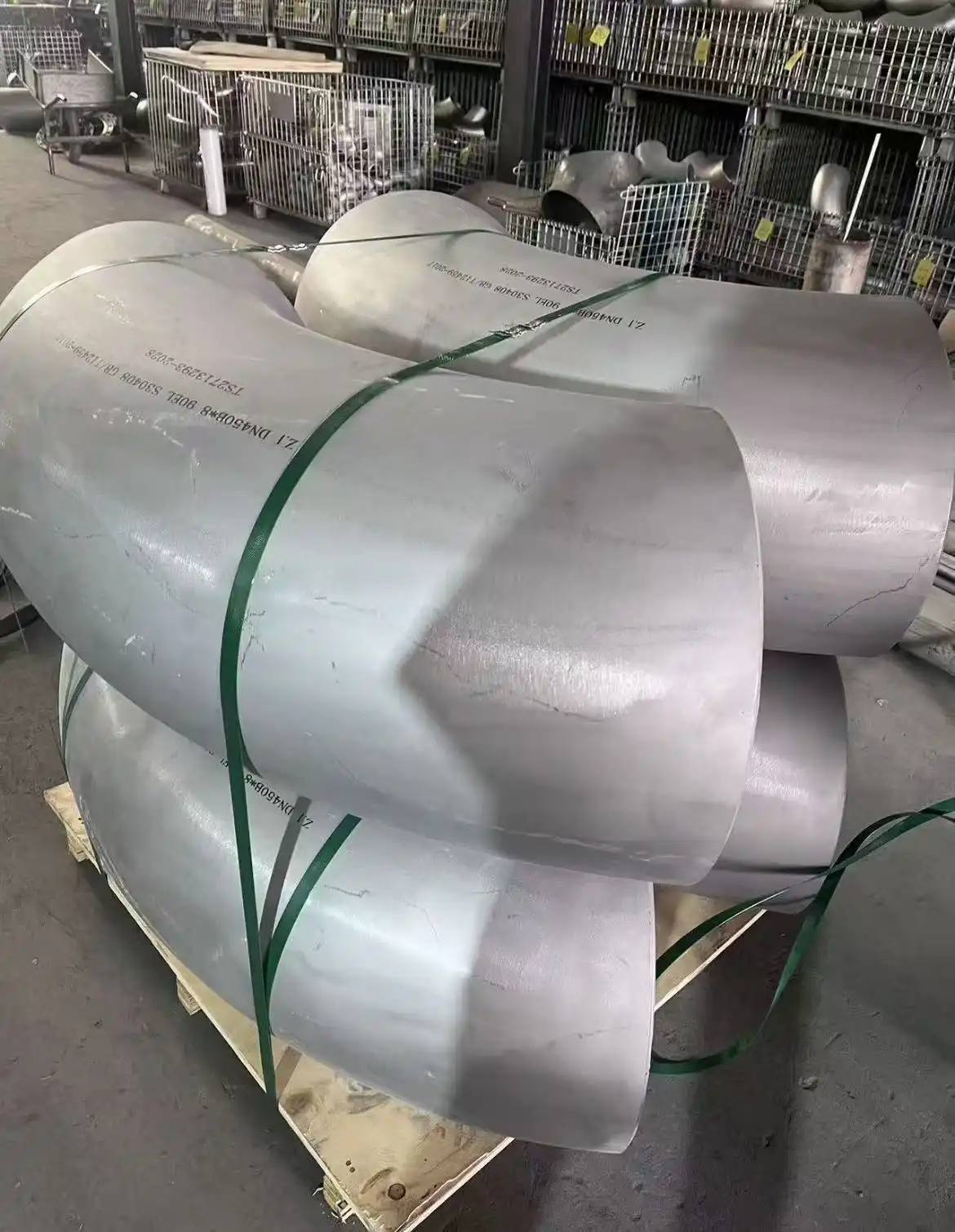
How Raw Material Changes Affect Elbow Manufacturing?
Material Selection and Manufacturing Requirements
Once steel has been purchased, the material still has to be converted into a fitting that meets the required dimensional and performance requirements. The manufacturing route may involve cutting, forming, bending, heat treatment, machining, inspection, and surface finishing, depending on the type of elbow and applicable specification.
The required material grade also matters. ASTM A234/A234M, for example, covers wrought carbon steel and alloy steel fittings of seamless and welded construction for pressure piping and pressure vessel applications at moderate and elevated temperatures. The standard also addresses material and testing requirements for covered fittings.
This means that a buyer should not compare prices using only the phrase “carbon steel elbow.” A 90-degree elbow and a 45-degree elbow may require different forming operations, while a larger diameter or heavier wall thickness requires more material and may involve different manufacturing conditions. Requirements for seamless construction, heat treatment, testing, traceability, or documentation can also increase the total production cost.
When raw material prices rise, manufacturers therefore have to consider the entire production cost rather than simply adding a percentage to an existing selling price. Efficient material utilization can reduce waste, but it cannot eliminate the underlying cost of steel or the labor and energy required to manufacture the fitting.
Quality Control Cannot Be Treated as a Cost-Cutting Shortcut
Raw material cost pressure can encourage manufacturers to look for greater efficiency, but quality requirements still need to be maintained. For industrial pipe fittings, buyers often require material certificates, dimensional inspection, chemical and mechanical test results, hydrostatic testing, or additional non-destructive examination depending on the applicable specification and project requirements.
A lower quotation should therefore be examined carefully if it is significantly below competing offers. The difference may come from inventory, purchasing volume, manufacturing efficiency, commercial terms, or freight arrangements, but it can also result from differences in material grade, testing scope, documentation, or product configuration.
For buyers, the key is to compare equivalent technical requirements. ASTM A234/A234M, for example, specifies requirements for covered wrought carbon and alloy steel fittings, including testing provisions. A quotation should therefore be assessed against the required standard and purchase specification rather than judged on price alone.
Inventory Can Delay the Effect of Commodity Prices
Inventory is another reason why changes in raw material markets do not immediately appear in fitting quotations. A manufacturer may have purchased steel several weeks or months earlier, particularly when it keeps commonly requested sizes and grades in stock. Those products may continue to reflect the supplier's earlier material cost.
The opposite situation can also occur. If a manufacturer needs to replenish stock while steel prices are rising, the replacement material may cost more than the inventory already on hand. The supplier then has to decide whether to absorb the difference temporarily or reflect the new cost in future quotations.
This creates an important distinction between spot purchasing and contract purchasing. A one-time order may be quoted according to current material and production conditions, while a longer-term supply agreement may contain mechanisms for handling changes in material prices, currency, freight, or other cost components. Buyers placing recurring orders should therefore review the commercial terms as carefully as the initial unit price.
Why Do Different Suppliers Quote Different Prices?
Specification Has a Direct Effect on the Cost Base
Two carbon steel elbows may look similar in a product photograph but have very different production costs. Diameter, wall thickness, schedule, material grade, elbow radius, angle, manufacturing method, applicable standard, and inspection requirements all influence the quotation.
For example, a large-diameter fitting requires more steel than a small fitting, while a heavy-wall elbow contains more material and may require additional forming or heat-treatment considerations. If a project requires particular documentation or inspection procedures, those requirements can also add cost.
This is why a buyer should provide a complete technical specification when requesting a quotation. Asking several suppliers to quote against the same material grade, size, schedule, standard, quantity, testing requirements, packaging conditions, and delivery terms creates a much more meaningful price comparison.
Order Quantity Changes the Economics
Production volume also affects the price of an elbow. A manufacturer producing a large batch can spread setup, tooling, inspection, packaging, and administrative costs across more units. A small custom order may have a higher unit cost even when the underlying steel price is identical.
Quantity can also affect the manufacturer's ability to purchase raw materials economically. Larger orders may allow the supplier to consolidate material purchases or negotiate better terms with upstream steel mills and distributors. Those savings may be reflected in the fitting quotation, although the actual commercial benefit depends on the supplier's purchasing structure.
For this reason, buyers should distinguish between the unit price of a single fitting and the total cost of fulfilling a complete order. A slightly different unit price may be reasonable when order size, packaging, inspection, or delivery requirements are different.
Location and Delivery Terms Matter
International purchasing introduces another layer of price variation. A manufacturer located close to a steel mill may have different logistics costs from a supplier that imports its feedstock. Similarly, a supplier quoting EXW, FOB, CIF, or another delivery term is not necessarily quoting the same cost scope.
Currency movements can also influence the final price. If steel is purchased in one currency and the fitting is sold in another, exchange-rate changes can affect the supplier's effective cost. Freight rates and customs-related expenses can create additional differences between factory quotations and delivered project costs.
Therefore, buyers should compare quotations on the same commercial basis. A factory-gate price and a delivered-to-site price cannot be evaluated as if they represented the same cost.
How Buyers Can Interpret Changes in Carbon Steel Elbow Prices?
Look Beyond the Commodity Headline
A change in iron ore or coking coal prices can be an early indicator of pressure within the steelmaking cost structure, but it should not automatically be treated as a direct forecast for carbon steel elbow prices. The effect depends on the steel production route, mill pricing, inventory levels, regional supply and demand, and the time required for changes to move through the supply chain.
A better purchasing approach is to monitor the price of the actual steel products or feedstock used by the supplier whenever possible. Buyers can then compare those movements with supplier quotations and determine whether a price change is supported by the underlying material market.
This approach also helps avoid overreacting to short-term commodity movements. If a supplier already has sufficient inventory for a particular order, a temporary change in an upstream commodity may have little immediate effect on the actual production cost of that order.
Compare Complete Quotations Rather Than Unit Prices Alone
When purchasing carbon steel elbows for a project, the unit price is only one part of the commercial evaluation. Buyers should confirm that the competing quotations cover the same technical specification, material grade, dimensions, manufacturing standard, inspection requirements, documentation, packaging, quantity, and delivery conditions.
A supplier offering a lower unit price may have a different testing scope or commercial basis, while a higher quotation may include additional inspection, documentation, or delivery services. Without checking these details, the apparent price difference can be misleading.
For repeat purchasing, buyers can also ask suppliers whether quotations are based on current material inventory or newly purchased steel. This does not guarantee a lower price, but it provides useful context for understanding why a supplier's quotation may differ from market expectations.
Consider Total Procurement Cost
The most useful comparison is often the total procurement cost rather than the factory unit price. Material price, inspection, packaging, freight, customs charges, delivery time, and potential project delays can all affect the actual cost of obtaining the fittings.
This is particularly relevant for large engineering projects where a fitting is only one component of a much larger piping system. A small difference in unit price may be less important than reliable documentation, consistent dimensional quality, predictable delivery, and the supplier's ability to provide the required material certificates and inspection records.
A well-structured purchasing process therefore considers both price and specification compliance. The objective is not to predict the commodity market perfectly, but to understand which cost factors are actually relevant to the specific order.
Conclusion
Raw material costs have a meaningful influence on carbon steel elbow prices, but the relationship is not as direct as a simple increase in iron ore or coking coal producing an equivalent increase in fitting prices. Steel production routes, scrap availability, energy costs, inventory, manufacturing efficiency, transportation, specification requirements, and market conditions all affect the final quotation.
For buyers, the most practical approach is to evaluate the complete cost structure behind a quotation. The material grade, size, schedule, manufacturing standard, testing requirements, quantity, delivery terms, and current inventory position should all be considered when comparing suppliers. For manufacturers and distributors, transparent pricing and efficient production can help explain cost movements while maintaining consistent quality. By understanding how upstream steel costs move through the supply chain, purchasers can make more informed comparisons and better understand the market price of carbon steel elbows. For more information on our high-quality carbon steel elbows and pricing strategies, please contact us at oudi-04@oudiguandao.com.
FAQ
1. How do raw material costs affect carbon steel elbow prices?
Raw material costs, particularly iron ore and coking coal prices, directly impact production expenses, which in turn influence the final pricing of carbon steel elbows.
2. What strategies do manufacturers use to manage raw material cost fluctuations?
Manufacturers employ various strategies, including cost-plus pricing, value-based pricing, and market segmentation, to manage raw material cost fluctuations and maintain competitiveness.
3. How do energy costs impact carbon steel elbow production?
Energy costs significantly contribute to overall production expenses, as the steel industry is energy-intensive. Fluctuations in energy prices can affect manufacturing costs and, consequently, carbon steel elbow prices.
4. What quality control measures are implemented in carbon steel elbow production?
Manufacturers employ stringent quality control measures, including raw material testing, in-process inspections, and advanced non-destructive testing methods to ensure carbon steel elbows meet industry specifications.
References
1. Smith, J. (2021). "The Global Steel Industry: Trends and Challenges." Journal of Industrial Economics, 45(3), 287-302.
2. Johnson, A., & Brown, M. (2020). "Raw Material Cost Analysis in Steel Production." International Journal of Manufacturing Technology, 18(2), 145-160.
3. Lee, S. H. (2019). "Pricing Strategies in the Carbon Steel Fittings Market." Journal of Industrial Marketing, 33(4), 412-428.
4. Zhang, Y., & Wang, L. (2022). "Supply Chain Management in the Steel Industry: A Case Study Approach." Supply Chain Management: An International Journal, 27(1), 78-93.
5. Patel, R. K. (2020). "Quality Control Methods in Carbon Steel Elbow Manufacturing." Journal of Materials Processing Technology, 280, 116-131.
6. Anderson, E., & Cho, H. (2021). "The Impact of Energy Costs on Steel Production: A Global Perspective." Energy Economics, 98, 105268.

Need help finding the right solution with our experts. Please contact us.

SINCE 1998 Your Reliable Pipeline Manufacturer



