The Importance of Hydrostatic Testing for Carbon Steel Tees
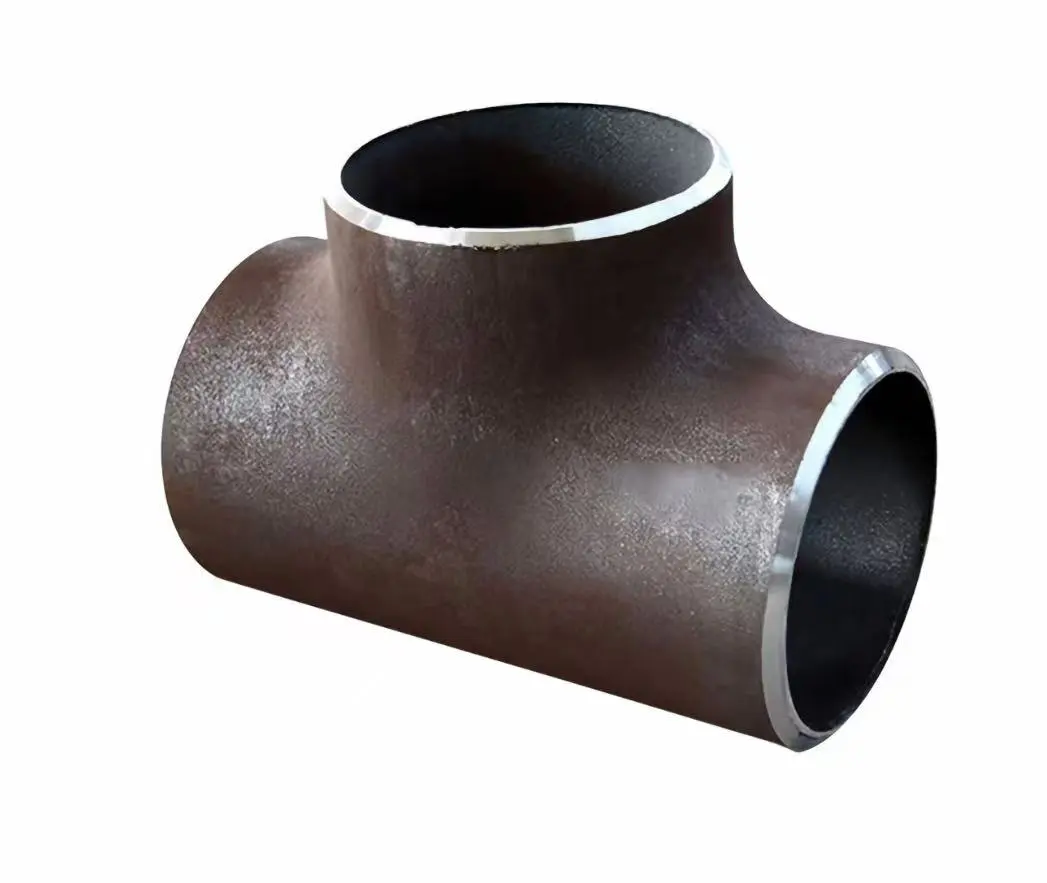
In industrial piping systems, a tee is more than a simple connection between three pipe sections. Its branch geometry changes the direction and distribution of fluid, while the fitting itself must maintain a reliable pressure boundary throughout operation. For this reason, the quality of carbon steel tees matters particularly in piping systems where pressure containment, dimensional accuracy, and material consistency are important. Hydrostatic testing is one method used to evaluate the pressure integrity of piping components and assemblies. Instead of using compressed gas, the test normally fills the component with water or another suitable liquid and then raises the internal pressure to a specified level. Because liquids are far less compressible than gases, hydrostatic testing can provide a controlled way to evaluate whether a pressure-containing component remains intact under the conditions defined by the applicable specification or project requirement. For manufacturers, engineers, and purchasing teams, however, it is important to understand what a hydrostatic test can actually demonstrate. The test is not simply a matter of applying an arbitrarily high pressure to a tee. Test pressure, duration, acceptance criteria, inspection procedures, and documentation should be established according to the applicable standard, design requirements, purchase order, and inspection plan. Understanding these details makes it easier to evaluate test reports and select suitable carbon steel tees for a particular piping application.
Why Hydrostatic Testing Matters for Carbon Steel Tees?
Pressure Integrity of the Fitting
A carbon steel tee forms part of the pressure boundary of a piping system. During service, internal pressure acts on the fitting wall and creates stresses that vary with geometry, wall thickness, material properties, and the connection between the run and branch. The branch area can be particularly important because changes in geometry influence how stresses are distributed through the fitting.
A hydrostatic test provides a practical way to check pressure boundary integrity under a controlled test condition. The fitting is filled with liquid, air is minimized or removed as required by the procedure, and pressure is increased according to the specified test method. Inspectors can then examine the tee for leakage or other unacceptable indications defined by the applicable requirements.
This does not mean that every hydrostatic test reproduces actual operating conditions. Service temperature, pressure cycling, corrosion, vibration, external loads, and other factors can influence performance after installation. Instead, the test provides evidence that the tested component meets the specified pressure integrity requirement at the time of testing.
Identifying Problems Before Installation
Manufacturing quality can have a direct effect on pressure performance. Issues such as unacceptable cracks, laps, incomplete welds where applicable, dimensional abnormalities, or other material and manufacturing discontinuities may compromise a fitting's ability to contain pressure.
Hydrostatic testing can help identify pressure-boundary defects that become evident through leakage or other unacceptable behavior during the test. It should therefore be viewed as one part of a broader quality assurance system rather than as a replacement for material inspection, dimensional inspection, visual examination, or other applicable non-destructive examination methods.
This distinction is important when evaluating carbon steel tees for demanding projects. A fitting that passes a hydrostatic test has demonstrated compliance with the conditions of that particular test, but the result should be considered together with material certificates, manufacturing records, dimensional inspection, and any additional examination required by the project.
Building Confidence in Pressure Piping
For a purchaser, hydrostatic testing also has a documentation function. A properly prepared test record provides evidence that the fitting was subjected to the specified procedure and that the recorded results met the applicable acceptance requirements.
This documentation can become particularly useful when carbon steel tees are purchased for large projects involving multiple batches, different material heats, or strict traceability requirements. When test records are linked with material identification and inspection documentation, the purchaser has a clearer quality trail from the finished fitting back to its manufacturing records.
How Hydrostatic Testing of Carbon Steel Tees Is Normally Performed?
Preparing the Tee and Test System
Before pressure is applied, the carbon steel tee must be installed in a suitable test arrangement. The openings are sealed using appropriate fixtures, and the test equipment must be capable of safely reaching and controlling the specified pressure.
The fitting is then filled with water or another approved test liquid. Removing or minimizing trapped air is an important part of the preparation because compressed air stores substantially more energy than water and can affect both the behavior of the test system and the hazards associated with pressure testing.
The pressure gauge and other measuring equipment should also be suitable for the expected test range and maintained according to the applicable quality procedures. Proper calibration and equipment identification are important because a test result is only useful when the pressure measurement itself can be trusted.
Raising and Holding the Test Pressure
After the test arrangement has been prepared, pressure is increased in a controlled manner until the specified test pressure is reached. The exact pressure should not be assumed from a generic rule such as “1.5 times the design pressure.” Instead, the requirement should be taken from the applicable product standard, piping code, purchaser specification, or project inspection procedure.
Once the specified pressure has been reached, the test may be held for the period required by the applicable procedure. During this stage, technicians inspect the carbon steel tee and relevant connections for visible leakage or other conditions that would constitute failure under the governing requirements.
The test is therefore both a pressure application procedure and an inspection activity. Maintaining a stable test condition and accurately recording the relevant parameters helps ensure that the result can be reviewed later.
Inspecting and Recording the Results
After the required test period, pressure is reduced in a controlled manner before the equipment is opened or the fitting is removed from the test setup. The tee is then examined according to the applicable inspection procedure.
A useful hydrostatic test record may identify the fitting, material or heat information where traceability is required, test medium, test pressure, holding period, test equipment, test date, and test result. The precise documentation requirements depend on the governing specification and purchaser requirements.
For procurement teams, this documentation can be just as important as the physical test itself. A pressure-tested fitting without adequate identification or traceability may create difficulties during receiving inspection, project documentation review, or later quality audits.
Understanding Standards and Testing Requirements
ASME B16.9 and Its Proper Role
ASME B16.9 is an important standard for factory-made wrought butt-welding fittings, including tees manufactured within its scope. It addresses dimensions, tolerances, marking, and other requirements relevant to standardized fittings. However, it should not be described simply as a universal hydrostatic testing specification for every carbon steel tee.
The actual pressure testing requirement may come from another applicable standard, piping code, material or product specification, purchaser specification, or project-specific inspection plan. In some projects, additional testing or inspection may be required beyond the baseline requirements associated with a standard fitting specification.
This distinction is valuable when purchasing carbon steel tees because the phrase “ASME B16.9 compliant” does not, by itself, communicate every detail of the pressure testing program. Buyers should identify the complete specification package applicable to their project rather than relying on a single standard designation.
Test Pressure Depends on the Applicable Requirement
There is no universal test pressure that can be correctly applied to every carbon steel tee. The required value may depend on the applicable code or specification, the design conditions, material, fitting configuration, wall thickness, and the way the piping component is qualified.
For that reason, a supplier should be able to explain the basis of the stated test pressure. If a quotation or inspection document specifies a particular hydrostatic pressure, the purchaser should be able to trace that value to the applicable technical requirement.
This approach is more reliable than applying a generic multiplier to every fitting. A project involving ordinary process piping may have different testing requirements from a highly regulated oil and gas installation, a power-generation system, or a piping system operating under unusual temperature or pressure conditions.
Combining Hydrostatic Testing With Other Inspections
Hydrostatic testing should not be treated as the only indicator of fitting quality. Dimensional inspection is necessary to confirm that the tee meets the required outside diameter, center-to-end dimensions, wall thickness requirements, and other applicable tolerances.
Material verification is also important. Depending on the project, purchasers may require a material test certificate identifying the chemical composition and mechanical properties associated with the material heat. Visual inspection and, where specified, non-destructive examination can provide additional information about the condition of the fitting.
When these inspections are considered together, the purchaser receives a much more complete picture of product quality. Hydrostatic testing addresses pressure integrity under the specified test conditions, while material, dimensional, and non-destructive examinations address other aspects of manufacturing quality.
What Purchasers Should Check Before Ordering Carbon Steel Tees?
Confirm the Complete Technical Specification
Before placing an order, the purchaser should establish the required fitting standard, material grade, dimensions, schedule or wall thickness, end preparation, and applicable piping code. The hydrostatic testing requirement should be stated as part of this technical package where pressure testing is required.
This is especially important when a project contains different tee sizes or configurations. Requirements that apply to one fitting group may not automatically apply to another, and assumptions made during purchasing can create documentation or inspection problems later.
Review Test Reports and Traceability
A hydrostatic test report should contain enough information for the purchaser or inspector to understand what was tested and under which conditions. The fitting identification should be consistent with the purchase order, material documentation, and other inspection records.
Traceability becomes particularly important when large quantities of carbon steel tees are supplied across multiple production batches. Clear identification helps the purchaser connect each fitting or batch with its relevant material and quality records.
Clarify Witness and Third-Party Inspection Requirements
Some projects require testing to be witnessed by the purchaser, an independent inspection agency, or another designated party. Others may only require the manufacturer to provide documented test results.
These requirements should be clarified before production rather than after the fittings have been manufactured. If third-party witnessing is required, the inspection schedule, notification period, applicable inspection points, and required documentation should be agreed upon in advance.
This can prevent a common procurement problem in which a technically acceptable product does not satisfy the project's documentation or inspection procedure because the required inspection stage was not arranged correctly.
Hydrostatic Testing Within a Broader Quality Control Program
Testing Supports but Does Not Replace Manufacturing Control
A reliable carbon steel tee begins with controlled raw materials and a consistent manufacturing process. Forming, heat treatment where applicable, machining, end preparation, marking, inspection, and final documentation all influence the finished fitting.
Hydrostatic testing is therefore best understood as one checkpoint within the overall quality system. It can provide useful evidence of pressure integrity, but it cannot independently establish every property that matters to a piping component.
For example, a hydrostatic test does not replace chemical analysis when material verification is required, and it does not establish dimensional conformity. Likewise, it should not automatically be considered a substitute for non-destructive examination when a project specification calls for ultrasonic, radiographic, magnetic particle, or other inspection methods.
Test Documentation Strengthens Project Control
Good documentation allows quality personnel to verify that the test was performed according to the agreed procedure. It also helps project teams maintain records throughout fabrication, delivery, installation, and commissioning.
For larger piping projects, organized documentation can reduce confusion when multiple sizes, material grades, or production batches are involved. It also makes it easier to investigate a quality issue if one is identified later in the project.
From this perspective, the value of hydrostatic testing extends beyond the test bench. The associated records can become part of the technical history of the piping system and provide useful evidence during inspection and project closeout.
Conclusion
Hydrostatic testing is an important part of pressure-integrity verification for carbon steel tees, but its value is greatest when it is applied according to the correct technical requirements and supported by a broader quality control program. The test provides a controlled method for identifying unacceptable leakage or pressure-boundary problems and can give purchasers documented evidence that the tested fittings met the specified test conditions.
At the same time, hydrostatic testing should not be presented as a universal substitute for other forms of inspection or as a direct prediction of service life. The actual test pressure, holding period, acceptance criteria, and inspection requirements should be established from the applicable standards, piping codes, purchaser specifications, and project requirements. ASME B16.9 is highly relevant to standardized butt-welding fittings, but its role should be distinguished from the specific requirements that govern pressure testing in a particular project.
For buyers evaluating carbon steel tees, the most useful approach is to look beyond the simple question of whether a hydrostatic test was performed. The quality of the test procedure, the basis for the selected test pressure, the accuracy of the records, material traceability, dimensional conformity, and any required third-party inspection all contribute to a more complete assessment. When these elements are properly controlled, hydrostatic testing becomes a practical and valuable part of assuring the integrity of carbon steel tees before they enter service. For more information on our high-quality carbon steel tees and our commitment to rigorous testing standards, please contact us at oudi-04@oudiguandao.com.
FAQ
1. What is hydrostatic testing?
Hydrostatic testing is a process that involves filling a component, such as a carbon steel tee, with water and pressurizing it to check for leaks and validate its structural integrity.
2. Why is hydrostatic testing important for carbon steel tees?
It ensures the tee can withstand operational pressures, detects manufacturing defects, and validates compliance with industry standards like ASME B16.9.
3. What pressure is used in hydrostatic testing of carbon steel tees?
Typically, the test pressure is 1.5 times the design pressure or higher, as specified by standards such as ASME B16.9.
4. How long does a hydrostatic test last?
The duration varies but usually ranges from several minutes to hours, depending on industry standards and specific requirements.
References
1. ASME. (2018). ASME B16.9-2018: Factory-Made Wrought Buttwelding Fittings. American Society of Mechanical Engineers.
2. Nayyar, M. L. (2000). Piping Handbook (7th ed.). McGraw-Hill Education.
3. Smith, P., & Zappe, R. W. (2004). Valve Selection Handbook: Engineering Fundamentals for Selecting the Right Valve Design for Every Industrial Flow Application (5th ed.). Elsevier.
4. American Petroleum Institute. (2013). API 570: Piping Inspection Code: In-service Inspection, Rating, Repair, and Alteration of Piping Systems. API Publishing Services.
5. Antaki, G. A. (2003). Piping and Pipeline Engineering: Design, Construction, Maintenance, Integrity, and Repair. CRC Press.
6. Kannappan, S. (1986). Introduction to Pipe Stress Analysis. John Wiley & Sons.

Need help finding the right solution with our experts. Please contact us.

SINCE 1998 Your Reliable Pipeline Manufacturer



