Using Schedule 40 Tees in Industrial Steam Lines
Industrial steam piping has to manage elevated temperature, internal pressure, thermal expansion, and repeated operating cycles at the same time. A tee may look like a relatively simple fitting, but its suitability for steam service depends on more than the nominal pipe size or the word “Schedule 40” on a purchase specification. The material grade, actual wall thickness, design temperature, design pressure, joining method, and applicable piping code all influence whether a tee is appropriate for a particular system. Schedule 40 tees are commonly considered for industrial steam lines because they are available in widely used sizes and material grades and can be supplied as butt-welding fittings for permanent piping connections. But don’t consider Schedule 40 to be a universal pressure rating. It defines a standard series of wall thicknesses, but the permitted pressure of a finished fitting or pipe system needs to be calculated from the relevant dimensions, material qualities, temperature, design code, and project requirements. This is a critical difference for engineers and buying teams. A tee that is suited for one steam service may not be suitable for another, even if both systems are using the same nominal pipe size and schedule classification. The following sections describe the evaluation of Schedule 40 tees for industrial steam applications with a focus on pressure and temperature, material selection, ASME B16.9 regulations, installation, and buying paperwork.
How Schedule 40 Tees Fit Into Steam Piping Design?
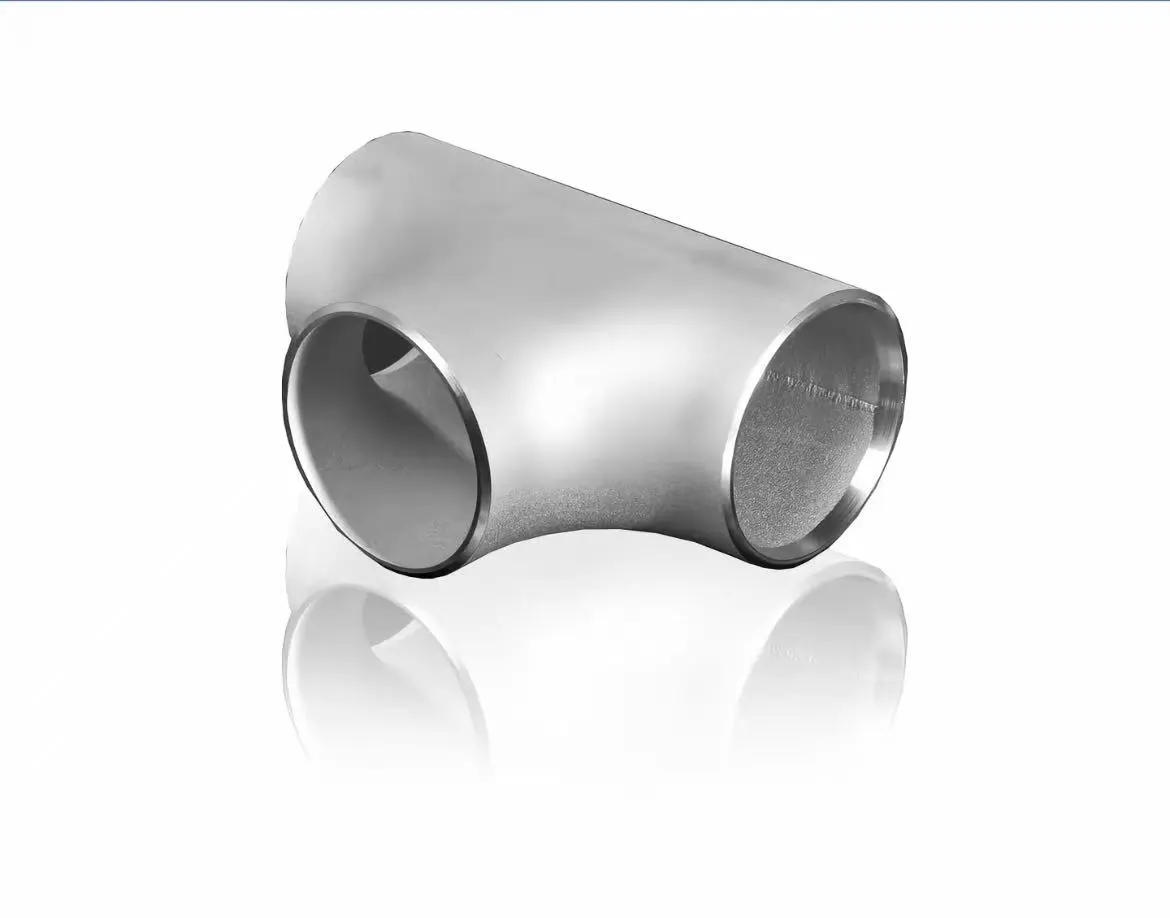
A tee is usually used in a steam line when one line branches into another line or when two flow routes need to be joined to a single run. In an industrial steam network, the fitting consequently forms part of a pressure boundary, not just an accessory for connection. The tee must withstand the internal pressure of the system but also the mechanical pressures imposed on adjoining piping.
"Schedule 40" is a set of wall thicknesses assigned to a nominal pipe size. It does not imply that all tees of schedule 40 have the same wall thickness or that one pressure rating fits all sizes and materials. The actual wall thickness associated with the schedule will likewise vary when the nominal diameter changes. The safe pressure that the component can bear is then determined by material strength and design temperature.
This is why you don’t stop at 'Schedule 40 tee' in a steam line specification. Typically a suitable specification will include the nominal size, the fitting type, the material specification, the dimensional standard, the end connection, and any inspection or paperwork necessary. The engineering team may need to check the design computation against the governing plumbing code under severe operating circumstances.
Pressure and Temperature Considerations for Schedule 40 Tees
Why Schedule 40 Is Not a Fixed Pressure Rating?
One of the most essential considerations with the selection of Schedule 40 tees is that Schedule 40 is not the same as a pressure class. The pressure rating cannot be determined only from the schedule notation.
For example, you may have two tees, both Schedule 40, but with differing nominal pipe diameters and hence different real wall dimensions. Their pressure capabilities may also vary owing to varying material grades and operating temperatures. Material strength typically fluctuates with temperature, and this may limit the allowed stress utilized for design estimates of pressure.
So a statement such as "Schedule 40 tees are rated to 150 psi" is too wide for an engineering standard. The right way is to first determine the design pressure and design temperature, then determine the fitting material and dimensions, then check the permissible circumstances with the appropriate design code and manufacturer documentation.
The same applies to the temperature of the steam. The pipe system might be considerably different depending on whether saturated steam or superheated steam is being used. A fitting chosen for use in a moderate-temperature saturated steam service should not be immediately converted to a higher-temperature superheated steam application without review of the whole design foundation.
Evaluating Temperature in Steam Service
Temperature impacts more than only the short-term strength of the fitting. Long-term exposure to excessive temperature may impact material characteristics, thermal expansion, oxidation, and the behavior of welded joints. The connecting piping also expands and contracts with changing operation circumstances, which might transmit extra loads into the tee.
Therefore, a realistic design assessment should include both the usual operating temperature and the maximum design temperature. Startup, shutdown, steam tracing, pressure changes, and intermittent operation may cause thermal cycles not visible from normal operating temperature.
Carbon steel is the most often used material for traditional industrial steam pipes, but whether it is appropriate depends on the actual temperature, pressure range, and applicable material and piping requirements. If the severity of service warrants, alloy or stainless steel may be considered, but selection should be based on documented material attributes and project demands rather than on a general temperature statement.
Thermal expansion also has to be addressed at the system level. Even if a tee is capable of handling the pressure, movement in the pipe might cause bending strains on the fitting. Thus, proper routing, supports, guides, anchors, and expansion provisions are part of the entire design.
Choosing the Right Material for Steam Service
Carbon Steel Tees for Conventional Industrial Steam
Carbon steel is a common choice for industrial steam piping because it combines mechanical strength, availability, weldability, and relatively predictable fabrication requirements. ASTM A234/A234M covers wrought carbon steel and alloy steel fittings for pressure piping and pressure vessel applications at moderate and elevated temperatures, including fittings manufactured to applicable ASME and MSS standards.
ASTM A234 WPB is one material grade frequently specified for carbon steel butt-welding fittings. However, specifying A234 WPB does not by itself determine whether a tee is suitable for every steam system. The material grade must still be considered together with nominal size, wall thickness, design temperature, design pressure, welding procedure, and the applicable piping code.
Carbon steel can be a practical choice for general plant steam distribution where the service conditions fall within the permitted range of the selected material and design standard. For branch connections in the piping system, Schedule 40 tees may be selected where their pressure rating and wall thickness are appropriate for the operating conditions. The system should also be evaluated for internal corrosion and the quality of the steam and condensate environment. Water chemistry, oxygen ingress, poor drainage, and repeated wetting can influence the long-term condition of carbon steel piping.
Stainless Steel Tees for More Demanding Conditions
Stainless steel can be considered when the steam environment, cleanliness requirements, corrosion conditions, or temperature range make carbon steel less suitable. Grades such as 304 and 316 are used in various industrial applications, but the appropriate grade should be determined from the actual process environment rather than simply assuming that stainless steel is always the better choice.
For example, a process system may require improved resistance to a particular contaminant or cleaning environment. In such a case, the selection should account for the relevant corrosion mechanism, fabrication requirements, and operating conditions. Stainless steel can also introduce different welding considerations, including heat input control and post-weld requirements where applicable.
The higher material cost should therefore be justified by the actual service conditions. Selecting a more expensive alloy without identifying the engineering reason does not necessarily improve the reliability of the steam system.
Alloy Materials for High-Temperature Applications
Some steam systems operate under conditions that require alloy steel or other higher-performance materials. Power generation and specialized process systems may involve elevated temperatures, high pressures, or prolonged thermal cycling that exceed the practical range of conventional carbon steel components.
In these cases, the material decision should be based on the applicable design code, material specification, allowable stresses, creep considerations where relevant, and fabrication requirements. Nickel alloys and high-alloy stainless steels may have applications in severe environments, but they should not be selected merely because a system operates at a high temperature.
A useful engineering approach is to begin with the complete operating envelope and then determine which material standards meet those requirements. This avoids the common mistake of treating material selection as a simple ranking from carbon steel to stainless steel to nickel alloy.
Understanding ASME B16.9 for Schedule 40 Tees
What ASME B16.9 Actually Covers?
ASME B16.9 is an important standard for factory-made wrought butt-welding fittings. According to ASME, the standard addresses overall dimensions, tolerances, ratings, testing, and marking for covered fittings.
This makes ASME B16.9 highly relevant when Schedule 40 tees are specified as butt-welding fittings, but it should not be treated as the only standard involved in selecting a steam-service tee. The fitting's material specification and the piping system's design requirements still have to be established separately.
For example, a carbon steel tee may be specified to ASTM A234/A234M for its material requirements while being dimensioned and manufactured to the applicable requirements of ASME B16.9. ASTM A234/A234M specifically covers wrought carbon steel and alloy steel fittings for moderate and elevated temperature service and includes fittings of seamless and welded construction.
Understanding the relationship between these standards makes a specification much clearer. One standard may define the fitting dimensions and general requirements, while another establishes the material requirements. The piping design code then governs how the component is used within the complete pressure system.
Inspection and Documentation for Steam-Service Tees
Inspection requirements should be established according to the project specification, applicable standards, and the risk level of the steam system. Material verification is an important starting point because the fitting grade needs to match the purchase specification.
Dimensional inspection can then confirm the fitting's nominal size, wall dimensions, branch geometry, end preparation, and other relevant characteristics. Visual examination can identify obvious surface defects, deformation, or damage that could affect installation.
Additional testing or examination may be required depending on the applicable material specification and project requirements. ASTM A234/A234M, for example, specifies testing requirements for covered fittings and provides supplementary requirements where a greater degree of examination is desired.
For critical steam systems, documentation is just as important as the physical fitting. Material test certificates, dimensional inspection records, heat numbers, test reports, and traceability documents can help the purchaser confirm that the supplied components correspond to the approved specification.
This documentation becomes particularly valuable during maintenance or future modification work. When the material grade and manufacturing history can be traced back to the original purchase records, engineers have better information for evaluating replacement components and system alterations.
Installation Factors That Affect Steam-Line Reliability
Even a correctly specified tee can create problems if the surrounding piping system is poorly designed or installed. Butt-welding requires appropriate joint preparation, welding procedures, qualified personnel, and inspection practices. The tee should be aligned with the connected pipe without forcing the piping into position.
Steam systems also require careful attention to drainage and condensate management. Poor drainage can contribute to water accumulation and unstable operating conditions. Steam lines may experience rapid changes during startup, and trapped condensate can create severe transient loads. These conditions can transfer forces to branch connections and other fittings.
Pipe supports are another important consideration. A tee should not be expected to absorb loads that should instead be controlled through proper support and routing. The weight of the pipe, valves, insulation, and accumulated condensate can all contribute to mechanical loading.
Thermal movement should also be considered before installation is completed. Steam piping expands as it heats, and the movement has to be accommodated through suitable routing and support arrangements. If the system does not provide enough flexibility, the resulting loads can be transferred to tees, valves, flanges, and equipment nozzles.
For this reason, selecting the fitting is only one part of achieving reliable steam service. The fitting, pipe, welding, supports, and expansion arrangement should be treated as one connected mechanical system.
Conclusion
Using Schedule 40 tees in industrial steam lines requires more than matching the tee to the nominal pipe size. Schedule 40 identifies a wall-thickness series, not a universal pressure rating, so the actual suitability of a tee must be evaluated using the fitting dimensions, material grade, design pressure, design temperature, and applicable piping requirements.
Carbon steel fittings such as ASTM A234 WPB can be suitable for many conventional steam services when the complete design conditions are within the permitted range. Stainless steel or alloy materials may be appropriate for more demanding environments, but the choice should be supported by the actual process and mechanical requirements.
ASME B16.9 is an important reference for factory-made wrought butt-welding fittings, while material standards such as ASTM A234/A234M address the requirements for wrought carbon steel and alloy steel fittings used at moderate and elevated temperatures.
For purchasing teams, the safest approach is to specify the complete fitting requirement rather than relying on “Schedule 40” alone. Confirming size, material, dimensional standard, operating conditions, inspection requirements, and traceability documentation before production can reduce specification errors and make the supplied Schedule 40 tees easier to verify, install, and maintain in an industrial steam system. For more information on high-quality pipe fittings for industrial applications, please contact us at oudi-04@oudiguandao.com.
FAQ
1. What is the maximum temperature rating for carbon steel? Schedule 40 teas in steam service?
Carbon steel Schedule 40 tees are typically rated for continuous use at temperatures up to 850°F (454°C).
2. Are stainless steel Schedule 40 tees better for corrosive steam environments?
Yes, stainless steel Schedule 40 tees offer superior corrosion resistance and are better suited for corrosive steam environments.
3. What is ASME B16.9, and why is it important for Schedule 40 tees?
ASME B16.9 is a standard that governs the design and manufacture of butt-welding fittings, ensuring quality, safety, and consistency in components like Schedule 40 tees.
4. How often should Schedule 40 tees in steam systems be inspected?
The inspection frequency depends on the operating conditions, but regular inspections as part of a preventive maintenance program are recommended.
References
1. American Society of Mechanical Engineers. (2018). ASME B16.9-2018: Factory-Made Wrought Buttwelding Fittings.
2. Smith, J. R. (2019). Industrial Steam Systems: Design, Operation, and Maintenance. CRC Press.
3. Johnson, M. K., & Stout, R. D. (2017). Piping and Pipeline Engineering: Design, Construction, Maintenance, Integrity, and Repair. CRC Press.
4. National Board of Boiler and Pressure Vessel Inspectors. (2021). National Board Inspection Code, Part 1.
5. American Petroleum Institute. (2020). API Standard 570: Piping Inspection Code: In-service Inspection, Rating, Repair, and Alteration of Piping Systems.
6. Nayyar, M. L. (2016). Piping Handbook. McGraw-Hill Education.

Need help finding the right solution with our experts. Please contact us.
SINCE 1998 Your Reliable Pipeline Manufacturer