Why Power Plants Rely on ASTM A234 WPB Pipe Tees?
Power plants operate with piping systems that have little room for uncertainty. Steam, feedwater, condensate, and other process fluids move through interconnected lines where temperature, pressure, thermal expansion, and mechanical loading must all be considered during design and operation. A failure at a pipe junction can affect more than a single section of piping, particularly when the fitting is installed in a system that supports boiler operation, steam generation, or turbine service. For this reason, the selection of pipe fittings is normally based on material requirements, design conditions, applicable codes, dimensional specifications, and inspection requirements rather than appearance or price alone. The ASTM A234 WPB Tee is commonly selected for carbon steel piping applications where a branch connection is required and the material is suitable for the service conditions. ASTM A234 WPB is a standard for wrought carbon steel and alloy steel fittings for moderate and increased temperature usage. These tees may be used in steam, feedwater, condensate and auxiliary piping systems in power plant applications where the material grade and design circumstances are adequate. So the significance of an ASTM A234 WPB Tee is not only that it is a robust carbon steel fitting. Its usefulness is based on the combination of standardised material qualities, regulated dimensions, existing production needs and conformity with engineering rules used for power pipes. Understanding these qualities helps engineers and buying teams make a more educated selection when choosing tees for demanding industrial conditions.
Why Carbon Steel Tees Remain Practical in Power Plant Piping?
Material Properties That Support Engineering Design
A tee is used to split or combine flow in a pipe system between a main run and a branch connection. The fitting is part of the pressure boundary, and the material qualities should be evaluated with the pipe, welding technique, wall thickness, operating temperature and design pressure.
ASTM A234 WPB is well known in the carbon steel pipe industry because its standard mechanical and chemical standards give established material properties for engineers to employ in design and specification work. The project might choose a recognised material standard and demand the manufacturer or supplier provide supporting documentation. Instead of an unidentified commercial carbon steel grade.
The difference may be helpful, especially in power plant acquisition. It’s not just a matter of a plumbing engineer enquiring if a tee is carbon steel or not. The engineer must know if the suggested material meets the specification of the project and whether its attributes are adequate for the intended service. Material certifications, heat numbers, dimensional inspection records and other quality documentation may be checked as part of the entire purchase and inspection process.
This standardised solution for an ASTM A234 WPB Tee provides a better relationship between the fitting that is chosen for purchase and the specifications specified during pipe design.
Suitability for Elevated-Temperature Service
Operating temperatures in power plant pipework may be significantly greater than those in many typical industrial water systems. Therefore, the materials for steam lines and other hot-fluid systems should have permissible stresses and mechanical characteristics for the design temperature indicated.
One reason WPB fittings are often selected for carbon steel power pipelines is because ASTM A234 has fittings for moderate and increased temperature service. However, the mere existence of the WPB designation does not establish if a tee is acceptable for every high-temperature application. Engineers will still need to check design temperature, design pressure, material permitted stress, wall thickness, joining technique, and appropriate piping code.
This is a key aspect when we are talking about the function of ASTM A234 WPB Tee in a power plant. The fitting should be designed as part of an engineering pipe system, not as a generic high-temperature component. The fitting may be a feasible option for branch connections in many carbon steel systems when the grade of material and the service requirements are adequately matched.
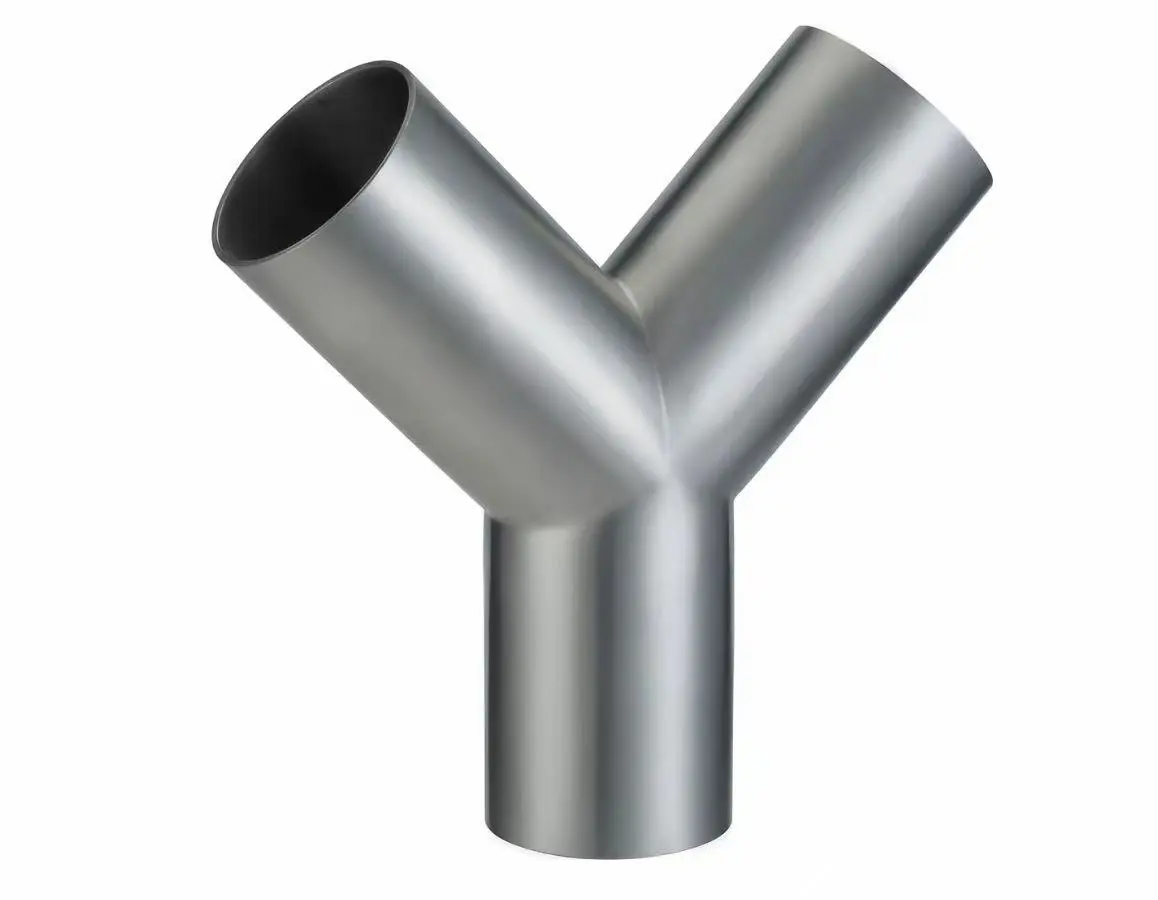
How Tee Geometry Affects Power Piping Performance?
Managing Branch Connections in Complex Piping Networks
Power plants contain extensive piping networks, and those networks rarely consist of simple straight runs. A main line may need to supply another piece of equipment, connect to an auxiliary circuit, or divide flow between different sections of the plant. An ASTM A234 WPB Tee provides a defined branch connection while maintaining a continuous connection with the main piping run.
The geometry of the fitting matters because a branch connection introduces changes in flow direction and creates a local area where stresses must be considered. A properly selected tee provides a standardized configuration that can be incorporated into the piping layout and connected to compatible pipe through the specified welding process.
In practical applications, tees can therefore simplify the design of branch connections compared with fabricating an improvised branch from plain pipe. The actual choice between a standard tee and another branch connection arrangement depends on factors such as pipe size, pressure class or wall thickness, design code, available space, stress analysis, and project specifications.
Dimensional Accuracy Matters at the Installation Stage
A fitting may meet its material requirements and still create problems if its dimensions do not match the piping system. Branch outlet size, overall dimensions, wall thickness, end preparation, and alignment all affect installation.
For this reason, dimensional inspection is an important part of quality control for power plant fittings. Purchasing teams should confirm that the tee corresponds to the required nominal size and wall thickness or schedule, as well as the applicable dimensional standard. Consistent dimensions can reduce installation difficulties and help fabricators maintain the intended piping geometry.
This becomes especially relevant in large projects where hundreds or thousands of fittings may be installed. A small dimensional inconsistency repeated across many components can create additional fitting, welding, or alignment work in the field. Proper dimensional control at the manufacturing stage can therefore contribute to smoother installation and more predictable project execution.
The Relationship Between ASTM A234 and Power Piping Codes
Material Specification and Piping Code Serve Different Purposes
One of the most important points for readers is that ASTM A234 and ASME B31.1 are not interchangeable standards. ASTM A234 establishes requirements for certain wrought steel pipe fittings, including material and manufacturing-related requirements. ASME B31.1, meanwhile, addresses the engineering requirements for power piping systems.
In a power plant project, these standards may work together rather than replace one another. The engineering specification can identify ASTM A234 WPB as the required fitting material while the piping design is developed according to the applicable requirements of ASME B31.1 or another relevant code.
This distinction is useful when reviewing supplier documentation. A manufacturer should not simply state that an ASTM A234 WPB Tee is “ASME B31.1 certified” without explaining what that statement means within the project context. The purchaser should instead verify the applicable material specification, dimensional standard, design requirements, inspection requirements, and certification or documentation requested by the project.
A clearer understanding of the standards makes technical purchasing more effective and reduces the risk of selecting a fitting based on an overly broad certification claim.
Inspection Requirements Should Match the Application
Quality inspection for power plant fittings can involve several stages. Chemical composition and mechanical properties may be verified through material testing and mill documentation, while dimensional inspection confirms that the finished fitting meets the specified geometry.
Depending on the project specification and application, additional inspection may also be required. Non-destructive examination can include methods such as magnetic particle testing or ultrasonic testing when specified. The appropriate inspection method should be determined by the applicable standard, project requirements, material, manufacturing route, and service conditions rather than automatically applied to every tee.
This approach is more useful than simply describing every ASTM A234 WPB Tee as having undergone “strict testing.” In professional procurement, the important question is whether the inspection scope matches the actual project requirements and whether the supplier can provide the required records.
Where ASTM A234 WPB Tees Fit Within a Power Plant?
Steam and Boiler-Related Piping
Steam generation systems contain piping exposed to demanding combinations of temperature and pressure. Depending on the system design and material selection, carbon steel fittings can be used in appropriate steam-related services where the allowable stress and other design criteria are satisfied.
An ASTM A234 WPB Tee may be used to create branch connections in such piping arrangements. The suitability of the fitting depends on the specific service rather than the name of the plant alone. A utility boiler, combined-cycle plant, industrial cogeneration facility, and other thermal systems can have very different operating conditions, so each application requires its own material and design review.
The fitting must also be considered together with the pipe and weld. A tee made to the correct material specification cannot compensate for an unsuitable pipe wall thickness, inadequate welding procedure, incorrect heat treatment where required, or poor installation practice. Reliable piping performance comes from the complete system rather than one component in isolation.
Feedwater, Condensate, and Auxiliary Systems
Not every important power plant piping line carries main steam. Feedwater, condensate, drainage, cooling-related services, and auxiliary systems also contain numerous branch connections. These systems may operate under different temperatures and pressures, making material selection a service-specific decision.
The relatively established use of carbon steel fittings allows ASTM A234 WPB Tee to remain a practical option in applications where its material characteristics are compatible with the process conditions. Engineers can specify the fitting according to the required size, thickness, material, end preparation, and inspection requirements while maintaining consistency with the wider piping specification.
For plant operators, consistency also has practical value during maintenance. When replacement fittings follow recognized material and dimensional specifications, maintenance teams have a clearer basis for checking whether a replacement component matches the original system requirements.
What Buyers Should Verify Before Ordering?
Confirm Size, Thickness, and End Configuration
For procurement teams, selecting an ASTM A234 WPB Tee should begin with the actual piping specification rather than the product name. The nominal pipe size, branch size, wall thickness or schedule, end configuration, dimensional standard, and material grade should all be confirmed before an order is released.
This is particularly important because a tee that appears similar in a supplier catalog may have a different wall thickness, outlet size, or dimensional configuration from the one required by the project. The purchase specification should therefore correspond directly with the piping drawings and bill of materials.
The connection between the tee and the adjoining pipe also deserves attention. For butt-weld applications, the end preparation must be compatible with the welding procedure and the pipe being joined. Correct preparation can help avoid unnecessary modification at the installation site.
Review Material and Traceability Documents
Documentation becomes increasingly important when fittings are installed in critical plant systems. Buyers may need material test certificates, heat identification, dimensional inspection records, and other quality documents specified by the project.
Traceability allows the supplied fitting to be connected with its material heat and manufacturing records. This can be valuable during receiving inspection, installation, commissioning, and later maintenance because the plant can retain a record of what material was installed in a particular piping location.
The level of documentation should match the project's quality plan and contractual requirements. Rather than assuming that every power plant requires exactly the same inspection package, purchasing teams should establish the documentation requirements before production begins.
Evaluate the Manufacturer, Not Only the Product Grade
A recognized material specification is important, but it does not eliminate the need to evaluate the supplier. Manufacturing capability, dimensional control, heat treatment practices where applicable, inspection equipment, quality management procedures, and experience with international piping standards can all affect the consistency of supplied fittings.
For project procurement, it is also useful to confirm whether the manufacturer can provide clear product marking and traceability, respond to technical questions, and supply inspection documentation within the required project schedule. These practical factors can become just as important as the material designation when a project has strict delivery and inspection milestones.
Conclusion
The ASTM A234 WPB Tee remains a practical choice for many carbon steel branch connections in power plant piping because its material specification provides a recognized basis for engineering, manufacturing, and procurement. Its application can extend across steam-related, feedwater, condensate, and auxiliary piping systems when the material is appropriate for the actual design conditions.
Its suitability, however, should not be judged by the WPB designation alone. Temperature, pressure, pipe thickness, branch geometry, welding requirements, applicable piping codes, inspection scope, and material documentation all contribute to the final selection. ASTM A234 defines the fitting material requirements, while standards such as ASME B31.1 provide the broader framework for power piping design and construction.
For power plant owners, engineers, and purchasing teams, the most reliable approach is to evaluate the complete specification rather than relying on general claims about strength or durability. When an ASTM A234 WPB Tee is correctly matched to the piping system and supported by appropriate quality control and traceability, it can provide a standardized and practical solution for branch connections in demanding power generation environments.
For technical support, material specifications, or quotation requests for ASTM A234 WPB Tees, please contact our team at oudi-04@oudiguandao.com about ASTM A234 WPB Tees and other high-quality pipe fittings.
FAQ
1. What is the maximum temperature rating for ASTM A234 WPB Tees?
ASTM A234 WPB Tees can withstand temperatures up to 1000°F (538°C).
2. Are ASTM A234 WPB Tees suitable for high-pressure applications?
Yes, these fittings can handle pressures up to 2500 psi (17.2 MPa) or higher, depending on the specific grade and wall thickness.
3. What safety standards do ASTM A234 WPB Tees comply with?
ASTM A234 WPB Tees comply with the ASME B31.1 Power Piping Code and other relevant industry standards.
4. How do ASTM A234 WPB Tees contribute to power plant efficiency?
These fittings offer excellent heat resistance, pressure handling capabilities, and corrosion resistance, which contribute to the overall reliability and efficiency of power plant operations.
References
1. ASTM International. (2019). ASTM A234/A234M-19 Standard Specification for Piping Fittings of Wrought Carbon Steel and Alloy Steel for Moderate and High Temperature Service.
2. American Society of Mechanical Engineers. (2018). ASME B31.1-2018 Power Piping.
3. Smith, J. R., & Johnson, A. L. (2020). Materials Selection for High-Temperature Power Plant Applications. Journal of Power Engineering, 45(3), 178-195.
4. Wilson, E. M., & Davis, R. K. (2021). Corrosion Resistance of Carbon Steel Fittings in Steam Power Plants. Corrosion Science and Technology, 56(2), 210-225.
5. Thompson, L. G., & Roberts, S. P. (2019). Quality Assurance Practices in Power Plant Piping Systems. International Journal of Quality and Reliability Management, 36(4), 567-582.
6. Brown, C. H., & Miller, D. W. (2022). Long-Term Performance of ASTM A234 WPB Fittings in Critical Power Plant Applications. Power Plant Engineering, 78(1), 45-60.

Need help finding the right solution with our experts. Please contact us.

SINCE 1998 Your Reliable Pipeline Manufacturer



