Why Forged Pipe Tees Last Longer Than Cast Pipe Tees?
A pipe tee may look like a relatively simple fitting, but its manufacturing method can have a noticeable effect on how it performs in service. In industrial piping, tees are exposed to internal pressure, changes in flow direction, vibration, thermal cycling, and mechanical loads at the branch connection. For this reason, the difference between a forged tee and a cast tee is not limited to how the component is produced. It can also influence material consistency, resistance to repeated loading, and the level of quality control required before the fitting enters service. Among the available manufacturing methods, forged pipe tees are often selected for piping systems where mechanical strength and dependable performance are important. In forging, the shape is formed by controlled plastic deformation of the metal, while in casting, the fitting is formed by pouring molten metal into a mould and letting it cool. Each approach has its role in industrial manufacturing, but the varied production methods produce diverse features in the completed component. By understanding these distinctions, engineers, contractors and buying teams will be able to make a more educated selection on the pipe tees they choose. Instead of presuming that one manufacturing process is applicable to all applications, it is more effective to consider how material structure, defect control, fatigue loading, manufacturing consistency, and overall service demands influence the decision.
Why the Manufacturing Process Matters for Pipe Tees?
Forging Creates a More Controlled Material Structure
Forging is the shaping of metal by applying localised compressive forces. It involves the controlled heating and mechanical deformation of a metal billet or preform. The procedure does not pour molten metal into a mould to solidify, but rather works an already solid material into the needed form. Depending on the forging process, this deformation might modify the material structure and result in a more favourable grain flow in mechanically loaded places.
This property is especially applicable to a pipe tee, when the piping system geometry is changed by the branch connection. The fitting is unevenly subjected to the internal pressure and external stresses. Local strains may develop at the junction of the run and the branch, particularly when the pipe system is exposed to vibration, thermal expansion, or cyclic pressure variations.
A well-controlled forging process can lead to a thick and fairly homogeneous material structure, offering forged pipe tees good mechanical properties for demanding applications. The precise outcome is still a function of material grade, forging temperature, reduction ratio, heat treatment, and subsequent machining, and the production process should always be evaluated in conjunction with the material specification.
Casting and Forging Approach Material Formation Differently
The casting method is characterised by a high degree of flexibility since it consists of pouring molten metal into a mould, which may be manufactured so as to look very much like the desired component. This makes casting suitable for different materials, sizes and forms. However, solidification is a crucial element of the process, and the final microstructure is dependent upon variables such as the pace of cooling, the composition of the alloy, the design of the mould, and management of the casting process.
Forging is a different way. The material is plastically distorted under controlled circumstances and stays in the solid state. This may assist in decreasing some of the internal discontinuities associated with poorly regulated solidification and can yield a material structure ideally suited to components subjected to mechanical stress.
Neither procedure assures a flaw-free product automatically. Manufacturing controls and inspection are still important. The practical benefit of forging is that its deformation process may produce a desirable mix of material continuity, grain refinement, and mechanical qualities in forged pipe tees, provided the fitting is appropriately designed and fabricated.
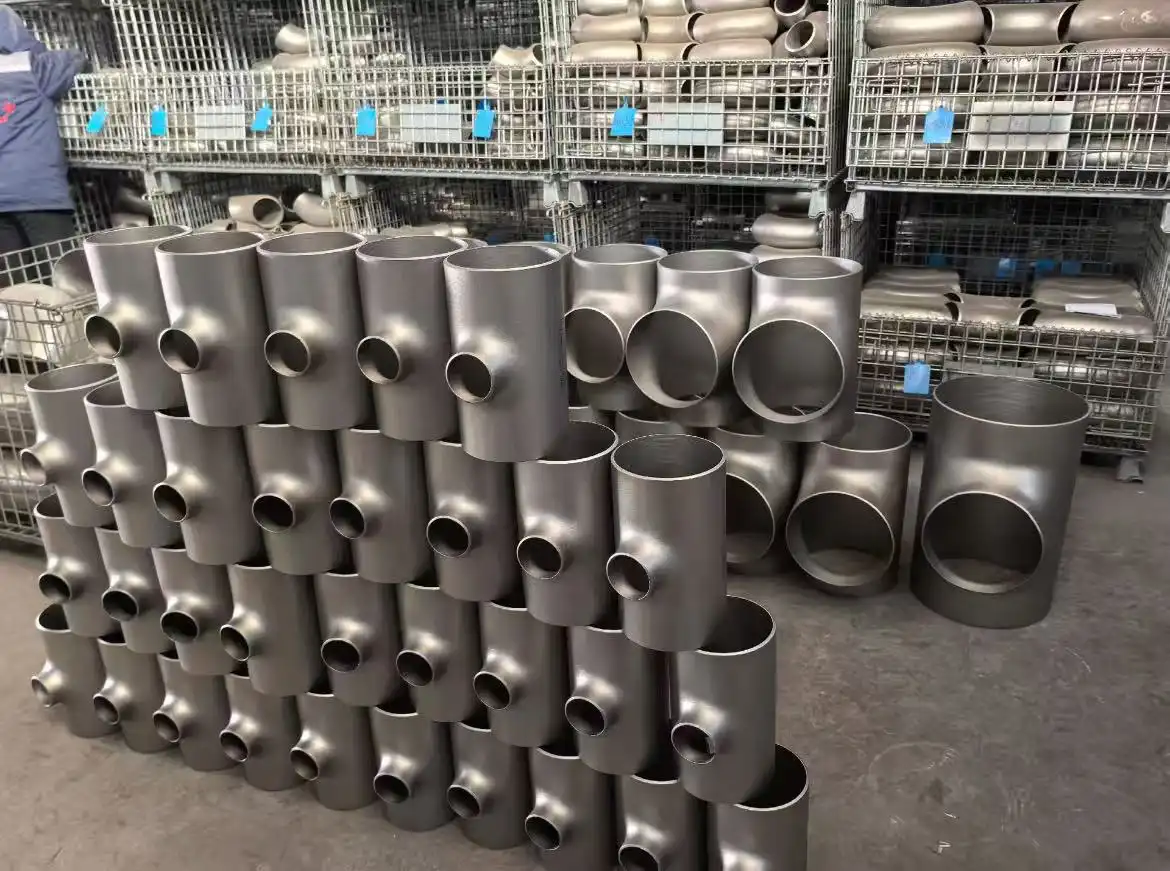
How Forged Construction Supports Strength and Fatigue Performance?
Strength Matters at the Branch Connection
A pipe tee does more than just join three pieces of piping. Its geometry deflects the forces within the system and their spreading. The branch region turns into a special place to think mechanically.
The strength of a forged tee relies on a variety of criteria such as material grade, wall thickness, heat treatment, dimensions, and quality of the forging process. The fitting, when appropriately managed for these criteria, may have high tensile and yield strength and excellent structural consistency.
That’s not to say every forged tee is somehow stronger than every cast tee. The real material specification and design requirements should be used to check the engineering performance. However, forging is extensively utilised when producers require some mix of mechanical strength and regulated material qualities.
This difference is particularly applicable in industrial pipes when the system is under mechanical demand. A fitting may be simultaneously subjected to internal pressure and bending pressures from attached piping or equipment. Properly made forged pipe tees may offer the mechanical basis for such service conditions.
Repeated Loading Can Affect Service Life
It is unusual that piping systems work under one ideal, consistent state over their entire service life. Connected equipment may turn pumps on and off, adjust pressure, change temperatures, and generate vibration. This cyclic loading of the pipe and its fittings is caused by these frequent variations.
This is a fatigue failure. It occurs over numerous stress cycles, not just one overload. When the component is subjected to a significant number of cycles, local stress concentrations or small defects may become critical. This is one reason why quality of material and consistency of manufacture are important when choosing fittings for systems whose operating conditions vary often.
The controlled deformation of forging may lead to a favourable material structure for the elements subjected to repetitive mechanical loads. With appropriate design, heat treatment, machining and inspection, this may help provide dependable fatigue performance.
The choice of the fitting, including forged pipe tees, should still be made according to the actual operating circumstances. However, fatigue is not eliminated by forging, and no manufacturing process can compensate for a bad pipe layout or high operating loads.
How Can Forging Reduce Certain Internal Defect Concerns?
Porosity and Internal Discontinuities
One of the important differences between casting and forging is the way each process handles the material before the final component is formed. During casting, the metal changes from a liquid to a solid. If the process is not properly controlled, phenomena such as gas entrapment or shrinkage during solidification can contribute to internal discontinuities.
Forging begins with solid metal and applies mechanical deformation. Under appropriate conditions, the process can close or reduce certain internal voids and improve material continuity. This is one reason forged components are frequently considered for applications where structural integrity is important.
However, it would be inaccurate to claim that forging completely eliminates internal defects. Forged products still require suitable process control and inspection. The quality of the starting billet, forging reduction, temperature control, heat treatment, and subsequent machining all influence the finished fitting.
For buyers, this means that the word “forged” should not be treated as a substitute for quality documentation. Material certificates, manufacturing specifications, dimensional inspection, and applicable non-destructive testing can all provide useful evidence of product quality.
Shrinkage-Related Defects Are Managed Differently
Shrinkage is primarily associated with the solidification stage of casting. As molten metal cools and changes from liquid to solid, its volume can change. Proper riser design, feeding systems, mold design, and process control are used to manage this behavior during casting.
Forging does not involve the same liquid-to-solid solidification stage during the formation of the fitting. Instead, a solid billet or preform is heated to an appropriate forging temperature and mechanically shaped.
This difference removes a particular class of solidification-related concerns from the forming stage. Nevertheless, other manufacturing issues can still arise if the forging process is poorly controlled. Internal discontinuities in the starting material, insufficient deformation, inappropriate heat treatment, or machining problems may still affect final quality.
The practical advantage is therefore not that forged pipe tees are completely free from defects, but that the manufacturing route avoids many of the solidification mechanisms associated with casting.
Grain Flow Can Support Load-Bearing Performance
Grain flow is another reason forging is often associated with mechanically demanding components. During deformation, the material's microstructure can develop a flow pattern influenced by the shape and direction of the forging operation.
For a tee, this consideration is particularly important because the component contains a branch and a main run rather than a simple cylindrical geometry. The actual grain flow depends on the forging method and the amount of deformation, so it should not be described as perfectly following every contour of the finished tee.
When the process is properly engineered, however, controlled material flow can contribute to favorable mechanical properties and structural consistency. This is one of the technical reasons forged fittings are often used in applications where strength and resistance to repeated loading are important.
Why Forged Pipe Tees Can Be Valuable in Demanding Piping Systems?
Pressure Fluctuation and Mechanical Loading
Industrial piping systems can experience more than steady internal pressure. Pumps, compressors, valves, and other equipment can create pressure fluctuations, while thermal expansion and contraction can introduce additional stresses.
The tee is particularly important because it creates a branch in the flow path. Forces can be distributed differently around this area compared with a straight section of pipe. If the piping system also experiences vibration or external loading, the fitting must be capable of handling the combined mechanical conditions.
This is where the structural characteristics of forged pipe tees can become valuable. A properly manufactured forged fitting can offer a combination of strength, material consistency, and resistance to cyclic loading that suits demanding service conditions.
The final selection should still consider pressure class, material grade, dimensions, wall thickness, temperature, fluid characteristics, connection type, and applicable design requirements. The manufacturing method is one part of the engineering decision rather than the only factor.
Thermal Cycling and Operating Changes
Temperature changes can also influence piping components. Heating and cooling cause materials to expand and contract, and repeated thermal cycling can contribute to fatigue over time. The effect becomes more important when the piping connects equipment operating at significantly different temperatures or when a system is frequently started and stopped.
A forged tee with appropriate material properties and heat treatment can be well suited to applications involving repeated thermal and mechanical changes. However, the fitting must be compatible with the rest of the piping system. Differences in material properties, installation conditions, supports, and expansion allowances can all influence actual service performance.
For this reason, a long service life cannot be attributed to the tee alone. Good system design and installation are equally important.
Looking Beyond the Purchase Price
Why Initial Price Does Not Tell the Whole Story
Forged fittings can have a higher purchase price than some cast alternatives because forging requires specialized equipment, dies, controlled deformation, heating, and subsequent processing. The final cost also depends on material grade, size, production volume, machining requirements, heat treatment, and inspection.
A lower purchase price does not necessarily mean a lower total cost. In an industrial piping system, replacement work can involve more than the price of the fitting itself. Access to the installation site, labor, isolation of the pipeline, draining or depressurizing the system, and scheduled downtime can all contribute to replacement expenses.
This is why the purchasing decision should consider the expected operating conditions and maintenance requirements rather than comparing unit prices alone.
Service Life and Maintenance Planning
A fitting that performs reliably over a longer operating period can simplify maintenance planning. If a component is less susceptible to premature failure under its intended service conditions, operators may have more flexibility when scheduling inspections and planned maintenance.
The value of forged pipe tees therefore becomes more apparent when they are used in systems where access is difficult, downtime is expensive, or operating conditions are demanding. In these situations, the cost of the fitting should be considered alongside installation requirements and the consequences of an unplanned replacement.
This does not mean a forged tee will always have a lower life-cycle cost. If the application has modest loads and less demanding service conditions, a properly manufactured cast tee may satisfy the engineering requirements. The appropriate choice depends on the balance between performance requirements, material selection, manufacturing quality, and overall system economics.
Conclusion
Forged pipe tees can offer important advantages when a piping system requires a combination of mechanical strength, structural consistency, and resistance to repeated loading. Their manufacturing process differs fundamentally from casting because the metal is shaped through controlled plastic deformation rather than formed through liquid-metal solidification. Under appropriate process conditions, forging can improve material continuity, refine the structure, and reduce certain internal discontinuity concerns associated with casting.
These characteristics can make forged tees particularly useful in industrial systems exposed to pressure fluctuations, vibration, thermal cycling, or other demanding operating conditions. Their higher initial cost may also be justified when maintenance access is difficult or unexpected downtime can create high operational costs.
At the same time, forging should not be treated as an automatic guarantee of longer service life. Material grade, design, heat treatment, manufacturing control, inspection, installation, and actual operating conditions all affect the performance of a pipe tee. A properly selected and manufactured forged fitting can therefore provide a strong option for demanding piping applications, while the final decision should always be based on the specific requirements of the system rather than manufacturing method alone. For more information on high-quality forged pipe fittings, contact Cangzhou Oudi Pipe Manufacturing Co., ltd at oudi-04@oudiguandao.com.
FAQ
1. What is the main difference between forged and cast pipe tees?
Forged pipe tees are made through a process of applying heat and pressure, resulting in a stronger, more uniform structure, while cast pipe tees are made by pouring molten metal into a mold.
2. Why do forged pipe tees have better fatigue resistance?
Forged pipe tees have better fatigue resistance due to their refined grain structure and absence of internal defects, which reduces the likelihood of crack initiation and propagation under repeated stress cycles.
3. Are forged pipe tees more expensive than cast pipe tees?
Initially, yes. Forged pipe tees typically have a higher upfront cost due to the more complex manufacturing process. However, they often provide cost savings over their lifetime due to increased durability and reduced maintenance needs.
4. In which industries are forged pipe tees particularly beneficial?
Forged pipe tees are especially beneficial in industries with high-stress applications, such as oil and gas, chemical processing, and power generation, where reliability and safety are crucial.
References
1. Smith, J. D. (2018). "Comparative Analysis of Forged and Cast Pipe Fittings in Industrial Applications." Journal of Materials Engineering and Performance, 27(5), 2345-2358.
2. Johnson, R. A., & Williams, S. T. (2019). "Longevity and Cost-Effectiveness of Forged vs. Cast Pipe Tees in Oil and Gas Industries." International Journal of Pressure Vessels and Piping. 172, 220-231.
3. Brown, L. M., et al. (2020). "Microstructural Evolution and Mechanical Properties of Forged Pipe Tees." Materials Science and Engineering: A, 775, 138924.
4. Thompson, K. L. (2017). "Fatigue Resistance of Forged and Cast Pipe Fittings: A Comparative Study." Journal of Failure Analysis and Prevention, 17(4), 758-767.
5. Davis, E. R., & Miller, P. J. (2021). "Economic Analysis of Forged vs. Cast Pipe Tees in High-Pressure Systems." Journal of Pipeline Engineering, 20(2), 89-101.
6. Zhang, Y., et al. (2019). "Defect Elimination in Forged Pipe Fittings: A Metallurgical Perspective." Metallurgical and Materials Transactions A, 50(8), 3765-3778.

Need help finding the right solution with our experts. Please contact us.

SINCE 1998 Your Reliable Pipeline Manufacturer



