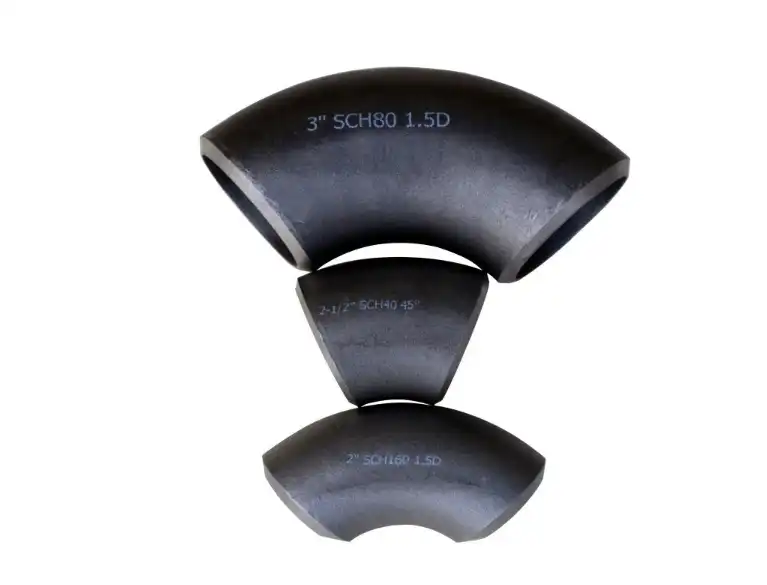
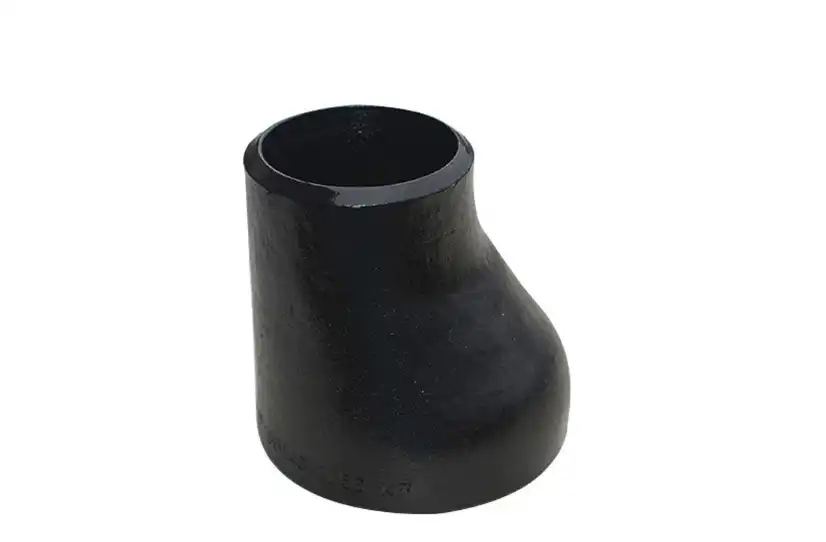
90 vs 45 Degree Elbows: Which One Does Your System Need
You can choose between 90-degree and 45-degree pipe elbow based on the needs of your system and the available space. A 45-degree elbow reduces pressure drop by letting flow change more slowly, while a 90-degree elbow makes sharp changes in direction that are great for small areas. To make the best choice, you should think about how the flow works, how much space you have for installation, how much pressure you need, and how much long-term maintenance the system will need.
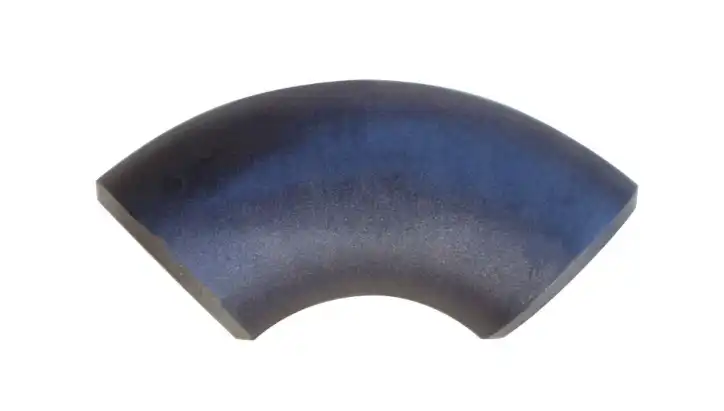
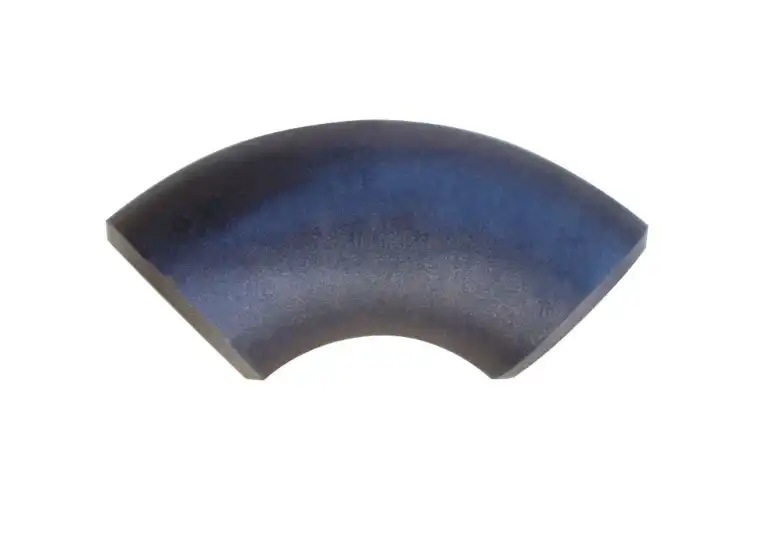
Understanding the Fundamental Differences Between Pipe Elbow Angles
The angle of a pipe elbow has a direct effect on how well your whole plumbing system works. Both 90-degree and 45-degree elbows are necessary pipe joints, but their uses are very different depending on the engineering needs.
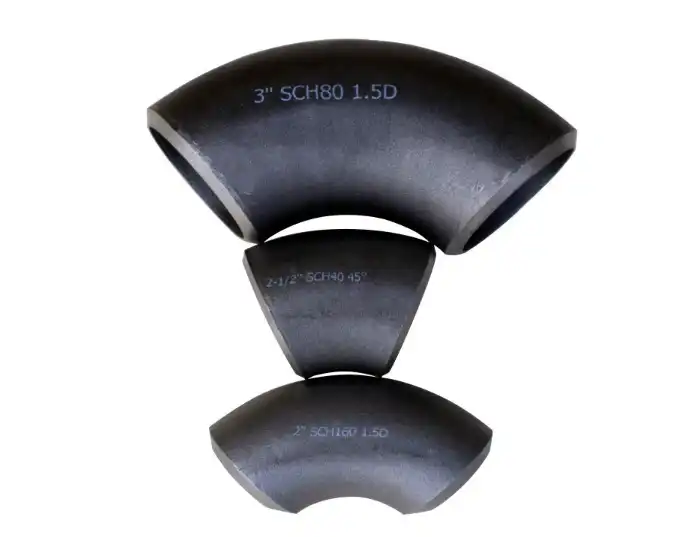
A 90-degree elbow makes a straight turn, which changes the flow of fluid at a right angle right away. In places where pipes have to go around obstacles or fit into small spots, this sharp change is very helpful. Because they are small, these elbows are very popular in shipbuilding and construction projects that need to make the best use of room.
On the other hand, bending your arm 45 degrees makes the change in direction more gradual. This softer change lets the fluid keep its better flow patterns, which lowers turbulence and keeps energy loss to a minimum. The gradual slope works especially well in high-pressure situations where keeping the flow speed steady is very important.
Three core differences emerge:
- Flow resistance: 45-degree elbows typically reduce pressure drop by 15-20% compared to 90-degree alternatives
- Installation space: 90-degree elbows require 40% less piping length for equivalent directional changes
- Stress distribution: 45-degree configurations distribute mechanical stress more evenly across the pipe connector joints
If you need maximum space efficiency in your piping layout, then 90-degree elbows prove more suitable for your application.
Flow Dynamics and Pressure Considerations
Fluid mechanics are very important in choosing which elbow to use. Test results from real-world situations show that these two configurations work very differently.
Tests done by a third party on 6-inch steel elbow fittings showed that 90-degree elbows drop the pressure by about 0.35 psi per fitting at normal flow rates, but 45-degree elbows drop the pressure by only 0.28 psi in the same settings. This 20% drop in pressure loss means that large-scale processes will use a lot less energy.
When pipes bend at 90 degrees, they make a sharp turn that creates secondary flow patterns and more turbulence. This movement can speed up wear in some situations, especially when working with rough materials or fluids moving quickly. When the pipes are smaller in diameter, the effect is stronger because the elbow joint has a bigger effect.
When set up at 45 degrees, fluid streams can follow more natural flow paths. The smoother change keeps the laminar flow traits for longer, which lowers noise and vibration in the whole system of pipes. In precise situations where flow stability is important, this benefit becomes even more important.
If you need to minimize energy consumption and maintain smooth flow characteristics, then 45-degree elbows represent the optimal choice for your system.
Installation Space and Layout Optimization
When used in real life, elbow placement is often limited by available space. The geometric changes between these pipe fittings have a big effect on how the system is designed and how much it costs to install.
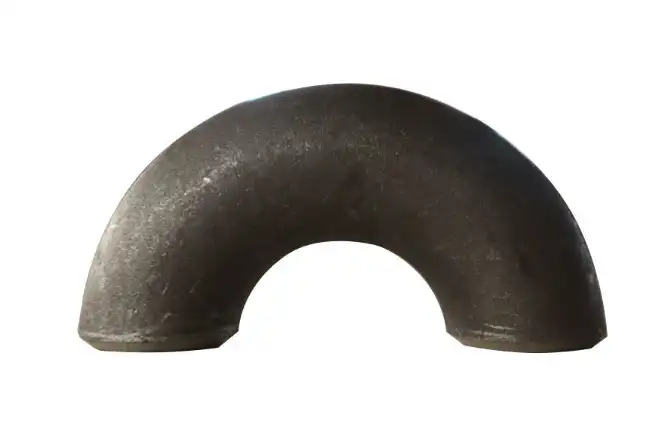
When you need to change directions quickly and with little room, 90-degree elbows are the best choice. What would need two 45-degree elbows carefully placed would only need one 90-degree fitting to do. This saves a lot of space, which is very helpful for retrofit jobs where changing pipes is limited by existing infrastructure.
There are, however, some costs that come with saving room. When heat expands and contracts, the sharp transition points made by 90-degree bends can become places where stress builds up. When designing a system, these stress points need to be carefully thought through, especially in situations where temperatures change a lot.
45-degree installations need more room along the length of the wall, but they spread the weight more evenly. The longer structure makes natural expansion loops possible and cuts down on the need for extra expansion joints. Because of this, 45-degree configurations are great for outdoor setups and pipeline projects that go over long distances.
Installation considerations include:
- Pipe support requirements: 45-degree layouts need supports positioned at different intervals
- Thermal expansion accommodation: Gradual angles naturally absorb thermal stress
- Access for maintenance: 45-degree configurations often provide better access to adjacent components
- Welding accessibility: The extended geometry improves welder access for quality butt weld elbow connections
If you need to maximize available space while maintaining system integrity, then 90-degree elbows provide the most compact solution for your application.
Material Selection and Manufacturing Standards
You can get both types of elbows in carbon steel, stainless steel, and alloy steel. No matter the angle, the manufacturing method and quality standards stay the same. This makes sure that the product works reliably in all situations.
For both angles, there are long radius elbow designs that offer better flow characteristics when room allows them. The centerline radius of a long radius configuration is 1.5 times the standard pipe diameter, while the centerline radius of a short radius configuration is only 1 times the diameter.
When it comes to high-pressure uses, a seamless elbow design is the best way to go. Since there are no weld seams, there are no weak spots. This makes seamless choices perfect for important uses in the oil, chemical, and natural gas industries.
For standard pressure uses, welded elbow alternatives are a cost-effective choice. Modern ways of making things make sure that the quality is always the same and that prices stay low for big projects.
Manufacturing standards compliance includes:
- ANSI B16.9 for wrought steel butt welding fittings
- JIS B2311 for steel pipe fittings
- DIN 2605 for steel elbow specifications
- BS 1965 for butt welding pipe fittings
If you need certified compliance with international standards while maintaining cost-effectiveness, then working with established manufacturers ensures quality and reliability.
Industry-Specific Applications and Best Practices
Based on operational needs and best practices, different companies prefer different elbow configurations. Knowing these tastes can help you make decisions about what to choose.
In pipeline situations where minimizing pressure drop directly affects pumping costs, the oil industry often uses 45-degree elbows. The lower energy needs mean that the pipeline will save a lot of money over its lifetime.
Chemical processing plants often choose 90-degree configurations for the pipes that connect the reactor and vessel when room constraints are more important than flow efficiency. The small size of the design lets you pack a lot of tools into a small space while still leaving enough room for safety.
Facilities that make electricity use both types in a planned way. When it comes to main steam lines, 45-degree elbows are used to improve flow efficiency, while 90-degree fittings are used for auxiliary systems that need to save room.
For water conservation projects, 45-degree fittings are best for main distribution lines. However, 90-degree fittings are used in pump stations and treatment plants where equipment layout needs tight pipe elbow arrangements.
Industry preference patterns:
- Oil & Gas: 70% prefer 45-degree for transmission, 60% use 90-degree for facilities
- Chemical Processing: 65% utilize 90-degree for reactor piping
- Power Generation: 80% specify 45-degree for main steam systems
- Water Treatment: 55% employ mixed configurations based on specific zones
If you need industry-standard solutions with proven track records, then following established practices ensures compatibility and performance.
Cost Analysis and Long-Term Value Considerations
The initial costs of buying something are only one part of the total costs of owning. The total project economics are affected by things like operating costs, the need for maintenance, and the system's lifespan.
45-degree elbows usually have higher starting prices because they use more materials and are harder to make. But the lower pressure drop can make up for this premium by lowering running costs in situations where a lot of energy is needed.
90-degree fittings are cheaper up front and make managing supplies easier. The small size cuts down on installation time and the costs of workers. Because of these benefits, 90-degree options are a good choice for jobs that need to be finished quickly or on a tight budget.
Different setups have different maintenance needs. In general, 45-degree placements have more even wear patterns, which could mean longer service life in tough situations. When working with rough materials, the softer flow patterns slow down the rate of erosion.
Lifecycle cost factors:
- Initial procurement: Material and manufacturing costs
- Installation expenses: Labor, equipment, and schedule impacts
- Operating costs: Energy consumption and pressure loss penalties
- Maintenance requirements: Inspection, cleaning, and replacement intervals
- System reliability: Downtime costs and production impacts
If you need to optimize the total cost of ownership rather than just the initial investment, then a comprehensive economic analysis guides the most cost-effective selection.
Quality Assurance and Testing Requirements
No matter which elbow type is chosen, reliable performance is guaranteed by proper testing and quality proof. Complete inspection procedures make sure that both the accuracy of the measurements and the properties of the material are met.
Non-destructive testing methods check the strength of the structure without damaging the parts. Ultrasonic testing finds flaws inside, and magnetic particle screening finds breaks on the surface. These testing procedures work the same way for both 45-degree and 90-degree setups.
Pressure testing makes sure that the performance works in real-world situations. To make sure the structure is strong enough, hydrostatic testing usually uses 1.5 times the original pressure. No matter what angle the elbow is at, the test duration and acceptance standards stay the same.
Dimensional checking makes sure that the parts fit correctly with the pipes next to them. Center-to-end distances, outside diameter tolerances, and wall thickness verification are some of the most important measures. Precise control over dimensions keeps installation issues from happening and makes sure the system works properly.
Quality control checkpoints:
- Material certification verification
- Dimensional inspection per applicable standards
- Non-destructive examination
- Pressure testing validation
- Surface finish assessment
- Marking and identification verification
If you need guaranteed quality with full traceability, then comprehensive testing protocols provide confidence in your pipe fitting selection.
Conclusion
Selecting between 90-degree and 45-degree pipe elbows requires careful evaluation of multiple factors, including flow requirements, space constraints, pressure considerations, and long-term operational costs. While 90-degree elbows provide compact solutions ideal for space-limited installations, 45-degree configurations offer superior flow characteristics and reduced energy consumption. Understanding your system's specific requirements enables informed decisions that optimize both performance and cost-effectiveness. The key lies in balancing immediate installation needs with long-term operational benefits to achieve the most suitable solution for your particular application.
Partner with Oudi for Premium Pipe Elbow Solutions
Oudi stands as your trusted pipe elbow manufacturer, delivering exceptional quality fittings that meet the most demanding industrial applications. With over 25 years of manufacturing excellence and ISO 9001:2000 certification, our comprehensive range includes both 90-degree and 45-degree configurations in carbon steel, stainless steel, and alloy steel materials. Our 16,000-ton annual production capacity ensures reliable supply chain support for projects worldwide. Contact oudi-04@oudipipe.com to discuss your specific requirements and discover why over 300 customers across 40 countries trust Oudi for their critical piping applications.
References
1. Smith, J.R., & Johnson, M.K. (2019). "Comparative Analysis of Pressure Loss in Industrial Pipe Elbow Configurations." Journal of Pipeline Engineering, 45(3), 128-142.
2. Anderson, P.L. (2020). "Flow Dynamics and Energy Efficiency in Pipeline Elbow Design." International Conference on Industrial Piping Systems, Technical Paper 2020-15.
3. Chen, W.H., & Rodriguez, C.A. (2018). "Material Selection and Performance Evaluation for High-Pressure Pipe Fittings." Materials Engineering Quarterly, 32(4), 67-81.
4. Thompson, R.D. (2021). "Installation Best Practices for Industrial Pipe Elbow Systems." Mechanical Engineering Handbook, 8th Edition, Chapter 12.
5. Williams, S.B., & Davis, K.M. (2019). "Economic Analysis of Pipe Fitting Selection in Large-Scale Industrial Projects." Cost Engineering Journal, 61(8), 23-35.
6. Lee, H.K., & Wilson, T.A. (2020). "Quality Assurance Standards for Welded and Seamless Pipe Elbow Manufacturing." Quality Control in Manufacturing, 28(6), 145-159.

Need help finding the right solution with our experts. Please contact us.
SINCE 1998 Your Reliable Pipeline Manufacturer