A Beginner’s Guide to ASME B16.9 Pipe Tee Standards
When a piping system includes a branch connection, the tee is one of the fittings that has to match the surrounding pipe both dimensionally and mechanically. For engineers, buyers, inspectors, and contractors who are new to industrial piping, the terminology surrounding standards can be confusing. An ASME B16.9 tee is not simply a three-opening fitting. Its dimensions, material identification, wall thickness, manufacturing route, marking, and design qualification all need to be considered in the context of the applicable piping system. ASME B16.9 is the standard for factory-made wrought welding fittings. The current ASME listing identifies the 2024 edition, which covers factory-made wrought welding fittings in sizes from NPS 1/2 through NPS 48, including the overall dimensions, tolerances, ratings, testing, and marking requirements that apply to fittings within its scope. For a beginner, the most useful way to understand an ASME B16.9 tee is to separate the standard into several practical questions. What size is the tee? What wall thickness or schedule does it have? What material is it made from? How are its dimensions controlled? How is compliance identified? And what documentation should be checked before the fitting is installed? Once these points are understood, the standard becomes much easier to apply during design, purchasing, inspection, and installation.
What ASME B16.9 Covers for Pipe Tees?
Understanding the Scope of the Standard
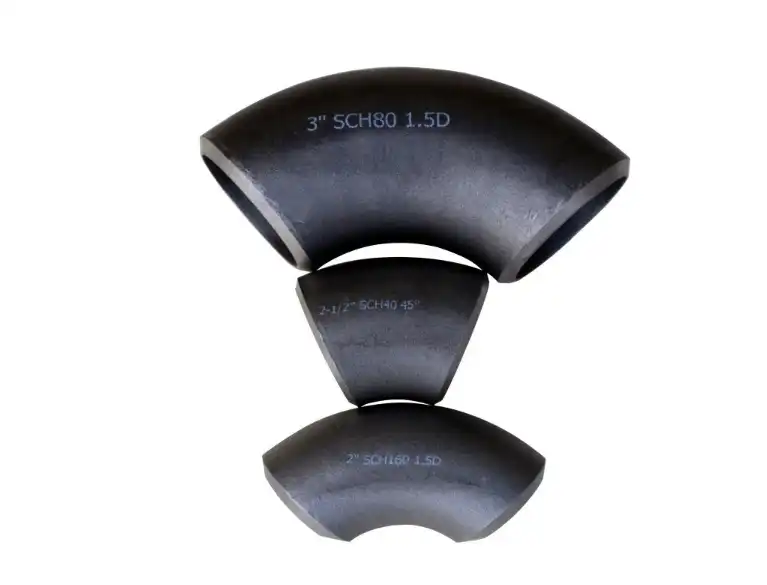
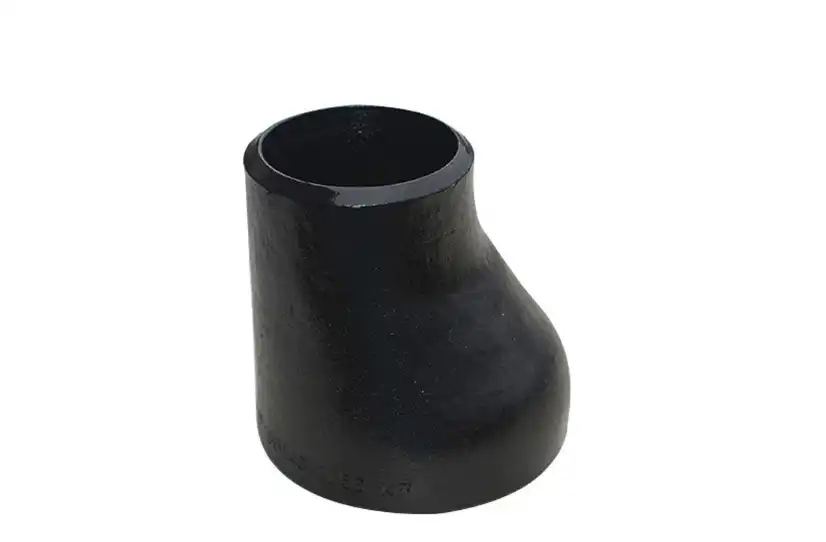
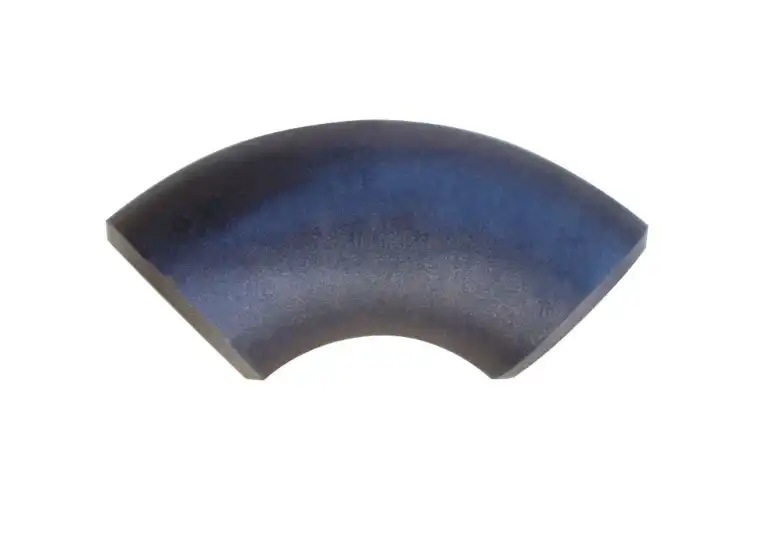
ASME B16.9 applies to factory-made wrought welding fittings rather than every type of pipe fitting used in industry. Its scope includes tees, elbows, reducers, caps, and other fitting configurations covered by the standard. It addresses dimensional requirements, tolerances, design-related requirements, testing, and marking. The standard is intended to be used together with other applicable piping and material standards rather than as a standalone specification for an entire piping system.
This distinction matters when selecting an ASME B16.9 tee. A fitting can conform to the dimensional requirements of B16.9, while its material, fabrication, welding, or system design must still be evaluated against other applicable specifications. For example, the material designation may come from an ASTM material specification, while the piping system itself may be designed under an applicable ASME B31 code.
For procurement teams, this means that writing “ASME B16.9 tee” on a purchase order is usually not enough. The order should identify the required size, wall thickness or schedule, material grade, fitting configuration, quantity, applicable inspection requirements, and documentation requirements.
Why a Tee Is Different From a Simple Pipe Connection?
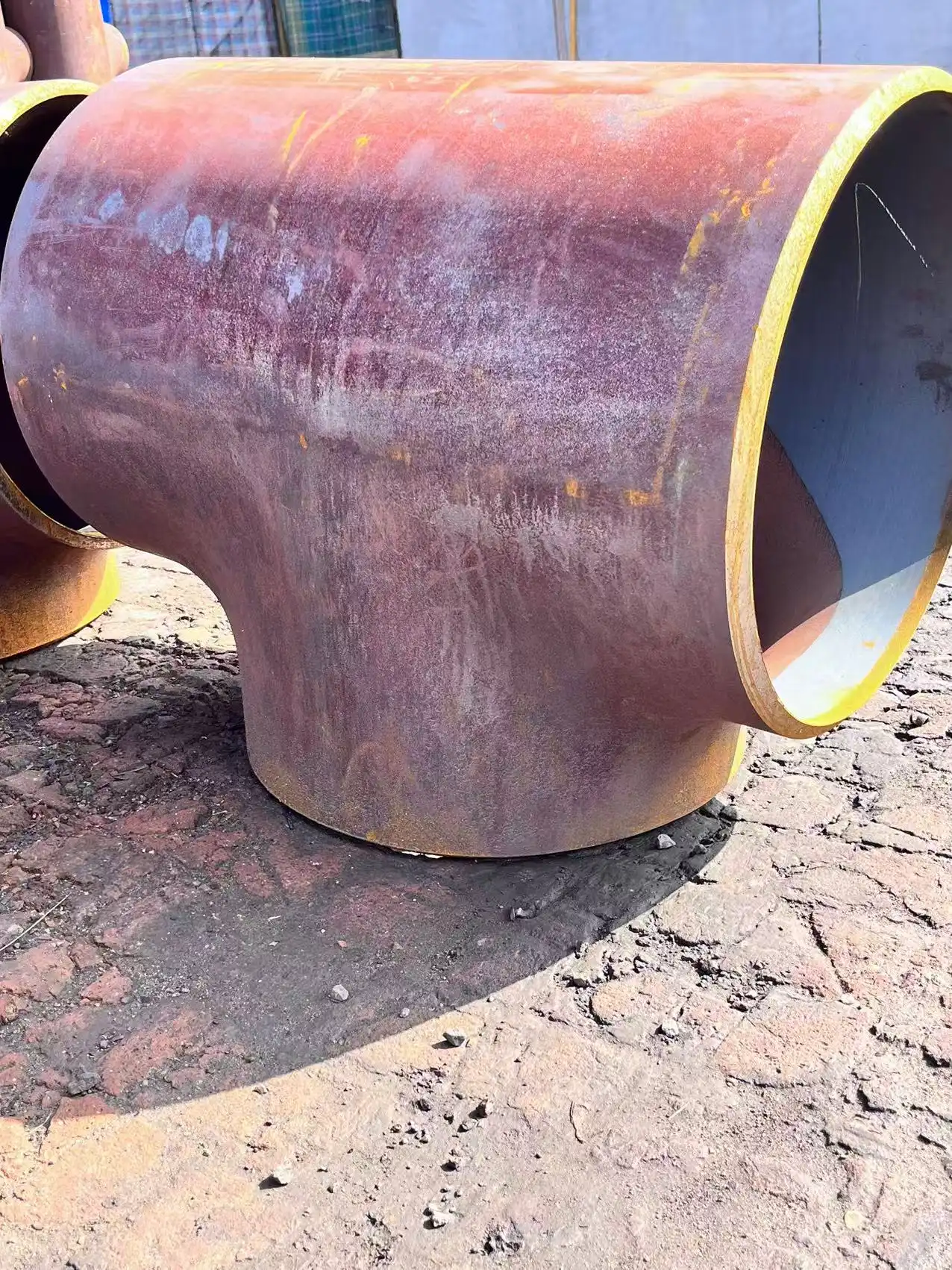
A tee creates a branch from the main run of a piping system. The geometry therefore has a direct relationship with flow direction, structural loading, welding preparation, and the available space around the connection.
An equal tee has the same nominal size at the run and branch, while a reducing tee has a smaller branch connection. The distinction is important because the dimensions and end connections have to correspond to the pipe being joined. A tee that looks suitable based only on its outside appearance may still be unsuitable if its wall thickness, end dimensions, or material designation does not match the project specification.
The purpose of ASME B16.9 is therefore not simply to make tees look similar. Standardized dimensions allow the fitting to be incorporated into a piping system with predictable interfaces and defined dimensional limits. This is particularly valuable when fittings and pipe are sourced from different suppliers.
How to Read the Dimensions of an ASME B16.9 Tee?
NPS, End Size, and Wall Thickness
The first information to confirm when selecting an ASME B16.9 tee is the nominal pipe size, or NPS. B16.9 covers fittings from NPS 1/2 through NPS 48. The end size identifies the nominal pipe size to which the fitting is intended to connect, but NPS should not be treated as a direct measurement of the actual outside diameter for every size.
Wall thickness is equally important. A tee may be specified by a schedule number or nominal wall thickness, depending on the project documents and the fitting marking. Two tees with the same NPS can therefore have different wall thickness requirements. The purchaser should not select a fitting based only on nominal diameter when the piping system also specifies a particular schedule or wall thickness.
This is especially important in pressure piping. The fitting must be compatible with the design conditions and the pipe to which it will be welded. The applicable piping code, material specification, and engineering design determine whether a particular wall thickness is suitable for the intended service.
Run, Branch, and Centre to End Dimensions
A tee has a main run and a branch. For an equal tee, the run and branch nominal sizes are the same. For a reducing tee, the branch is smaller than the run. The standard provides dimensional requirements for these configurations so that the fitting can be incorporated into the piping layout without relying on arbitrary manufacturer dimensions.
Centre-to-end dimensions are particularly useful during fabrication and installation because they affect the location of the branch relative to adjacent components. If a tee does not conform to the required dimensional range, the resulting difference can create fit-up problems during welding or force changes to the piping layout.
For this reason, dimensional inspection should not be treated as a cosmetic check. Measurements provide evidence that the fitting supplied is consistent with the specified configuration and can be incorporated into the intended piping arrangement.
Wall Thickness and Dimensional Tolerances
One area where the original article needs greater technical precision is wall thickness tolerance. It is not accurate to describe the B16.9 requirement simply as a symmetrical ±12.5% wall thickness tolerance. The 2024 edition states that, at the bevel, a minimum wall thickness of 87.5% of the nominal thickness applies unless the purchaser specifies a different wall thickness tolerance. Similar minimum thickness requirements apply to the fitting body, with additional provisions for critical areas and reducing fittings.
The practical meaning is important for inspection. A fitting should not be rejected or accepted based on a simplified “plus or minus 12.5%” interpretation without considering the exact location being measured and the applicable requirements of the standard and purchase specification.
Dimensional tolerances also apply to other features of the fitting. The purpose is to establish controlled manufacturing limits rather than to require every fitting to have mathematically identical dimensions. This distinction is useful for beginners because a standard does not eliminate manufacturing variation. It defines acceptable variation.
Material Selection for ASME B16.9 Tees
Matching the Material Specification to the Service
Material selection should begin with the requirements of the piping system rather than with the fitting name alone. An ASME B16.9 tee may be manufactured from carbon and low alloy steels, stainless steels, and other materials covered by the applicable material standards within the scope of B16.9.
The 2024 edition organises materials into groups that reference standards such as ASTM A234/A234M and ASTM A420/A420M for carbon and low-alloy steels, ASTM A403/A403M and ASTM A815/A815M for austenitic and duplex stainless steels, and other ASTM specifications for nickel, aluminium, and titanium alloys.
This is why a statement such as “the tee is made according to ASME B16.9” does not by itself identify the material. A purchase specification should normally state the material grade required by the project. For example, a carbon steel tee may be specified using an applicable ASTM material grade such as ASTM A234 WPB, while a stainless steel application may require a grade covered by ASTM A403.
The correct material depends on the process fluid, temperature, pressure, corrosion requirements, welding procedure, and applicable design code. A supplier should therefore receive the complete material designation rather than being asked to select a grade solely from the words “carbon steel tee” or “stainless steel tee".
Material Verification and Documentation
Material verification is particularly important when several fitting grades are handled in the same production facility. The fitting marking should correspond to the required material identification, and the purchaser may also require material test reports or other quality documents.
The 2024 edition specifies permanent marking requirements that include the manufacturer or trademark, material identification, wall thickness or schedule information, size, and compliance information, subject to the standard's provisions and exceptions.
For a purchasing team, these markings provide a practical way to compare the physical fitting with the purchase order and inspection documents. If the marking does not match the specified size, material, or wall thickness, the discrepancy should be resolved before installation.
Manufacturing and Design Considerations
How Tees Are Formed?
Factory-made wrought tees can be produced using different forming and manufacturing approaches. The actual method depends on the fitting design, material, size, manufacturing equipment, and applicable requirements.
The important point is that B16.9 should not be presented as prescribing one universal manufacturing sequence for every tee. The 2024 edition recognises different manufacturing methods when establishing design qualification. Its proof test provisions, for example, distinguish between different basic configurations and methods of manufacture because changes in geometry or manufacturing method can affect the behaviour of a fitting.
This matters when a buyer evaluates a supplier. Instead of asking only whether the supplier can provide an “ASME B16.9 tee", it is more useful to confirm the intended material, size range, wall thickness, manufacturing method where relevant, inspection requirements, and available quality records.
Heat Treatment and Mechanical Properties
Heat treatment cannot be reduced to a fixed sequence that applies to every ASME B16.9 tee. Requirements depend on the material specification and manufacturing process. Some materials and forming routes require specific heat treatment conditions to achieve the required mechanical properties and metallurgical condition.
Consequently, heat treatment records should be evaluated according to the applicable material specification and project requirements. If a purchaser requires specific heat treatment documentation, that requirement should be included in the purchase specification rather than assumed to be covered simply by referencing B16.9.
This approach provides a clearer division of responsibilities. B16.9 establishes fitting requirements within its scope, while the applicable material specification establishes the relevant material requirements. The piping design code and project specification then determine how the fitting is incorporated into the complete system.
Testing, Inspection, and Marking Requirements
Design Qualification Is Not the Same as Routine Production Inspection
One of the most important distinctions for beginners is the difference between design qualification and routine production inspection. ASME B16.9 includes provisions for design proof testing and other design approaches. The 2024 edition allows fitting design to be established through methods such as recognised mathematical analysis, proof testing, experimental stress analysis, or detailed stress analysis with appropriate validation.
That does not mean every tee leaving a factory must undergo the same proof test. Design qualification establishes that the fitting design is capable of meeting the applicable requirements under the defined conditions.
Routine production inspection is a separate matter. Dimensional checks, material identification, marking verification, and other inspections may be performed according to the standard, material specification, purchaser requirements, or project quality plan.
Do Not Assume Hydrostatic Testing Is Automatically Required by B16.9?
The original article states that ASME B16.9 requires pressure testing as part of general quality control. This needs to be corrected.
The 2024 edition specifically states that hydrostatic testing of wrought fittings is not required by B16.9 itself. Instead, the fittings are required to be capable of withstanding the hydrostatic test pressure required by the applicable piping code for equivalent seamless pipe of the material, size, and wall thickness identified by the fitting marking.
This distinction is valuable when reviewing supplier documentation. If a project requires hydrostatic testing, RT, UT, MT, PMI, or another inspection method, the purchaser should identify that requirement in the project specification or inspection plan. The presence or absence of one particular test should not be presented as the sole definition of B16.9 compliance.
Why Marking Matters During Receiving Inspection?
Marking provides a direct connection between the physical fitting and its documentation. Under the 2024 edition, standard marking includes the manufacturer's name or trademark, material identification, wall thickness identification or schedule information, NPS size, and compliance information, subject to the applicable exceptions.
During receiving inspection, these details can be compared with the purchase order, material certificates, dimensional inspection records, and other quality documents. This simple verification step can prevent a wrong size or material from entering the fabrication process.
For projects involving many similar fittings, consistent marking is especially useful. It helps warehouse personnel, fabricators, inspectors, and installation teams identify components before they are welded into the piping system.
Conclusion
Understanding an ASME B16.9 tee begins with recognising what the standard actually controls. ASME B16.9 covers factory-made wrought welding fittings and establishes requirements related to dimensions, tolerances, design, testing, and marking within its scope. The current 2024 edition covers fittings from NPS 1/2 through NPS 48.
For buyers and engineers, compliance should not be judged from the standard number alone. NPS, branch configuration, wall thickness, material grade, dimensional requirements, marking, design qualification, inspection scope, and documentation all need to be considered together. It is also important to distinguish requirements contained directly in B16.9 from requirements imposed by material standards, piping codes, project specifications, or purchaser requirements.
For a manufacturer or supplier, this creates an opportunity to provide more useful technical support. Cangzhou Oudi Pipe Manufacture Co., Ltd. has been engaged in pipe fitting manufacturing since 1998 and can supply ASME B16.9 tees and other industrial pipe fittings for different piping applications. For buyers comparing suppliers, the most useful discussion should focus on the actual fitting specification, available material grades, dimensional requirements, inspection documentation, and delivery requirements rather than relying on general quality statements. A clear specification at the purchasing stage helps ensure that the tee selected is compatible with the piping system and that the supplied product can be properly verified before installation. Please email us at oudi-04@oudiguandao.com if you need more information or have questions.
FAQ
1. What are the ASME B16.9 standards for pipe tees used for?
The ASME B16.9 standards make sure that pipe tee fittings are consistent, safe, and reliable by laying out the requirements for size, material, and testing.
2. What materials are commonly used for ASME B16.9 tees?
Common materials include carbon steel (e.g., ASTM A234 Grade WPB) and stainless steel (e.g., ASTM A403 Grade WP316L).
3. What size range is covered by ASME B16.9 for tee fittings?
ASME B16.9 typically covers nominal pipe sizes (NPS) ranging from 1/2 to 48 inches.
4. What are the main testing requirements for ASME B16.9 tees?
Testing requirements include dimensional checks, material verification, and non-destructive testing such as radiographic examination and ultrasonic testing.
References
1. American Society of Mechanical Engineers. (2018). ASME B16.9-2018: Factory-Made Wrought Buttwelding Fittings. New York, NY: ASME.
2. Nayyar, M. L. (2000). Piping Handbook (7th ed.). New York: McGraw-Hill.
3. Smith, P. (2015). Piping Materials Guide: Selection and Applications. Oxford: Butterworth-Heinemann.
4. Antaki, G. A. (2003). Piping and Pipeline Engineering: Design, Construction, Maintenance, Integrity, and Repair. New York: Marcel Dekker.
5. American Petroleum Institute. (2016). API 570: Piping Inspection Code: In-service Inspection, Rating, Repair, and Alteration of Piping Systems. Washington, D.C.: API Publishing Services.
6. Kannappan, S. (1986). Introduction to Pipe Stress Analysis. New York: John Wiley & Sons.

Need help finding the right solution with our experts. Please contact us.
SINCE 1998 Your Reliable Pipeline Manufacturer