The Role of ASTM A234 Tee in Industrial Pipelines
An ASTM A234 tee is a butt-welding pipe fitting used to create a branch connection in an industrial piping system. A branch pipe is used to link a tee to a main run, allowing the piping architecture to transfer process media to other lines without improvised connections. ASTM A234 is the standard for material covering wrought carbon steel and alloy steel pipe fittings for moderate and high-temperature usage. In practice, the material specification is commonly utilised in conjunction with dimensions and piping specifications to specify the entire requirements for a fitting. ASTM A234 tees are often used in process piping, power generation, petrochemical plants, refineries and other industrial facilities where welded steel pipe is needed. But choosing the right tee is more than just checking the ASTM designation. Engineers and buying teams will also need to consider material grade, nominal size, wall thickness, fitting dimensions, design temperature, design pressure, welding requirements, inspection requirements and relevant project standards. Understanding how these aspects interplay may make it simpler to appropriately specify an ASTM A234 tee, rather than just picking a fitting by its material name alone.
Understanding the Material Specification Behind ASTM A234 Tee
What ASTM A234 Covers?
ASTM A234 covers wrought carbon steel and alloy steel pipe fittings for moderate and increased temperature use. The standard covers numerous grades of material. One of the grades often used with carbon steel fittings for industrial plumbing is WPB.
Although the ASTM A234 designation covers the material and manufacturing criteria of the fitting, it should not be considered a comprehensive pipe design standard. The fitting must still meet the dimensions specifications and design parameters of the pipe system it will be put in.
For example, a project may require a tee in ASTM A234 WPB with dimensions from ASME B16.9 and an appropriate pipe design code. Each standard has a distinct purpose in this case. ASTM A234 covers the fitting material and associated manufacturing requirements, and ASME B16.9 covers the dimensions and other standards for factory-made wrought butt-welding fittings.
This difference is especially relevant when ordering fittings for a major industrial project since the precise material designation alone does not guarantee that the fitting is adequate for all operational conditions.
Why WPB Is Widely Used?
ASTM A234 WPB is a grade of carbon steel used in industrial plumbing applications when the operating conditions are consistent with its material and design specifications. The combination of strength, weldability and ready availability makes this material useful for many process pipe systems.
WPB is composed of regulated quantities of carbon, manganese, phosphorus, sulphur, silicon and other elements as required by the relevant material standard. These restrictions are used to ensure that material properties are constant from heat to heat of manufacture.
But for project engineers, the importance of WPB is not only the fact that it is a carbon steel grade. The grade must be considered combined with the design temperature, pressure pipe material, welding technique and service circumstances. A tee that works for one process line may not be suitable for another, even if both systems have the same nominal pipe size.
How ASTM A234 Tees Are Manufactured and Inspected?
Forming and Heat Treatment
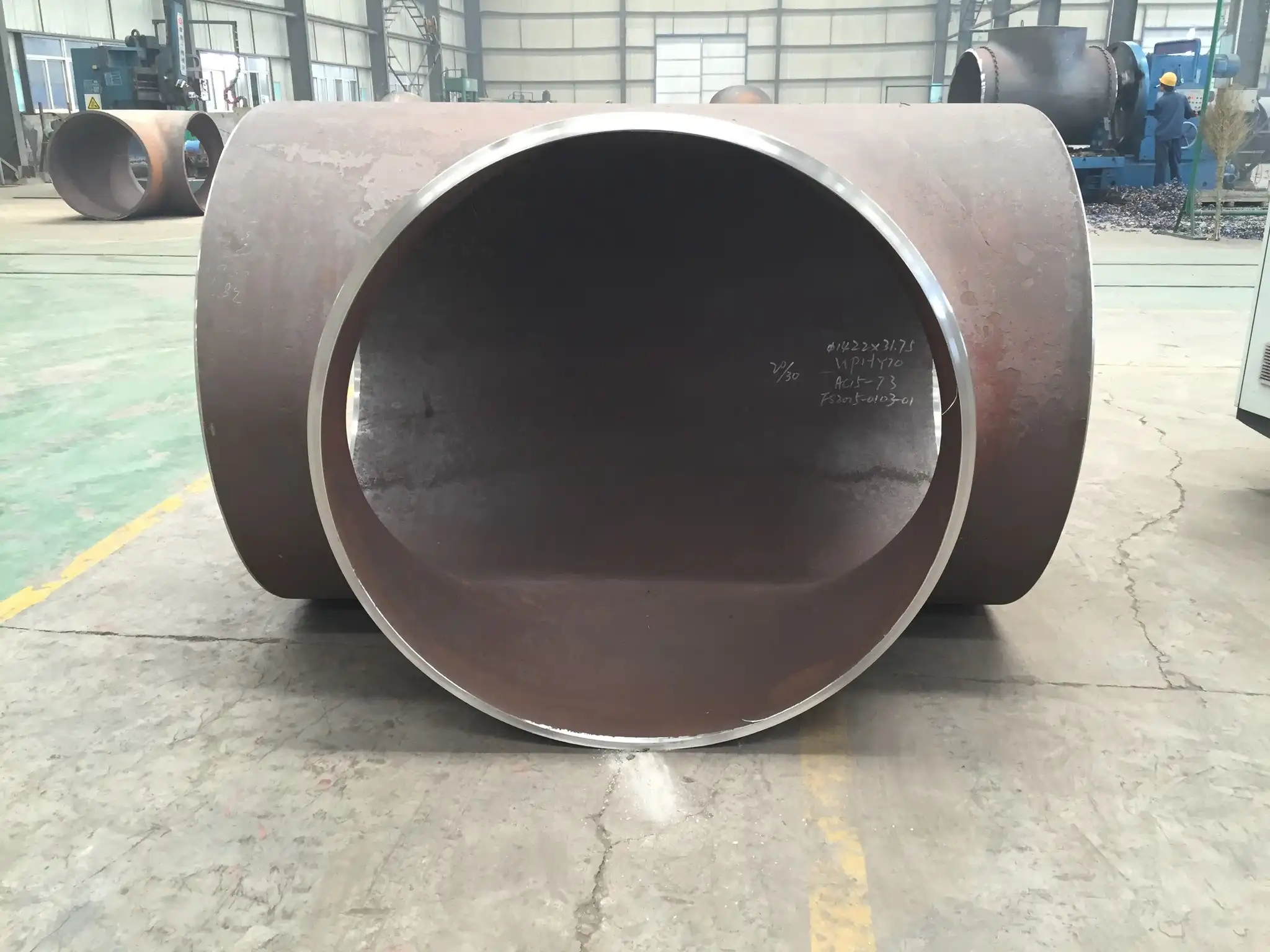
Generally, the manufacturing of an ASTM A234 tee entails shaping the steel material into the desired branch shape and then performing the operations relevant to the material grade and the design of the fitting. Depending on the product and the production process, forming might be hot forming or other controlled forming procedures. Then heat treatment may be necessary depending on grade and specification.
The goal is to get a fitting of the correct dimensions and material qualities and to have a smooth transition between the run and branch portions. The branch area is of special interest since it is a geometric alteration in the pipe system and might impact the local stress distribution.
After forming and heat treatment, the fitting is next usually dimensionally and visually inspected. Additional testing may be necessary, depending on the project requirements. These criteria should be set before manufacturing, not added after the fittings have been produced.
Dimensional Accuracy and End Preparation
A tee isn’t just a piece of steel with three holes. The outer diameter, center-to-end dimensions, wall thickness, branch geometry, and welding ends must be compatible with the adjoining pipe.
For end preparation for butt welding of installations, it is very crucial. The fitting should be provided with a suitable welding configuration for the pipe and the welding technique defined by the project. Even if the nominal dimensions and material grade look adequate, problems in installation might arise from variations in wall thickness or end geometry.
Therefore, the purchase requirements should identify the appropriate dimensional standard and establish the requisite nominal size and wall thickness. The inquiry paperwork should cover particular needs of the project prior to quoting.
Inspection and Material Documentation
Another essential link between manufacturing quality and acceptability of a project is inspection. Inspection may include chemical composition, mechanical qualities, dimensions, surface condition, and non-destructive testing according to the order requirements.
Material test reports are particularly valuable because they provide traceability between the delivered fitting and the material heat from which it was built. Heat numbers, product marks, and inspection records may then be verified against the paperwork accompanying the order.
Buyers may also need third-party inspection or further investigation according to project specification, in the case of essential industrial projects. So before purchasing, the actual inspection scope should be validated rather than assuming the same level of testing for every ASTM A234 tee.
Evaluating Mechanical Performance in Industrial Piping
Strength and Plasticity
Mechanical characteristics are also an essential aspect of the ASTM A234 criteria because fittings must be able to endure the mechanical stresses associated with their intended service. The tensile strength is the greatest stress a material can sustain in a tensile test, and the yield strength is the stress at which the stipulated commencement of permanent deformation occurs.
These values should be considered according to the quality of material in question and the particular edition of the standard, rather than by a generalized range as a blanket specification for all ASTM A234 tees.
Elongation gives information regarding a material's capacity to perform plastic deformation during tensile testing. It should not be regarded as a sign that the finished tee can be physically bent during installation. Instead, it is one of the mechanical qualities used to characterize the material and to verify that it fulfils the appropriate standard.
This is critical since pipe components are designed as part of a fixed system. Their performance relies not only on the strength of the material but also on the geometry, wall thickness, welding, supports, thermal expansion, and operating circumstances.
Hardness and Material Consistency
If necessary by the corresponding material specification or project requirements, hardness may also be adjusted or appraised. It may provide important information on the state of the material and, in certain applications, may help to verify quality.
However, hardness should not be seen as a single measure of the suitability of a tee for a specific pipeline. A fitting with an acceptable hardness rating may still be inappropriate if its dimensions, grade of material, pressure-temperature design circumstances, or documentation do not meet project requirements.
A more practical technique is to examine hardness along with chemical analysis, tensile testing, dimensional inspection, heat treatment records, and other quality documents as necessary.
How Pressure and Design Conditions Affect Tee Selection?
Pressure Is Not Determined by ASTM A234 Alone
One of the most important points when selecting an ASTM A234 tee is that ASTM A234 does not by itself establish a universal pressure rating for every tee.
The pressure capacity of a fitting depends on several factors, including fitting size, wall thickness, material grade, design temperature, connected pipe, applicable dimensional standards, and the piping design code. The configuration of the tee also matters because a branch connection creates a change in geometry that must be considered in the design of the piping system.
ASME B16.9 is commonly referenced for dimensions and tolerances of factory-made wrought butt-welding fittings, while a piping code such as ASME B31.3 may govern the design of process piping. These standards work together rather than replacing one another.
Consequently, buyers should avoid selecting a tee based only on a statement such as “high-pressure fitting.” The correct selection should be based on the actual design conditions and the requirements stated in the engineering specification.
Temperature and Service Conditions
Temperature is equally important. ASTM A234 is intended for moderate and elevated-temperature service, but the acceptable operating range depends on the material grade and the design requirements of the system.
Instead of assigning one universal temperature range to every WPB tee, engineers should verify the allowable stresses and design conditions applicable to the specific grade and piping code. Thermal expansion, cycling, insulation, external loads, and connection conditions can also influence the suitability of a fitting.
For systems that experience significant temperature changes, the engineering review should consider how the piping expands and contracts during operation. The tee must function as part of the complete piping arrangement rather than as an isolated component.
ASTM A234 Tee Applications in Industrial Piping
Process and Petrochemical Systems
In process and petrochemical facilities, tees are used where a main pipeline needs to connect with a branch line. The branch may supply another processing unit, connect to auxiliary equipment, or divide the flow into separate downstream lines.
The material grade becomes particularly important when the piping system operates at elevated temperatures or under demanding process conditions. An ASTM A234 tee made from ASTM A234 WPB is therefore frequently considered for carbon steel systems where its material characteristics are compatible with the project specification.
The tee's role in these systems also makes dimensional compatibility important. A fitting that does not match the connected pipe can create unnecessary fabrication work and complicate installation.
Oil and Gas Facilities
Oil and gas facilities use branch fittings throughout gathering, processing, transmission-related, and utility piping systems. The applicable requirements vary considerably from project to project because operating temperatures, pressures, media, corrosion conditions, and regulatory requirements are not identical.
In some projects, additional requirements may apply to material selection and testing, particularly where specific service environments are involved. The buyer should therefore review the project specification rather than assuming that ASTM A234 alone covers every requirement.
For international procurement, documentation can be equally important. Material certificates, heat numbers, inspection records, dimensional reports, and certificates of compliance may be required as part of the final documentation package.
Power Generation and General Industrial Systems
Power plants and general industrial facilities also use carbon steel butt-welding fittings in a wide range of piping arrangements. Steam-related systems, utility lines, process water systems, fuel systems, and other services may have different material and design requirements.
The correct tee therefore depends on the specific line rather than the industry name alone. Engineers need to identify the medium, pressure, temperature, pipe material, nominal size, wall thickness, and applicable code before finalizing the fitting specification.
What Buyers Should Check Before Ordering an ASTM A234 Tee?
Material, Size, and Configuration
A purchasing inquiry should clearly identify the required ASTM A234 grade and the tee configuration. Equal tees and reducing tees serve different piping arrangements, so the branch size needs to be stated accurately.
Nominal pipe size and wall thickness are equally important. A tee designed for one pipe schedule should not be assumed to be interchangeable with another simply because the nominal diameter is the same.
The buyer should also confirm the applicable dimensional standard, end preparation, quantity, marking requirements, and any special project specifications. Providing these details at the inquiry stage reduces the possibility of receiving a product that technically carries the correct ASTM designation but does not fit the intended piping system.
Inspection and Traceability
Inspection requirements should be agreed upon before production. Depending on the project, buyers may request chemical composition reports, mechanical test results, dimensional inspection, visual examination, non-destructive testing, heat treatment records, and material test reports.
Traceability is especially valuable for projects where components must be documented throughout fabrication and installation. Matching the product marking to the material certificate allows the purchaser to establish a clear connection between the physical fitting and its manufacturing records.
For larger orders, buyers may also establish requirements for inspection hold points, third-party inspection, packaging, marking, and shipping documentation. These details are part of procurement quality control and should be included in the purchase specification.
Supplier Evaluation
Supplier selection should consider more than price. A capable manufacturer should be able to explain the material grade, manufacturing route, dimensional standard, inspection scope, and documentation available for the requested tee.
Production consistency is particularly important when a project requires multiple sizes or large quantities. The supplier should have a clear quality-control process that links incoming material, forming, heat treatment where applicable, inspection, marking, and final documentation.
For international buyers, communication about technical specifications is also important. Differences in standards, terminology, documentation formats, and inspection expectations can create delays if they are not clarified before production begins.
Conclusion
ASTM A234 tee fittings are important branch components in industrial piping systems because they provide a standardized way to connect branch lines to a main run while meeting specified material and manufacturing requirements. ASTM A234 covers wrought carbon steel and alloy steel fittings for moderate and elevated-temperature service, while dimensional standards and piping codes establish additional requirements for the completed piping system.
ASTM A234 WPB is widely considered for carbon steel applications because of its established use in industrial piping and its combination of mechanical properties and weldability. However, the correct selection should never be based on the ASTM designation alone. Material grade, size, wall thickness, temperature, pressure, service conditions, applicable standards, welding requirements, inspection, and traceability all need to be reviewed together.
For purchasing teams, a well-defined specification can make a significant difference. Confirming the tee configuration, material grade, dimensions, applicable standards, inspection requirements, and documentation before production helps reduce installation problems and supports better project control.
Cangzhou Oudi Pipe Manufacture Co., Ltd. has specialized in manufacturing ASTM A234 pipe fittings since 1998 and supplies fittings for industrial pipeline projects. The company can provide ASTM A234 pipe fittings in different sizes and specifications according to project requirements and applicable international standards. For buyers evaluating ASTM A234 tee fittings, discussing the required grade, dimensions, inspection scope, and documentation with the manufacturer before ordering can help ensure that the selected fitting matches the actual application. For technical support, product specifications, or quotation requests, please contact our sales team at oudi-04@oudiguandao.com.
FAQ
1. What is the temperature range for ASTM A234 Tee fittings in WPB grade?
ASTM A234 Tee fittings in WPB grade are typically suitable for use in temperatures ranging from -29°C to 593°C (-20°F to 1100°F).
2. What are the typical pressure ratings for ASTM A234 tee fittings?
The pressure rating of ASTM A234 tee fittings depends on factors such as wall thickness, pipe schedule, material grade, and applicable ASME standards.
3. What industries commonly use ASTM A234 tee fittings?
ASTM A234 Tee fittings are widely used in oil and gas, chemical processing, power generation, and manufacturing industries.
4. What mechanical properties are important for ASTM A234 tee fittings?
Key mechanical properties include tensile strength, yield strength, elongation, and hardness, which contribute to the fittings' performance and durability.
References
1. ASTM International. (2019). ASTM A234 / A234M - 19 Standard Specification for Piping Fittings of Wrought Carbon Steel and Alloy Steel for Moderate and High Temperature Service.
2. American Society of Mechanical Engineers. (2017). ASME B16.9-2018 Factory-Made Wrought Buttwelding Fittings.
3. American Petroleum Institute. (2018). API Specification 5L, 46th Edition: Specification for Line Pipe.
4. NACE International. (2015). NACE MR0175/ISO 15156 Petroleum and natural gas industries—Materials for use in H₂S-containing environments in oil and gas production.
5. Nayyar, M. L. (2000). Piping Handbook (7th ed.). McGraw-Hill Education.
6. Smith, P. (2018). Piping Materials Guide: Selection and Applications for Process and Plant Design. Elsevier Science.

Need help finding the right solution with our experts. Please contact us.

SINCE 1998 Your Reliable Pipeline Manufacturer