Global Trends in Pipe Tee Manufacturing and Export in 2026
The global demand for industrial pipe fittings remains closely connected to investment in energy, chemical processing, water treatment, construction, and general industrial infrastructure. Within this market, pipe tees continue to be important components because they allow a piping system to create a branch while maintaining a controlled connection between different sections of pipe. As projects become more demanding, buyers are paying greater attention not only to price but also to dimensional accuracy, material traceability, applicable standards, delivery reliability, and the supplier's ability to support international orders. These changes are influencing pipe tee manufacturing as well as the way manufacturers approach export markets. Production is increasingly more automated and data-driven, but consumers are demanding additional alternatives of materials, nonstandard dimensions, inspection paperwork, and smaller, tailored batches. At the same time, manufacturers are under greater expectation for energy efficiency, waste reduction, resilience of the supply chain, and digital communication. For customers the crucial factor is not only whether pipe tees can be made at a cheaper cost. A more important inquiry is how production and export procedures are evolving and what those changes signify when picking a supplier in 2026.
How Is Modern Technology Changing Pipe Tee Production?
CNC machining and automated production improve consistency
Automation is becoming an increasingly valuable tool in the manufacturing of pipe tees, especially for those activities where repeatability and dimensional control directly influence the final quality. Following the main forming or fabrication process, CNC machining may be utilized for precision end preparation, facing, boring, and other finishing operations. Similarly, if the same specs are used frequently, automated equipment may decrease the difference between batches.
Robotic welding and automated material handling have a more defined role in facilities manufacturing fabricated or welded pipe tees. Although good operators and certified welding techniques are still required for quality assurance, these technologies may ensure consistent welding conditions and avoid needless human handling. Automation does not replace inspection. Instead, it enables producers to establish a more regulated manufacturing process where inspection points may be inserted at various phases of manufacturing.
This uniformity is important to foreign purchasers since pipe tees are usually placed in big piping systems where dimensional discrepancies might cause complications during fit-up. Hence, a supplier with robust manufacturing controls is better positioned to retain the dimensions constant in repeated orders.
Digital inspection is becoming part of quality control
Inspection technology is also evolving from basic manual measuring. Manufacturers may use coordinate measuring equipment, digital gauges, optical measurement systems, ultrasonic testing, radiographic testing, or other non-destructive testing procedures depending on the product and client needs.
The inspection technique to be used should be suitable for the material, the production route, the specification to be satisfied, and the service needs. For example, a conventional carbon steel butt-weld tee does not need the same level of inspection as a critical alloy steel fitting in a high-temperature process system.
That difference matters to purchasers. A contemporary manufacturing plant should not only boast that it has “advanced inspection equipment.” It should be able to tell you the inspection procedures used, the standards followed, how results are documented, and what papers will accompany the cargo.
Traceability may also be improved using digital inspection records. Material heat numbers, manufacturing batches, dimensional data, and inspection records may be linked to particular orders so that buyers can easily verify what was given when documentation is needed for project approval.
Additive manufacturing has a selective role
Additive manufacturing is exciting the entire metalworking sector, but its use in pipe tee manufacture should be taken with a grain of salt. This is especially beneficial if the component has a strange shape, or if a prototype is needed, or if a limited number has to be manufactured without too much investment in specialized tooling.
For ordinary tees made in high numbers, traditional forming, fabrication, machining, and associated production techniques are often more viable because they provide proven production pathways and competitive unit prices. Therefore, additive manufacturing is more of a complementing technique rather than a wholesale substitute for traditional pipe tee fabrication.
Its longer-term worth may be larger for highly tailored components and technical development. A firm with strong pipe tee manufacturing capabilities that can combine traditional manufacturing methods with current prototype tools may react more flexibly to a customer’s need for a non-standard design.
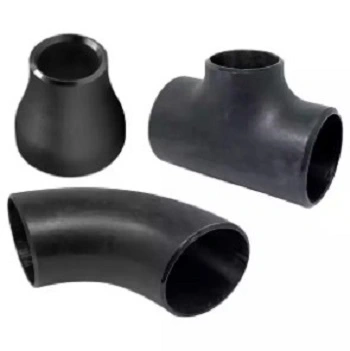
What Manufacturing Practices Are Becoming More Important in 2026?
Material traceability is increasingly important for industrial buyers
As international projects become more demanding, buyers are placing greater emphasis on knowing exactly what material has been supplied. Pipe tees may be manufactured from carbon steel, stainless steel, alloy steel, and other materials selected according to pressure, temperature, corrosion resistance, and service conditions.
Material selection cannot be separated from the applicable specification. Buyers may need to consider requirements such as ASTM material specifications and ASME dimensional standards, depending on the project. The supplier should be able to identify the material grade clearly and provide the required supporting documentation.
Material traceability becomes particularly important when fittings are purchased for oil and gas, petrochemical, power generation, or other applications where documentation forms part of the project quality package. Heat numbers, material certificates, inspection records, and product identification should remain consistent throughout production and shipment.
This is an area where experienced manufacturers can offer more value than suppliers competing solely on unit price. Clear traceability reduces uncertainty when products arrive at the customer's facility and helps simplify later quality audits.
Flexible manufacturing supports customized orders
Industrial piping projects do not always use only standard dimensions. Customers may require different wall thicknesses, material grades, end preparations, dimensions, markings, or packaging arrangements depending on the application and local requirements.
Flexible production systems make it easier for manufacturers to accommodate these variations without disrupting their entire production schedule. CNC equipment, programmable inspection systems, standardized tooling, and organized production planning can all contribute to this flexibility.
Customization is particularly relevant to export customers because specifications can vary between markets. A buyer working on an Asian petrochemical project may have different documentation or dimensional requirements from a contractor supplying a European water treatment project. A manufacturer that understands these differences can reduce the number of revisions needed before production begins.
For purchasers, customization should not be viewed simply as a request for a special size. It should include technical communication before production, drawing confirmation, material verification, inspection requirements, marking, packaging, and documentation.
Energy efficiency is becoming a practical manufacturing concern
Energy efficiency is receiving more attention in metal component manufacturing because heating, forming, machining, welding, and material handling can all contribute significantly to production energy consumption.
Manufacturers can improve efficiency through better furnace management, optimized heating cycles, variable-speed equipment, improved insulation, heat recovery, and more effective production scheduling. The exact approach depends on the manufacturing process and factory layout.
Energy management also has a cost dimension. Lower energy consumption can reduce production expenses, but it should not come at the expense of proper heating, forming, heat treatment, or inspection. In industrial pipe tee manufacturing, process stability remains more important than simply minimizing energy consumption.
For customers with environmental procurement requirements, the ability to explain how energy and production waste are managed during pipe tee manufacturing may increasingly become part of supplier evaluation.
Which Global Market Trends Are Affecting Pipe Tee Exports?
Manufacturing capacity is becoming more geographically diverse
China remains an important manufacturing base for industrial pipe fittings, while India, Vietnam, Mexico, and other production centers are gaining attention from international buyers for different product categories and regional supply-chain needs. This does not mean that manufacturing is simply moving from one country to another. Instead, many companies are developing more diversified sourcing strategies to reduce dependence on a single production location.
Geopolitical uncertainty, transportation costs, trade policies, lead times, and regional infrastructure investment can all influence sourcing decisions. Buyers may therefore evaluate suppliers based on more than factory price. The location of raw material sources, proximity to ports, export experience, production capacity, and ability to maintain stable lead times can all affect the final purchasing decision.
This creates opportunities for manufacturers that can demonstrate reliable production and export execution. A competitive supplier needs to understand not only how to manufacture pipe tees, but also how to coordinate documentation, packaging, logistics, and communication with overseas customers.
Regional demand is influencing export strategies
The growth of infrastructure, energy, water treatment, and industrial projects in developing markets is creating additional demand for piping components. At the same time, mature markets continue to require replacement parts, maintenance components, and fittings for existing facilities.
This creates different opportunities for manufacturers. Large infrastructure projects may require substantial quantities with strict project documentation, while maintenance and engineering customers may value short lead times and the ability to supply less common specifications.
Export strategies are therefore becoming more market-specific. Instead of treating the global market as a single customer group, manufacturers increasingly need to understand what different regions expect in terms of standards, documentation, packaging, communication, and delivery.
E-commerce is changing the first stage of industrial sourcing
Digital channels have changed how industrial buyers identify potential suppliers. Customers can now review product specifications, manufacturing capabilities, certifications, production photos, inspection information, and technical documentation before making direct contact.
For pipe fittings, however, online product information is only the beginning of the purchasing process. A professional buyer normally needs to confirm material grade, dimensions, wall thickness, applicable standards, quantity, inspection requirements, marking, packaging, and delivery terms before placing an order.
This means that manufacturers need more than a visually attractive website. Technical information must be clear enough for engineers and purchasing teams to determine whether a product is suitable for their project.
A well-prepared product page can therefore support the sales process by answering common technical questions about pipe tee manufacturing before an inquiry is submitted. Clear drawings, material information, manufacturing descriptions, inspection capabilities, and documentation details can make communication more efficient and help qualified buyers move more quickly toward quotation.
What Do International Buyers Need From Pipe Tee Manufacturers?
Compliance with recognized standards remains essential
International buyers rarely select pipe tees based only on appearance or nominal size. The fitting needs to match the requirements of the piping system and the relevant project specification.
Depending on the application, buyers may need to consider standards covering dimensions, materials, manufacturing requirements, testing, marking, and inspection. ASME, ASTM, EN, and other standards may apply depending on the destination market and project specification.
A capable manufacturer should therefore confirm the applicable standard before production rather than assuming that one specification fits every order. This is especially important when the same nominal pipe size is being purchased for different projects with different material or dimensional requirements.
Documentation can influence supplier selection
For export orders, product documentation is often as important as the physical fitting. Depending on the project, buyers may request material test certificates, inspection reports, dimensional inspection records, non-destructive testing reports, packing lists, certificates of origin, or other documents.
The exact documentation package should be agreed upon before production. This prevents situations where a fitting meets the physical specification but the shipment is delayed because required records are missing or inconsistent.
Good documentation also supports traceability after delivery. If a customer needs to investigate a particular batch, having consistent production and material records makes it much easier to identify the relevant information.
Packaging and logistics deserve more attention
Pipe tees are robust industrial components, but they can still be damaged by unsuitable packaging, moisture, impact, or poor handling during long-distance transportation. Export packaging should therefore reflect the destination, transportation method, product size, surface treatment, and customer's unloading conditions.
Small fittings may be packed in cartons or cases, while larger or heavier components may require stronger wooden cases, pallets, or other suitable arrangements. Protective measures should also prevent fittings from moving excessively during transportation.
A manufacturer with export experience should be able to discuss packaging before shipment rather than treating it as an afterthought. This is particularly valuable when the customer is purchasing large quantities or sending fittings to a project site where replacement deliveries would be expensive.
Conclusion
In 2026, there will be big changes in the company that makes and sells pipe tees all over the world. New technologies, environmental worries, and shifting business trends are all changing the scene. In this changed world, pipe tee manufacturing companies that use automation, eco-friendly methods, and digital solutions will be in a good situation to do well. Innovation and sustainability must be balanced in order for the industry to meet the growing demand around the world while having the least possible effect on the environment. Being able to change with the times will be important for success as new production hubs open up and customization grows. Please email us at oudi-04@oudiguandao.com to learn more about our state-of-the-art pipe tee options.
FAQ
1. What materials are commonly used in pipe tee manufacturing?
Common materials include carbon steel, stainless steel, alloy steel, and various plastics such as PVC and HDPE.
2. How is 3D printing changing pipe tee manufacturing?
3D printing enables rapid prototyping, customization, and production of complex designs that are difficult to achieve with traditional methods.
3. What are the main applications of pipe tees?
Pipe tees are widely used in plumbing, oil and gas, chemical processing, and water treatment industries.
4. How are environmental regulations affecting pipe tee manufacturing?
Regulations are driving the adoption of sustainable materials, cleaner production processes, and energy-efficient manufacturing techniques.
References
1. Smith, J. (2023). "The Future of Pipe Fittings: Global Trends and Innovations." Industrial Manufacturing Quarterly, 45(2), 78-92.
2. Chen, L. et al. (2024). "Sustainable Practices in Pipe Tee Manufacturing: A Comprehensive Review." Journal of Cleaner Production, 312, 129876.
3. Anderson, R. (2022). "Digital Transformation in the Pipe Fitting Industry." Technology in Manufacturing, 18(4), 205-220.
4. Kumar, P. & Patel, S. (2023). "Emerging Markets in Global Pipe Tee Production: Opportunities and Challenges." International Journal of Industrial Engineering, 56(3), 345-360.
5. Yamamoto, H. (2024). "Advancements in Automated Pipe Tee Manufacturing Systems." Robotics and Computer-Integrated Manufacturing, 75, 102359.
6. Brown, E. (2023). "The Impact of 3D Printing on Custom Pipe Fitting Production." Additive Manufacturing, 52, 102735.

Need help finding the right solution with our experts. Please contact us.

SINCE 1998 Your Reliable Pipeline Manufacturer



