ASME B16.9 Pipe Cap: How to Select the Right Size?
Most purchasers don't know how important it is to get the appropriate ASME B16.9 pipe cap. An incorrect size might lead to pressure failures, weld flaws, or expensive delays to the project. This guide has been prepared for purchasing managers, engineers, distributors, and EPC contractors who require clear, practical assistance on specifying and procuring butt-weld pipe caps for oil, gas, chemical, and water system projects.
Understanding ASME B16.9 Pipe Caps: Definitions and Standards
What Is an ASME B16.9 Pipe Cap?
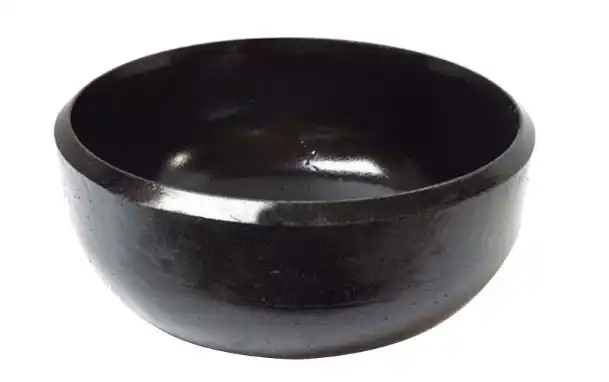
Pipe caps are dome-shaped fittings that are welded on the open end of a pipe to provide a permanent seal. ASME B16.9 specifies wrought buttwelding caps fabricated in a factory that range in size from NPS 1/2 to NPS 48. They are designed without mechanical joints to seal pipelines and are suitable for high-pressure and high-temperature applications in oil refining, natural gas transfer, and chemical processing.
Dimensional and Material Standards
Pipe end caps wall thickness, outer diameter, center-to-end dimensions, and bevel angles are specified in ASME B16.9. End preparation in accordance with ASME B16.25: a 37.5° bevel is usual to provide full penetration groove welds. Regular material grades are ASTM A234 WPB for carbon steel caps and ASTM A403 WP304/316 for stainless steel variations. ASTM A234 WP5 and WP9 are alloy steel choices suitable for high-temperature usage over 800°F.
Manufacturing and Quality Inspection
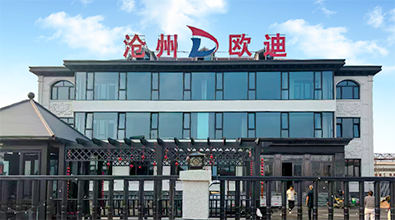
Pipe caps are made by hot or cold pressing wrought steel blanks and then heat-treated to reduce residual tension. Trusted manufacturers use a thorough inspection procedure that includes raw material certification, dimensional inspections, hydrostatic testing, and non-destructive defect identification. This is a procedure that every pipe cap in Oudi goes through before leaving the plant. We have the ISO 9001:2000 certificate and a special equipment manufacturing license provided by the People's Republic of China.
How to Select the Right Size: Criteria and Methodology
Match Nominal Pipe Size to Outside Diameter
The most frequent sizing mistake is to confuse nominal pipe size (NPS) with the actual outer diameter. For example, an NPS 6 pipe is not 6 inches OD, but 6.625 inches. Always check the OD and wall thickness from the ASME B36.10M or B36.19M pipe schedule table before choosing a matching ASME B16.9 pipe cap. The cap OD must be exactly the same size as the pipe OD so you can have a good butt weld that is code.
Factor in Pressure Rating and Wall Thickness
Unlike flanges, there is no standard pressure class for ASME B16.9 pipe caps. Their permissible pressure is the same as that of a straight pipe of the same material grade, OD, and wall thickness (schedule). A Schedule 40 carbon steel cap at NPS 4 will have a different working pressure than a Schedule 80 carbon steel cap. Always match the cap schedule to the attached pipe schedule and then check the pressure-temperature rating against your operating circumstances in ASME B31.3 or B31.1.
Account for Weld Method and Installation Conditions
Once you have the NPS and schedule, think about how you are going to weld the cap. Butt-weld caps need correct fit-up, constant bevel angles, and possibly heat treatment after welding depending on wall thickness and service fluid. The selection of material for corrosive or cryogenic applications (carbon steel vs stainless steel or alloy) also affects size availability. Check the piping class specification of the project before submitting a purchase order to verify all variables correlate.
Comparison Guide: ASME B16.9 Pipe Caps vs Alternatives
B16.9 Caps vs. Threaded or Socket-Weld Caps
Threaded and socket-weld caps are covered by ASME B16.11 and are suitable for small-bore, low-pressure lines, often NPS 2 and less. ASME B16.9 butt-weld caps are the proper solution for bigger diameter or greater pressure systems since the full penetration welds have the same burst strength as the pipe being joined. That’s why they’re used extensively in oil and gas collection lines, refinery pipework, and power production steam systems.
Carbon Steel vs. Stainless Steel Pipe Caps
Carbon steel pipe caps (ASTM A234 WPB) are less expensive and are suitable for normal industrial service up to about 800°F in non-corrosive environments. Stainless steel end caps (ASTM A403 WP304/316) are “oxidation resistant” and “chloride corrosion resistant” and are the proper option for chemical processing, saltwater cooling lines, and food-grade applications. The cost difference between the two materials may be substantial when ordering in large quantities. Therefore, selecting the right material from the beginning preserves the project budget and the piping’s long-term integrity.
ANSI-Compatible Caps in Mixed-Standard Environments
Many multinational projects use a combination of ANSI, DIN, and JIS pipe fittings. Most ASME B16.9 pipe caps will be dimensionally compatible with ASME B16.9 for most NPS sizes. However, you should check the OD and bevel standard before combining parts from various sources. Oudi provides caps that comply with American standards, Japanese standards (JIS), German standards (DIN), and British standards (BS) regulations, which makes sourcing easier for international EPC projects.
Procurement Tips for ASME B16.9 Pipe Caps
Verify Certifications Before Ordering
Every serious procurement team should request the supplier's ISO 9001 certificate, material test reports (MTR), and any special equipment manufacturing licenses relevant to pressure components. These documents confirm that the product was made under a controlled quality system. Oudi holds ISO 9001:2000 certification and the PRC special equipment manufacturing license, giving buyers documented assurance that quality checks were applied from raw material intake through finished-product dispatch.
Here are the core factors that drive pricing and lead time in bulk procurement:
- Material grade and schedule: Higher alloy content and heavier wall thicknesses increase both material cost and machining time. An ASTM A234 WP9 alloy cap in NPS 12, Schedule 80 carries a noticeably higher unit price than a standard carbon steel WPB cap of the same size.
- Order quantity and MOQ: Factory-direct suppliers typically offer better unit pricing when orders exceed a minimum threshold. Oudi's annual output of 16,000 tons allows it to fulfill both large project orders and smaller repeat orders without significant lead time penalty.
- Export compliance and documentation: For shipments to the U.S., EU, or Middle East markets, ensure the supplier can provide country-of-origin certificates, mill test reports, and any required third-party inspection reports (such as SGS or Bureau Veritas).
These factors directly affect total procurement cost and project scheduling, so address them early in the sourcing process.
Factory-Direct Sourcing Advantage
Buying directly from a manufacturer like Oudi removes middlemen markups, shortens communication loops, and gives buyers direct access to technical support. Oudi has served over 300 customers across 40+ countries, including buyers in Europe, North and South America, Southeast Asia, and the Middle East. That export track record means the team understands local compliance requirements, packaging standards, and documentation expectations for each target market.
Best Practices and Common Pitfalls in Selecting ASME B16.9 Pipe Cap Sizes
Avoid These Common Specification Errors
The most common errors when purchasing pipe caps include confusing an NPS with an OD, ordering the improper wall thickness schedule, and not specifying the end preparation requirements. This generates a weld mismatch when a cap specified for NPS 8, Schedule 80 is welded on NPS 8, Schedule 40 tubing, leading to expensive field repair. Always cross-check pipe class specification, piping isometric drawings, and ASME B16.9 dimensional table before confirming the purchase order.
Storage, Handling, and Installation Integrity
Store carbon steel caps dry to avoid surface oxidation. Stainless steel caps should be separated from carbon steel storage spaces to prevent iron contamination resulting in corrosion in service. During installation, check that the bevel angles on the cap and pipe match and that fit-up gaps are within the limits specified in the welding technique. These actions are fairly inexpensive yet avoid warranty claims and safety problems.
Real-World Application Example
The project was a Southeast Asia refinery expansion that required NPS 10, Schedule 80 carbon steel pipe caps for a 900 PSI, 600°F crude oil transfer line. The engineering team also eliminated unnecessary over-specification expenditures by matching the ASTM A234 WPB material grade to the pipe’s ASTM A106 Gr. B standard and checking the wall thickness against ASME B31.3 pressure tables to satisfy all code requirements. The caps were purchased from a verified factory-direct supplier, and complete MTRs and dimensional inspection reports were submitted prior to shipping.
Conclusion
Selecting the suitable ASME B16.9 pipe cap size under ASME B16.9 boils down to three things: matching NPS to pipe OD, aligning wall thickness schedule to system pressure, and selecting the appropriate material for the service environment. If any of these procedures are not completed, rework, delays, or safety failures will occur. For customers sourcing at volume for oil, gas, chemical, or power projects, the most economical route is working with a qualified, factory-direct manufacturer. Oudi has that mix – established quality, comprehensive certification, and export expertise on four continents.
FAQ
1. Does an ASME B16.9 pipe cap have a fixed pressure rating?
No. ASME B16.9 pipe caps do not carry a fixed pressure class as flanges do. Their allowable working pressure equals that of a straight pipe made from the same material, diameter, and wall thickness. You determine the pressure rating by consulting the applicable piping code and the material's allowable stress table.
2. What happens if I order an undersized pipe cap?
An undersized cap creates a weld fit-up gap that is impossible to close without modification. In the field, this leads to weld defects, potential leak paths, and code non-compliance. In high-pressure service, the consequences can include catastrophic failure. Always verify the cap's OD against the connected pipe before ordering.
3. What is the typical lead time for bulk orders?
Lead time depends on size, material, and quantity. Standard carbon steel caps in common NPS sizes are often available from stock or within 2–4 weeks. Large-diameter alloy steel caps in heavy wall schedules may require 4–8 weeks for production. Contact your supplier early to confirm lead times against your project schedule.
4. Can ASME B16.9 caps be used with DIN or JIS piping systems?
They can in some cases, but you must verify OD compatibility. ASME and DIN/JIS systems use different OD conventions in certain size ranges. A supplier that manufactures to multiple international standards simplifies this process.
Get a Quote from Oudi — Your Trusted ASME B16.9 Pipe Cap Supplier
Oudi has manufactured carbon steel, stainless steel, and alloy steel pipe fittings since 1998, with 16,000 tons of annual output and ISO 9001 certification. Whether you need standard ASME B16.9 pipe caps or custom specifications for a global project, our team provides accurate documentation, competitive pricing, and reliable delivery. Send your specifications to oudi-04@oudiguandao.com and receive a tailored quotation within one business day.
References
1. American Society of Mechanical Engineers. ASME B16.9: Factory-Made Wrought Buttwelding Fittings. ASME, 2018.
2. American Society of Mechanical Engineers. ASME B31.3: Process Piping. ASME, 2022.
3. ASTM International. ASTM A234: Standard Specification for Piping Fittings of Wrought Carbon Steel and Alloy Steel for Moderate and High Temperature Service. ASTM, 2022.
4. ASTM International. ASTM A403: Standard Specification for Wrought Austenitic Stainless Steel Piping Fittings. ASTM, 2021.
5. American Society of Mechanical Engineers. ASME B16.25: Buttwelding Ends. ASME, 2017.
6. Nayyar, Mohinder L. Piping Handbook, 7th ed. McGraw-Hill, 2000.

Need help finding the right solution with our experts. Please contact us.
SINCE 1998 Your Reliable Pipeline Manufacturer