How to Choose a Lap Joint Flange CS Factory?
Choosing the proper lap joint flange CS manufacturer is one of the most important choices a procurement team can make. A carbon steel lap joint flange is a crucial part of many pipe assemblies in oil, gas, chemical, and water conservancy systems. If the source manufacturer is not certified, consistency or dimensional precision is not maintained, and project timeframes are blown completely. This book leads you through every step of that selection process—from knowing the product itself to establishing a long-term supplier relationship—so you can source with confidence.
Understanding Lap Joint Flange CS: Specifications and Applications
What Makes a Lap Joint Flange Unique
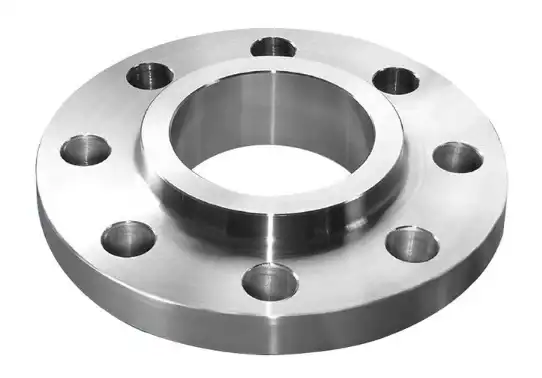
A lap joint flange is an assembly of two parts. The backing flange is free to glide over the pipe, and a stub end is butt-welded directly to it. The backing ring revolves independently so the bolt holes line up without twisting the pipe. This flexibility of rotation is what sets this design apart from any other kind of flange on the market.
Key Standards and Pressure Ratings
Carbon steel lap joint flanges are produced according to ASME B16.5 (½″ to 24″) and ASME B16.47 (26″ to 60″) and include pressure classes ranging from 150# to 2500#. The inner radius of the hole is chamfered to precisely clear the weld fillet of the mating stub end. Usually, material is forged from ASTM A105 to provide high yield strength for uniform bolt-load transfer.
Where They Work Best
These flanges are most often found in oil and gas pipelines, petrochemical factories, water treatment plants, and power production systems. Their real strength is evident in three applications: chemical processing lines where a Hastelloy stub end is used with a carbon steel backing ring to reduce material costs by 40-60 percent; slurry or wastewater systems that need to be disassembled often; and dense refinery pipe racks where turning a rigid pipe is physically impossible.
Critical Comparison: Lap Joint Flange CS vs Other Flange Types
Structural Differences That Matter
Weld neck flanges are attached directly to the pipe and have great fatigue strength. They are the typical choice for severe cyclic or high-pressure applications. Slip-on flanges are easier and cheaper but do not have mechanical integrity. Lap joint flange CS has around 10% of the fatigue strength of weld neck flanges and is hence suitable for low to moderate pressure applications, not high-cycle conditions.
When Carbon Steel Beats Other Materials
Carbon steel backing flanges are far less expensive than stainless steel or alloy counterparts. For corrosive use, engineers combine the stub end of an unusual alloy — Inconel, SS316, or Hastelloy C276 — with the backing ring of a common carbon steel. The aggressive medium is solely in contact with the stub end; the structural load is taken by the flange. This split material method maintains performance without increasing the budget.
Matching Flange Type to Project Requirements
Socket weld and threaded flanges are suitable for small-diameter, high-pressure lines. Slip-on flanges are used for common low-pressure services. Lap joint flanges are the way to go when some flexibility in alignment is required, or when various materials need to co-exist in one assembly. That is why they are commonly specified by procurement engineers on oil refinery and shipbuilding projects, as installation is significantly more manageable in confined locations.
How to Evaluate and Choose the Right Lap Joint Flange CS Factory?
Selecting the right manufacturing partner goes beyond comparing a price sheet. I recommend building a structured checklist before contacting any factory.
Here are the core criteria every procurement team should verify:
- Certification verification: Confirm ISO 9001 certification and any applicable special equipment manufacturing licenses. These documents signal that the factory operates under a controlled quality management system from raw material intake through final inspection.
- Production capacity and technology: A factory with at least 16,000 tons of annual output and advanced forging, machining, and non-destructive testing equipment can support large project schedules without interruption.
- Export track record: Factories that have served clients across Europe, North America, Southeast Asia, the Middle East, and Africa understand documentation, logistics, and compliance expectations that purely domestic suppliers may not.
- Range of standards covered: Verify that the factory produces to ANSI, ASME, DIN, JIS, and BS standards so your entire project specification can be sourced from one partner.
- Transparent MOQ and payment terms: Clearly negotiated minimum order quantities and flexible payment structures protect cash flow, particularly on large EPC contracts.
These criteria work together. A factory that holds ISO 9001 but lacks export experience may still struggle with customs documentation or packing standards for long-haul shipping. Evaluate the complete profile, not individual data points.
After shortlisting factories, request mill test reports for ASTM A105 material, ask for dimensional inspection records, and — where budget allows — arrange a third-party inspection before shipment. That single step eliminates the majority of downstream quality disputes.
Benefits of Partnering with a Trusted Lap Joint Flange CS Manufacturer
Consistent Material and Dimensional Quality
A factory running a full inspection system — covering raw material intake, in-process controls, and finished-product non-destructive testing — delivers flanges that match drawings shipment after shipment. Dimensional inconsistency in a backing lap joint flange CS causes assembly delays on-site that cost far more than any price difference between suppliers.
Technical Support and Customization
Established manufacturers can accommodate non-standard bore sizes, special facing finishes, and dual-material assemblies. Engineering support at this level matters for EPC contractors managing complex plant specifications where off-the-shelf dimensions simply do not apply.
Supply Chain Stability
A factory with proven global distribution to more than 40 countries carries the logistics infrastructure — export licenses, packing standards, port relationships — to deliver on time. For a procurement manager running a tight project schedule in the oil and gas sector, that reliability directly protects project completion dates.
Step-By-Step Guide: How to Procure Lap Joint Flange CS Effectively
Step 1 — Research and Shortlist
Look for manufacturers with ISO 9001. They should be able to manufacture to ASME B16.5/B16.47 and have verifiable export experience. Review factory audit records if possible and check the client's references.
Step 2 — Request Quotes with Full Technical Specifications
Please provide a price request with material grade (ASTM A105), pressure class, size range, face finish, quantity, and needed delivery window. It generates bogus figures when comparing quotations that don't have comparable specs.
Step 3 — Sample Orders and Inspection
Order a sample and check the dimension reports before making a big purchase against your drawings. Arrange third-party inspection if the project scale justifies it. This step catches quality issues before they reach your job site.
Conclusion
A carbon steel lap joint flange CS from the appropriate supplier helps preserve project quality, budget, and schedule all at once. The keys are simple: examine certificates, check production capacity, check export experience, and test before you commit to volume. Factories that meet the whole spectrum of international standards -- ANSI, DIN, JIS, BS -- and enforce stringent quality control from raw material to shipping provide procurement teams with the bedrock they need. A methodical approach to supplier selection always yields better long-term results than a chase for the lowest unit price.
FAQ
1. Is a carbon steel lap joint flange suitable for corrosive media?
Carbon steel backing flanges work well in non-corrosive or mildly corrosive environments. For aggressive media like sulfuric acid, engineers pair the carbon steel backing ring with a corrosion-resistant stub end made from SS316 or Hastelloy C276. The flange carries structural load while the stub end handles media contact, which is a proven cost-reduction strategy.
2. How do I verify a manufacturer's quality standards?
Ask for the factory's ISO 9001 certificate and request that they share a copy of the special equipment manufacturing license. Request material test reports (MTRs) for ASTM A105 material on any order. Third-party inspection agencies such as SGS or Bureau Veritas can conduct pre-shipment audits if additional assurance is required.
3. What are typical lead times for bulk orders?
Standard bulk orders for carbon steel lap joint flanges generally take 4–8 weeks depending on size range, quantity, and the factory's current production schedule. Factories with high annual output capacity — 16,000 tons or more — tend to manage lead times more predictably than smaller operations.
4. Can lap joint flanges and stub ends use different materials?
Yes. This is one of the primary engineering advantages of the lap joint design. The backing flange and stub end can be specified in different materials within a single assembly, allowing cost savings without compromising the integrity of the wetted surface.
Get a Direct Quote from Oudi — Lap Joint Flange CS Manufacturer
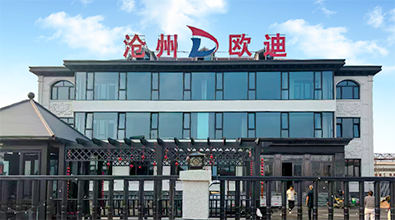
Oudi has supplied carbon steel pipe fittings and flanges to clients in more than 40 countries since 1998. Our lap joint flange CS manufacturer capabilities cover ANSI, DIN, JIS, and BS standards, with an annual output of 16,000 tons and full ISO 9001 certification. Send your specifications to oudi-04@oudiguandao.com and receive a detailed quote with lead time confirmation. We also offer sample orders so you can verify quality before committing to volume.
References
1. ASME B16.5 — Pipe Flanges and Flanged Fittings: NPS ½ Through NPS 24 Metric/Inch Standard, American Society of Mechanical Engineers, 2017.
2. ASME B16.47 — Large Diameter Steel Flanges: NPS 26 Through NPS 60 Metric/Inch Standard, American Society of Mechanical Engineers, 2020.
3. ASTM A105/A105M — Standard Specification for Carbon Steel Forgings for Piping Applications, ASTM International, 2021.
4. MSS SP-43 — Wrought and Fabricated Butt-Welding Fittings for Low Pressure, Corrosion Resistant Applications, Manufacturers Standardization Society, 2014.
5. ISO 9001:2015 — Quality Management Systems — Requirements, International Organization for Standardization, 2015.
6. Nayyar, M.L. — Piping Handbook, 7th Edition, McGraw-Hill, 2000.

Need help finding the right solution with our experts. Please contact us.
SINCE 1998 Your Reliable Pipeline Manufacturer