ASME B16.9 Pipe Cap Manufacturer – Fast Suppl
ASME B16.9 Pipe Cap products give your vital infrastructure the reliability it needs when you need to safely end a pipe run. These factory-made, wrought carbon steel parts securely seal pipe ends for high-pressure systems in oil factories, chemical plants, and power plants. As deadlines get shorter for global sourcing managers and project engineers, working with a maker that can turn things around quickly without lowering quality gives you an edge over your competitors. Over 300 industry customers in 40 countries have bought from Oudi since 1998. We offer certified pipe caps that meet your exact specs. To help you feel good about your sourcing choices, this guide walks you through technical standards, comparing materials, buying strategies, and real-life examples.
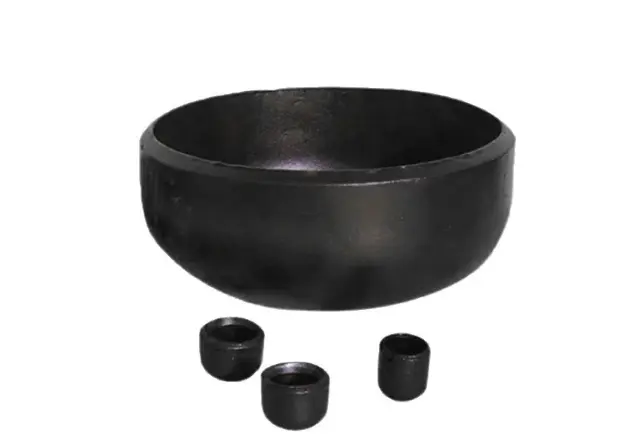
Understanding ASME B16.9 Pipe Caps: Specifications and Standards
ASME B16.9 specifies the marking needs, pressure-temperature values, and size ranges for butt-welding fittings made in a plant, such as caps from NPS 1/2 to 48 inches. These end closures work perfectly with pipe schedules 10 through XXS. They provide a fixed end for test headers, future growth points, and the removal of deadlegs in process systems.
Material Grades and Pressure Capabilities
The tensile strength of carbon steel pipe caps made to ASTM A234 WPB standards is at least 60,000 psi. This means they can be used in power generation systems for feedwater and petroleum processing at temperatures up to 750°F. The managed carbon content—usually no more than 0.30%—allows welding without having to heat the metal below room temperature, which lowers the cost of installation. Stainless steel types like ASTM A403 WP304L can handle chloride stress corrosion in harsh marine settings. Alloy steel grades WP11 and WP22 can handle creep-resistant tasks in refinery catalyst regenerators that are heated above 1000°F. The thickness of the walls is calculated using the ASME B31.3 and ASME B31.1 pressure design methods. Schedule 40 caps are used for standard-duty chemical transfer lines, and Schedule 80 versions can handle higher design pressures in underwater pipeline terminals.
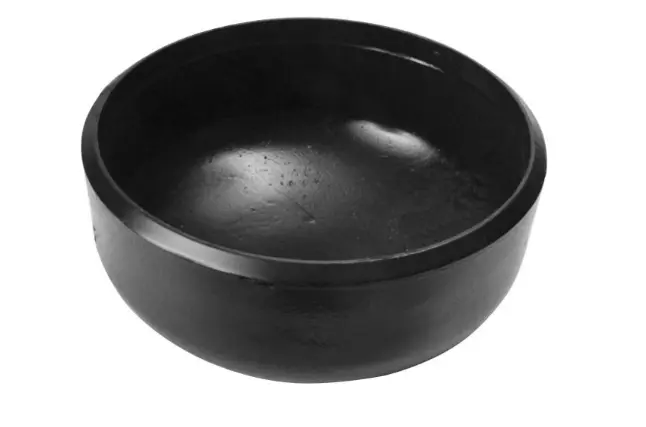
Manufacturing Processes and Quality Certifications
The first step in our production process is hot-pushed making, which turns seamless pipe blanks into hemispherical forms without damaging the grain structure. Normalization at 1650°F, followed by controlled cooling, is the heat treatment steps that return ductility after cold working while keeping hardness below 197 HB, which is what ASME requires. For dimensional verification, center-to-end lengths are compared to B16.9 accuracy tables (±1/16 inch for NPS 2 to 6), and squareness checks ensure that the parts are perpendicular to each other within 1 degree so that there are no alignment problems during field fit-up. Our quality control system is based on ISO 9001 approval and the People's Republic of China's Special Equipment Manufacturing License. It requires that all test reports, from the mill test reports to the final hydraulic testing at 1.5 times design pressure, can be tracked.
Comparing ASME B16.9 Pipe Caps: Making the Right Choice for Your Application
Choosing the best ASME B16.9 pipe cap setup depends on its intended use, your budget, and your maintenance plan. Knowing these differences can help you avoid expensive repairs and service interruptions.
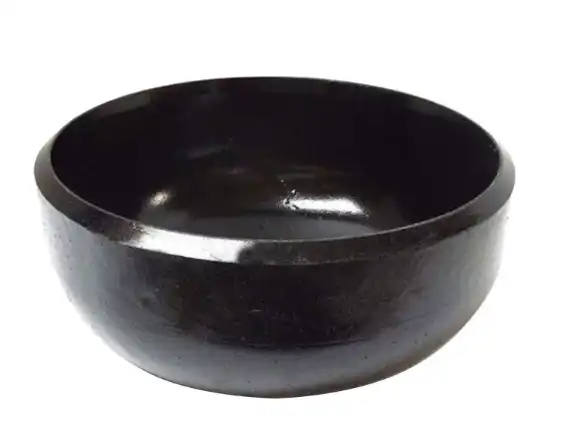
ASME B16.9 Versus ASME B16.28 Short Radius Caps
B16.9 caps have a depth that is about the same as the standard pipe diameter. ASME B16.28 short radius caps, on the other hand, have shallower profiles that are better for installs with limited room, like marine piping manifolds. The longer shape of B16.9 designs spreads stress more widely, which lowers the risk of fatigue cracking in services that involve changing temperatures, like those found in steam turbines during extraction. When buying things for offshore platforms that need to be retrofitted, procurement teams often choose B16.28 versions to keep weight and envelope measurements as low as possible, even if such a choice means taking slightly higher stress intensification factors, as shown in ASME B31.3 flexibility analysis.
Seamless Versus Welded Construction
When you make seamless caps from solid bar stock, you eliminate the longitudinal weld lines that can cause hydrogen to create cracks in sour gas service. Their uniform microstructure meets the requirements for radiography testing and doesn't have the planar breaks that are common in seam-welded options. But welded caps made from formed plate can save you 20 to 30 percent on costs for low-criticality uses like firewater distribution lines and condensate return systems that work below 300 psi. Our expert team uses XRF spectrometry to positively identify materials and make sure they meet the chemistry requirements of ASTM A234 heat analysis. They also make sure that the manganese-to-carbon ratios meet the requirements of any production route.
Carbon Steel Versus Stainless Steel Material Selection
Carbon steel caps are most common on gas pipes and the outside of boilers, where oxygen-free conditions keep oxidation rates below 0.005 inches per year. They can be welded to A106 Grade B pipe using E7018 electrodes, and for widths less than 1.25 inches, there is no need for a post-weld heat treatment. This accelerates the building process. When working with cold chlorine water, acidic condensates (pH below 5), or cryogenic liquefied natural gas (-260°F), you need to use materials other than stainless steel. Type 316L caps with 2% to 3% molybdenum don't rust or pit in marine environments, but their thermal expansion rate is 50% higher than carbon steel, so they need careful analysis during mixed-metallurgy changes.
Procurement Guide: How to Buy ASME B16.9 Pipe Caps Efficiently
Throughout the lifetime of a project, strategic sourcing for every ASME B16.9 pipe cap strikes a balance between technical compliance, delivery efficiency, and the total cost of ownership. These tried-and-true strategies make evaluating and negotiating with vendors easier.
Verifying Supplier Credentials and Certifications
Ask for proof that the company is registered with ISO 9001, ASME approval marks if they need to work on pressure vessels, and special equipment licenses that are valid in your area. According to EN 10204 Type 3.1 standards, our mill test records show the chemical makeup, mechanical properties, and results of a non-destructive study. They are checked by a third party who is not involved with the project. You can visit or virtually inspect manufacturing sites to find out how much they can produce. Our yearly output of 16,000 tons ensures a steady supply without long wait times. Check the references for past projects in your industry to make sure the supplier has worked with EPC contractors on FEED and detailed planning steps before.
Understanding Price Factors and Obtaining Competitive Quotations
Base prices are based on the grade of the material. For example, carbon steel WPB caps cost about 40% less than stainless steel 304L caps of the same size. For Schedule 160 and XXS wall thicknesses requiring special tools, the price increases by 15–25% due to dimension complexity. Tiered savings of up to 12–18% are available for bulk orders of more than 500 pieces of each size. However, for normal NPS 2–12 configurations, the minimum order quantity usually starts at 10 pieces. Ask for detailed price quotes that break down the costs of the material, shaping, heating, testing, and finishing the surface to find places where you can negotiate. Compare landing prices that include freight. Because we are close to Tianjin Port, delivery times to the U.S. Gulf Coast ports are shorter by 8–12 days compared to competitors in the interior.
Managing Lead Times and Logistics for Fast Supply
Standard stock sizes ship within 7–10 working days from our plant in Cangzhou. Custom specs, on the other hand, need 18–25 days to get the materials and heat-treat them. For critical path items, expedited production costs 20% more, but cuts plans down to 12–15 days by putting them at the top of the priority queue. Make sure that the shipping methods you use are in line with the project's goals. Less than a container load consolidation works best for small amounts, while full container loads get the best per-unit freight rates for bulk consumption over 8 metric tons. Our team of export paperwork experts takes care of business invoices, packing lists, and certificates of origin that meet U.S. customs rules, which would get rid of delays at target ports for clearing.
Technical and Application Insights for ASME B16.9 Pipe Caps
Installing the ASME B16.9 pipe cap correctly and keeping it in good shape can make it last longer and keep it from going down without warning, which can mess up production goals.
Installation and Welding Best Practices
The ends are beveled to 37.5° ± 2.5° angles so that full entry butt welds can be done that meet the standards of ASME Section IX. To get rid of mill scale, clean the contact surfaces with wire brushes and ensure the fit-up gaps stay under 1/16 inch to avoid too much weld strengthening. Apply tack welds in four quadrants while keeping the rotational alignment. Next, do root passes using GTAW methods for important services or SMAW methods for construction-grade uses. A visual inspection after the weld shows that the bead profiles are regular and there is no undercut, and a radiographic check according to ASME Section V Article 2 finds subsurface porosity in pressure-retaining welds.
Pressure Testing and Non-Destructive Examination
Hydrostatic testing at 1.5 times the Maximum Allowable Working Pressure makes sure the structure is solid, and the hold times must be at least 30 minutes long according to ASME B31.3 standards. Pneumatic testing can replace water-sensitive systems that deal with potassium hydroxide or anhydrous ammonia. However, safety rules require remote tracking and blast shields because of the dangers of stored energy. Ultrasonic thickness measure checks that the minimum wall compliance has been met after making, and magnetic particle inspection finds cracks in carbon steel weldments that break the surface. Our quality control lab keeps the calibrations up to NIST standards, ensuring that measurements remain accurate to within ±0.001 inches.
Key Industries and Operational Benefits
Caps are used on oil and gas transmission pipes to separate future tie-in points during phased building. This lets the first parts go into service while the expansion works on. During repair breaks for turbines, thermal power plants put caps on the superheater exit headers. This keeps the system clean and stops unwanted objects from getting in. Chemical processing plants use caps to stop the nozzles on reactor vessels while they change the catalysts. This allows for quick response times that keep production costs low. The strong butt-weld link can handle more than 15,000 cycles of thermal expansion stress in combined-cycle cogeneration plants, which is better than threaded closures that often get stuck or leak.
Why Choose Oudi as Your Trusted ASME B16.9 Pipe Cap Manufacturer?
The trust of large EPC contractors, plant operators, and distributors in charge of complicated global supply chains comes from our dedication to technical excellence and client relationships regarding the ASME B16.9 pipe cap. We keep full records of all materials from the steel mill to the final shipment. Positive material identification testing makes this possible by checking that all heat lots follow the rules for chemistry. Digital imaging systems and automatic ultrasonic scanners are examples of advanced inspection equipment that make it possible to find flaws more accurately than the code minimum standards. Our technical support team helps with figuring out pressure-temperature ratings, suggesting better materials for corrosive environments, and introducing changes to dimensions to fit non-standard pipe plans.
Conclusion
To find ASME B16.9 Pipe Cap products that meet your project's needs, you have to balance technical specs, material performance, and source dependability. By knowing about dimensional standards, pressure rates, and industrial quality controls, you can make smart decisions about whether carbon steel or stainless steel is better for your application. Checking certifications, figuring out wait times, and negotiating high prices are all efficient ways to buy things that keep costs low and schedules on track. For oil, chemical, power production, and industrial manufacturing uses, the right installation methods and testing procedures ensure long-term integrity. When you work with a maker who has a lot of experience, you get the technical help and quick delivery you need to handle complicated global projects well.
FAQ
What materials are standard for ASME B16.9 pipe caps?
Carbon steel ASTM A234 WPB is still the most common material for general service uses up to 750°F because it is easy to weld and is inexpensive. The grades A403 WP304/304L and WP316/316L of stainless steel work well in acidic conditions and at very low temperatures. Specifications for alloy steels like A234 WP11 (1.25Cr-0.5Mo) and WP22 (2.25Cr-1Mo) are used in high-temperature refineries that go over 1000°F, where creep resistance is critical.
How do I verify pressure rating compliance for pipe caps?
Make sure that the thickness of the walls meets the pressure design figures in ASME B31.3 or ASME B31.1 for your design temperature and allowed stress levels. Check mill test results that show the tensile strength and yield qualities of the material against ASTM standards. Hydrostatic test certificates that show 1.5 times the design pressure can be held without leaking are the final proof that the pressure-retaining integrity is complete.
What are typical lead times for bulk orders?
Standard carbon steel caps in popular sizes can be shipped within 7–10 business days if they are in stock. Lead times can be 18 to 25 days if you need special material grades or measurements that aren't normal. This includes the time it takes to buy the materials and heat treat them. For critical path needs, expedited production can cut plans down to 12–15 days, but this depends on the current production queue state and the cost of the service.
Partner with Oudi for Reliable Pipe Cap Supply
Since 1998, Oudi has been making certified ASME B16.9 pipe cap items that are subject to strict quality controls and are ready to help you with your next plumbing job. Our ability to produce 16,000 tons of goods each year and our location near Tianjin Port make shipping to places around the world quick and easy. Our ISO 9001 certification and special equipment licenses also make sure that we follow international rules. Our engineering team is here to help you with any technical questions you have, from the first time you ask about standard carbon steel caps for refining growth to custom alloy specs for offshore platforms. Email our salespeople at oudi-04@oudiguandao.com to talk about your unique needs, get full quotes, or set up a tour of our facility. Find out why top EPC builders and industrial distributors choose Oudi as their top provider for quality, dependability, and quick service.
References
1. American Society of Mechanical Engineers. (2018). ASME B16.9: Factory-Made Wrought Buttwelding Fittings. New York: ASME International.
2. American Society of Mechanical Engineers. (2020). ASME B31.3: Process Piping Code. New York: ASME International.
3. ASTM International. (2019). ASTM A234/A234M: Standard Specification for Piping Fittings of Wrought Carbon Steel and Alloy Steel for Moderate and High Temperature Service. West Conshohocken: ASTM International.
4. American Society of Mechanical Engineers. (2017). ASME Section V: Nondestructive Examination. New York: ASME Boiler and Pressure Vessel Code.
5. European Committee for Standardization. (2015). EN 10204: Metallic Products – Types of Inspection Documents. Brussels: CEN.
6. American Welding Society. (2016). AWS A5.1/A5.1M: Specification for Carbon Steel Electrodes for Shielded Metal Arc Welding. Miami: AWS Publications.

Need help finding the right solution with our experts. Please contact us.

SINCE 1998 Your Reliable Pipeline Manufacturer



