ASME B16.9 Pipe Cap Price Guide for Bulk Procurement
To make smart choices about where to buy ASME B16.9 Pipe Cap parts for industrial piping systems, buyers need clear pricing structures and quality assurance. Standardised butt-weld caps are used as important end-sealing tools in water treatment plants, chemical plants, and oil companies. Procurement managers can arrange better terms while still following international standards if they know about the different factors that affect costs, such as the grades of raw materials and the limits used in manufacturing. This guide talks about how prices change, what specifications are needed, and how to evaluate suppliers so that you can make smart bulk purchases in today's global market.
Understanding ASME B16.9 Pipe Caps: Standards and Specifications
What Defines an ASME B16.9 Pipe Cap?
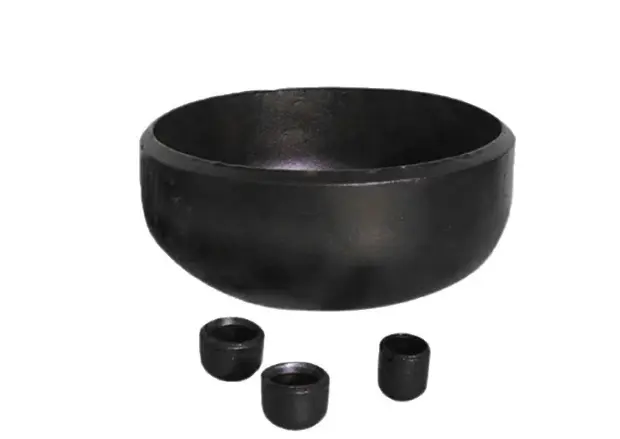
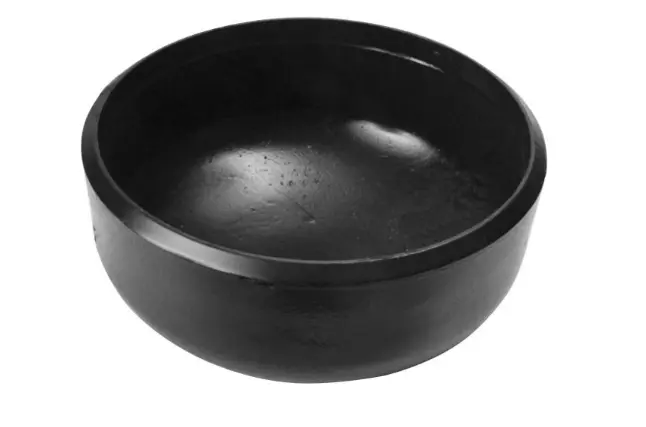
The American Society of Mechanical Engineers set the ASME B16.9 standard, which controls the tolerances for size, pressure ratings, material needs, and production methods for wrought butt-welding fittings. Pipe caps that meet this standard seal pipe ends by welding around the outside. This makes leak-proof closures that are as strong as the pipeline they connect to. Instead of fixed or socket-weld options that are covered by ASME B16.11, these caps are fully-penetration welded directly into the pipe system, so there are no gaps that could allow rust to grow or stop flow.
Material Composition and Performance Characteristics
The choice of material has a big effect on both how well it works and how much it costs. Carbon steel types like ASTM A234 WPB are most common in situations where the tensile strength needs to be above 60,000 psi. They are also very easy to weld without the need for preheating because the carbon content is managed to 0.30% or less. Forging or forming, which are both types of wrought manufacturing, line grain structures to make materials more resistant to wear than cast options. Stainless steel types (ASTM A403 WP304/316) are better at resisting corrosion in chemical processing settings, while alloy steel types can handle high temperatures in power generation systems. Each type of material has its own costs that buyers have to weigh against the needs of their operations.
Dimensional Standards and Manufacturing Tolerances
ASME B16.9 lists exact dimensions to make sure that products can be swapped out in global supply chains. Standardised bevel end preparation—usually 37.5° ± 2.5°—is used when making pipe caps to make full penetration welding easier. The standard makes sure that the wall thickness is always the same, with the minimum thickness at any point having to stay above 87.5% of the nominal designation. Sizes range from NPS 1/2 to NPS 48, and there are tolerances for being out of round and not being centred. These strict requirements ensure a consistent fit-up during installation, which lowers the cost of making changes in the field and keeps the structure's integrity during pressure cycling.
Key Factors Influencing ASME B16.9 Pipe Cap Prices for Bulk Orders
Material Grade and Alloy Composition
When buying ASME B16.9 Pipe Cap in bulk, the main thing that affects prices is the cost of the raw materials. Most of the time, carbon steel caps are the most cost-effective option. The current market prices reflect the world's steel production capacity and the value of scrap metal. Depending on how much nickel and chromium they contain, different types of stainless steel are worth between 150% and 300% more than carbon steel versions. For high-temperature use, specialised metals like ASTM A234 WP11 or WP22 can make each unit cost 200% to 400% more than normal carbon steel. Buyers should think about whether material changes really meet practical needs or are just too specific, which drives up project costs for no reason.
Size, Wall Thickness, and Weight Considerations
Making caps with bigger diameters costs more because they need more raw materials and more complicated shaping steps. A 24-inch smooth cap weighs a lot more than a 4-inch comparable, which has an immediate effect on the cost of materials and shipping. Wall thickness schedules, which go from Schedule 10 to XXH, also affect prices. Heavier schedules require more material investment. Instead of over-designing to be safe, procurement teams should make sure that the wall thicknesses they specify match the actual pressure needs. This will save money on both the cost of buying the materials and the cost of shipping them for large orders.
Manufacturing Process: Seamless vs. Welded Construction
When you make seamless caps using hot-forming methods, they usually cost more because they are stronger and don't have any weld seams that could work loose. For bigger sizes, where seamless manufacturing is either too hard to do or too expensive, welded caps made from plate material are a cheaper option. Which of these methods you choose affects not only the price at which you buy it, but also how reliable it is in the long term in high-pressure or corrosive environments. Buyers need to compare the savings they get up front with the costs they'll have over the course of their lifetime. This is especially important when the working conditions include changing loads or being exposed to harsh chemicals.
Market Dynamics and Supply Chain Variables
The price of steel around the world changes depending on the supply of iron ore, the cost of energy, and the rules for international trade. When buyers buy from foreign producers, currency exchange rates have a big effect on the prices of their goods. Lead times get longer when demand is high or when providers can't get enough raw materials. Sometimes, faster production is needed at higher costs. Prices per unit are affected by the minimum order quantity. For orders over 10 tonnes, manufacturers offer volume discounts that can reach 15% to 25%. Changes in seasonal demand in the energy and construction industries open up price windows that smart buyers can take advantage of by planning and being flexible with delivery times.
How to Choose the Right ASME B16.9 Pipe Caps for Bulk Procurement
Matching Material Selection to Operating Conditions
A careful study of service parameters is the first step in writing a good material specification. For use at temperatures above 800°F, alloy steel types with better creep resistance are usually needed. For cryogenic uses, materials must stay flexible at temperatures below zero. To choose the right stainless steel grades or protective coatings for chemical processing environments, you need to carefully look at the different types of corrosion that can happen, such as oxidising acids, reducing acids, and stress corrosion caused by chloride. Carbon steel is good enough for work in water or hydrocarbons that don't corrode at mild temperatures, which saves a lot of money. We suggest including information about pressure, temperature, and media properties in the procurement requirements so that providers offer the right material grades instead of just offering the most expensive ones.
Pressure Rating Considerations and Pipe Schedule Compatibility
Butt-weld caps get their pressure rating from matching the wall thickness of the pipe they are connected to, while flanges are governed by ASME B16.5 and have clear pressure classes (150#, 300#, etc.). To keep the system's integrity, a cap that is welded to a Schedule 40 pipe must have the same minimum wall thickness. To keep safety margins from being lowered by mismatches, procurement specifications should include both the nominal pipe size and the schedule designation. The requirement in the standard that no point goes below 87.5% of nominal thickness acts as a safety net, but buyers must use mill test records and third-party inspection methods to make sure that makers' production controls always meet this standard.
Compatibility with Adjacent Fittings and Standards
Other butt-weld parts from the same standard family, such as elbows, tees, and reducers, are seamlessly integrated with ASME B16.9 Pipe Caps. They usually connect to ASME B16.5 weld neck flanges, which makes switching between welded pipe runs and bolted connections easier. Knowing these interface requirements will keep you from having to make expensive changes to the field. When working on projects with parts from other countries, buyers should make sure that the measurements match up between ANSI, DIN, JIS, and BS standards so that the parts can be used together. Suppliers with a wide range of products that include different types of fittings make it easier to buy things and lower the risk of dimensional issues that slow down building plans.
Supplier Certification and Quality Assurance Capabilities
Quality certifications are one of the most important factors used for bulk purchases. Having ISO 9001:2015 certification shows that you handle quality in a planned way, and having national special equipment manufacturing licenses shows that you follow the rules for making pressure vessel parts. Buyers should make sure that suppliers keep written inspection procedures that include checking the size, chemical composition, mechanical property testing, and non-destructive examination. For industries that need to see proof of a material's history, being able to provide material traceability through heat numbers and mill test certificates becomes very important. Customisation options from suppliers, like non-standard sizes or speciality finishes, give projects a lot of freedom to meet their specific needs without affecting delivery times.
Bulk Procurement Strategies: How to Get the Best Price and Service
Volume-Based Pricing Structures and Negotiation Leverage
Manufacturers usually base their prices on quantity limits, with big savings applied to orders of 5 tonnes, 10 tonnes, and 20 tonnes. Increasing bargaining power means combining needs from several projects or planning purchases with partner groups. Suppliers like annual blanket orders with planned drops because they make it easier for them to plan their production, and in return, they get better prices. In order to find ways to negotiate, buyers should ask for detailed quotes that break down the costs of materials, labour, testing, and packaging. When open bids are made public, providers are more likely to lower their prices while keeping quality standards high. Long-term partnerships often end up being more valuable in the long run than short-term deals where the only goal is to get the lowest price per unit.
Optimising Delivery Schedules and Logistics Planning
By lining up procurement schedules with project construction schedules, you can avoid expensive storage and expediting fees. Standard wait times for pipe caps are between 4 and 8 weeks, but this depends on how much material is available and how busy the production line is. However, common carbon steel items may ship within 2 to 3 weeks. It takes 10 to 14 weeks longer if the alloys are complicated or the sizes aren't standard. Buyers should be honest about when they need things delivered instead of making them seem urgent when they're not. Containerised shipping is cheaper for buying things from other countries, and 20-foot containers can hold between 18 and 22 tonnes, depending on how they are stacked. When buyers ship from foreign makers, they need to figure out the total landed costs that include customs processing, inland goods, and any possible tariff effects.
Quality Verification Protocols and Inspection Requirements
Rework and project delays can be avoided by implementing strict quality assurance for ASME B16.9 Pipe Cap. Before goods leave the factory, they are checked by third-party agencies to make sure they are the right size, have the right markings, and look good. Every heat number should come with a mill test record that lists the chemicals used and their mechanical qualities. Buyers in critical service applications should ask for more non-destructive tests besides standard visual and dimensional checks. These tests could include ultrasonic examination or radiographic inspection. Putting clear acceptance criteria in purchase orders, like allowed differences from nominal dimensions and surface finish requirements, gets rid of disagreements after delivery. Suppliers who keep statistical process control data show that they are committed to uniform quality, which makes it easier for buyers to check goods when they come in.
Supplier Evaluation and Risk Mitigation
Doing your research on suppliers is the best way to avoid quality problems and delivery delays. We look at potential suppliers based on several factors, including their ability to handle large orders, the sophistication of their equipment for keeping tight tolerances, the strength of their quality system as shown by the range of certifications they hold, and their export experience, which can be seen through references from similar industries. Signs of financial security, like the number of years the business has been open and the amount of money it has invested in its facilities, show that it can keep its long-term promises. Site visits are a better way to learn about production skills and quality culture than just reading through documentation. Diversifying providers across regions lowers the risk of disruptions happening in specific areas and keeps prices and service levels low by keeping competitive pressure.
Trusted ASME B16.9 Pipe Cap Suppliers and Manufacturers: Where to Buy
Evaluating Manufacturer Credentials and Capabilities
Reputable manufacturers set themselves apart by having a wide range of certifications and state-of-the-art production facilities. ISO 9001 quality management systems make sure that processes are always the same, from receiving the raw materials to checking the final product. Specialised pressure equipment manufacturing permits show that safety-critical parts are made in accordance with the rules. As part of the production process, there should be equipment for shaping materials, furnaces for heat treatment to relieve stress and make things normal, and testing labs with tools for chemical analysis, evaluating mechanical properties, and checking measurements. When companies buy CNC machining centers and automatic welding systems, they get better accuracy and tighter tolerances across big production runs. If you've exported to more than one international market, you should know how to deal with the different rules and paperwork that are needed to get your goods through customs.
Comprehensive Product Range and Customisation Flexibility
Suppliers who offer a full range of fittings in carbon steel, stainless steel, and metal materials, such as elbows, tees, reducers, and caps, make it easier to buy things and keep relationships with vendors strong. This range makes it possible for complex project needs to be met by a single source, while quality standards and delivery coordination are kept the same. When standard catalogue sizes don't exactly fit the needs of a project, the ability to customise becomes useful. Manufacturers who can make walls with non-standard widths, bevel angles, or material grades without having to meet large minimum order sizes give designers more options. We keep our production capacity at 16,000 tonnes per year across a wide range of sizes. This lets us meet both regular commodity orders and unique needs with stable lead times.
Case Study: Successful Bulk Procurement Execution
A big project to expand a petrochemical plant needed 450 units of carbon steel pipe caps with diameters from 2 inches to 24 inches and wall thicknesses of Schedule 40, 80, and 160. The purchasing team looked at eight possible suppliers and chose the top three based on their ISO certification, ASTM A234 material approvals, and ability to deliver within six weeks. A close look at the quotes showed that the prices were different by 12% between the highest and lowest bids. We suggested a value engineering option that would use seamless construction instead of welded caps for sizes smaller than 12 inches. This would make the caps more resistant to corrosion while keeping the project's budget in check by choosing the best materials for the bigger sizes. Approval of a pre-production sample confirmed the accuracy of the measurements and the quality of the surface finish. Phased delivery matched the order of construction, with the first shipments arriving within 5 weeks and the last lots finishing within the agreed-upon time frame. A third-party inspection at our facility before shipment confirmed that the products met the required tolerances, and all of the material test reports matched the recorded heat numbers. This made it possible for the projects to be seamlessly integrated without any rejections in the field.
Conclusion
To successfully buy pipe caps in bulk, you need to know a lot about the material specs, price factors, and the supplier's abilities. Strategic buyers weigh up the initial costs against the performance over the product's lifetime, choosing materials and production methods that work with the real-world conditions instead of over-specifying to be safe. By combining orders, planning, and working together with suppliers, you can get better prices while still meeting quality standards. There are risks that come with foreign buying, but they can be lessened by carefully checking suppliers' credentials, production capabilities, and quality systems. With these strategic methods, we've seen buying teams cut costs by 15% to 20% while also making deliveries more reliable and products more consistent.
FAQ
1. What determines pressure ratings for ASME B16.9 pipe caps?
ASME B16.9 fittings don't have fixed pressure class names. Instead, pipe caps are made to hold up under the same amount of pressure as straight pipes of the same width, wall thickness, and material grade. According to piping code calculations (like ASME B31.3), the pressure rating is based on the strength of the material and the thickness of the wall. This means that for the same size and material, a Schedule 80 cap can handle more pressure than a Schedule 40 cap.
2. Can ASME B16.9 caps be used with ASME B16.5 flanges?
Of course, these standards are made to work with each other. Butt-weld caps often connect directly to the weld neck part of ASME B16.5 flanges. This makes connections between welded pipe sections and bolted flanges. When specifications correctly list both the pipe schedule and the flange pressure class, the matching dimensional standards make sure that everything fits together correctly.
3. How does material choice affect pipe cap pricing?
Prices go up a lot for stainless steel (150% to 300% more expensive) and speciality alloys (200% to 400% more expensive). Carbon steel is the least expensive option. Corrosion resistance, temperature capability, and mechanical strength requirements determine the choice of material. Buyers must balance performance requirements with budget constraints to avoid over-specification that drives up costs.
4. What are typical delivery timelines for bulk orders?
Caps made of standard carbon steel in popular sizes usually ship in two to four weeks. Lead times are longer for stainless steel and alloy materials because they need to be ordered and heated in a special way. Large orders or measurements that aren't normal may take 10 to 12 weeks. Buyers should let sellers know about their delivery needs early on in the buying process so that they can plan production well and avoid having to pay extra for faster delivery.
Partner with Oudi for Reliable ASME B16.9 Pipe Cap Solutions
Since 1998, Cangzhou Oudi Pipe Manufacture Co., Ltd. has been making high-quality butt-weld fittings for over 300 customers in 40 countries who work in the chemical, natural gas, water conservation, and oil and gas industries. Our ISO 9001:2000-certified facility can produce 16,000 tonnes of ASME B16.9 Pipe Caps every year. It has advanced forming tools and full checking capabilities that make sure every cap meets strict material and size requirements. We have all kinds of steel, like carbon steel, stainless steel, and alloy steel, in sizes ranging from NPS 1/2 to NPS 48 and in different schedules. Our steel is made to meet ANSI, JIS, DIN, and BS standards. Our quality control system includes full traceability from checking the quality of the raw materials to testing finished products without damaging them. This is made possible by our special equipment manufacturing licence. As a manufacturer with a lot of experience making ASME B16.9 Pipe Caps, we can offer you competitive bulk prices, the freedom to make changes, and reliable delivery schedules that work with your project's schedule. Please email our team at oudi-04@oudiguandao.com for detailed quotes, technical specifications, or a sample evaluation that shows how committed we are to quality and service excellence.
References
1. American Society of Mechanical Engineers. (2018). ASME B16.9: Factory-Made Wrought Buttwelding Fittings. ASME International.
2. American Society of Mechanical Engineers. (2020). ASME B31.3: Process Piping Code. ASME International.
3. ASTM International. (2021). ASTM A234/A234M: Standard Specification for Piping Fittings of Wrought Carbon Steel and Alloy Steel for Moderate and High Temperature Service. ASTM International.
4. Nayyar, M.L. (2019). Piping Handbook (8th ed.). McGraw-Hill Education.
5. Smith, P.R., & Zappe, R.W. (2004). Valve Selection Handbook: Engineering Fundamentals for Selecting the Right Valve Design for Every Industrial Flow Application (5th ed.). Gulf Professional Publishing.
6. Becht, C. (2017). Process Piping: The Complete Guide to ASME B31.3 (4th ed.). ASME Press.

Need help finding the right solution with our experts. Please contact us.

SINCE 1998 Your Reliable Pipeline Manufacturer



