ASME Pipe Cap vs Standard Cap – Differences
Selecting the legitimate conclusion closure fitting is basic for keeping up channeling security, weight keenness, and long-term operational unwavering quality in mechanical frameworks. For businesses such as oil and gas, petrochemical preparation, control era, and water treatment, ASME B16.9 pipe caps are commonly favored since they give standardized measurements, more grounded weld compatibility, and higher quality confirmation compared with numerous general-purpose caps. Understanding the contrasts between ASME-compliant fittings and standard pipe caps makes a difference; procurement groups, EPC temporary workers, and mechanical wholesalers make more educated obtaining choices.
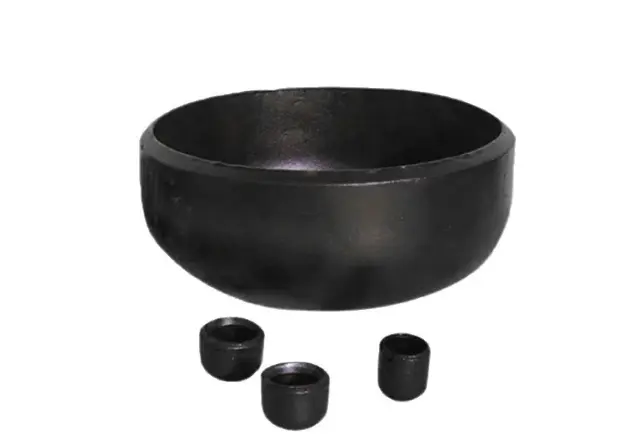
What Are ASME B16.9 Pipe Caps?
ASME B16.9 pipe caps are factory-manufactured wrought steel butt-welding fittings designed to close the ends of piping systems. These fittings are produced according to strict dimensional and manufacturing requirements established by the ASME B16.9 standard.
Typical materials include:
- ASTM A234 WPB carbon steel
- ASTM A403 WP304 and WP316 stainless steel
- Alloy steel grades such as WP11 and WP22
These fittings are widely used in medium- and high-pressure systems where leak prevention, structural integrity, and welding reliability are important.
Compared with threaded or socket-type end caps, butt-weld caps provide smoother flow transition and stronger welded connections for demanding industrial environments.
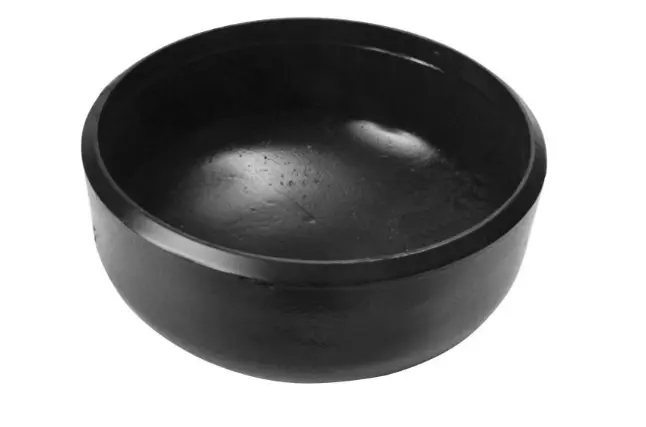
What Defines a Standard Pipe Cap?
The ubiquity of ASME B16.9 pipe caps comes from their combination of building unwavering quality, fabricating consistency, and worldwide standard compatibility.
High Dimensional Accuracy
ASME measures characterize strict resistances for divider thickness, slope points, and center-to-end measurements. This moves forward field fit-up productivity and diminishes welding alteration time amid installation.
Better Welding Performance
Standardized slope arrangement underpins full-penetration welding, making a difference, making strides in joint quality, and diminishing spill dangers in weight systems.
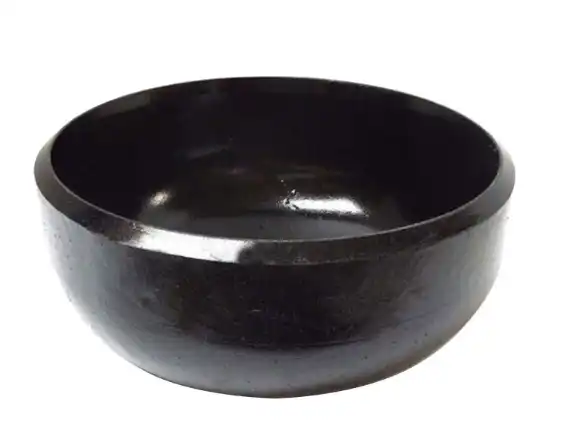
Reliable Material Quality
Certified materials experience mechanical and chemical testing to affirm compliance with ASTM details. This moves forward consistency over huge mechanical projects.
Suitable for Harsh Environments
These fittings are commonly utilized in high-temperature steam lines, refinery channeling frameworks, and chemical handling offices where conventional fittings may not give adequate reliability.
Easier International Procurement
Because ASME benchmarks are all-inclusive and recognized, buyers can source fittings from numerous qualified providers while keeping up extended compatibility requirements.
Overall, ASME-standard fittings offer assistance, decrease operational chance, and make strides in long-term upkeep execution in mechanical channeling frameworks.
Key Differences Between ASME and Standard Pipe Caps
In spite of the fact that standard pipe caps may show up comparable, a few critical specialized contrasts exist between them and ASME-compliant products.
Dimensional Accuracy
ASME B16.9 pipe caps are made according to strict dimensional resilience necessities. Benchmarks absolutely characterize divider thickness, incline point, and center-to-end estimations, making a difference moving forward in establishment consistency and welding arrangement. Standard pipe caps may change between producers, which can make fit-up issues and increase establishment trouble amid field welding.
Material Certification and Traceability
ASME-standard caps are ordinarily provided with total Fabric Test Reports (MTRs), warm number following, and assessment documentation. These records offer assistance to confirm chemical composition and mechanical execution. In differentiating, standard pipe caps may offer constrained documentation, making it more troublesome to affirm item quality and compliance for basic projects.
Welding Performance
ASME B16.9 pipe caps are planned with standardized incline arrangements that bolster full-penetration welding. This makes strides in joint quality and spill resistance in high-pressure channeling frameworks. Standard caps may have conflicting conclusion-arrangement quality, which can influence welding unwavering quality and long-term framework stability.
Pressure and Temperature Capability
ASME pipe caps are commonly utilized in demanding mechanical situations since they are planned to withstand higher weight and temperature conditions. Standard pipe caps are by and large more reasonable for low-pressure utility frameworks or common mechanical applications with lower operational requirements.
Application Scope
ASME B16.9 pipe caps are broadly utilized in oil and gas, petrochemical, control era, and water treatment businesses where strict designing measures are required. Standard pipe caps are more commonly found in HVAC frameworks, common development channeling, and non-critical liquid transport systems.
Long-Term Reliability
Because ASME-compliant fittings take after stricter fabricating and review measures, they by and large give way to better long-term strength and operational solidness. This makes a difference in diminishing upkeep recurrence, spillage hazard, and unforeseen shutdown costs over the lifecycle of the channeling system.
For low-pressure utility frameworks, standard caps may be worthy. In any case, high-pressure or safety-critical ventures for the most part require certified ASME fittings.
Important Factors When Selecting Pipe Caps
Choosing the right fitting includes assessing numerous operational and acquirement factors.
Operating Pressure and Temperature
Material review and divider thickness ought to coordinate the real weight and temperature conditions of the system.
Corrosion Environment
For destructive media or seaward situations, stainless steel or coated carbon steel may give superior long-term performance.
Welding Method
Field welding strategies ought to coordinate fitting fabric and divider thickness to diminish weld absconds and push concentration.
Inspection Requirements
Critical systems often require:
- PMI testing
- Ultrasonic testing
- Radiographic inspection
- Hydrostatic testing
Supply Chain Reliability
Procurement teams should verify production capability, export experience, and delivery stability before placing large project orders.
Proper evaluation helps reduce shutdown risks and maintenance costs over the equipment lifecycle.
Common Procurement and Installation Mistakes
Many industrial projects experience avoidable problems due to incorrect fitting selection or insufficient quality verification.
Common issues include:
- Selecting non-certified fittings for critical systems
- Ignoring wall thickness compatibility
- Poor bevel preparation before welding
- Missing MTR documentation
- Delayed delivery from unstable suppliers
- Inadequate corrosion protection
These problems may lead to weld cracking, leakage, dimensional mismatch, or premature system failure under operating pressure.
Why Industrial Buyers Choose Oudi
Oudi specializes in manufacturing high-quality ASME B16.9 pipe caps for industrial piping systems worldwide. With advanced production equipment, strict quality control systems, and extensive export experience, we support demanding projects across multiple industries.
Our manufacturing advantages include:
- ISO-certified production management
- Advanced dimensional inspection systems
- Material traceability and MTR support
- OEM and custom fabrication capability
- Stable export supply for bulk orders
- Technical support for EPC projects
Our products are widely used in:
- Oil and gas pipelines
- Petrochemical plants
- Thermal power stations
- Water treatment facilities
- Industrial process piping systems
We focus on delivering reliable fittings that meet international engineering standards and long-term operational requirements.
Conclusion
For mechanical channeling frameworks working beneath requesting conditions, ASME B16.9 pipe caps give more grounded quality affirmation, superior welding compatibility, and more dependable long-term performance compared with numerous standard caps. Selecting the correct fitting requires cautious assessment of weight conditions, fabric compatibility, certification necessities, and provider capability. By working with experienced producers, acquirement groups can move forward, extend unwavering quality, diminish upkeep dangers, and bolster more secure mechanical operations over oil, gas, control, chemical, and water treatment businesses.
FAQ
What businesses commonly utilize ASME B16.9 pipe caps?
These fittings are broadly utilized in oil and gas, petrochemical preparation, control era, chemical plants, and mechanical water treatment systems.
Why are ASME B16.9 caps favored for high-pressure systems?
They give standardized measurements, dependable fabric quality, and more grounded, welded associations for requesting working conditions.
Can ASME B16.9 pipe caps be customized?
Yes. Numerous producers offer custom measurements, fabric grades, divider thicknesses, and extraordinary conclusion arrangements based on venture prerequisites.
Partner with Oudi for Reliable ASME B16.9 Pipe Caps
Oudi is a trusted manufacturer of ASME B16.9 pipe caps for sale for global industrial piping projects. We provide high-quality carbon steel, stainless steel, and alloy steel fittings supported by strict inspection procedures, material traceability, and professional engineering assistance.
Whether you require standard fittings, OEM fabrication, or custom industrial piping solutions, our experienced team can support your project with reliable manufacturing and export services.
Contact us today at oudi-04@oudipipe.com to request product catalogs, technical documentation, MTR reports, or customized quotations for your industrial piping requirements.
References
1. American Society of Mechanical Engineers. (2018). ASME B16.9: Factory-Made Wrought Buttwelding Fittings. New York: ASME Press.
2. ASTM International. (2020). ASTM A234/A234M: Standard Specification for Piping Fittings of Wrought Carbon Steel and Alloy Steel for Moderate and High Temperature Service. West Conshohocken: ASTM International.
3. Harvey, J. F. (1991). Theory and Design of Pressure Vessels (2nd ed.). New York: Van Nostrand Reinhold.
4. Nayyar, M. L. (2000). Piping Handbook (7th ed.). New York: McGraw-Hill Professional.
5. Singh, R. K., & Solanki, V. S. (2017). Materials selection and corrosion behavior of pipe fittings in petrochemical applications. International Journal of Pressure Vessels and Piping, 152, 34-42.
6. Becht IV, C. (2005). Process Piping: The Complete Guide to ASME B31.3 (2nd ed.). New York: ASME Press.

Need help finding the right solution with our experts. Please contact us.

SINCE 1998 Your Reliable Pipeline Manufacturer



