Best Cost-Effective Carbon Steel Elbow for OEM Projects
The stakes are high when procurement managers hunt for cost-effective carbon steel elbows for OEM projects. An incorrect material grade, missing certification, or an unreliable supplier might stop a whole manufacturing line. The good news is that carbon steel elbows are still one of the most proven, budget-smart pipe fitting alternatives in oil, gas, chemical, and water conservancy applications. This book takes you through everything you need to know – from kinds and selection criteria to manufacturing insights and procurement methods – so you can source with confidence.
What Are Carbon Steel Elbows, and Why Do They Matter in OEM Projects?
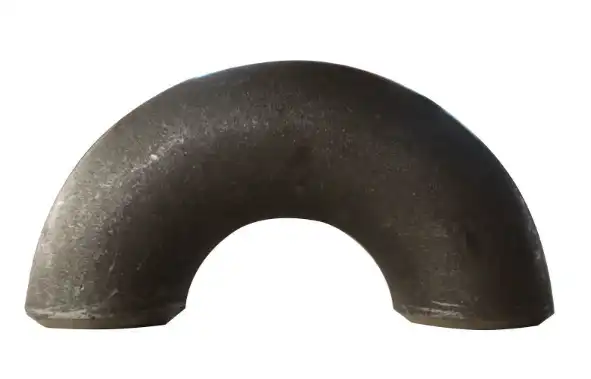
Carbon steel elbows are pipe fittings engineered to redirect fluid flow within a piping system at defined angles — most commonly 45°, 90°, and 180°. They connect pipes in layouts where straight runs are impractical, making them indispensable across refinery networks, boiler systems, and shipbuilding assemblies.
There are two basic classifications of manufacture for carbon steel elbows: seamless and welded. Excellent pressure resistance with no weld seam weakness is provided by seamless elbows, manufactured using hot forming techniques such as hot pushing and hot bending. Welded elbows are feasible for greater diameters. Ends are of butt-welded (BW), socket-welded (SW), and threaded forms.
These are manufactured as per internationally accepted standards, including ASME B16.9, ASTM A234, ANSI, DIN, JIS, and BS – standards that Cangzhou Oudi Pipe Manufacture Co., Ltd. has been following since 1998. Sizes ½ inch through 72 inches, Schedule 40 through Schedule 160, XXS pressure classes.
Both short radius (SR) and long radius (LR) versions are used for differing space and flow velocity requirements. SR elbows with the radius of bending equal to the pipe diameter are perfect for tight installations in oil refining and water treatment. LR elbows with a bend radius of 1.5 times the pipe diameter decrease turbulence and pressure drop in high-flow systems.
How Do You Choose the Right Carbon Steel Elbow for Your OEM Application?
The proper Cost-effective carbon steel elbow begins with picking the correct product specs for your working environment. Selections are based on pressure ratings, fluid temperature, corrosion exposure, and available space for installation.
The table below helps narrow down your material choice based on critical decision factors:
| Criterion | Carbon Steel | Stainless Steel | Alloy Steel |
|---|---|---|---|
| Cost | Low | High | Medium–High |
| Pressure Rating | High | High | Very High |
| Corrosion Resistance | Moderate (with coating) | Excellent | Good |
| Temperature Range | Up to 425°C | Up to 870°C | Up to 650°C+ |
| Best Application | Oil, gas, water, construction | Chemical, food, marine | High-temp, high-pressure |
| OEM Cost Efficiency | Excellent | Low–Moderate | Moderate |
Oudi’s product range is aimed squarely at the core markets where carbon steel is the dominant option for OEM projects in oil pipelines, natural gas transportation, boiler manufacture, and water conservancy infrastructure. If rust is a problem, an anti-corrosion coating like epoxy or hot-dip galvanizing may improve service life without the extra expense of stainless steel.
The optimum performance-to-price ratio for projects that need ASTM A234 WPB material certification and ASME B16.9 compliance is provided by carbon steel butt-weld elbows.
What Are the Smartest Procurement Strategies for OEM Bulk Orders?
Managing procurement costs without sacrificing quality requires a deliberate sourcing strategy. Purchasing managers working on large OEM contracts face competing pressures: tight lead times, certification verification, and volume pricing.
Here are the core procurement approaches worth evaluating for industrial pipe fitting projects:
- Direct manufacturer partnerships give you the strongest leverage on pricing, customization, and certification traceability. Suppliers like Oudi, with an annual output of 16,000 tons and ISO 9001:2000 certification, offer consistent supply chain reliability for repeat OEM orders — critical when your production schedule cannot tolerate delays.
- Bulk order consolidation reduces per-unit cost significantly. Carbon steel elbows ordered alongside flanges, tees, and reducers from a single certified source eliminate multi-supplier coordination risks and reduce freight overhead.
- Certification-first supplier screening protects your project from compliance failures. Oudi holds both ISO 9001:2000 and the People's Republic of China Special Equipment Manufacturing License, ensuring every batch meets international inspection standards from raw material intake through finished product dispatch.
- Custom OEM fabrication is available for non-standard dimensions or special coatings. With full in-house production equipment and nondestructive flaw detection capabilities, Oudi accommodates project-specific requirements without compromising delivery timelines.
These strategies collectively help procurement managers balance lead time, compliance, and budget — the three variables that define successful OEM sourcing. Choosing a manufacturer with proven global export experience across 40+ countries reduces supplier risk substantially.
What Manufacturing and Heat Treatment Standards Should OEM Buyers Verify?
Material Selection
The base material grade dictates the mechanical qualities, pressure tolerance, and weld performance. Standard: ASTM A234 WPB Carbon Steel Butt-Weld Fittings. Request mill test reports (MTRs) to validate the chemical composition and tensile strength. Oudi is fully traceable from raw material acquisition to final shipping.
Mold Design
The dimensional accuracy and wall thickness uniformity are directly affected by the precision mold design, particularly in the hot-pushed elbows. Wall thinning at the bend arc is often inconsistent in poor-quality fits and is a recognized failure location. Oudi’s 66,600-square-meter plant uses state-of-the-art hot-forming machinery to ensure dimensional conformity to ASME B16.9 standards for all kinds of Cost-effective carbon steel elbows.
Testing Standards
OEM-grade fittings are non-negotiable in post-production inspection. Oudi performs the entire inspection process, including nondestructive testing (NDT), hydrostatic testing, and dimensional verification. Oudi has an in-house suite of detection equipment that can perform some of the accepted test procedures under ASME and ASTM standards, such as radiographic testing (RT) and ultrasonic testing (UT).
Heat treatment, such as normalizing and annealing, is used to release residual stresses during hot forming while restoring toughness and enhancing impact resistance. This process is especially critical for elbows used in low-temperature or high-cycle pressure applications.
How Have Carbon Steel Elbows Performed in Real OEM Projects?
An EPC contractor, seeking pipe components for a natural gas transmission project in the Middle East, wanted ASME B16.9 carbon steel elbows in different sizes with fast lead times and comprehensive MTR documentation. The project team consolidated the order with a single qualified manufacturer, reducing procurement coordination time by more than 30%. The team was able to meet their installation timeline without supply delays.
Wanted bespoke radius elbows with special anti-corrosion coatings for marine-grade pipe systems. The flexibility to work with both standard and bespoke specs under a single supplier relationship dramatically reduced qualification overhead and enhanced consistency across production lots.
These results are a reflection of what Oudi’s clients in Europe, North America, Africa and the Middle East often tell us – solid quality, timely technical assistance and very competitive pricing that includes big-volume OEM contracts.
Conclusion
Cost-effective carbon steel elbow pipes are a common part of industrial pipe systems, and choosing the proper product for your OEM project may greatly affect operating performance and procurement budget. The best way to achieve cost-effective, compliant sourcing is to match the right grade, standard, and manufacturing process to your application, in partnership with a certified, high-capacity manufacturer. Oudi has been serving 300+ clients in 40+ countries since 1998. 16,000 tons of capacity per year, along with strict quality control, for reliable outcomes on every OEM contract.
FAQ
1. What is the difference between carbon steel and stainless steel elbows for OEM projects?
Carbon steel elbows cost significantly less and handle high-pressure, high-flow applications in oil, gas, and water systems effectively. Stainless steel elbows offer superior corrosion resistance, making them preferable for chemical processing or food-grade environments. For most OEM industrial projects where budget efficiency matters, carbon steel elbows with protective coatings deliver the best value.
2. How do I determine the correct pressure rating for my elbow order?
Match the schedule rating (e.g., SCH 40, SCH 80, SCH 160) to your system's maximum operating pressure and temperature. Reference ASME B16.9 and ASTM A234 specifications, and always request certified mill test reports from your supplier to verify compliance.
3. Can carbon steel elbows be custom-manufactured for non-standard OEM specifications?
Yes. Manufacturers like Oudi accommodate custom dimensions, bend radii, end connections, and surface coatings. Providing detailed drawings and specification sheets allows the supplier to confirm feasibility and lead time before order confirmation.
Source Your Next OEM Order with Oudi — Certified Quality, Competitive Pricing
Oudi has been a trusted cost-effective carbon steel elbow manufacturer since 1998, serving 300+ customers across 40 countries with ISO 9001-certified quality and 16,000-ton annual capacity. Whether you need standard ASME elbows or fully custom OEM fittings, our team delivers verified quality at competitive pricing. Contact us today at oudi-04@oudiguandao.com to request a free quote or discuss your project specifications.
References
1. ASME B16.9 – Factory-Made Wrought Buttwelding Fittings, American Society of Mechanical Engineers, 2018.
2. ASTM A234/A234M – Standard Specification for Piping Fittings of Wrought Carbon Steel and Alloy Steel for Moderate and High Temperature Service, ASTM International, 2022.
3. Pipe Fittings: Selection, Application and Quality Standards, Hydrocarbon Processing, 2020.
4. Industrial Piping and Equipment Estimating Manual, Gulf Professional Publishing, 2017.
5. ISO 9001:2015 – Quality Management Systems: Requirements, International Organization for Standardization, 2015.
6. Engineering Procurement and Construction (EPC) Best Practices in Oil & Gas Projects, Energy Institute, 2021.

Need help finding the right solution with our experts. Please contact us.

SINCE 1998 Your Reliable Pipeline Manufacturer



