How to Select the Right Precision-machined elbow for Your Project?
Choosing the appropriate Precision-machined elbow may make or break the integrity of your pipe system. Whether you are working with a high-pressure oil pipeline, a chemical processing facility, or a subsea control module, a precision-machined elbow will give the strict dimensional tolerances, smooth internal bore finish, and material homogeneity that ordinary fittings just cannot provide. When ordering these items, it’s important to pay attention to material grade, pressure rating, tolerance class, and certificates of conformity. This manual will bring you through all the key decision points, step by step.
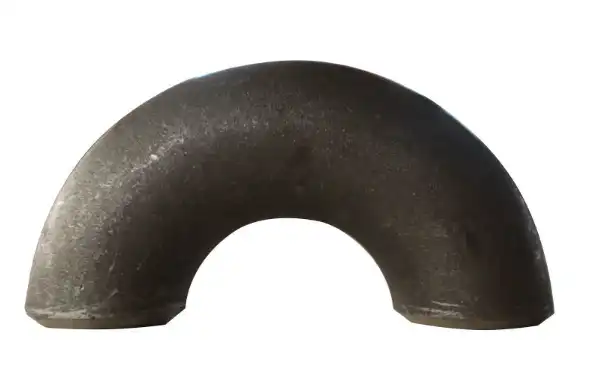
Understanding Precision-Machined Elbows: What They Are and Why They Matter
What Separates Them from Standard Fittings?
A precision-machined elbow is a high-end flow direction component created by CNC milling and turning out of solid billet material. It provides interior bore smoothness as fine as Ra 0.4 μm, dimensional tolerances of ±0.01 mm, and complete material homogeneity throughout the wall, unlike cast or ordinary forged alternatives. They remove internal dead zones where corrosive fluids may gather, lower turbulence-induced pressure loss, and avoid the micro-leakage channels that can develop in high-vibration situations.
These parts are particularly important in industries where system failure cannot be tolerated, such as oil and gas, chemical processing, electric power, and boiler production, where the performance differential between a precision component and a commercial fitting grows with time. For example, a single-dimensional difference in a modular hydraulic manifold causes stack faults across dozens of connection points, increasing maintenance costs and unnecessary downtime.
Where Are They Deployed?
Three demanding application areas make use of precision-machined elbows. Semiconductor manufacturing uses ultra-high-purity gas supply systems, which must be free of particle contamination and have mirror-smooth inner walls. Fuel and hydraulic lines in aerospace and military applications are required to resist severe G-forces and temperature cycling without fatigue cracking. The subsea control modules used in deep-sea oil and gas are concurrently exposed to the external hydrostatic pressure and the interior saline corrosion, and are required to be rated for a service life of 25 years or more.
Core Selection Criteria: How to Choose the Right Precision-Machined Elbow
Matching Material to Operating Conditions
Material selection drives corrosion resistance, tensile strength, and total lifecycle cost. Here is a practical comparison of the most common alloy grades:
| Material | Corrosion Resistance | Pressure Rating | Best Application |
|---|---|---|---|
| 316L Stainless Steel | Excellent (chloride environments) | Up to 10,000 PSI | Chemical, offshore, food-grade |
| Carbon Steel (A234 WPB) | Moderate (requires coating) | High (cost-effective) | Oil, gas, and water conservation |
| Alloy Steel (Cr-Mo grades) | Good at elevated temperatures | Very high | Boiler, power plant, refinery |
| Titanium Grade 5 | Outstanding | Very high, lightweight | Aerospace, deep-sea |
| Inconel 625 | Exceptional (extreme heat) | Extremely high | High-temperature chemical service |
Cangzhou Oudi Pipe Manufacture Co., ltd has produced carbon steel, stainless steel, and alloy steel pipe fittings since 1998, offering ANSI, DIN, JIS, and BS standard compliance across all grades listed above.
Understanding Tolerance Classes and Configuration Options
Apart from the material, the tolerance class is what makes the Precision-machined elbow either function to specification or deteriorate prematurely. The precision-machined elbows are usually kept to ±0.01 mm, much over the ASME B16.9 requirement. With the right billet and machining technique, pressure ratings typically reach 10,000 PSI.
Standard configuration choices include long-radius and short-radius geometries at 45°, 90°, and 180°. CNC machining is capable of producing non-standard angles such as 22.5° or 60° compound bends that are difficult to manufacture by conventional means of casting or bending. Procurement managers should seek quotes with the correct angle, bore diameter, wall thickness, end connection type (butt-weld, socket-weld, or threaded), and desired surface finish Ra value.
Comparing Precision-Machined Elbows with Other Elbow Types
Not every project needs a precision-machined component. Understanding where the performance differential justifies the cost helps procurement teams allocate budgets correctly.
| Criteria | Precision-Machined | Cast | Forged | Fabricated |
|---|---|---|---|---|
| Dimensional Tolerance | ±0.01 mm | ±0.5–1.5 mm | ±0.1–0.3 mm | Variable |
| Surface Finish (Ra) | 0.4 μm or better | 3.2–12.5 μm | 1.6–6.3 μm | Variable |
| Pressure Rating | Highest (>10,000 PSI) | Moderate | High | Moderate |
| Lead Time | 2–4 weeks (custom) | Short (stock) | Moderate to long | Short |
| Material Traceability | EN 10204 3.1 / 3.2 MTR | Standard cert | Standard cert | Limited |
| Custom Geometry | Yes (any angle) | No | Limited | Yes |
| Best Fit | High-purity, high-pressure | General service | Structural, high-toughness | Low-pressure custom runs |
Precision-machined elbows are still economical for common service lines when tolerance stacking is not a problem. Forged elbows provide good durability; however, non-standard requirements will take longer lead times. Fabricated elbows allow design freedom, but they do not have the same wall thickness uniformity as finely machined elbows. When system integrity is non-negotiable – subsea umbilicals, high-pressure chemical reactors, power boiler headers – precision-machined components are the defensible option.
Procurement Best Practices: Finding and Ordering Precision-Machined Elbows
Evaluating a Supplier's Qualification Stack
A trusted Precision-machined elbow provider should have verified credentials. Before ordering, it is important to get the following documentation:
- ISO 9001 quality management system certified in the discipline of processes from raw material to shipping of final items.
- Manufacturing license for special equipment provided by a recognized national body, for use in pressure vessel and boiler applications.
- EN 10204 3.1 or 3.2 Mill Test Reports with complete chemical and mechanical traceability for each heat of material.
- PMI (Positive Material Identification) records verifying alloy chemistry meet the MTR.
Oudi has maintained its ISO 9001:2000 accreditation and a People’s Republic of China special equipment manufacturing license throughout its 25+ year history. The Company sells to more than 300 clients in more than 40 countries and has active supply agreements in North America, Europe, Southeast Asia, the Middle East, and South America.
Managing Lead Times and Custom Orders
Common precision-machined elbows in standard grades and angles are delivered in two weeks. Custom geometries – non-standard angles, compound bends, OEM-branded components — typically take two to four weeks depending on material availability. Buyers should provide comprehensive technical drawings, material specifications, and the necessary inspection level at the inquiry stage to minimize revision cycles that delay delivery dates.
Oudi’s yearly manufacturing capacity of 16,000 tons, enhanced by state-of-the-art CNC technology and a complete in-house inspection suite, guarantees purchasers the supply chain continuity required by big EPC and industrial procurement projects.
How to Inspect and Verify Precision-Machined Elbows Before Acceptance
Taking a finely machined elbow at face value without due diligence at each downstream connection point is risky business. The inspection process below is industry standard:
- CMM Dimensional Analysis: Full 3D coordinate measurement to verify angular correctness and wall thickness uniformity to the authorized design. Any discrepancy more or less than ± 0.01 mm is a signal for rejection.
- PMI Testing: XRF or OES Spectroscopy verifies that the alloy chemistry agrees with the provided MTR. This provides assurance against material substitution.
- NDT Testing: Dye Penetrant Inspection (DPI) or Ultrasonic Testing (UT) to find subsurface micro-fissures that are not apparent to the human eye.
- Pressure & Leak Testing: Hydrostatic testing at 1.5× design pressure or helium mass spectrometry for ultra-high-purity applications to verify zero-leakage performance.
- Surface Profilometry: Accurate measurement of bore roughness verifies that the necessary Ra value is achieved, guarding against flow resistance penalties in sensitive fluid systems.
These stages comply with ASME, ASTM, and EN inspection standards. Oudi ships with comprehensive inspection reports and MTR’s that meet EN 10204 standards, making paperwork easy to access for third-party audits or for submission to your customers.
Conclusion
To choose the correct Precision-machined elbow, it is necessary to take a systematic view of material grade, dimensional tolerance, pressure rating, configuration, and supplier qualification. Failures due to under-specified fittings are too costly for projects working in oil, chemical, natural gas, electricity, or water conservancy settings. 3 behaviors that distinguish reliable procurement from expensive rework: Match your operational circumstances to the proper alloy, validate certificates, and verify each batch with a defined inspection methodology. Since 1998, Oudi has helped worldwide buyers get it right.
FAQ
1. Why choose a precision-machined elbow over a standard forged elbow?
Machined elbows achieve tolerances of ±0.01 mm and bore finishes as smooth as Ra 0.4 μm. Standard forgings cannot match these numbers, making machined components the necessary choice for high-vacuum systems, ultra-high-pressure seals, and applications where dimensional stacking errors compound across multiple fittings.
2. Can non-standard angles like 22.5° or 60° be produced?
CNC machining accommodates any custom geometry or compound angle. Traditional casting and bending processes cannot reliably hold these geometries, which is a key reason precision machining exists as a distinct product category.
3. How do you prevent corrosion at the joint interface?
Precision-cut chamfers enable full-penetration orbital welding, while specialized face-seal grooves — VCR or SAE patterns — create a metal-to-metal seal as resilient as the parent pipe. Both methods eliminate crevice corrosion paths common in threaded or socket connections.
4. Are Material Test Reports provided?
Every precision-machined elbow ships with EN 10204 3.1 or 3.2 certification, providing full chemical and mechanical traceability from the original material heat to the finished component.
5. What is the typical lead time?
Standard items ship within approximately two weeks. Custom precision elbows with non-standard geometries or special alloys typically deliver within two to four weeks, depending on raw material availability.
Partner with Oudi for Your Next Precision-Machined Elbow Order
Oudi has been a trusted Precision-machined elbow manufacturer since 1998, certified to ISO 9001 and holding the special equipment manufacturing license, with an annual capacity of 16,000 tons and active supply relationships across 40-plus countries. Send your technical drawings and specifications to oudi-04@oudiguandao.com to receive a tailored quote, material certification documentation, and product samples. Our team responds promptly to support your procurement timeline.
References
1. ASME International. ASME B16.9: Factory-Made Wrought Buttwelding Fittings. 2018.
2. American Society for Testing and Materials. ASTM A960/A960M: Standard Specification for Common Requirements for Wrought Steel Piping Fittings. 2022.
3. European Committee for Standardization. EN 10204: Metallic Products — Types of Inspection Documents. 2004.
4. American Petroleum Institute. API 6A: Specification for Wellhead and Tree Equipment. 2018.
5. International Organization for Standardization. ISO 9001:2015 Quality Management Systems — Requirements. 2015.
6. Nayyar, Mohinder L. Piping Handbook, 7th Edition. McGraw-Hill. 2000.

Need help finding the right solution with our experts. Please contact us.

SINCE 1998 Your Reliable Pipeline Manufacturer



