Can a reducing street elbow be used in a power plant?
Power plant pipe elbows and procurement managers agreeing on how to reduce street elbows is not always easy. Yes, they can be used in power plants, but the scientific details must be checked. A pipe elbow used in power plants facilitates directional change while accommodating pipe size transitions, yet its suitability hinges on material selection, pressure ratings, and installation context. When properly designed, reducing street elbows optimally utilize space and flow in condensate lines and auxiliary systems. However, they must strictly follow ASME standards to avoid stress concentration failures during thermal cycling and high-pressure steam conditions.
Understanding Power Plant Pipe Elbows and Their Functions
The pipe systems in a power plant move steam, cooling water, fuel, and gas between different operating zones. They are the facility's circulatory network. In this complicated system of pipes, pipe elbows are essential directional parts that keep the flow going while taking into account space limitations and engineering design needs.
What Defines a Power Plant Pipe Elbow?
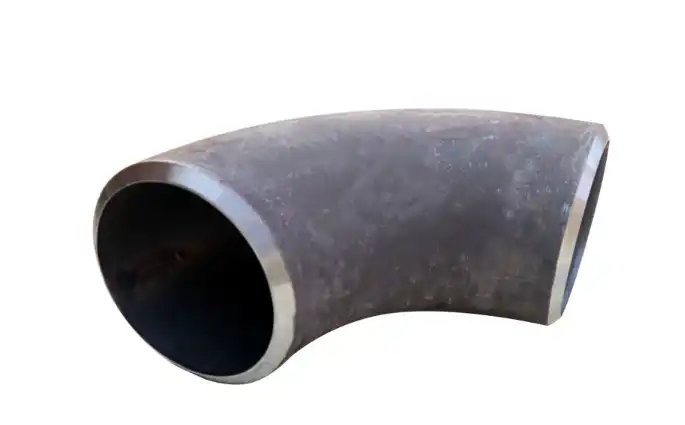
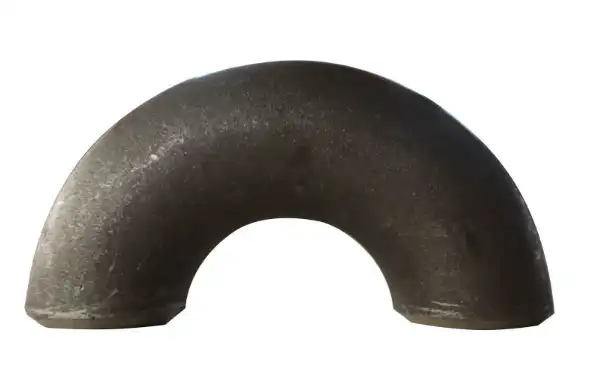
A power plant pipe elbow is a butt-welded fitting engineered to redirect fluid or gas flow at predetermined angles, typically 45°, 90°, or 180°. Butt-welded elbows are different from threaded or socket-welded links because their ends are beveled to 37.5° according to ASME B16.25. This design allows full-penetration welding, which makes a stable joint that doesn't leak and can handle high temperatures and pressures. With the seamless production method, there are no longitudinal weld gaps. This makes sure that the hoop strength is the same all the way around, which is important for high-pressure steam lines that work at 600°F and 2500 psi. One type of street elbow that does two things at once is the reducing street elbow, which changes the direction of flow and goes from one pipe width to another. Because they can do two things at once, they are ideal for setups with limited room because separate reducing couplings and elbows would require extra welds and possible weak spots.
Common Types and Design Standards
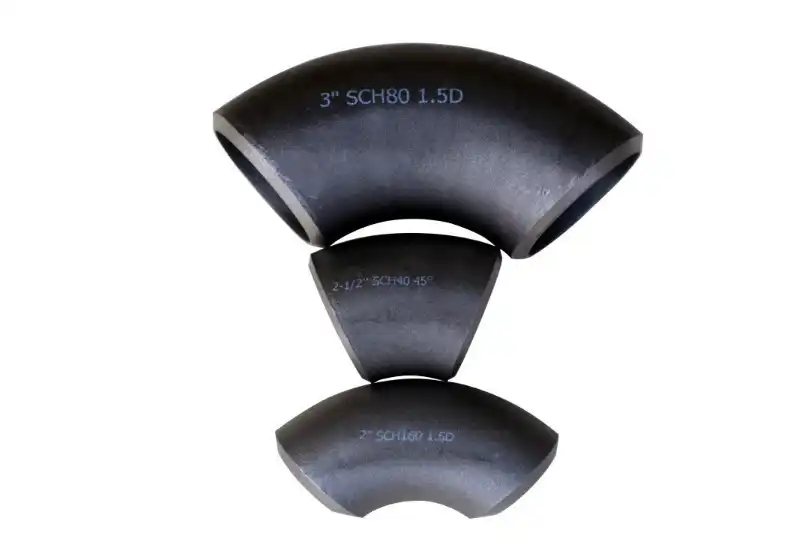
Depending on their needs, industrial power plants use various elbow designs. Long radius elbows with a centerline radius of 1.5 times the nominal pipe diameter minimize turbulence and erosion, making them ideal for main steam lines where flow velocity exceeds 100 feet per second. Short radius elbows with a radius of 1.0D can fit into smaller places, but they cause more erosion and pressure drops. Design standards control dimensional tolerances, wall thickness calculations, and material requirements. ASME B16.9 specifies the sizes for reducing elbows from 1/2" to 48" standard pipe size for wrought butt-welding fittings made in carbon and alloy steel. Both DIN 2605 and ISO 15590 have the same requirements for markets in Europe and around the world. These standards make sure that parts can be swapped out and that their performance will be consistent across global supply lines. This lets procurement teams choose parts with confidence that they will be the same size and quality.
Pressure and Temperature Requirements
The conditions inside a power plant put a lot of stress on the parts that make up pipes. In supercritical units, the main steam systems work at 4500 psi and 1100°F, which calls for chrome-molybdenum alloy steel types like P91 or P92 that don't creep. For systems that move water between 40°F and 550°F, you need materials that don't crack from heat stress. Condensate recovery lines that deal with changes in pH need materials or coverings that don't rust. Reduced street elbows need to have the same pressure-temperature ratings as the pipes next to them. Pressure class numbers in ASME B16.34, which range from Class 150 to Class 2500, show the highest pressures that can be used at certain temperatures. At 100°F, a Class 300 carbon steel elbow can handle 740 psi. At 600°F, it can only handle 490 psi because the material is weaker. These derating factors, along with corrosion limits and cyclic loading effects that build up over decades of use, must be taken into account in procurement requirements.
Can a reducing street elbow be used in a power plant?
Technical success depends on how well the features of the parts match the requirements of the application. Reducing street elbows works well in secondary systems and lines with lower criticality, but they can't be used in main steam paths or safety-related circuits because the design rules require more conservative methods.
Material Compatibility and Performance
Carbon steel reducing elbows made to ASTM A234 WPB standards can be used in a wide range of settings, such as water treatment plants, fuel handling systems, and compressed air networks. Because they are cheap and easy to weld, they can be used in non-critical systems that run below 650°F and Class 300 pressure levels. The seamless design gets rid of longitudinal weld gaps that could start corrosion in systems with a lot of air. 304L or 316L types of stainless steel are resistant to chloride stress corrosion cracking in seaside power plants where the cooling water has a lot of salt in it. The molybdenum presence in Type 316 makes it more resistant to cracking in acidic condensate return lines, which are places where carbonic acid forms when steam condenses. These austenitic types stay flexible at very low temperatures, which means they can be used in systems that vaporize liquefied natural gas in combined-cycle plants.
Alloy steel reducing elbows made from ASTM A234 WP11 or WP22 chrome-molybdenum materials are used in steam systems that work at temperatures between 650°F and 950°F. The chromium content makes it more resistant to rust, and the molybdenum content makes it stronger against creep when loaded at high temperatures for a long time. These materials need to be heated after the welding process is done to recover the mechanical qualities that were damaged by the welding thermal cycles. This makes the installation process more complicated in the field.
Operational Risks and Stress Considerations
When you compare reducing elbows to standard equal-diameter elbows, the change in dimensions causes flow problems that make turbulence and pressure loss worse. Computational fluid dynamics research shows that sudden changes in diameter create flow separation zones where localized velocity spikes speed up the wear and tear on carbon steel parts. High-speed steam carrying water drops or particles can wear away at materials at rates faster than 0.1 inches per year, causing walls to thin and fail before they should. When specifying the design, it is important to carefully look at the stress buildup at the diameter transition zone. Because it's hard to prove stress intensification factors using finite element analysis, the ASME Section III nuclear piping code doesn't allow reducing elbows to be used in Class 1 safety systems. As long as the wall thickness estimates take into account the combined pressure, weight, and thermal expansion pressures, fossil plants that follow the ASME B31.1 Power Piping Code can reduce elbows in non-critical services.
Real-World Application Scenarios
It works well for many plants to use reducing street Power plant pipe elbows in condensate polisher bypass lines, where temperatures stay below 250°F, and working pressures stay below 150 psi. The smaller width and change in direction make it easier to lay out pipes around the bases of equipment, which lowers the cost of installation by getting rid of the need for separate fittings. Monitoring the thickness with ultrasound waves on a regular basis can find any erosion before it gets too bad. On the other hand, a reducing elbow in a high-pressure extraction steam line working at 400 psi and 450°F broke at a combined-cycle facility. Metallurgical research done after the failure showed that stress cracking started at the throat area, which is where the thickness changed between pipe types. The main reason was that there wasn't enough stress analysis during design, which meant that the loads caused by thermal expansion during quick starting were not taken into account. The plant changed the part with a separate reducing coupling and long-radius elbow. This spread the stress over several joints that have been shown to increase stress.
Comparing Reducing Street Elbows to Other Power Plant Elbow Types
Understanding how the performance of different elbow designs varies helps choose the best parts that meet business needs and stay within budget.
Flexibility and Pressure Resistance
Standard equal-diameter elbows are better at keeping air in because the wall thickness is the same all the way through the joint. Because there are no diameter changes, there are no localized stress concentrations. This means that these parts can reach the highest pressure values that are set by the material grade and manufacturing method. Long radius equals elbows reduces flow resistance, which lowers the cost of pumping energy in systems that move millions of gallons of water every day. In order to save room, reducing street elbows means giving up some pressure capability. When the width changes, a stress riser is made where the mechanical loads are concentrated. The ASME B31.3 Process Piping Code says that when figuring out allowed spans and support spacing, stress intensification factors up to 1.5 times higher than normal elbows must be used. This means that support gaps for pipes have to be closer together, which could cancel out any space benefits in pipe racks that are already full. Combining the ability to change direction and reduce size makes setups easier in retrofit projects where layout choices are limited by the foundations that are already there. This can be done with a single component instead of two separate fittings: a chemical injection skid connection that needs both a 90° turn and a 2-inch to 1-inch reduction. This combination cuts down on the time needed for welding and the number of possible leak paths, both of which are very important in hazardous fluid services.
Seamless Versus Welded Manufacturing Methods
When seamless reducing elbows are made by hot-forming seamless pipe billets, they have a uniform microstructure with no joint fusion zones. Since there are no longitudinal cracks, there are no weak spots where hydrogen-induced cracking could start in sour gas services that contain H₂S. Radiographic or ultrasound inspection that doesn't damage the object is used to assess its internal health without finding any weld signs that need to be looked at and possibly fixed. Welded reducing Power plant pipe elbows, which are made by bending flat plate pieces and welding along a longitudinal seam, are cheaper for sizes over 24 inches, where seamless pipe is harder to find, and costs go up very quickly. When the right filler metals and post-weld heat treatment methods are used, modern submerged arc welding creates high-quality fusion zones whose mechanical qualities match those of the base material. Before the part goes into service, a full X-ray of the longitudinal seam is needed to find any welding flaws. The choice of manufacturing method has to strike a balance between performance needs and cost considerations. For critical main steam piping, seamless elbows are always required, so there is no doubt about the weld's integrity when it creeps. Welded elbows can be used in auxiliary cooling water systems that work at room temperature and low pressure, which lets budget savings be put toward more important parts.
Carbon Steel Versus Stainless Steel Materials
Carbon steel reducing elbows are most often used in power plants because they are cost-effective and work well in settings with controlled water chemistry. Fittings made of ASTM A234 WPB carbon steel cost about 30% less than fittings made of 316 stainless steel. This means that thousands of pipe parts in a normal 500 MW plant can be made with less expensive materials. The better heat transfer in feedwater heaters and economizers is made possible by carbon steel's higher thermal conductivity. But carbon steel needs careful corrosion control through water treatment programs that keep the pH between 9.0 and 9.6 and the amount of dissolved oxygen below 7 parts per billion. Changes in these factors speed up both normal corrosion rates and flow-accelerated corrosion in two-phase flow regimes. Plants that have trouble controlling the chemistry of their water have to replace pipes all the time, which costs millions of dollars in materials and lost production time. Stainless steel reducing elbows get rid of corrosion problems in trouble spots, and their high price is justified by the fact that they last longer. Austenitic grades don't react with chloride in seawater-cooled condensers or salty water sources. Their smooth, oxide-passivated surfaces stop bacteria from growing, which stops microbiologically influenced corrosion. Lifecycle cost analysis, which takes into account how often something needs to be replaced, the cost of upkeep, and the money that is lost from generation, usually prefers stainless steel, even though it costs more at first.
Procurement Considerations for Power Plant Reducing Street Elbows
Sourcing choices affect how long a project takes, how well it stays within budget, and how reliable it is in the long run. When you do strategic procurement, you have to balance technical requirements with the skills and terms of the seller.
Technical Specifications and Certifications
The measurements must be clearly stated in the purchase papers, whether they are ASME B16.9 for American projects or DIN 2605 for European ones. Each standard has different tolerances for size and pressure-temperature values that make it harder to use with current pipes. Using different standards for the same project makes things more difficult to understand during building and makes it harder to keep track of extra parts. Material certifications make it possible to track final parts back to the heat numbers and mechanical test results of the raw materials. Mill test reports (MTRs) that list the chemical makeup, tensile strength, and impact toughness of a material confirm that it meets the requirements of certain ASTM grades. If a seller has ISO 9001 certification, it means they have quality management systems with written processes for controlling production, inspecting it, and dealing with problems. Authorities in each state issue special equipment manufacturing licenses that prove legal permission to make pressure-retaining parts. Temperature derating factors set out in ASME B16.34 must be taken into account in pressure rating standards. A reducing elbow that is supposed to work at 400 psi and 500°F needs to be rated Class 300 to make sure it has enough safety cushion above normal conditions. When procurement engineers match material types to the conditions they need to work in, they use pressure-temperature charts to make sure they don't under-specify, which could cause failure, or over-specify, which would lose money on extra capacity that isn't needed.
Sourcing Strategies and Supply Chain Management
Standard stock reducing elbows in popular sizes like 2 inches to 1 inch or 4 inches to 3 inches can be shipped within days from the distributor's stock. These common things are good for small jobs and maintenance work that needs to be done right away. Prices include markups from distributors on top of what the plant costs. This is done so that distributors can get their goods quickly and with little downtime for equipment. For custom-made reducing elbows in odd-size combinations or rare metal grades, you have to place an order directly with the plant, and the wait time is eight to twelve weeks. Communicating with manufacturers like Oudi, whose yearly production capacity is 16,000 tons, makes sure that supply schedules are reasonable and in line with building goals. When building a big power plant, the piping materials are bought in bulk and bargained for directly with the makers. This saves money and makes sure that the supply stays steady for the whole project, which can last for years. When you use global sources, things like paperwork, shipping, and checking the quality become more complicated. Asian companies with a good reputation that have quality processes that meet worldwide standards have more than 300 customers in 40 countries. Before parts are shipped, they are checked by third-party inspection agencies to make sure they meet standards in terms of size and material quality. It takes twelve weeks for containers to travel from production facilities to project sites by ocean, so procurement must start early during the planning stages.
Supplier Evaluation and Quality Assurance
In addition to price quotes, other factors that are used to choose a supplier include checking their technical skills and dependability. Advanced production tools like CNC machining centers, induction heating systems, and automatic welding stations show that the manufacturing process is very advanced and can keep standards very tight. Inspection facilities with spectroscopy, ultrasonic testing, and hydrostatic testing show a dedication to checking the quality of goods before they leave the plant. Exporting to controlled markets shows that the provider is qualified to meet strict requirements. Companies that do business with people in Europe, North America, and the Middle East have changed their methods to meet the needs of customers with different code and paperwork standards. Being familiar with ASME, DIN, BS, and JIS standards makes it easier for technical people to talk to each other and lowers the chance of misunderstanding specifications. It is better to have long-term ties with suppliers based on regular quality performance than to use transactional low-bid sourcing, which can lead to variation. Preferred providers learn about the specific needs of the project and look for problems before they happen during design reviews. Their desire to keep a buffer stock of important spare parts helps plant repair plans that shorten the time that plants are down.
Best Practices for Installation and Maintenance of Reducing Street Elbows in Power Plants
The right way to do things in the field determines whether parts last as long as they're supposed to or break down early, which can affect operations and safety.
Installation Protocols and Welding Standards
For good welds to happen, the fit-up must be exact. The ends of the pipes must line up within a 1/16-inch offset range to avoid high-low situations that cause stress concentrations and make it harder to weld. During tack welding and root pass finishing, internal alignment clamps or support rings keep the root gap constant. Beveled edges need to be clean, without mill scale, rust, or other things that could get into the weld metal and cause flaws. The conditions for welding are set by qualified processes that are specific to the type of base material, the range of wall thickness, and the shape of the joint. ASME Section IX welder skills that can be proven through bend tests and X-rays show that each welder is skilled at making joints that don't have any flaws. By slowing down the rate at which the weld cools, preheat standards for chrome-molybdenum metals stop hydrogen cracking. When temperature limits are set between passes, grain growth that weakens mechanical qualities is stopped. Post-weld heat treatment releases stresses that were locked into the part while it cooled from the high temperatures of welding. When welding materials that are more than three-quarters of an inch thick, carbon steel P-1 needs to be heated to 1100°F for one hour for every inch of thickness. No matter how thick the steel is, it needs to be heat-treated to recover the microstructures that were softened during the welding process. Field heat treatment is possible with portable electric resistance heating blankets when parts can't be taken off to be heated in an oven.
Monitoring and Inspection Techniques
Recording baseline thickness readings during the initial commissioning sets reference numbers that show how much the thickness is decreasing over time. Ultrasonic thickness gauging at set grid points finds wall loss from erosion and corrosion before the leftover thickness goes below the minimum values that are needed. An annual check lets you see how corrosion rates are changing over time, which lets you know when to replace something and buy it ahead of time, before it breaks down. During downtime, visual inspection can find surface corrosion, coating wear, and mechanical damage from equipment touching nearby. Cracks in the surface found with a liquid penetrant show wear damage that needs to be evaluated by an engineer. When internal cracking is suspected, more advanced methods are used, such as phased-array ultrasonic scanning, which maps the crack's depth and length so that it can be judged on its fitness for service using fracture mechanics standards. Monitoring vibrations on high-velocity steam lines finds flow-induced excitement that speeds up damage from wear and tear. Accelerometers attached to pipe supports measure the size and frequency of vibrations and compare the results to the limits set by ASME OM-S/G standards. When there is too much shaking, changes in the flow regime, support degradation, or component loosening need to be looked into so that a catastrophic failure doesn't happen.
Protective Measures and Durability Enhancement
Coatings on the outside of carbon steel keep it from rusting in damp places or when it comes into contact with chemical fumes. Desulfurization methods used in coal-fired plants make corrosive flue gas condensates that attack steel that isn't covered. High-build epoxy coatings or thermal spray metal protect against damage and make surfaces last decades longer than parts that aren't covered. During application, inspection of the coating makes sure that the surface is properly prepared and that the film thickness meets the requirements of the standard. Internal surface processes make places more resistant to erosion and corrosion. Electroless nickel treatment on elbow throats in feedwater systems makes the surface harder, so particles that get into the system don't wear it down mechanically. Wear-resistant surfaces are made with chromium carbide coatings that are formed during welding processes. These are used in coal slurry handling applications. These improvements pay for themselves over time through longer periods between replacements and less frequent upkeep. Controlling the environment around pipes stops corrosion from happening from the outside. Pipe shafts and other enclosed areas don't get damp when they have enough air. Insulation systems with vapor shields keep cold surfaces below the dew point from condensing. In underground pipe networks, cathodic protection systems cause electrochemical processes that stop corrosion. This keeps the pipes' integrity in soil settings.
Conclusion
When designed, built, and kept correctly, reducing street elbows can improve the functionality of power plant sites. Their form saves space by combining changes in direction and diameter, which makes pipe layouts easier in crowded places. Long-term dependability depends on choosing the right material for the job, like carbon steel for general uses or stainless steel for places where corrosion is a problem. Procurement strategies that balance technical needs with business needs lead to the best results on projects, and strict installation and testing methods make sure that parts last as long as they were designed to. Before defining these specialized fittings in important power production systems, engineers need to do a full analysis that looks at stress concentrations, operating risks, and code compliance.
FAQ
What distinguishes a reducing street elbow from a standard elbow?
The reducing street elbow does two things at once: it changes the direction of flow and connects pipes of different sizes. Standard elbows with the same width only change the direction of flow and not the size. In threaded setups, the reducing variant has male threads on one end and female threads on the other end. Butt-weld variants have different nominal diameters at each beveled end. This two-in-one feature cuts down on the number of joints and welds needed compared to using separate reducing couplings and standard elbows. However, it causes stress concentration issues that need careful engineering analysis.
Are reducing street elbows suitable for high-pressure steam applications?
How well it works relies on certain working conditions and code requirements. When built correctly with the right wall thickness and alloy materials, reducing street elbows can handle mild steam pressures below ASME Class 300 ratings. When main steam systems are working at more than 900 psi, they usually don't employ reducing elbows because they worry about stress buildup and because codes require more conservative designs in critical services. Reducing elbows works well in auxiliary steam systems and extraction lines that work at lower pressures, as long as stress analysis indicates that they are within the allowed stress limits.
What are typical lead times for custom reducing street elbows?
Standard reducing elbows in popular sizes made of carbon steel are shipped within two weeks from stock at a dealer. For custom setups that need certain alloys, odd-size combinations, or big diameters, they have to be made in a workshop, which takes eight to twelve weeks. These schedules include getting raw materials, planning output, inspecting for quality, and figuring out how to ship parts from one country to another. These lead times don't affect building plans when procurement planning starts early in the project engineering phase.
Partner with Oudi for Reliable Power Plant Pipe Elbow Solutions
Over the past twenty years, we've been making high-integrity pipe parts for thousands of power plants around the world. As experts, we make seamless butt-weld reducing elbows in carbon steel, stainless steel, and chrome-molybdenum alloy types that meet ASME B16.9, DIN 2605, and JIS B2313 standards. Our ISO 9001-certified quality system and special equipment manufacturing license make sure that every part meets the strictest worldwide standards. With the ability to handle 16,000 tons per year and high-tech checking tools like ultrasonic testing and spectroscopic analysis, we provide reliable quality that power plant engineers trust. Contact our technical team at oudi-04@oudiguandao.com to talk about the details of your project with an experienced power plant pipe elbow supplier dedicated to helping your business succeed by providing you with high-quality goods and quick service.
References
1. American Society of Mechanical Engineers. ASME B31.1-2020: Power Piping Code. New York: ASME Press, 2020.
2. Harvey, John F. Theory and Design of Pressure Vessels, Second Edition. New York: Van Nostrand Reinhold Company, 1985.
3. Mohitpour, M., Golshan, H., and Murray, A. Pipeline Design and Construction: A Practical Approach, Third Edition. New York: ASME Press, 2007.
4. Electric Power Research Institute. Guidelines for the Evaluation of Service-Induced Flaws in Pressure Boundary Materials. EPRI Report NP-6045. Palo Alto: EPRI, 1988.
5. Singh, Raghuvir. Applied Welding Engineering: Processes, Codes, and Standards, Second Edition. Burlington: Elsevier, 2016.
6. Nayyar, Mohinder L. Piping Handbook, Seventh Edition. New York: McGraw-Hill, 2000.

Need help finding the right solution with our experts. Please contact us.

SINCE 1998 Your Reliable Pipeline Manufacturer



