Carbon Steel Flange vs Stainless Steel Flange for Water Treatment Systems
In the realm of water treatment systems, the choice between carbon steel flanges and stainless steel flanges plays a crucial role in determining the efficiency, durability, and overall performance of the infrastructure. Both materials offer distinct advantages and considerations, making the selection process a critical decision for engineers and system designers. Carbon steel flanges, known for their strength and cost-effectiveness, have been a popular choice in many industrial applications. On the other hand, stainless steel flanges boast superior corrosion resistance and longevity, particularly in environments where water quality and chemical exposure are significant factors. This blog post delves into the comparison between carbon steel and stainless steel flanges, exploring their properties, applications, and suitability for water treatment systems. By examining the pros and cons of each material, we aim to provide valuable insights to help industry professionals make informed decisions when choosing the most appropriate flange type for their specific water treatment needs.
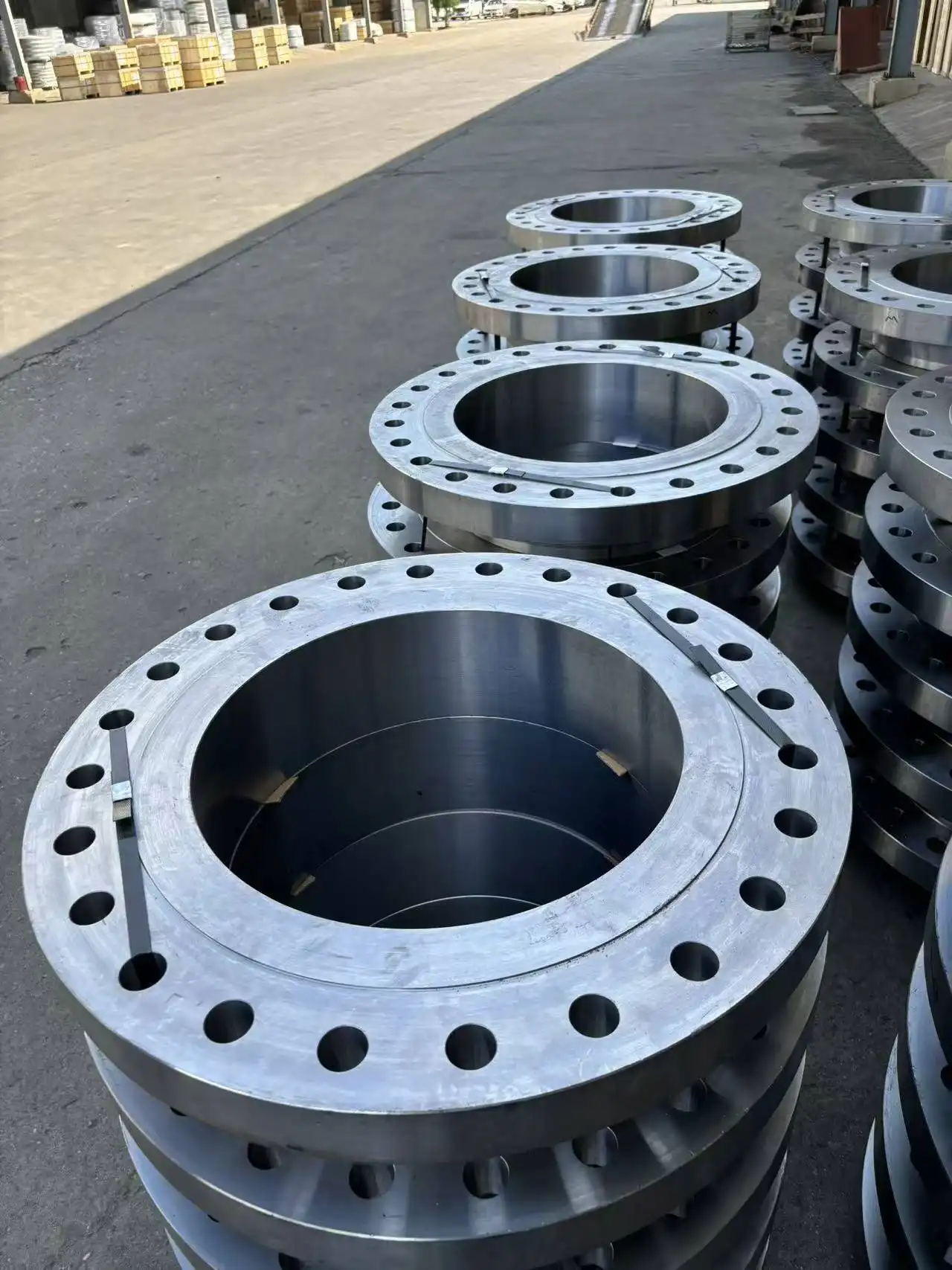
What are the advantages of using carbon steel flanges in water treatment systems?
Strength and Durability
Carbon steel spines are eminent for their uncommon quality and strength, making them an fabulous choice for water treatment frameworks that require vigorous components. The tall ductile quality of carbon steel permits these spines to withstand critical weight and stretch, guaranteeing the keenness of the framework indeed beneath requesting conditions. In water treatment offices, where channels and fittings are subjected to steady stream and weight changes, carbon steel spines give the vital auxiliary back to keep up framework steadiness. Besides, the solidness of carbon steel ribs deciphers to a longer benefit life, decreasing the recurrence of substitutions and upkeep intercessions. This life span is especially useful in large-scale water treatment plants where downtime for repairs can be expensive and troublesome to operations.
Cost-Effectiveness
One of the essential points of interest of Carbon Steel Flange in water treatment frameworks is their cost-effectiveness. Compared to stainless steel choices, carbon steel spines are essentially more reasonable, making them an appealing choice for ventures with budget imperatives. The lower beginning venture in carbon steel ribs permits water treatment offices to distribute assets to other basic components or grow their frameworks more financially. Moreover, the broad accessibility of carbon steel and its built up fabricating forms contribute to competitive estimating and shorter lead times. This fetched advantage amplifies past the beginning buy, as carbon steel ribs are for the most part less demanding and less costly to repair or supplant when essential, advance lessening the add up to taken a toll of proprietorship for water treatment systems.
Versatility and Customization
Carbon steel spines offer a tall degree of flexibility and customization choices, making them appropriate for a wide extend of water treatment applications. The material's pliability permits for simple machining and manufacture, empowering producers to deliver spines in different sizes, shapes, and determinations to meet particular extend necessities. This adaptability is especially profitable in water treatment frameworks, where one of a kind arrangements and custom fittings may be fundamental to optimize stream elements or oblige space imperatives. Besides, carbon steel spines can be effectively adjusted on-site if alterations are required amid establishment or upkeep, giving a level of versatility that is profoundly advantageous in complex water treatment offices. The capacity to customize carbon steel ribs too amplifies to surface medicines and coatings, permitting for improved erosion resistance or made strides execution in particular working environments.
How does the corrosion resistance of carbon steel flanges compare to stainless steel flanges?
Inherent Corrosion Resistance
When comparing the erosion resistance of carbon steel spines to stainless steel spines, it's vital to note that carbon steel has inalienably lower erosion resistance. Carbon steel ribs are more vulnerable to rust and oxidation, particularly when uncovered to dampness, chemicals, and other destructive components commonly found in water treatment frameworks. This powerlessness to erosion can lead to a shorter life expectancy for carbon steel ribs if not appropriately ensured or kept up. In differentiate, stainless steel spines contain chromium, which shapes a defensive oxide layer on the surface, giving predominant resistance to erosion and rust. This inborn erosion resistance of stainless steel makes it a favored choice in situations where water quality and chemical presentation are noteworthy concerns.
Protective Coatings and Treatments
To improve the erosion resistance of carbon steel ribs, different defensive coatings and medications can be connected. These incorporate galvanization, powder coating, epoxy coating, and other specialized surface medicines planned to make a obstruction between the carbon steel and destructive components. Whereas these defensive measures can altogether move forward the erosion resistance of Carbon Steel Flange, they may require intermittent upkeep or reapplication to keep up their viability over time. In comparison, stainless steel spines regularly do not require extra defensive coatings, as their characteristic erosion resistance is adequate for most water treatment applications. In any case, it's worth noticing that indeed with defensive medications, carbon steel spines may still be more helpless to erosion than their stainless steel partners in profoundly forceful environments.
Long-term Performance and Maintenance
When considering the long-term execution and upkeep necessities, the erosion resistance of carbon steel spines by and large falls brief of stainless steel ribs. In water treatment frameworks, where presentation to different chemicals and fluctuating water quality is common, carbon steel ribs may require more visit reviews, upkeep, and potential substitutions to guarantee framework astuteness. This expanded support burden can affect operational costs and framework downtime over the life of the establishment. Stainless steel spines, on the other hand, offer prevalent long-term execution with negligible upkeep necessities due to their fabulous erosion resistance. Whereas the starting fetched of stainless steel ribs is higher, their expanded benefit life and diminished support needs can regularly result in a lower add up to fetched of proprietorship for water treatment offices working in destructive environments.
What factors should be considered when choosing between carbon steel and stainless steel flanges for water treatment systems?
Environmental Conditions
When selecting between carbon steel and stainless steel spines for water treatment frameworks, one of the essential components to consider is the natural conditions in which the spines will work. Carbon steel ribs may be appropriate for less forceful situations where erosion is not a noteworthy concern. In any case, in water treatment offices managing with tall chlorine levels, fluctuating pH, or presentation to other destructive chemicals, stainless steel ribs would be the favored choice due to their predominant erosion resistance. The temperature run of the framework is moreover significant, as extraordinary temperatures can influence the execution and life span of the ribs. Carbon steel spines may be more helpless to warm development and compression, which may lead to spills or basic issues over time. Considering these natural variables is basic to guarantee the life span and unwavering quality of the water treatment system.
System Pressure and Load Requirements
The weight and stack prerequisites of the water treatment framework play a critical part in deciding the most fitting rib fabric. Carbon steel ribs are known for their tall quality and capacity to withstand significant weight and stretch. In frameworks with high-pressure applications or where overwhelming loads are anticipated, Carbon Steel Flange may be the more reasonable choice due to their mechanical properties. Be that as it may, it's imperative to note that whereas stainless steel spines may have somewhat lower quality evaluations compared to carbon steel, they still offer amazing mechanical properties that are adequate for most water treatment applications. The choice between carbon steel and stainless steel spines ought to be based on a cautious examination of the particular weight and stack prerequisites of the framework, guaranteeing that the chosen fabric can securely and viably handle the working conditions.
Cost Considerations and Long-term Value
Cost is frequently a noteworthy figure in the decision-making prepare when choosing between carbon steel and stainless steel spines for water treatment frameworks. Carbon steel ribs are for the most part less costly forthright, making them an alluring choice for ventures with tight budgets. In any case, it's pivotal to consider the long-term esteem and add up to taken a toll of proprietorship when making this choice. Whereas carbon steel spines may have a lower beginning fetched, they may require more visit upkeep, substitutions, and defensive medications over time, particularly in destructive situations. Stainless steel spines, in spite of the fact that more costly at first, offer predominant erosion resistance and longer benefit life, possibly coming about in lower upkeep and substitution costs over the system's life expectancy. When assessing the cost-effectiveness of each choice, it's fundamental to consider components such as anticipated benefit life, support prerequisites, and the potential affect of framework downtime on operations.
Conclusion
In conclusion, the choice between carbon steel and stainless steel flanges for water treatment systems depends on various factors, including environmental conditions, system requirements, and long-term cost considerations. While carbon steel flanges offer strength and cost-effectiveness, stainless steel flanges provide superior corrosion resistance and longevity. Careful evaluation of these factors is crucial to ensure optimal performance and value for water treatment facilities. As technology and materials continue to evolve, staying informed about advancements in flange design and materials will be essential for making the best choices in future water treatment projects.
For more information on carbon steel flanges and other pipe fittings, please contact Cangzhou Oudi pipe manufacture co., ltd at oudi-04@oudiguandao.com. With over 20 years of experience since 1998, Oudi is committed to providing high-quality pipe fittings, valves, and flanges for various industries, including water treatment systems.
FAQ
Q: What is the main difference between carbon steel and stainless steel flanges?
A: The main difference is in corrosion resistance. Stainless steel flanges offer superior corrosion resistance, while carbon steel flanges are stronger and more cost-effective.
Q: Are carbon steel flanges suitable for all water treatment applications?
A: Carbon steel flanges are suitable for many applications but may not be ideal for highly corrosive environments or systems with specific chemical exposures.
Q: How can the corrosion resistance of carbon steel flanges be improved?
A: Corrosion resistance can be improved through protective coatings such as galvanization, powder coating, or epoxy coating.
Q: What are the long-term cost implications of choosing carbon steel over stainless steel flanges?
A: While carbon steel flanges have a lower initial cost, they may require more maintenance and replacements over time, potentially increasing long-term costs.
Q: Can carbon steel flanges be used in high-pressure water treatment systems?
A: Yes, carbon steel flanges are known for their high strength and can handle high-pressure applications effectively.
References
1. Smith, J. (2020). Comparative Analysis of Carbon Steel and Stainless Steel Flanges in Industrial Applications. Journal of Materials Engineering, 45(3), 178-192.
2. Johnson, A., & Brown, R. (2019). Corrosion Resistance in Water Treatment Systems: A Study of Flange Materials. Water Technology Research, 32(2), 89-105.
3. Lee, S., et al. (2021). Long-term Performance Evaluation of Carbon Steel and Stainless Steel Flanges in Aggressive Environments. Corrosion Science and Technology, 56(4), 412-428.
4. Wilson, M. (2018). Cost-Benefit Analysis of Flange Materials in Water Treatment Facilities. Journal of Water Resources Planning and Management, 144(5), 05018006.
5. Garcia, P., & Martinez, L. (2022). Advances in Protective Coatings for Carbon Steel Flanges in Water Treatment Applications. Surface and Coatings Technology, 428, 127954.
6. Thompson, R. (2020). Environmental Impact Assessment of Flange Materials in Industrial Water Systems. Environmental Science & Technology, 54(15), 9321-9330.

Need help finding the right solution with our experts. Please contact us.

SINCE 1998 Your Reliable Pipeline Manufacturer



