Carbon Steel Pipe Reducers: Functions, Types, and Benefits
When making strong pipe reducer carbon steel for heavy industrial use, picking the right parts is crucial to their success. A pipe reducer made of carbon steel is an important part of connecting lines with different sizes. It is designed to handle changes in flow, keep pressure stable, and keep downstream equipment safe from hydraulic stress. These parts, which are mostly defined by ASTM A234 WPB standards, solve important problems in power plants, chemical processing plants, and oil refineries. Because they are strong mechanically, don't cost much, and work with international standards, they are required for building projects that need to be reliable in harsh circumstances.
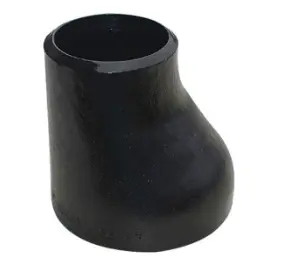
Understanding Carbon Steel Pipe Reducers: Functions and Specifications
Core Functions in Industrial Piping Systems
Pipe reducers made of carbon steel do more than just change the width. They also do other hydraulic tasks. These fittings control changes in speed as fluid goes from a bigger to a smaller hole size. Turbulence does not wear down high-pressure lines. In pump flow situations, eccentric types stop air pockets from forming, which is a major cause of cavitation damage that shortens the life of the impeller. At the same time, concentric patterns help keep the pipe straight in vertical steam lines, evenly distributing the stress from temperature changes across the support structures. Our factory has sent these parts to oil plants that work with pressures higher than 1500 PSI, where flow steadiness has a direct effect on process safety. The cone-shaped design lowers the friction coefficients when the pipe is expanding or contracting. This keeps the pipe walls from wearing out faster.
Key Specifications and Standards
To choose the right reducers, you need to know several technical factors, including:
- Material Grade Compliance: ASTM A234 WPB carbon steel has a tensile strength that is suitable for use at temperatures up to 400°C. This grade is perfect for natural gas transfer systems and water treatment plants because it can be welded and is strong enough to hold its shape.
- Dimensional Standards: In North America, ANSI B16.9 sets the rules, while in Europe, DIN 2616 does. These standards spell out plans for wall thickness, end preparations, and limits that make sure the new pipes can be used with the pipes that are already in place. Japanese JIS and British BS standards are two more area variations.
- Pressure Ratings: Safe working pressures are based on temperature and wall thickness. A 6-inch Schedule 40 reducer can usually handle 150 PSI at room temperature, while Schedule 80 versions can handle higher stress levels. We suggest that you look at pressure-temperature rating charts that are in line with the ASME B31.3 pipe rules.
- Size Range: Standard production makes reducers with nominal sizes ranging from ½ inch to 48 inches. For specialized uses like condensate systems in power plants, custom manufacturing can go up to bigger sizes.
Our quality management system, which is approved under ISO 9001:2000 and backed up by special licenses for making tools, makes sure that these requirements are met. Before being sent to our more than 300 clients in 40 countries, each batch goes through nondestructive testing and measurement proof.
Types of Carbon Steel Pipe Reducers and Their Applications
Concentric vs. Eccentric Configurations
The difference in structure between these two main types is based on different operating needs. Concentric reducers keep the centerlines of the input and exit ends straight, which makes the flow patterns symmetrical. This plan works well for vertical placements because gravity drainage takes care of any air-trap issues. The regular conical shape keeps solids from collecting in the corners, which helps the flow patterns in wastewater transport lines clean themselves. Eccentric reducers have centerlines that aren't lined up straight, and one side is flat. By keeping the bottom area flat, this design keeps gas from building up in horizontal pump suction lines. When the amount of liquid in storage tanks drops, the flat edge lets all of the liquid drain out without leaving any vapor pockets that make starting the pump harder.
Manufacturing Methods: Seamless vs. Welded
The way something is made affects how well it works. Seamless reducers are made from solid billets that are worked on either hot or cold. They have a regular grain structure and don't have any weld gaps. Because of this, they are better for uses with high-pressure steam, where weld parts could fail when the temperature changes. Welded reducers, which are made from plate or rolled pipe pieces, are less expensive for uses with larger diameters and lower pressure. We use modern EFW (Electric Fusion Welding) methods and the right filler materials to make the metal as strong as the base metal. However, some rules don't allow ERW (Electric Resistance Welded) lines to be used in the production of reducers because the longitudinal seams can be weak. As another way to shape metal, the "Outer Die Method" involves heating the ends of pipes and pressing them into cone-shaped dies. This makes smooth changes without adding extra material. This method works well for sizes in the middle range, where smooth extrusion is too expensive.
Industry-Specific Applications
Based on their working environments, different sectors put different reducer traits at the top of their lists:
- Oil and Gas Sector: In the oil and gas industry, vertical pump discharge systems with circular reducers are used to handle crude oil that can hit 350°C. The centerline alignment makes it easier to place the support brackets and controls pressure spikes that happen during starting. Eccentric versions are used in the ports of horizontal separator vessels, where full liquid evacuation keeps hydrocarbons from building up.
- Chemical Processing: Handling corrosive fluids requires careful choice of materials. In systems that dilute sulfuric acid, carbon steel reducers with the right coats are used to control the flow speed and keep exothermic reactions from happening. The slow change in width reduces the turbulence that speeds up rust in the feed lines to the reactor.
- Power Generation: Boiler setups with high-pressure steam systems need concentric reducers between the superheater steps. These keep the straight lines of flow going, which is important for even heat distribution and stops areas from getting too hot, which can damage tubes. Our goods are used in sites that produce 500 MW of power, where the security of the grid is directly affected by the reliability of the parts.
- Water Conservancy Projects: Municipal treatment plants use eccentric reducers in sludge handling systems as part of water conservation projects. Because it has a flat bottom, the design keeps particles from settling during times of low flow, which lowers the frequency of upkeep. We have sold these to building projects in Southeast Asia and Africa, where ease of use is more important than original cost.
Understanding these application nuances helps buying teams choose the right options that meet safety standards and extend the system's life.
Comparing Carbon Steel Pipe Reducers with Other Materials
Material Property Analysis
Several performance factors play a crucial role in determining the best reducer materials for a specific setting. Carbon steel is the most common choice for non-corrosive uses because it is strong and doesn't cost too much. Its 60,000 PSI tensile strength is higher than what is needed for most industrial pipe systems that work below 400°C.
Stainless steel variants offer superior corrosion resistance in acidic or salty settings. Grade 316L stainless reducers can handle salt exposure in industrial plants near the coast, but they cost three times as much as carbon steel reducers. When corrosion-related downtime is greater than the price difference, the choice of material becomes economically sound.
Alloy steel reducers with molybdenum and chromium added to them are used in high-temperature situations above 500°C. These newer materials are needed to stop creep warping in power plants that use supercritical steam cycles. But as welding gets more complicated, it needs skilled welders and heat treatment after the join.
Ductile iron offers low-cost options for water lines with low flow. Even though it's less expensive than carbon steel, it can't be used in places where vibrations are likely to happen because it breaks easily when hit. When safety margins call for ductile failure modes in chemical or oil uses, we don't suggest ductile iron very often.
Seamless vs. Welded Performance Considerations
In addition to having different manufacturing costs, these types of buildings also behave differently when they are stressed. Seamless reducers have the same mechanical qualities in all directions, so there are no join heat-affected zones that are more likely to rust. Tests of pressure show that seamless versions can handle 15–20% higher burst pressures than joined versions of the same type.
Welded reducers need to be inspected carefully. Ultrasonic and X-ray tests are used at our site to detect problems below the surface of weld gaps. Welded reducers meet ASME Section VIII standards for pressure tank parts when they are made correctly with full-penetration welds and stress-relieved through controlled cooling.
The choice between building types and technical needs is weighed against budget limits. Smooth standards are necessary for critical systems handling flammable or dangerous fluids, while non-hazardous water service can utilize welded options. Our engineering talks with clients in the construction and shipbuilding sectors are based on this material-type choice framework.
How to Choose the Right Carbon Steel Pipe Reducer for Your Project?
Technical Parameter Evaluation
A thorough study of the whole system is the first step in choosing the right reducer. Operating pressure sets the basic material needs. For example, systems that go over 600 PSI usually need Schedule 80 wall thickness or seamless construction. Extreme temperatures can make materials less flexible. For example, carbon steel becomes weak below -20°C, so it needs to be tested for impact according to ASTM A370 before it can be used in cold climates.
Size estimates go beyond meeting the stated diameter. When there is a lot of flow, velocity issues can stop erosion. For liquid service, industry rules say that fluid speeds should stay below 3 meters per second. If the flow rate goes up at the transition zone of a 6-inch to 4-inch reduction in a crude oil transfer line, it needs to be able to handle that.
A corrosion environment study tells you what kind of protection you need. Pipe Reducer Carbon Steel doesn't react with neutral pH fluids, but acidic condensate in flue gas systems needs epoxy coatings or better materials. Our expert team figures out the rate of rust using data on fluid chemistry and suggests the best ways to protect things.
Supplier Evaluation Criteria
Decisions about what to buy should take into account more than just the unit price of each supplier's skills. Verification of certification is still very important to us. Foreign regulatory bodies accept our ISO 9001 quality management systems and manufacturing licenses for special equipment. These certificates demonstrate consistent control over the process, from the receipt of raw materials to the final review.
Production capacity affects delivery reliability. Our annual output of 16,000 tons makes sure that we have enough stock for pressing project needs and supports long-term supply deals. Clients who are responsible for multi-phase building projects value suppliers who can make deliveries at different times to fit installation plans.
Customization gives you the freedom to meet unique needs. Catalog measurements are good for most uses, but sometimes special projects need middle sizes or different end preparations. For custom fabrication orders, we offer technical help, which includes checking 3D models before committing to production.
After-sales support distinguishes commodity suppliers from strategic partners. Our warranty plans cover flaws in the material and problems with the size or shape, and they come with replacement promises. Technical support goes beyond the original buy and helps with installation issues and system improvement throughout the entire operating lifecycle.
Balancing Specifications with Budget Constraints
Cost-effective buying balances technical compliance and economic facts. Over-specifying materials loses money; in a non-corrosive setting, a carbon steel reducer works just as well as a stainless steel one. On the other hand, insufficient definition leads to safety risks and early replacement costs that greatly exceed the original savings.
Value engineering finds ways to make things better. In low-pressure situations, switching from seamless to welded reducers can save 30% on costs without affecting safety. Buying in bulk takes advantage of economies of scale. Our pricing system rewards promises to buy in bulk with tiered discounts.
Total cost of ownership calculations should include maintenance and lifetime costs. A Pipe Reducer Carbon Steel with the right protective covering might cost 15% more at first, but it won't need to be replaced as often, which would cause problems with operations. Lifecycle cost modeling helps our clients make smart choices about where to put their cash.
Procuring Carbon Steel Pipe Reducers: Best Practices and Market Insights
Global Supplier Landscape
The environment for making reducers includes many different areas, each with its own benefits. North American providers are close to U.S. projects, which shortens shipping times and makes warranty operations easier. However, production prices are usually 40–60% higher than Asian options, which can affect projects that need to stick to a budget.
European companies focus on precise engineering and tight regulatory compliance, which makes them appealing for medicinal and food-grade uses that need a lot of paperwork. Their licenses are completely in line with EU rules, but their high prices reflect the strict quality standards.
Asian producers, especially well-known Chinese producers like our plant in Cangzhou, offer reasonable prices and a lot of capacity. Since 1998, we've spent money on high-tech production tools that meet international quality standards and keep prices low enough to help global buying budgets. Our selling experience in markets in Europe, the Americas, Africa, and the Middle East shows that we can meet a wide range of legal needs.
Digital Procurement Trends
Online buying platforms have changed how businesses buy things. Digital platforms let you compare specifications and request quotes right away, which accelerates the process of finding the first seller. Complex projects, on the other hand, do better with standard relationship-based procurement, in which expert discussions help shape custom solutions.
We use a mix of methods. Our website lets people ask general questions and download technical data, but engineering teams get in touch directly for help with specific applications. You can use this model for both one-time purchases and building long-term partnerships.
Negotiation Strategies and Order Management
When negotiating to buy in bulk, you should talk about more than just the unit price. Payment arrangements that handle cash flow while taking source risk into account often lead to more discounts. We offer open terms to long-term clients because we know how important it is to have a good relationship.
To handle lead time, you need to make realistic plans. Items from the store usually ship within two to three weeks, but special fabrication can take up to eight weeks, based on how complicated the job is. Getting involved early in the planning stages of a project can help you avoid critical path delays.
Minimum order numbers show how much it costs to make something. We can take sample orders for approval tests, but setup costs are higher for production runs below 500 kg. Combining needs from different project stages maximizes pricing efficiency.
Logistics coordination determines landed costs. Being only 120 kilometers from Tianjin Port, our plant makes it easy to combine containers and get good freight rates. Our help with sending paperwork and customs rules makes it easier for businesses to buy things from other countries.
Conclusion
Long-term system stability in the oil, chemical, and building sectors depends on choosing the right pipe fittings. Pipe Reducer Carbon Steel effectively manages pressure, improves hydraulics, and ensures tool safety. Understanding changes in design, comparisons of materials, and buying strategies helps people make smart decisions that are in line with practical goals. Our three-decade history of production blends technical know-how with the ability to distribute products all over the world. We help clients from the initial specification stage through ongoing operational support. We ensure compliance with ASTM, ANSI, DIN, and JIS standards through strict quality systems, a requirement for foreign project approval.
FAQ
What kinds of pressures can carbon steel reducers handle?
Pressure capacity is based on the material grade, temperature, and wall thickness plan. Schedule 40 ASTM A234 WPB reducers can usually handle 150 to 300 PSI at room temperature, while Schedule 80 versions can handle 600 PSI or more. According to ASME B31.3 derating formulas, higher temperatures lower the pressures that are allowed. Always look at pressure-temperature rating charts that are made for your working conditions and the pipe rules that apply.
Can carbon steel reducers work in places where metals rust?
Carbon steel works well with fluids that have a neutral pH, but it breaks down in acidic or high-chloride situations. Protective coats make things last longer in slightly corrosive situations, but for harsh chemicals, you need to switch to stainless steel or a metal. When choosing a material, it's important to look at facts on rust rates for different types of fluids and temperatures.
What effect do circular and eccentric reducers have on flow?
Concentric designs make symmetrical velocity profiles that work well for vertical lines and tasks that need to match the axis. Eccentric reducers keep the horizontal pump's prime even when there is low flow because they keep air from getting trapped in the suction. The flat-bottom eccentric shape also makes it easier for all the water to drain out of the tank, which keeps sediment from building up.
Partner with Oudi for Reliable Pipe Reducer Carbon Steel Solutions
To find your way around complicated piping specs, you need a supplier that can both make great products and provide quick expert help. Over 300 customers in 40 countries have bought high-quality carbon steel reducers from Oudi since 1998. Our factory is ISO 9001 approved. We keep a large inventory of parts that meet ANSI, DIN, JIS, and BS standards. This lets us meet tight project deadlines and make custom parts for unique needs. Our annual capacity of 16,000 tons makes sure that the supply chain is always reliable, whether you need small amounts for testing or large orders for big building projects. Email our tech team at oudi-04@oudiguandao.com to talk about the specifics of your program. As a well-known company that makes pipe reducers from carbon steel, we offer affordable quotes, detailed datasheets, and material certifications that make the buying process easier. We want to show you how our quality, value, and global shipping knowledge can help your business succeed.
References
1. American Society of Mechanical Engineers. (2020). ASME B31.3: Process Piping. ASME Press.
2. ASTM International. (2019). ASTM A234/A234M—Standard Specification for Piping Fittings of Wrought Carbon Steel and Alloy Steel for Moderate and High Temperature Service. ASTM International Standards.
3. Nayyar, M. L. (2018). Piping Handbook (8th ed.). McGraw-Hill Education.
4. British Standards Institution. (2017). BS 1640: Specification for Steel Butt-Welding Pipe Fittings for the Petroleum Industry. BSI Standards Publication.
5. Deutsches Institut für Normung. (2016). DIN 2616: Welded Steel Pipe Fittings - Reducing Sockets. Beuth Verlag GmbH.
6. Japanese Standards Association. (2015). JIS B 2311: Steel Butt-Welding Fittings. Japanese Standards Association Publications.

Need help finding the right solution with our experts. Please contact us.

SINCE 1998 Your Reliable Pipeline Manufacturer



