Concentric Reducer Carbon Steel Applications in Oil & Gas Systems?
In oil and gas pipeline systems, Concentric Reducer Carbon Steels are very important because they connect lines of different sizes while keeping the flow path straight. Made to meet ASTM A234 WPB standards, these conical fittings allow for smooth changes in diameter that keep noise and pressure changes to a minimum. In upstream and midstream operations with a lot at stake, these reducers keep pump systems safe from cavitation damage, handle changes in flow velocity well, and keep the structure of vertical pipeline installations intact. This is why engineers need them to design reliable, cost-effective fluid transport systems for drilling platforms, refineries, and transmission networks.
Understanding Concentric Reducer Carbon Steel in Oil & Gas Systems
Core Design and Functionality
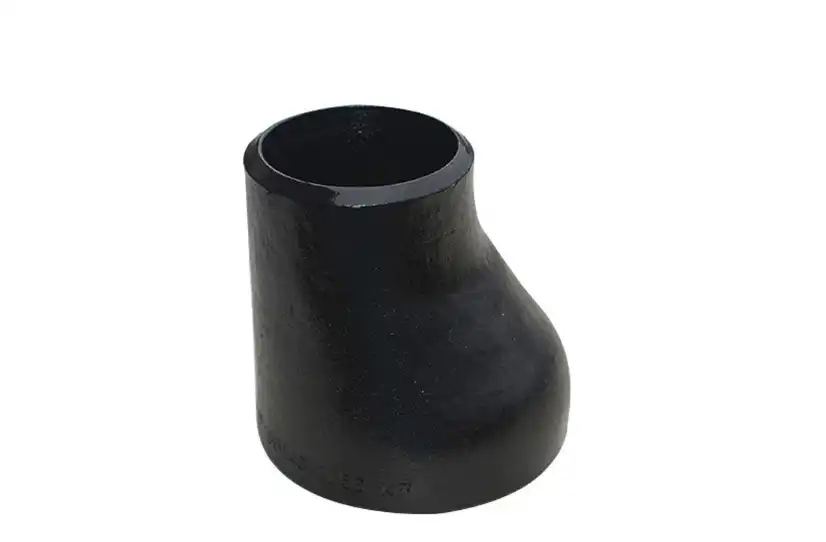
Concentric Reducer Carbon Steels have the shape of a symmetrical cone, with the centerlines of both the inlet and exit ports being exactly aligned. This physical accuracy makes sure that fluid moves through a passageway that gets narrower over time without any dead spots or too much turbulence. This design is very important in oil and gas when switching from bigger trunk lines to smaller branch links in gas compression stations or when connecting pump discharge ports to gearbox pipelines. The even width of the walls around the circumference gives the structure balanced support. This makes these fittings perfect for vertical placements where gravity acts evenly across the fitting.
Material Advantages in Harsh Environments
Most oil and gas uses use carbon steel types, especially ASTM A234 WPB, because they are good at balancing three important traits. The tensile strength of the material is more than 60,000 psi, which is enough for working pressures of up to 3,000 psi in most Class 600 situations. Because it can be welded, it can be easily joined to nearby pipes using standard SMAW or GTAW methods, without the need for special filling materials. When you look at the total costs over a product's lifetime, you can see that Concentric Reducer Carbon Steels are more cost-effective than stainless steel ones. They usually cost 40 to 60 percent less while still performing the same in non-corrosive environments. Normalising heat treatment above 595°C is used in Oudi's production process. This restores the microstructure after cold forming and gives the material the flexibility it needs to survive thermal cycling in reactors where temperature swings can reach 150°C.
Concentric vs. Eccentric: Application Logic
Flow direction and practical issues are the only things that matter when choosing between concentric and eccentric configurations. Concentric reducers work best for vertical runs, like riser pipes on offshore platforms, reactor feed lines, and links between distilling columns. They make it easier to keep the central alignment, which stops uneven stress loading on the structure. Because they have a flat side, eccentric reducers work best in horizontal pump pressure lines where keeping air pockets from forming is very important. If you put a concentric reducer on the pump's flow in the wrong way, it makes a high point where vapour can build up. This can cause cavitation, which wears down impellers in months. Knowing this difference keeps tools from breaking and from needing expensive repairs.
Key Specifications and Types of Carbon Steel Concentric Reducers
Dimensional Standards and Pressure Ratings
Face-to-face measures are regulated by ASME B16.9. This makes sure that makers around the world can use the same measurements. The standard defines length based on the outside diameter of the bigger pipe. For example, a 12-inch to 8-inch reducer is about 9 inches long, which is the right taper angle to reduce friction losses while keeping installation footprints small. The schedule method used for pressure ratings is known to pipeline architects. Schedule 40 Concentric Reducer Carbon Steels can handle Class 150 applications that work with low-pressure gathering systems. Schedule 80 variants can handle Class 300 applications that are popular in high-pressure gas transportation. Extra-extra-heavy Schedule XXH meets the needs of Class 600 in injection wells and improved recovery systems. Our factory keeps reducers in stock with sizes ranging from 1 inch to 48 inches. This means that 95% of oil and gas projects can get what they need without having to wait for special tools to be made.
Manufacturing Methods: Seamless vs. Welded
The way something is made affects both function and cost patterns. When you make seamless reducers from hot-pierced billet stock, you don't have to worry about longitudinal weld gaps that can rust in sour gas service with H₂S. These are more expensive, but they are more reliable in important situations like terminating underwater pipelines. Welded reducers, which are made from rolled plate and horizontal welds, are better for less demanding uses like connecting air storage tanks. The weld zone is x-rayed according to ASTM E94 to make sure there are no flaws and that the joins won't crack when they are loaded and unloaded again and again. We use a post-weld heat treatment when the wall thickness is more than 22 mm. This gets rid of any remaining stresses that might make the material less resistant to wear when the pressure changes.
Matching Schedules to System Requirements
When specifying reducers, the wall thickness must match the schedules of the pipes that join them, and the pressure drop across the change must be taken into account. When the flow speed goes up, it is common to connect Schedule 40 inlet pipes to Schedule 80 outlet pipes. This is because the stronger outlet wall can handle higher erosion rates from faster fluid. The reducer usually follows the larger plan so that it doesn't become the weak point of the system. When customers give us information about the working pressure, temperature, and flow rate, our engineering team helps them choose the best plan by using ASME B31.3 Chapter IX allowable stress tables to figure out the needed wall thickness.
Material Comparisons and Procurement Decision-Making
Carbon Steel vs. Stainless and Alloy Alternatives
When choosing materials, you have to think about how much they cost, how well they prevent rust, and how strong they are. Concentric Reducer Carbon Steels are most common in dry natural gas and sweet crude oil service where the moisture content stays below the dew point, and there isn't enough free water for rusting to happen. Even though it costs three to four times more than carbon steel, 316L stainless steel is needed when salt levels are higher than 50 ppm or working temperatures are higher than 400°C. Some alloy steel types, such as ASTM A234 WP11 (1.25Cr-0.5Mo), are used in specific situations where hydrogen attack could damage carbon steel above 230°C and 200 psi hydrogen partial pressure. We help customers make decisions about material trade-offs by asking for information about the composition of the process fluid and the working conditions. Then, we suggest the safest and most cost-effective choice.
Corrosion Allowance and Service Life
To make something last a long time, you have to add more rust space than the minimum pressure-retaining wall thickness. As a general rule, 3 mm (0.125 inches) are added to carbon steel that is used in crude oil service, with a weathering rate of 0.1 mm per year over a 30-year design life. To keep materials from sulphide stress cracking in sour service settings that follow NACE MR0175 standards, they must be less than 22 HRC hard. We make sure of this by checking each heat-treated batch for Brinell hardness. Protective coats make things last longer in low-use situations. For example, fusion-bonded epoxy adds 15 to 20 years of life to slightly acidic water pumping systems for a fifth of the cost of switching to stainless steel.
Certification Requirements and Quality Verification
For big oil and gas projects, the procurement requirements require proof that the materials can be tracked and that they meet the required dimensions. Our ISO 9001:2015 certification shows that we have a method for controlling quality from the time we receive the raw materials to the time we do the final check. Each reducer comes with Mill Test Certificates that list the chemical make-up and mechanical qualities of the steel mill, as well as measurement reports that confirm ASME B16.9 tolerances measured by precise 0.01mm coordinate measuring machines. Pressure vessel parts can be made with special equipment manufacturing licenses given by Chinese regulatory officials. These are the credentials that meet the standards for EPC contractors. When bidding on foreign projects, we offer EN 10204 3.1 certificates that are recognised in both European and Middle Eastern markets. This gets rid of the paperwork problems that slow down customs processing.
Installation Guidelines and Application Best Practices in Oil & Gas Systems
Pre-Installation Preparation and Alignment
Before the first weld spark hits, the right planning is the first step to a successful installation. Check the Concentric Reducer Carbon Steel for damage from shipping, focusing on the end bevels where dents can cause fusion zones to not fuse fully. Compare the measurements to the mill certificates. Make sure that the bigger end's outside diameter and the face-to-face length are the same. Use wire cleaning or grinding to get rid of mill scale, rust, and other contaminants that are within 50 mm of the weld joint on both the reducer and connected pipe ends. Machined pipe often has oil waste that needs to be cleaned with a fluid because it makes welds less solid. Before tacking, we suggest dry-fitting the reducer between pipe sections to make sure it is lined up correctly. Use laser alignment tools or straightedges to make sure the centerline deviates by less than 1.5 mm per metre. This stops eccentric loading that causes bending loads.
Welding Best Practices for Carbon Steel Reducers
To join carbon steel reducers, you need to use methods that make full-penetration welds that can match the power of the base metal. SMAW (stick welding), which is popular in the field, can be done on reducers with walls thinner than 22 mm because they have a normal 37.5° bevel angle. Root passes with E7018 electrodes at 90–110 amps create fusion with enough depth; keep a 3 mm root hole with backing rings when working from only one side. For important uses in H₂S service, GTAW (TIG) root passes get rid of the porosity problems that come with flux-coated electrodes. This is followed by SMAW fill and cap passes that get output rates. Controlling the temperature between passes is important. Keep the temperature between 150°C and 250°C to stop martensite from forming in the heat-affected zone and to avoid too high of a temperature that causes grains to grow. In cold weather, we've seen setups where the builders didn't follow the preheat standards. Hydrogen cracking was found months later during hydrostatic testing. When the wall thickness is more than 22 mm or when the code says so, it has to go through a post-weld heat treatment. This is done by heating the whole circle to 595–650°C for one hour per 25 mm of thickness and then cooling it down slowly to avoid thermal shock.
Case Application: Offshore Platform Riser System
A North Sea operator had problems with their 16-inch production lift system where the moonpool on the platform changed to 12-inch topsides pipe. The first eccentric reducer fitting, which was not done properly, made turbulent swirls that made flow-induced vibrations stronger. Within 18 months, fatigue cracks showed up, and the roof had to be replaced quickly during a weather window. We gave them Concentric Reducer Carbon Steels with Schedule 80 walls that were just the right size for the 16x12 changeover. The concentric shape got rid of uneven flow patterns, and our suggested construction method included placing vibration-dampening supports 3 pipe diameters downstream. Ultrasonic thickness tracking every six months showed that the wall thickness was the same after 5 years of use, which proved that the design change was right. This installation shows how choosing the right reducer and following the right installation steps can directly affect the stability of foreign assets.
Procurement Insights and Ordering Considerations for B2B Clients
Order Quantities and Lead Time Planning
The ways that EPC contractors build new facilities and maintenance organisations support current businesses' use to buy things are very different. Bulk ordering is better for new building projects because standard-sized packages of 50 to 100 Concentric Reducer Carbon Steels cut the cost per unit by 25 to 35 percent compared to buying in small lots. Our annual capacity of 16,000 tonnes lets us handle big orders, and wait times for normal ASME B16.9 dimensions are 6 to 8 weeks. When it comes to maintenance buyers, availability is more important than bulk discounts, and they prefer sellers who keep popular sizes in stock for quick shipping. We keep 2-inch to 12-inch reducers in stock in Schedules 40 and 80, so we can ship them to customers in North America within 48 hours and to stores in Europe within 5 days. Lead times can go up to 10 to 12 weeks for custom sizes that need special tools. Procurement managers should find out about non-standard needs early on in the project plan.
Price Determinants and Budget Forecasting
The price of a reducer is affected by more than just the cost of materials and labour. Base prices are based on size. For example, a 6x4-inch Schedule 40 reducer costs $35 to $45 per unit when bought in bulk of 100, but a 24x18-inch Schedule 80 unit costs $850 to $1,100 because it has to deal with more material and is harder to shape. When going from standard WPB to low-temperature A420 WPL6 carbon steel for LNG uses, material grade changes add 15 to 20 percent more cost. Heat treatment costs an extra $8 to $15 per piece, based on its size, because the oven takes time and energy. Testing and inspection requirements have a big effect on costs: basic measurement inspection is included in the normal price, but liquid penetrant testing costs an extra $12 to 18 per unit, and x-rays of welds cost an extra $45-75 per reducer. International licenses, like NACE compliance paperwork, PED material badges for European projects, or API monogram licensing, cost more to manage but give you access to more markets, so it's worth it. We give detailed quotes that break down every cost factor. This lets buying teams find the best standards while staying within their budgets.
Supplier Evaluation and Risk Mitigation
When choosing providers for important pipeline parts, you need to look at more than just price. The manufacturing capacity of a company tells you if they can meet project deadlines without cutting corners on quality because they have too much capacity. Our three production lines, which together handle 16,000 tonnes of goods every year, give us extra capacity during busy times, like the spring building season. Inspection tools back up claims of quality control: we keep spectroscopy for checking materials, ultrasonic thickness gauges, hydraulic test equipment with a 15,000-psi rating, and measure tools that can be traced back to national standards. When planning foreign shipments, having experience with exporting is important. We've been through customs processes in 40 different countries and know what paperwork is needed to avoid delays at the port. Customers like how we help them load containers, make packing lists that shipping lines and customs officials can use, and work with goods forwarders to get the best shipping prices. Payment terms show a partnership: we offer 30-day terms to long-term customers but need letters of credit from new foreign buyers. This protects both sides' interests as the relationship grows.
Conclusion
Concentric Reducer Carbon Steels are tried-and-true, low-cost ways to change the width of oil and gas pipelines where centred flow paths and vertical direction provide the best hydraulic performance. Long-term system dependability depends on choosing the right materials that balance resistance to corrosion with cost-effectiveness, along with being very clear about pressure rates and size requirements. The quality of the installation, especially the welding and checking of the alignment, has a direct effect on whether these parts last the 20–30 years that are expected or break down early. To be successful at procurement, you need to work with certified makers who can provide full quality documents, enough production capacity, and expert help during the specification and installation stages. The information here gives you the tools you need to make smart choices that match the need for efficiency with the realities of your budget.
FAQ
What distinguishes concentric reducers from eccentric types in oil and gas applications?
The most important change is the centerline orientation. Concentric Reducer Carbon Steels keep the centres of the input and exit on the same plane. This makes a symmetrical cone shape that is perfect for vertical pipeline runs. These centres are pushed apart by eccentric reducers, which keep one side flat to keep air from building up in the horizontal pump pressure lines. When circular reducers are used incorrectly horizontally, they form vapour trap points that cause pump cavitation.
Can carbon steel concentric reducers handle sour gas service containing H₂S?
For bad service compliance, standard ASTM A234 WPB material needs to be processed in a different way. To stop sulphide stress cracking, NACE MR0175 says that the hardest material must be at least 22 HRC. Through normalising rounds and verification tests on every production batch, our heat treatment methods keep the hardness under control. Material papers show that the product meets the requirements for use in wells that produce gas with H2S levels up to 50 ppm, as required by NACE.
How do I determine the correct pressure rating for my application?
Following the ASME B31.3 pipe code, match the reducer plan to the design pressure and temperature of your system. Schedule 40 is good for Class 150 uses with pressures below 285 psi at room temperature. Class 300 values up to 740 psi can be used with Schedule 80. Figure out the maximum stress that can be applied by using code methods that take temperature into account. Above 200°C, carbon steel loses strength. If you give us the working conditions, our engineering team can help you figure out the pressure.
Partner With a Trusted Concentric Reducer Carbon Steel Manufacturer
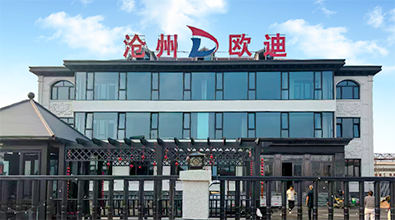
To make pipeline systems that work well, you need parts made by companies that know what the oil and gas business needs. Oudi has been making Concentric Reducer Carbon Steels that meet ASTM A234, ASME B16.9, and NACE standards for 26 years, which is important for the success of your project. Our ISO 9001:2015-certified factory in Cangzhou handles 16,000 tonnes of material every year. We keep standard sizes in stock for quick delivery and can also make special sizes for specific uses. Each reducer comes with full material tracking paperwork, dimensional records, and pressure test certificates that meet the standards for EPC contractors. Purchasing managers like how our quotes are clear and break down the costs of certification, testing, and different types of materials. There are no hidden fees that slow down decisions. Email our expert sales team at oudi-04@oudiguandao.com to talk about your unique pipeline needs. We'll give you advice on the right size, the best material, and the most competitive prices for Concentric Reducer Carbon Steel parts that will help you stay on schedule and on budget.
References
1. American Society of Mechanical Engineers. (2020). ASME B16.9: Factory-Made Wrought Buttwelding Fittings. New York: ASME Press.
2. American Society for Testing and Materials. (2019). ASTM A234/A234M: Standard Specification for Piping Fittings of Wrought Carbon Steel and Alloy Steel for Moderate and High Temperature Service. West Conshohocken: ASTM International.
3. National Association of Corrosion Engineers. (2021). NACE MR0175/ISO 15156: Petroleum and Natural Gas Industries—Materials for Use in H₂S-Containing Environments in Oil and Gas Production. Houston: NACE International.
4. American Society of Mechanical Engineers. (2018). ASME B31.3: Process Piping - Design, Materials, Fabrication, Examination, Testing, and Inspection. New York: ASME Press.
5. Mohitpour, M., Golshan, H., and Murray, A. (2007). Pipeline Design and Construction: A Practical Approach (3rd ed.). New York: American Society of Mechanical Engineers.
6. Escoe, A. Keith. (2016). Piping and Pipeline Assessment Guide (2nd ed.). Cambridge: Gulf Professional Publishing.

Need help finding the right solution with our experts. Please contact us.
SINCE 1998 Your Reliable Pipeline Manufacturer