CS Concentric Reducer Buying Guide for Pipeline Engineers
Choosing the correct CS Concentric Reducer for your pipeline project can mean the difference between running smoothly and having to pay a lot for downtime. These important pipe fittings join pipes of different sizes together while keeping the axis straight. This allows fluids to flow smoothly in vertical pipeline runs used for oil, chemicals, natural gas, and water conservation. As a pipeline expert or procurement worker, it can be hard to find a good balance between technical requirements, quality standards, and your company's budget. This guide makes that process easier by taking you through the most important parts of buttweld CS Concentric Reducers, such as how they are designed and how to find suppliers who meet international standards like ISO 9001, ASME B16.9, and ANSI. In order to help you make secure buying choices based on specification sheets, our goal is to give you useful information. Understanding CS Concentric Reducers: Specifications and Applications.
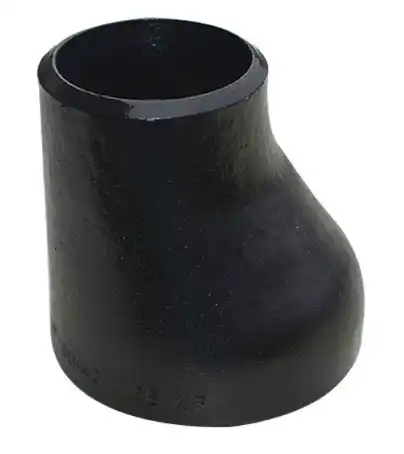
What Defines a Buttweld Concentric Reducer?
Buttweld CS Concentric Reducers are cone-shaped pipe fittings that are made to go from one pipe width to another while keeping both ends straight on a shared centerline. This heavy-duty part doesn't have threaded or socket connections; instead, it has bevelled ends that meet ASME B16.25 standards. This lets full-penetration butt welding happen, which makes solid joins that won't leak. Because the uniform design spreads stress evenly, these reducers are essential for high-pressure situations where the structure's stability can't be compromised.
Material Options and Their Impact on Performance
Due to its low cost and dependability in most industrial settings, carbon steel is still the most popular material choice. ASTM A234 WPB grade carbon steel is easy to weld and has good mechanical qualities for temperatures from -29°C to 400°C. When caustic materials or high temperatures are present, types of stainless steel (ASTM A403 WP304/316) offer better protection, but they are more expensive. In the power generation and industrial industries, where better creep resistance is important, alloy steel choices are available to meet specific needs.
Standard Dimensions and Pressure Ratings
Buttweld CS Concentric Reducers get their pressure rating from the pipe plan they match, while flanged fittings are rated at specific pressure classes (150#, 300#, etc.). A Schedule 40 reducer can handle the same amount of internal pressure as a Schedule 40 straight pipe made of the same material. For a 6-inch carbon steel pipe at room temperature, this pressure is usually around 1000 PSI. Sizes that are often changed are 1/2" x 3/8" to 48" x 42", and wall thicknesses range from Schedule 10 to XXS. By understanding this connection, you can avoid over-specification and spending money that isn't necessary.
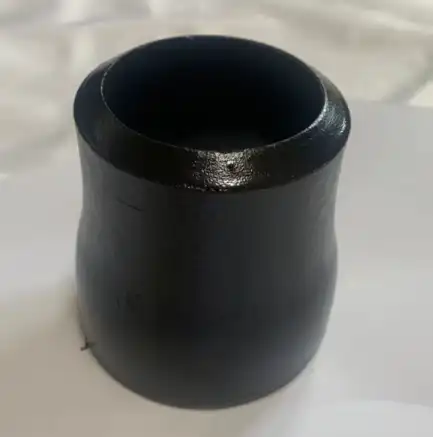
Where Concentric Reducers Excel
For vertical pipeline systems to stay stable and keep support structures from being overloaded, they need CS Concentric Reducers. These fittings are used in water treatment plants, chemical plants, and HVAC systems to handle changes in flow without making dead zones where sediment builds up. The smooth inside shape reduces turbulence, which in turn lowers noise and wear at junction points caused by speed, which are important factors in pump discharge lines and high-speed gas pipes.
CS Concentric Reducer vs Alternatives: Making the Right Choice
Concentric vs Eccentric: Understanding the Fundamental Difference
The direction of the pipe and the flow features determine whether CS Concentric Reducers or eccentric reducers should be used. CS Concentric Reducers work best for uphill runs where equal flow distribution keeps the hydraulics from becoming unbalanced. Eccentric reducers have one flat side and are designed for horizontal pump pressure lines. The flat-top design stops air pockets from forming, which can damage pumps through cavitation. When these parts are used incorrectly, they cause operations to be less efficient and tools to break down early.
Evaluating Wall Thickness Compatibility
When connecting lines with different plans, the internal bore alignment needs to be carefully thought out. It is not possible for a Schedule 40 CS Concentric Reducer to connect straight to a Schedule 80 pipe without making an internal step that stops flow and speeds up rust. Professional makers counter-bore the inside of the reducer to match the inside diameter of the pipe it's connecting to. This gets rid of any turbulence zones. This change costs more, but it's necessary for long-term dependability in acidic work.
Material Selection: Carbon Steel vs Stainless Steel Trade-offs
When used in non-corrosive situations, carbon steel CS Concentric Reducers are a great deal because they cost about 40% less than their stainless steel counterparts. Corrosion resistance is the trade-off. In mild settings, surface coatings and cathodic protection make the service life longer. Stainless steel is worth the extra cost in places like chemical plants that work with acids, sites near the coast that get hit by salt spray, and food preparation plants that need to meet strict hygiene standards. In high-temperature power plants, where carbon steel gets soft and stainless steel is too expensive, alloy steel fills the gap.
Heat Treatment Requirements and Quality Implications
Normalising heat treatment is needed to smooth out the grain structure and reach the required hardness (up to 197 HB according to ASTM standards) for carbon steel reducers that were made by hot or cold methods. This heat processing lowers the stresses inside the material that could lead to cracks during service or bonding. Manufacturers who skip this step hurt their long-term dependability, which is a red flag when evaluating suppliers. Asking for approved mill test reports (MTRs) that list the details of the heat treatment keeps your project safe from fittings that aren't up to par.
Procurement Insights: How to Source CS Concentric Reducers Efficiently
Why Supplier Credentials Matter More Than Price
Cangzhou Oudi Pipe Manufacture Co., Ltd. has been in the pipeline business since 1998 and is ISO 9001:2000 certified and has a People's Republic of China Special Equipment Manufacturing License. These qualifications are more than just paperwork; they prove that quality control is carried out in a planned way, from checking the raw materials to the final nondestructive testing. Our Mengcun plant is 66,600 square meters and has modern forming equipment as well as testing tools that meet all ASME, ANSI, JIS, DIN, and BS standards. This infrastructure supports a steady output of 16,000 tonnes per year, which keeps your projects on track by making sure the supply chain is reliable.
When specifications are looked over, the difference between certified makers and commodity sellers becomes clear. We keep a full set of measuring tools, infrared equipment for figuring out what the material is made of, and ultrasound testing gear for finding flaws inside the material. Each buttweld CS Concentric Reducer comes with an MTR that lists the chemical makeup, mechanical qualities, and dimensional compliance of the product. This makes it possible to track the product, which is needed for engineering review and regulatory checks.
Navigating Customisation Options and MOQ Considerations
Most size changes can be handled by standard CS Concentric Reducers, but for more specialised uses, unique sizes or unusual materials are often needed. Our tech team works together to come up with standards that improve performance without making fabrication too hard. For normal carbon steel sizes, the minimum order quantity is usually 100 pieces. For large-diameter or metal sizes, it drops to 10 to 20 pieces. Lead times are between 4 and 6 weeks for stock materials and between 8 and 10 weeks for raw materials.
When you buy in bulk, you can take advantage of economies of scale. For projects that need 500 or more reducers, the cost is often 15-20% less than when you buy them in small lots. We have open terms for EPC workers who are in charge of handling multiple phases of building and storing materials to fit installation plans. This method cuts down on storage costs on the job site while still making sure that parts are available when the building teams need them.
Cost Structures and Value Engineering Opportunities
The price of buttweld CS Concentric Reducers depends on the type of material used, how hard it is to make, and how many are ordered. In bulk, 200 of a 6" x 4" Schedule 40 carbon steel reducer might cost $18 to $25 each, while the same size in stainless steel costs $65-85. The width of the wall has a big effect on the cost. For example, XXS schedule reducers need more forming work and material, which can make normal schedule prices double. Value engineering opportunities can be found by understanding these forces. For example, Schedule 80 can be used instead of XXS when pressure estimates allow it.
Transportation is another cost factor, especially for packages going across foreign borders. We are close to Tianjin Port and only 120 kilometres from Tianjin Airport. This makes it easy for us to ship goods to over 40 countries in Europe, the Americas, Africa, Southeast Asia, and the Middle East. Optimising containers lowers the cost of shipping each unit; smart packing puts smaller reducers inside larger ones to make the most of each cubic inch.
Installation and Maintenance Guide for CS Concentric Reducers
Proper Welding Techniques for Permanent Joints
End preparation is the first step to a successful butt-weld fitting. For standard wall thicknesses, ASME B16.25 calls for a 37.5° ± 2.5° bevel angle and a 1/16" root face. Pipes with walls thicker than 22mm need compound bevels to make sure the weld penetrates properly. Alignment is very important—even a small angle misalignment puts stress at the weld toe, which can cause fatigue cracks to start. Tack welding at three evenly spaced points keeps the pipe in place during root pass welding.
Welding procedure specifications (WPS) must match the properties of the base material. For GMAW processes, carbon steel reducers usually use E7018 electrodes or ER70S-6 wire, and the metal must be heated up to above 10°C. Stainless steel needs low-carbon filler metals (ER308L for 304 base metal) and argon backing gas to keep the root side from sugaring. For some pressure classes and materials, post-weld heat treatment is required; checking the relevant codes (ASME B31.3 for process piping) can s
Common Installation Pitfalls and Prevention Strategies
Most installation failures happen because of misalignment during fit-up. To keep concentricity, use internal line-up clamps, especially for thin-wall pipe, where welding heat can distort it. Another common mistake is welding reducers with the small end facing upstream in vertical down-flow applications. This causes turbulence and erosion; flow direction should guide orientation decisions.
Incomplete penetration in the root pass for the CS Concentric Reducer creates leak paths and stress concentration zones. Most piping codes for pressure service require radiographic or ultrasonic examination to find these flaws before hydrostatic testing. Our reducers go through factory UT examination, which gives them a baseline quality that makes field inspection acceptance easier.
Maintenance Practices That Extend Service Life
External corrosion can be found through regular visual inspection before wall loss threatens the integrity of the pressure system. Protective coatings for carbon steel systems—epoxy or polyurethane systems offer a 10–15-year service life in moderately corrosive environments; cathodic protection extends this even further for buried or submerged pipelines. Ultrasonic thickness gauging is used for 3–5 year intervals to track erosion rates in high-velocity services.
Vibration analysis finds problems caused by flow before they become mechanical. Reducers placed near pumps or compressors experience cyclic loading that can fatigue weld heat-affected zones. Following the ASME B31.3 span tables for pipe support placement minimises dynamic stresses. When thickness measurements show that 80% of the minimum required wall remains, replacing it during scheduled turnarounds avoids unplanned shutdowns.
Conclusion
For successful CS Concentric Reducer procurement, technical requirements must be balanced with supplier capabilities and cost considerations. Knowing the difference between concentric and eccentric applications, how pressure ratings are based on pipe schedules, and verifying manufacturer certifications will protect your project from specification errors and quality failures. The buttweld design is the most reliable for permanent installations, and the right choice of materials and heat treatment will ensure long-term performance in harsh industrial environments. By working with certified manufacturers who consistently demonstrate quality control and international standards compliance, pipeline engineers can get parts that improve flow efficiency, require minimal maintenance, and last for decades of reliable operation.
FAQ
When Should I Select Concentric Over Eccentric Reducers?
When you have vertical pipeline runs, you should use CS Concentric Reducers because keeping the centerline alignment ensures structural stability and even flow distribution. Symmetrical design is also good for vertical pump discharge lines, riser pipes in multi-story buildings, and tower-to-ground connections. Eccentric reducers are better for horizontal orientations, especially pump suction lines, because the flat-top design stops air from building up and causing cavitation. Misusing these fittings
How Are Pressure Ratings Determined for Buttweld Reducers?
Buttweld fittings don't have fixed pressure class ratings like flanges do. Instead, their pressure capacity matches the schedule of the seamless pipe they connect to—a Schedule 40 reducer can handle the same amount of pressure as a Schedule 40 pipe made of the same material. To figure out the pressure rating, you need to use ASME B31.3 or the relevant piping code tables, taking into account the material grade, temperature, and corrosion allowance. Making sure the reducer schedule matches the connected pipe ensures enough strength without over-engineering.
Can Custom Dimensions Accommodate Unique Project Requirements?
Standard reducers can handle most transitions, but for more specific uses, custom sizes or materials are often needed. We make reducers with diameters from 1/2" to 48" in carbon steel, stainless steel, and alloy grades, and wall thicknesses from Schedule 10 to XXS. For custom orders, we usually need engineering drawings that show the dimensions, material grade, heat treatment needs, and testing procedures. Lead times are longer than for standard products, and minimum quantities can be negotiated based on how complicated the fabrication is.
Partner With Oudi for Reliable CS Concentric Reducer Supply
If pipeline engineers and procurement teams need a reliable CS Concentric Reducer manufacturer, Oudi has 25 years of experience and can meet their needs. Our ISO 9001-certified facility makes 16,000 tonnes of carbon steel, stainless steel, and alloy reducers every year that meet ASME, ANSI, JIS, DIN, and BS standards. We have earned the trust of over 300 customers in 40 countries by offering competitive pricing, quick technical support, and strict quality control. Every batch goes through full inspection systems and nondestructive testing.
Our engineering team works together to come up with specifications that get the best performance and cost for your needs. Email us at oudi-04@oudiguandao.com to talk about your needs, get material certifications, or set up a sample evaluation. Our closeness to Tianjin Port makes export logistics easy, and our ability to handle our own import and export makes doing business across borders easier. Let our experience in the oil, chemical, natural gas, and water conservation sectors help your next project.
References
1. American Society of Mechanical Engineers. (2020). ASME B16.9: Factory-Made Wrought Buttwelding Fittings. New York: ASME Press.
2. American Society of Mechanical Engineers. (2017). ASME B16.25: Buttwelding Ends. New York: ASME Press.
3. American Society of Mechanical Engineers. (2018). ASME B31.3: Process Piping. New York: ASME Press.
4. ASTM International. (2019). ASTM A234/A234M: Standard Specification for Piping Fittings of Wrought Carbon Steel and Alloy Steel for Moderate and High Temperature Service. West Conshohocken: ASTM International.
5. Nayyar, M. L. (2015). Piping Handbook (8th ed.). New York: McGraw-Hill Education.
6. Singh, R. K. (2018). Pipeline Integrity Handbook: Risk Management and Evaluation. Houston: Gulf Professional Publishing.

Need help finding the right solution with our experts. Please contact us.

SINCE 1998 Your Reliable Pipeline Manufacturer



